Commercial Snow Removal Site-Walk Checklist for Property Managers
Before a commercial snow-removal site walk, gather a marked property map, operating schedules, photos of visible obstacles and a list of areas whose winter service responsibilities need clarification. The purpose is to show how the property works—not to arrive with a plowing plan already decided.
Keep observed details separate from proposed arrangements. You can document where staff enter, when deliveries arrive and which gates remain locked. Snow placement, treatment scope, service timing and responsibility handoffs still need confirmation with the provider and any other parties involved.
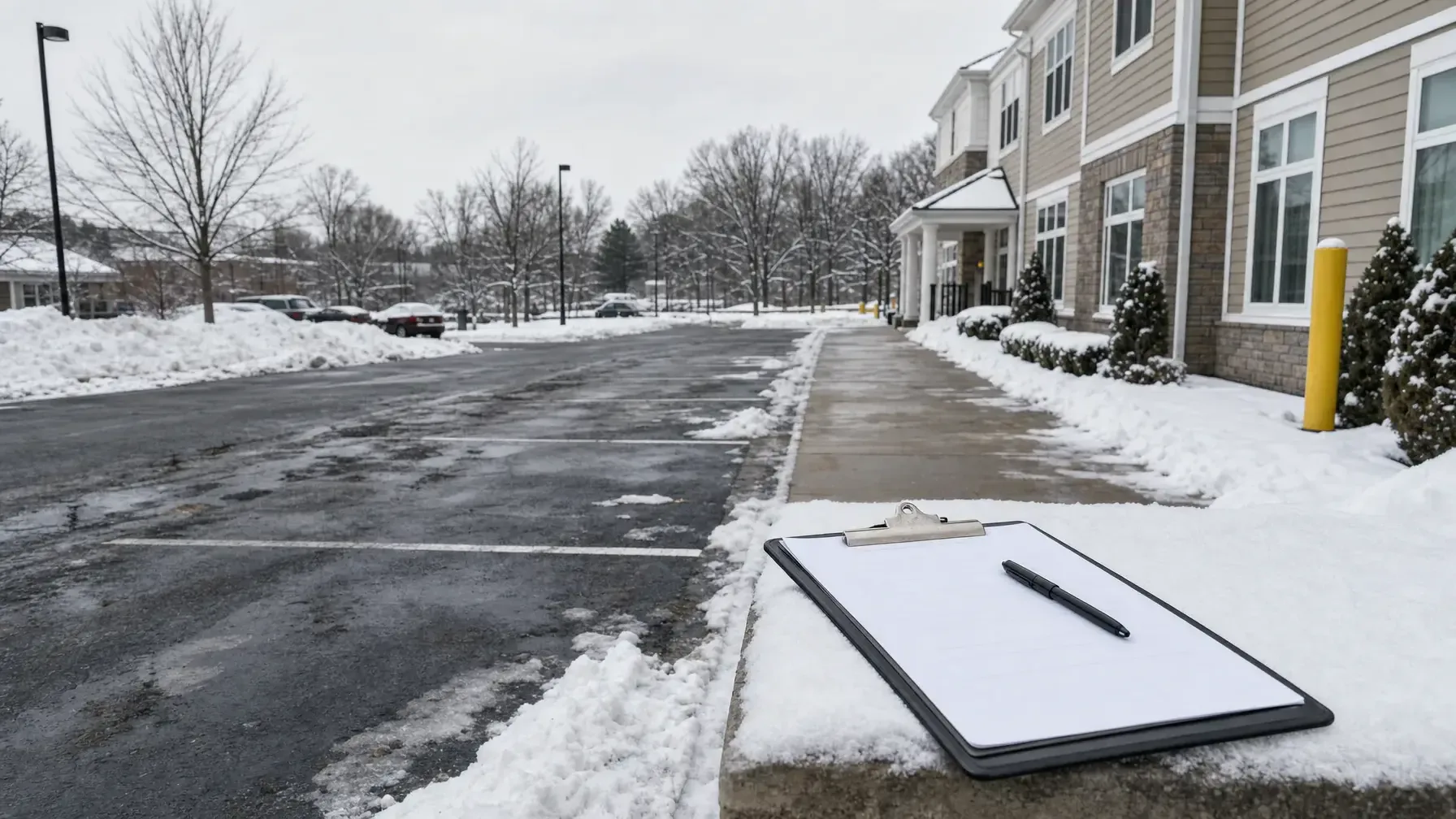
Start with a marked property map
Use an existing site plan or a clear sketch that everyone can annotate during the walk. Label areas consistently so notes, photos and the eventual scope refer to the same places. A label such as “rear delivery entrance” is more useful than “back area.”
- Mark property boundaries and flag any edge where ownership or maintenance responsibility is uncertain.
- Label vehicle entrances, exits, drive lanes, parking areas, loading zones and dumpster access.
- Trace pedestrian routes between parking, building entrances, sidewalks, steps and ramps.
- Identify shared drives, tenant-maintained spaces and areas handled by another property or provider.
- Mark gates, restricted areas and places where parked vehicles or stored materials limit access.
Do not turn an uncertain boundary into an assumed service area. Mark it as unresolved and identify who can confirm it before the scope is finalized.
Record when and how people use the property
Bring actual operating schedules rather than a general request to clear the property “before opening.” Staff arrivals, tenant hours and deliveries may create access needs outside posted business hours. Describe those needs so the provider can discuss what arrangements are feasible.
- Business and tenant schedules, including early arrivals, late departures and off-hours occupancy.
- Delivery and waste-pickup windows, the routes those vehicles use and the space needed at their destination.
- Customer entrances, employee entrances, accessible parking spaces and the pedestrian routes connecting them.
- Overnight parking, fleet storage and who can arrange vehicle moves when needed.
- Gate-access procedures and the person authorized to coordinate access.
Note An operating requirement is not a confirmed service commitment. Record the access window you need, then ask the provider to explain how it would be addressed, including during ongoing snowfall.
Photograph obstacles and flag treatment questions
Photograph visible conditions while they are easy to identify. Match each photo to a location on the map and include enough surrounding context to find it again. Record what you can see without diagnosing the condition or choosing a clearing method.
- Curbs, parking stops, bollards, signposts and low landscape borders.
- Raised covers, uneven pavement, existing damage and changes in surface material.
- Drains, low spots and locations where staff have observed standing water or recurring ice.
- Steps, ramps, narrow walkways, door thresholds and spaces that need separate scope discussion.
- Equipment, outdoor storage or temporary objects that may move after the site walk.
For each area, ask whether clearing and any ice treatment are included, excluded or assigned elsewhere. If treatment materials are a concern for a surface or nearby landscaping, bring any available property specifications and ask what needs further confirmation.
Discuss snow storage without assuming a location
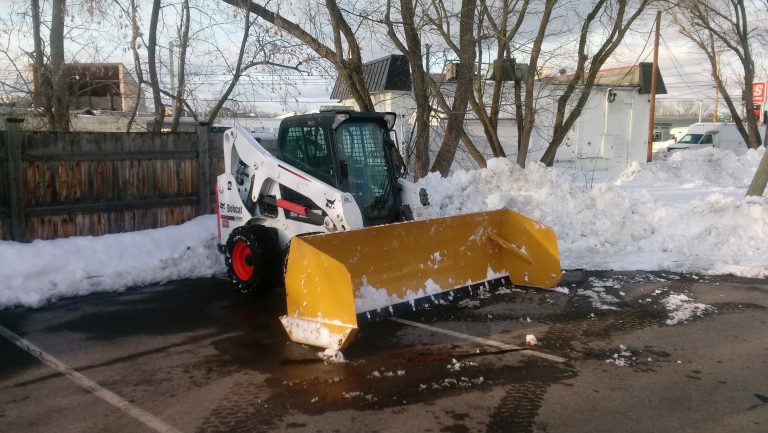
Mark possible snow-storage areas as proposals, not instructions. An apparently unused corner may also serve as overflow parking, a delivery turning area or a pedestrian connection. The site walk should make those tradeoffs visible.
- Who has authority to approve snow placement in the proposed area?
- Would stored snow affect entrances, visibility, walkways, accessible spaces, drains or shared access?
- Which parking or operating space, if any, could be temporarily unavailable?
- What should happen if the agreed storage area no longer has usable space, and who authorizes any additional work?
Do not assume relocating snow or removing it from the property is included. Record that as a scope question and ask how the decision would be communicated.
Make responsibility handoffs explicit
Match each mapped area to a responsible party and a backup contact. Pay particular attention to transitions: a lot may be assigned to the snow provider while a doorway, stairway or shared sidewalk is handled separately. Those boundaries need to be written down, not left to assumption.
Confirm who can approve scope changes, arrange vehicle moves, notify tenants and report an access concern. Ask which communication channel to use and what information a report should include. A location label, photo and description of the access problem can make the issue easier to identify.
Use this site-walk worksheet
Copy this worksheet into your property notes. For each topic, record confirmed details separately from open questions. Give every unresolved item a named follow-up owner; do not mark it confirmed until the relevant parties agree.
| Topic | Details to document | Question and follow-up owner |
|---|---|---|
| Property limits | Mapped boundaries, shared spaces and exclusions | Who confirms uncertain boundaries? |
| Operating needs | Staff, tenant, customer and delivery schedules | Which access windows need provider confirmation? |
| Access | Vehicle routes, pedestrian paths, gates and parked vehicles | Who unlocks gates and coordinates vehicle moves? |
| Obstacles | Labeled photos, surface conditions and movable objects | What needs clarification or an updated photo? |
| Treatment scope | Lots, entrances, walkways, steps and ramps | Who confirms clearing and treatment for each area? |
| Snow storage | Proposed locations and affected access or parking | Who approves placement and resolves space limitations? |
| Communication | Responsible parties, backup contacts and reporting channel | Who approves changes and informs occupants? |
After the walk, share the annotated map and resolved worksheet with the people responsible for the property. Keep proposed items visibly pending. These notes support the service discussion; they do not replace the agreed scope or service arrangement.
ACME Pressure Washing offers commercial snow removal, including plowing and winter lot management for businesses in Merrimack and Southern New Hampshire. To discuss your property, contact ACME Pressure Washing with your site notes and open questions. Confirm property-specific coverage and scope directly.