
Oil vs. Rubberized Undercoating: Which Should NH Drivers Choose Before Winter?
Learn how oil-based and rubberized undercoatings compare, what can go wrong with either, and which questions to ask before choosing winter protection.
The short answer
- For many salt-exposed daily drivers, oil-based undercoating is a practical choice when paired with regular checks and reapplication as needed.
- Rubberized coatings can provide a durable barrier, but surface preparation and adhesion are critical.
- Neither option repairs damaged metal or makes existing rust, trapped salt or loose coatings disappear.
- Check your vehicle’s condition and coating history before choosing a treatment.
The short answer for New Hampshire drivers
For a daily driver facing New Hampshire salt and brine, oil-based undercoating is often a practical choice if you will keep up with maintenance. Its replenishable protective film can suit a vehicle that needs ongoing corrosion protection. Rubberized undercoating may make sense on properly prepared, compatible surfaces, but it deserves careful consideration when rust or older coatings are already present.
ACME Pressure Washing, a family-run company based in Merrimack, offers oil-based vehicle undercoating to protect undercarriages from New Hampshire road salt, brine and moisture. When comparing that option with rubberized protection, start with the underside’s actual condition rather than the appearance of a freshly coated vehicle.
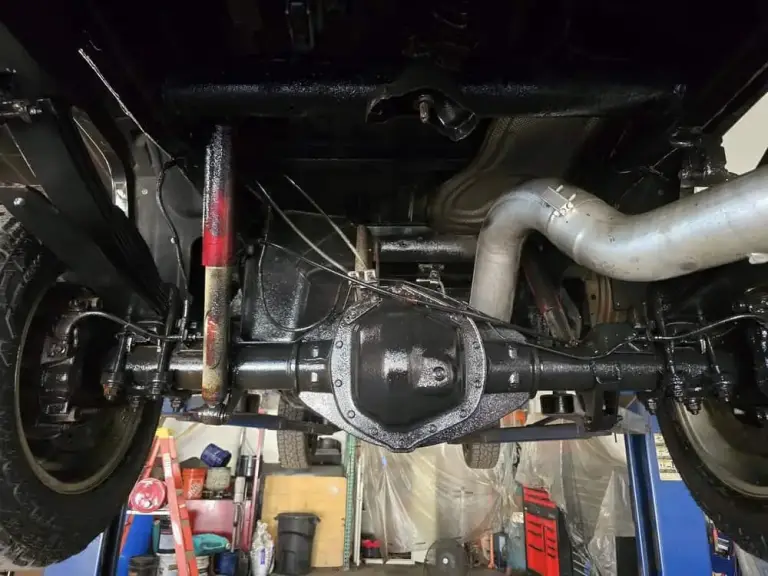
A uniform black finish does not tell you whether the metal underneath was properly prepared.
How the two types of undercoating protect
Oil-based undercoating: a renewable protective film
Many oil-based rustproofing products leave a soft, water-repelling film instead of curing into a rigid shell. Depending on the formulation and application, they may spread into small seams and overlapping metal joints. Coverage still depends on access, product characteristics and application quality.
The trade-off is upkeep. Road spray, abrasion and washing can reduce coverage, especially in exposed areas. Do not assume these products neutralize salt already on the vehicle. Product compatibility also matters around rubber, plastics and existing finishes.
Rubberized undercoating: an adhering barrier
Rubberized products generally cure into a more substantial coating. Some automotive formulations provide abrasion resistance and sound reduction as well as protection from water exposure. Their suitability depends on the particular product and the surface receiving it.
The concern arises when a coating bridges loose rust, covers contamination or loses adhesion. Water and salt can get behind a damaged layer, allowing corrosion to continue out of sight. That does not make every rubberized product unsuitable; it makes preparation and later checks especially important.
Let the condition underneath guide the choice
Before approving either approach, have a qualified automotive professional assess the underside. Ask which of these situations applies:
- Sound factory protection: An intact original finish may need preservation or compatible supplemental protection, rather than removal or blanket coverage with another material.
- Light surface corrosion: Ask what preparation the proposed product requires and how the remaining metal will be evaluated.
- Peeling or unknown previous treatment: Loose material can undermine a new application. Identify the old product where possible and establish compatibility before adding another layer.
- Heavy scaling, holes or questionable components: Get a repair assessment first.
A used vehicle with an undocumented underside deserves particular care. Fresh coating can hide both sound metal and serious problems, so appearance alone is not enough to judge its condition.
Surface requirements also vary. Some products require thoroughly dry metal; others tolerate limited residual moisture under specified conditions. Neither claim should become an excuse to coat over salty sludge, loose debris or standing water. Follow the actual product instructions.
If corrosion may affect vehicle safety, resolve that concern before treating undercoating as the next step.
Questions worth asking before approving the work
A useful comparison goes beyond asking whether a shop uses oil or rubberized material. Ask for clear answers to these questions:
- What exact product will be used? Ask whether it remains soft or cures, which surfaces it suits, and whether it is compatible with previous treatments.
- What preparation is included? Clarify how contamination, loose rust, failing coatings and moisture will be addressed before application.
- Where will it be applied—and excluded? Brakes, exhaust components, drains and other sensitive areas require appropriate protection or exclusion according to vehicle and product instructions.
- How will coverage be checked? Ask which areas are accessible and which cannot be reached. “Full underside” should not imply every hidden cavity receives protection.
- What happens afterward? Request product-specific guidance on curing or settling, washing, parking precautions, follow-up checks and reapplication.
For an electric or hybrid vehicle, ask specifically about battery enclosures, high-voltage components and manufacturer restrictions. Leave access and application around these systems to qualified professionals.
If you contact ACME Pressure Washing about oil undercoating, mention your vehicle and any previous treatment. Those details help frame the conversation without assuming that every underside needs the same approach.
What to do if salt exposure has already started
Before winter exposure is a useful planning window, but missing it does not automatically mean waiting until next year. If your vehicle has already traveled salted roads, the immediate question is how its underside should be assessed and prepared before treatment.
You can safely gather information without crawling underneath. Park on level ground, shut the vehicle off, let hot components cool, and take ground-level photos of visible areas from beside the vehicle. Collect previous service records and note any flaking coating you have noticed. Never get beneath a vehicle supported only by a jack.
Leave lifting, scraping, underbody preparation and spraying to professionals. Avoid outdoor washing when water could freeze and create slippery surfaces. Ask the provider how cleaning and any necessary drying will fit the product requirements and weather conditions.
Do not rush into coating simply because another storm is forecast. Correct preparation remains important after the first salt exposure.
Choose protection you can keep maintaining
Keep a record of the product name, application date, treated areas and any preparation performed. Save available before-and-after photos. At later automotive service visits, ask the technician to note exposed metal, peeling material or significant corrosion. Those observations help you decide whether the next step should be a touch-up, a different preparation approach or a repair assessment.
Common questions
Is rubberized undercoating always bad for vehicles driven in New Hampshire?
No. A suitable automotive product on a properly prepared surface can provide useful protection. Problems arise when poor adhesion, hidden corrosion or damaged coating allows salt and moisture underneath.
Can oil-based undercoating go over an existing rubberized coating?
Do not assume the two are compatible. Have the existing coating identified and checked for adhesion, then confirm compatibility using the proposed product’s instructions. Covering a peeling layer does not fix the failure underneath.
Will either type stop rust that has already started?
A suitable treatment may help limit further moisture exposure after appropriate preparation, but neither type restores lost metal. Significant corrosion needs an automotive repair assessment, particularly around structural areas and safety-related components.
Does oil-based undercoating always drip or smell afterward?
That depends on the formulation, application and conditions. Ask for the specific product’s guidance on possible residue, odor, ventilation and parking precautions rather than assuming all oil-based treatments behave alike.