




Your Merrimack Roof Has a Problem — And It’s Getting Worse
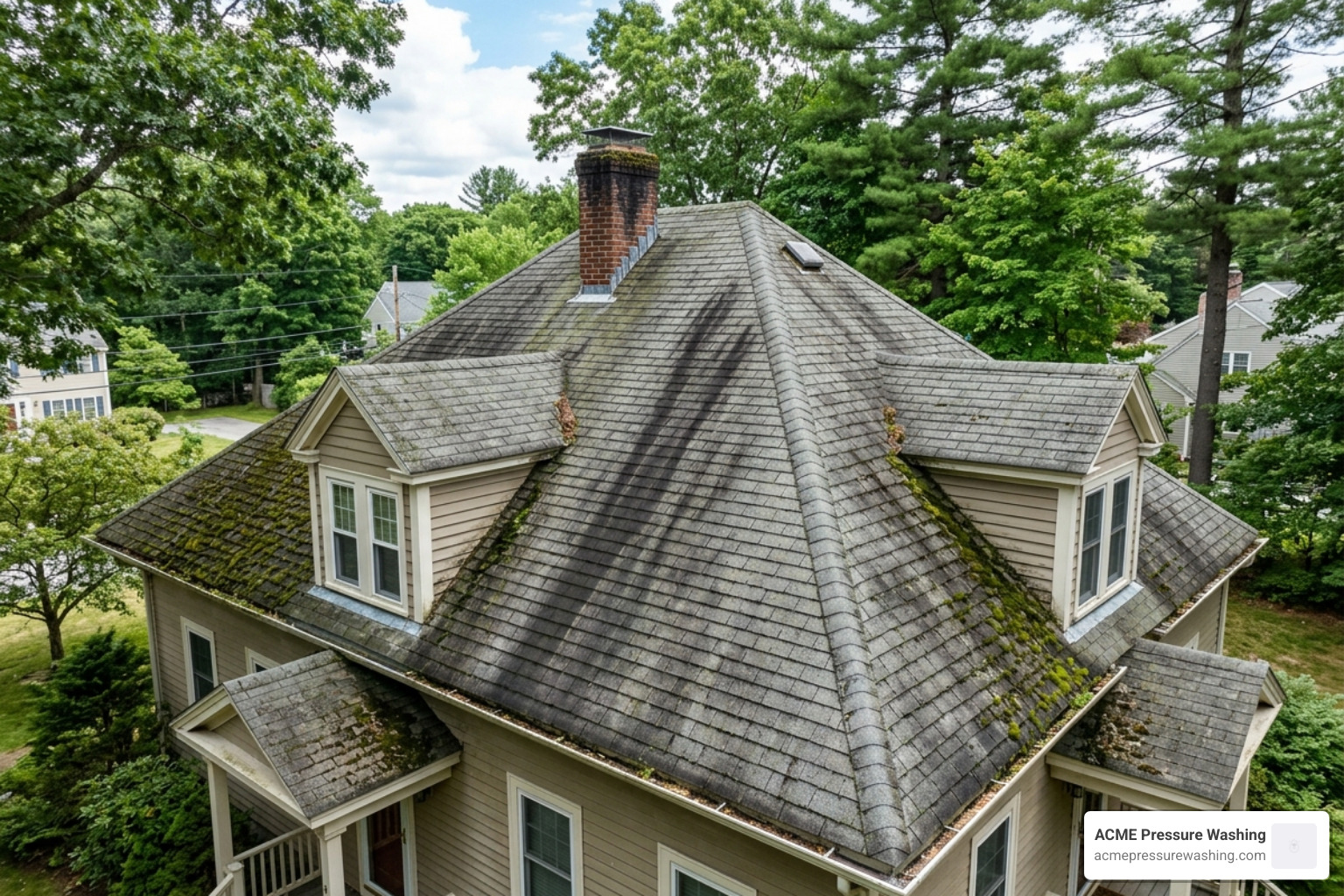
Asphalt shingle roof cleaning is one of the most important — and most overlooked — parts of home maintenance in Merrimack, NH.
Here’s a quick answer for those who want it fast:
How to clean asphalt shingles safely:
- Remove loose debris with a leaf blower or soft broom
- Apply a diluted cleaning solution (bleach-water mix or oxygen-based cleaner) with a low-pressure sprayer
- Let it sit for 15–20 minutes
- Rinse gently from top to bottom with a garden hose
- Never use a pressure washer — it strips protective granules and voids warranties
Now, here’s why this matters for your home specifically.
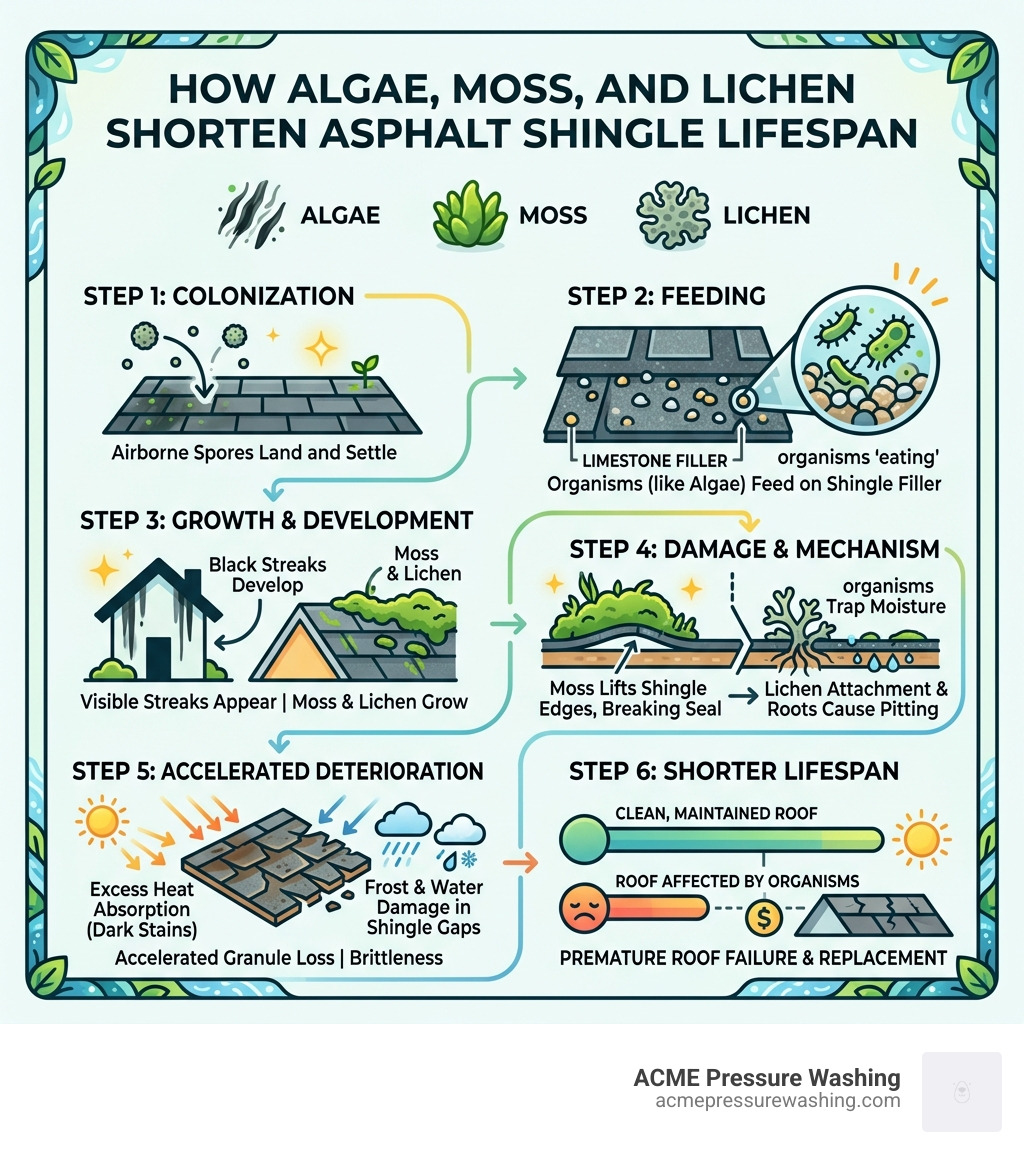
Those dark streaks running down your roof aren’t just ugly. They’re alive. A bacteria called Gloeocapsa magma feeds on the limestone filler in your shingles, slowly eating away at the material that protects your home. Add moss and lichen into the mix, and you’ve got organisms that lift shingle edges, trap moisture, and accelerate wear.
Over 80% of homes in humid climates develop algae-related roof stains. In shaded, moisture-prone areas like parts of Merrimack, the problem is even worse — moss-related damage accounts for up to 70% of premature roof replacements.
The good news? You don’t need a new roof. You need the right cleaning method.
Understanding the Enemies of Your Asphalt Shingle Roof
If you’ve noticed black streaks on your roof, you aren’t looking at “dirt” or “soot.” You are looking at a hardy cyanobacteria called Gloeocapsa magma. This organism is remarkably clever—it travels through the air as spores and lands on your roof, where it begins to feed on the crushed limestone filler used in modern asphalt shingles.
As the algae grows, it develops a dark, pigment-rich outer coating to protect itself from UV rays. This results in those unsightly black streaks that ruin your home’s curb appeal and decrease property value. Because it thrives in shade and moisture, you’ll often see it most prominently on the north-facing side of Merrimack homes.
But algae is just the “gateway” contaminant. Once it establishes a foothold, it creates a moist environment where moss and lichen can thrive.
- Moss colonies: Unlike algae, moss is a plant with a shallow root system. It acts like a sponge, soaking up rainwater and holding it against your shingles.
- Lichen: This is a symbiotic combination of fungus and algae. It has “roots” that can actually penetrate the shingle material, causing permanent scarring.

When moss grows, it doesn’t just sit on top; it grows between and under the shingles. This causes shingle curling and lifting. Once a shingle is lifted, wind can easily catch it and blow it off, or water can wick underneath, leading to wood rot in your roof deck. Furthermore, these dark patches absorb more heat from the sun. A dirty roof can be significantly hotter than a clean one, driving up your summer cooling costs and causing the asphalt to become brittle and crack prematurely. To learn more about the specifics of these growths, you can check out How to Clean Roof Shingles the Right Way.
The Dangers of DIY Asphalt Shingle Roof Cleaning
We understand the temptation to grab a ladder and a bucket of bleach on a Saturday morning. However, asphalt shingle roof cleaning is one of the most hazardous DIY tasks a homeowner can undertake.
First, there is the physical risk. Each year, over 50,000 people are injured from falls while cleaning or maintaining their roofs. A wet roof covered in soapy cleaning solution is essentially a giant slip-and-slide. Professional crews use specialized fall-protection harnesses and slip-resistant footwear for a reason—it’s dangerous up there.
Beyond personal safety, there is the risk to your property:
- Granule Loss: One of the most common DIY mistakes is using too much pressure or aggressive scrubbing. Asphalt shingles are coated in ceramic granules that protect the underlying bitumen from UV damage. If you scrub these off, you are effectively “balding” your roof, which can reduce its lifespan by 25% or more.
- Chemical Runoff: Professional-grade cleaners are effective, but they must be managed. If a DIYer sprays a high concentration of bleach without properly saturating the surrounding landscape, they can kill expensive bushes, flowers, and even grass.
- Warranty and Insurance Issues: Many shingle manufacturers, such as GAF or Owens Corning, have specific guidelines for maintenance. Using unapproved methods (like a pressure washer) can void your manufacturer’s warranty. Additionally, if an insurance adjuster sees signs of neglect or improper cleaning, it could complicate future claims.
| Risk Factor | DIY Cleaning | Professional Soft Washing |
|---|---|---|
| Safety | High risk of falls/injury | Trained pros with safety gear |
| Shingle Health | Risk of granule loss/scarring | Gentle, no-damage approach |
| Effectiveness | Often misses roots/spores | 100% kill rate of organisms |
| Landscape | High risk of plant damage | Pre-wetting and protection used |
| Cost | Cheap (unless repairs needed) | Fixed service fee |
| Warranty | May void manufacturer warranty | Maintains warranty compliance |
Research shows that over 25% of DIY roof cleaning attempts result in damage to shingles, costing homeowners an average of $1,000 in repair costs. When you consider that a professional clean can extend the lifespan of your shingles by up to 30%, the “savings” of DIY often disappear. For more on the technical risks of high pressure, see our guide on pressure-washing-roofs.
Why Soft Washing is the Best Method for Asphalt Shingle Roof Cleaning
At ACME Pressure Washing, we don’t “pressure wash” roofs—we soft wash them. There is a massive difference. While a standard pressure washer can blast water at 3,000 PSI or more, soft washing utilizes a specialized system that operates at under 500 PSI—about the same pressure as a strong garden hose.
Soft washing relies on chemistry rather than brute force. We use a customized blend of biodegradable cleaners, including sodium hypochlorite (the industry standard recommended by the Asphalt Roofing Manufacturers Association) and eco-friendly surfactants. This solution is gently misted onto the roof, where it dwells and kills the algae, moss, and lichen at the root level.
This is the only method that provides a “root-level disinfection.” If you just blast away the surface algae with water, the microscopic spores remain in the pores of the shingle, and the black streaks will return within months. Soft washing ensures the organisms are actually dead, keeping your roof cleaner for much longer. You can see the dramatic results of this method in our gallery-roof-pressure-washing.
For a deeper dive into the technical steps, refer to A Step-by-Step Guide to Cleaning Asphalt Shingles.
The Step-by-Step Process for Asphalt Shingle Roof Cleaning
When we arrive at your Merrimack home, we follow a strict protocol to ensure both the roof and your property are protected:
- Landscape Protection: This is our first priority. We thoroughly saturate all nearby plants, shrubs, and grass with plain water. This creates a “buffer” so that any cleaning solution runoff is diluted and doesn’t harm your greenery.
- Gutter and Debris Clearing: We clear gutters to ensure the cleaning solution can flow freely and remove any loose leaves or sticks from the roof surface using a blower or soft brush.
- Solution Application: Using our low-pressure system, we apply the cleaning solution from the top down. We ensure even coverage, paying special attention to the heavily stained north-facing slopes.
- Dwell Time: We allow the solution to sit (dwell) for 15 to 20 minutes. You can actually see the black streaks disappear as the algae is neutralized.
- Gentle Rinse: We perform a final, low-pressure rinse to wash away the dead organic matter and cleaning residue.
- Final Inspection: We walk the perimeter to ensure the roof is spotless and give the landscaping one last deep soak to ensure the soil pH remains balanced.
Average Costs and Frequency for Asphalt Shingle Roof Cleaning
How much should you expect to invest in asphalt shingle roof cleaning? Based on internet data and regional averages in New Hampshire, professional roof cleaning generally costs between $0.20 and $0.90 per square foot.
For a typical home, this results in a wide price range from $200 to $2,500, depending on the size of the roof, the steepness (pitch), and the severity of the moss or algae growth. A small, single-story ranch with light staining will be on the lower end, while a large, multi-story home with heavy moss carpets will require more time and product.
As for frequency, most homes in the Merrimack area should be cleaned every 1 to 3 years. If your home is surrounded by mature trees or is in a particularly humid, shaded spot, you may need an annual touch-up. Not only does this keep the roof looking new, but it can also lower attic temperatures by over 10°F in the summer, leading to energy savings of 10-20%.
Long-Term Prevention and Maintenance Strategies
Once your roof is clean, you want to keep it that way. Here are the best ways to prevent the “live fungus garden” from returning:
- Zinc or Copper Strips: Installing these metal strips along the ridge of your roof is a highly effective long-term strategy. When it rains, the water hits the metal and releases ions that are toxic to algae and moss. These ions wash down the roof, creating an environment where spores cannot take root.
- Trim Those Branches: Algae and moss love shade. By trimming back overhanging tree branches, you allow more sunlight to hit the shingles and improve airflow, which helps the roof dry out faster after rain.
- Gutter Maintenance: Clogged gutters contribute to 40% of water-related roof failures. When water backs up, it keeps the edge of the roof damp, inviting moss and rot. Keep them clear!
- Annual Inspections: A quick look once a year can catch a small patch of moss before it becomes a roof-wide infestation.
Frequently Asked Questions about Roof Maintenance
Does cleaning an asphalt shingle roof extend its lifespan?
Absolutely. Regular cleaning can extend the lifespan of your shingles by up to 30%. By removing moss and lichen, you prevent moisture from being trapped against the shingles and stop “root” structures from causing wood rot in the roof deck. It is much cheaper to clean a roof every few years than it is to pay for a $15,000 replacement a decade earlier than expected.
Can you use a pressure washer on asphalt shingles?
No. High-pressure washing is the fastest way to destroy an asphalt roof. It strips away the protective granules, forces water underneath the shingles, and can even tear the shingles themselves. Almost all manufacturers warn against this, and doing so will likely void your warranty. Soft washing is the only industry-approved method.
Are commercial spray-and-leave products effective?
Products like Wet & Forget or 30 Seconds can be effective for light maintenance, but they work very slowly—sometimes taking months or several rain cycles to show results. For heavy black streaks or thick moss, these consumer-grade products often lack the “punch” needed for a total kill. Professional-grade soft washing provides instant results and a much deeper clean.
Conclusion: Trust the Merrimack Experts
Your roof is the most expensive “shield” your home has. Don’t let algae and moss eat away at your investment. At ACME Pressure Washing, we bring over 38 years of experience to every job. We live and work right here in Merrimack, NH, and we understand the specific challenges our New England climate poses to your home.
We take pride in using safe, customized, and eco-friendly techniques that deliver professional results without risking the integrity of your shingles or the health of your landscape. Whether you are in Amherst, Bedford, Londonderry, or right here in Merrimack, we are ready to help your home shine again.
Schedule your professional Merrimack roof cleaning today and give your roof the care it deserves!
