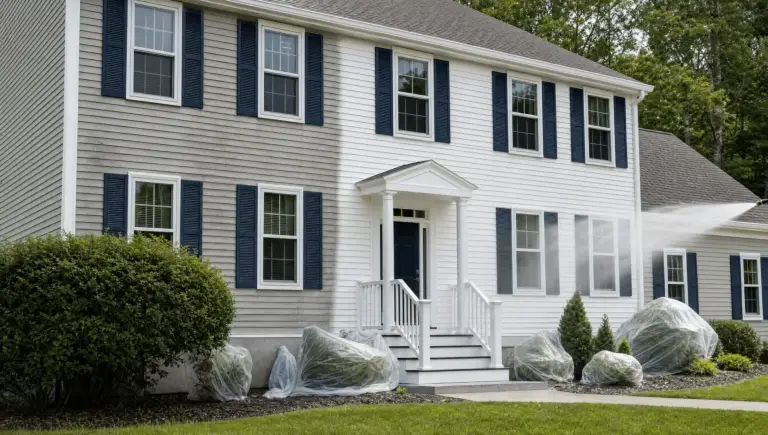
Can You Power Wash Shingles? Risks and Safer Alternatives

Is Power Washing Shingles Safe? Here’s What You Need to Know First
Power washing shingles is almost always a bad idea — and for most roof types, it can cause serious, costly damage.
Quick answer:
- Power washers operate at 1,500–4,000 PSI — up to 40x the force of a garden hose
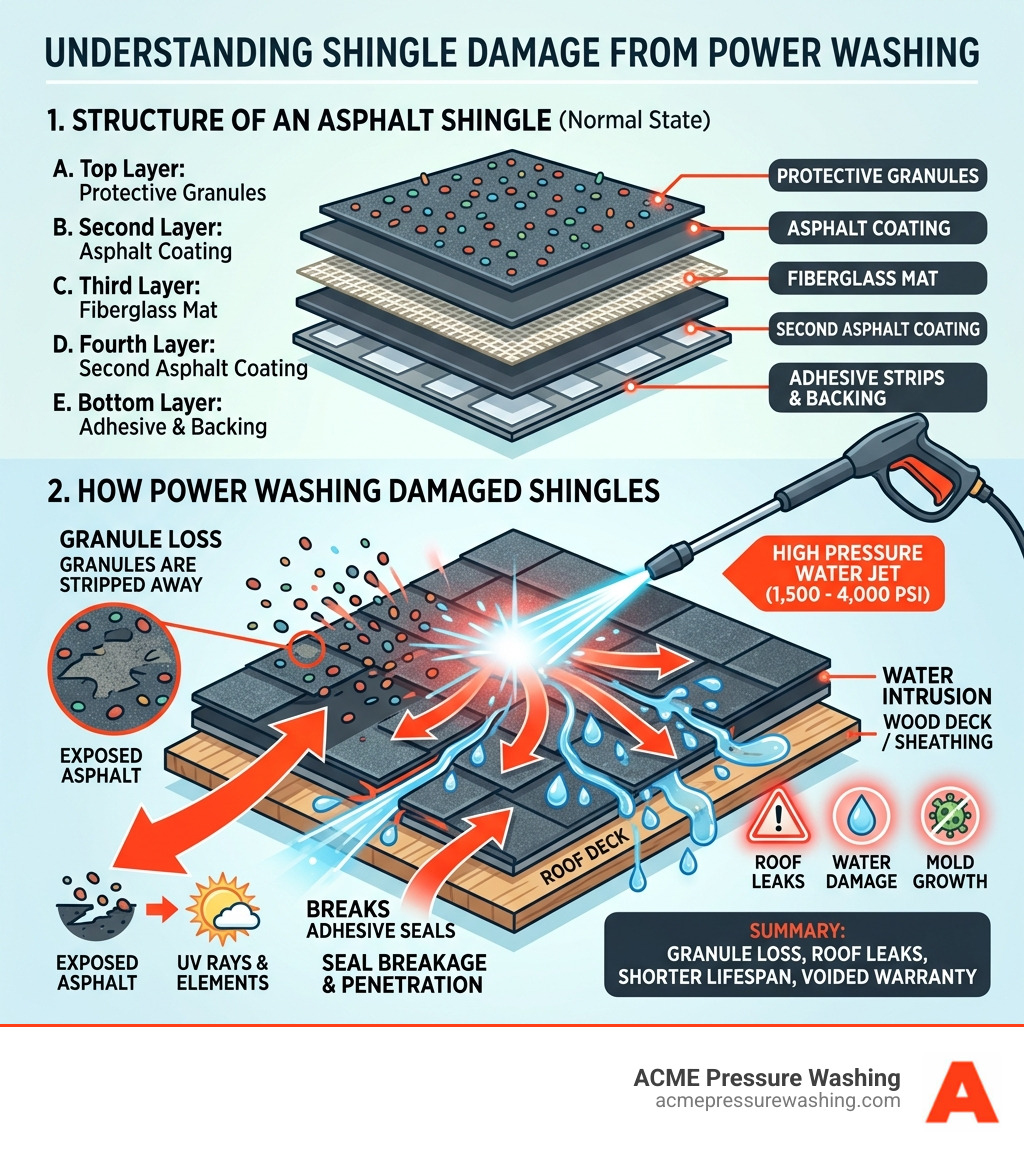
- That pressure strips protective granules, breaks seals, and forces water under shingles
- Both asphalt and cedar shingles are too delicate for high-pressure cleaning
- Many shingle manufacturers will void your warranty if power washing is used
- The safe alternative is soft washing — low pressure (100–500 PSI) plus biodegradable cleaning solutions
If you’re a homeowner in Merrimack, Nashua, or anywhere else in New Hampshire, you’ve probably looked up at a streaky, dark roof and thought: “Can I just blast that clean with my pressure washer?”
It’s a completely natural reaction. Power washing is deeply satisfying to watch. And your roof does need cleaning — algae, moss, and grime are real threats to shingle lifespan.
But here’s the problem: your roof is not a driveway. The same pressure that strips grease off concrete can strip the protective granules right off your shingles — leaving the underlying asphalt exposed to UV rays, moisture, and New Hampshire’s freeze-thaw cycles.
The damage often isn’t visible right away. By the time you notice leaks or crumbling shingles, the harm is already done — and your warranty may already be voided.
This guide covers exactly what goes wrong when you power wash shingles, why manufacturers warn against it, and what professionals use instead to safely clean and protect your roof.
Discover more about power washing shingles:
The Hidden Dangers of Power Washing Shingles
When we talk about power washing shingles, we are talking about a high-stakes gamble with your home’s most important defense. In towns like Bedford and Londonderry, we often see the aftermath of “satisfying” DIY projects that turned into “financial nightmares.” The primary issue is that shingles—whether asphalt or cedar—are designed to shed water that falls from the sky, not to withstand a concentrated jet of water traveling at thousands of pounds per square inch (PSI).
Standard consumer pressure washers typically produce between 1,500 and 3,000 PSI. To put that in perspective, a standard garden hose operates at around 100 PSI. Blasting your roof with that much force is akin to using a sandblaster on a delicate painting.
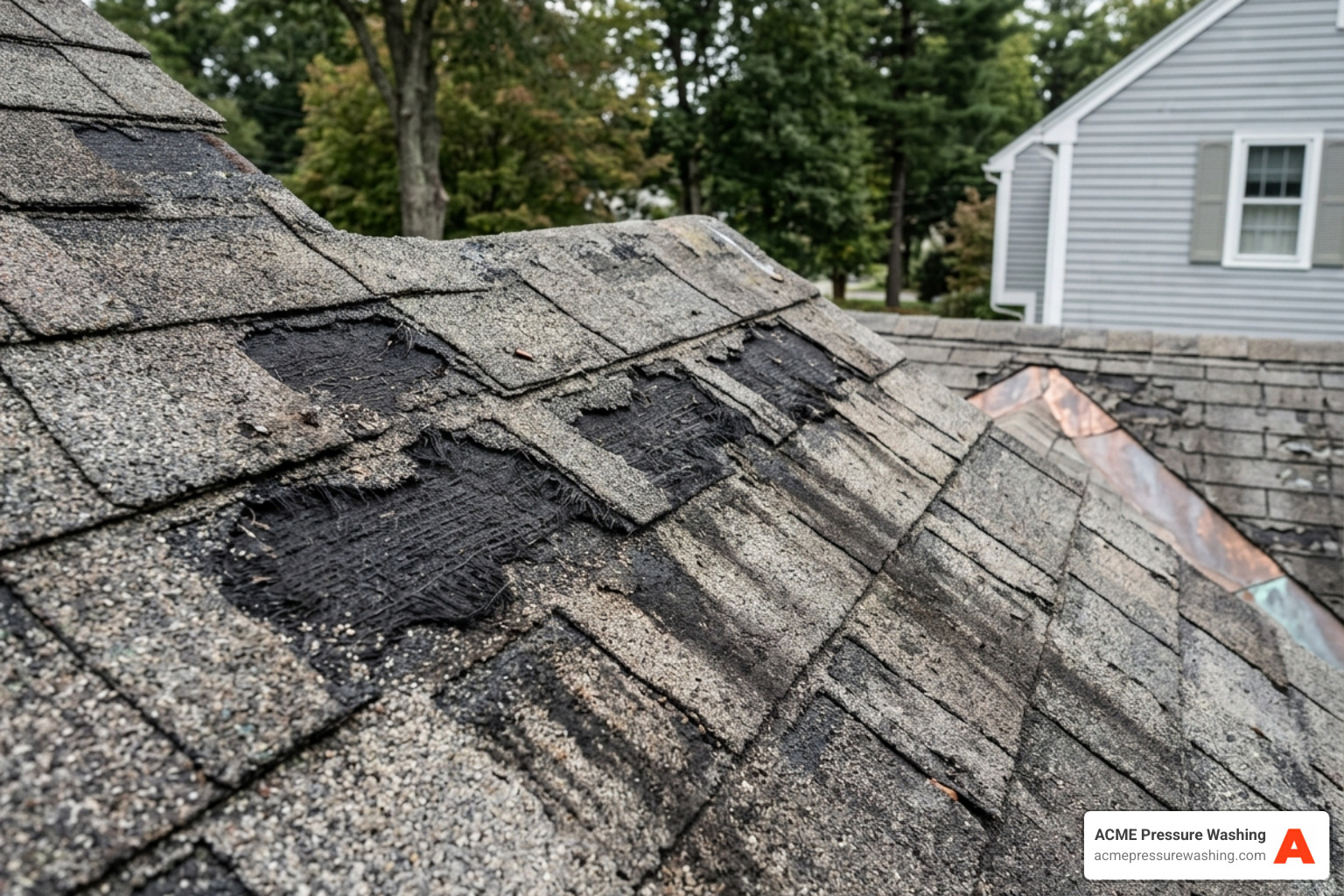
The risks of Pressure Washing Roofs include:
- Granule Loss: Stripping away the protective outer layer of asphalt shingles.
- Water Intrusion: Forcing water under the shingles and into the roof deck.
- Mold and Mildew: Creating damp pockets in your attic and insulation that lead to rot.
- Seal Failure: Breaking the adhesive bonds that keep shingles attached during high winds.
| Water Source | Typical PSI | Effect on Shingles |
|---|---|---|
| Garden Hose | 60 – 100 PSI | Safe for rinsing |
| Soft Wash System | 100 – 500 PSI | Industry standard for cleaning |
| Consumer Pressure Washer | 1,500 – 3,000 PSI | High risk of damage |
| Industrial Power Washer | 3,000+ PSI | Guaranteed destruction |
According to Riverview Pressure Cleaning, high-pressure washing reduces the UV protection and fire resistance of your roof by removing the ceramic-coated granules.
Why Power Washing Shingles Strips Protective Granules
Asphalt shingles are engineered with a specific anatomy. The core is usually fiberglass or organic felt, which is saturated with bitumen (asphalt) for flexibility and waterproofing. The outermost layer consists of ceramic-coated granules. These granules aren’t just for color; they provide critical UV protection and reflect sunlight to keep your home cool in Manchester.
When you use high pressure, you physically dislodge these granules. This is often called “asphalt erosion.” Once the granules are gone, the bitumen is exposed to the sun’s harsh rays, causing it to dry out, crack, and curl prematurely. This process is irreversible. For more details on protecting this layer, see our guide on Roof Shingle Moss Cleaning: How to Avoid Damage.
Structural Damage Caused by Power Washing Shingles
Beyond the surface, power washing shingles can compromise the structural integrity of your roof. Shingles are installed in an overlapping pattern designed to let gravity pull water downward. When a pressure washer is aimed sideways or upward—common mistakes in Nashua—water is forced under the shingles.
This high-pressure water can break the adhesive strips that bond shingles together. Once these seals are broken, your roof becomes highly vulnerable to wind uplift during New Hampshire storms. Furthermore, water forced into the roof deck can lead to hidden wood rot and mold growth that won’t be discovered until it’s a major emergency. As noted by Roof Maxx, the force of a power washer can even tear shingles completely off the roof.
Why Manufacturers Recommend Against High-Pressure Cleaning
If you are looking for a reason to put the pressure washer away, look no further than your roof’s warranty. Major manufacturers like GAF and Owens Corning have clear stances: high-pressure cleaning is a no-go. The Asphalt Roofing Manufacturers Association (ARMA) specifically recommends against the use of high-pressure equipment.
In Hollis and Amherst, many homeowners have been shocked to find that a single afternoon of DIY cleaning voided their 25-year or 50-year warranty. Manufacturers view high-pressure washing as “abuse” or “neglect” because it causes premature wear.
According to our 10 Common Questions About Roof Cleaning Service Answered, here are the most common mistakes that void warranties:
- Using a pressure washer at any PSI over 500.
- Using harsh chemicals not approved by the manufacturer.
- Scrubbing shingles with stiff-bristle brushes.
- Walking on the roof without proper equipment, causing physical shingle damage.
Soft Washing: The Industry Standard for Roof Maintenance
Since we’ve established that power washing shingles is dangerous, how do we actually get the roof clean? The answer is soft washing. This is the only method we use at ACME Pressure Washing for delicate surfaces like shingles in Derry and Auburn.
Soft washing utilizes a low-pressure delivery system (usually between 100 and 500 PSI) combined with specialized, biodegradable detergents. Instead of using brute force to “blast” away dirt, the cleaning solutions do the heavy lifting. They kill the organic growth at the root.
The main culprit behind those ugly black streaks on your roof is a cyanobacteria called Gloeocapsa Magma. This organism feeds on the limestone filler used in modern asphalt shingles. If you just pressure wash it, you might remove the surface stains, but the roots remain, and the algae will return even faster. Soft washing eliminates the bacteria entirely. If you have questions about our process or want to see if it’s right for your home, call us at +1603-883-6900.
Benefits of Soft Washing:
- Safety: It does not damage the shingle granules or break seals.
- Longevity: Because it kills the algae and moss at the root, the roof stays clean 2-3 times longer than pressure washing.
- Eco-Friendly: We use biodegradable solutions that are safe for your landscaping when handled by professionals.
- Warranty Compliant: This is the ARMA-approved method for roof maintenance.
Learn why this method is essential for your property in our article on Why Your Home Needs a Professional Manchester Soft Wash and our specific breakdown of Merrimack Roof Cleaning: Why Soft Washing Wins.
Professional Roof Cleaning Costs and Frequency in New Hampshire
Maintaining your roof is an investment in your home’s lifespan. In humid climates like we experience in Bedford, Londonderry, and Manchester, we recommend a professional soft wash every 4 to 6 years. If your home is heavily shaded or surrounded by trees, you may need it more frequently to prevent moss buildup.
Regular cleaning can extend the life of asphalt shingles to 20 or 25 years, whereas a neglected roof might need replacement in as little as 12 to 15 years.
Average Industry Pricing: All prices mentioned are average costs sourced from publicly available internet data as of April 2026 and are not the actual prices of any specific provider. Industry averages suggest a wide range of $1,000 to $5,000 depending on roof size and severity of organic growth. Factors that influence the price include:
- Roof Pitch: Steeper roofs require more safety equipment and time.
- Severity of Growth: Heavy moss or lichen takes more solution and “dwell time” to treat.
- Roof Material: While this guide focuses on shingles, we also handle metal roof cleaning, which requires different specialized solutions.
Frequently Asked Questions about Power Washing Shingles
Is power washing safe for cedar shingles?
Absolutely not. Cedar is a natural wood product, and high-pressure water will strip the wood fibers, causing the shingles to become “fuzzy” and thin. This significantly accelerates cedar decay. For cedar, we use a very gentle chemical treatment to kill mold and restore the wood’s natural pH. In rare professional cases in Nashua, a very low-pressure downward angle might be used, but for the average person, it’s a recipe for disaster.
Can I DIY my roof cleaning with a pressure washer?
We strongly advise against it. Beyond the risk of damaging your shingles, roof cleaning is dangerous work. Ladder falls are a leading cause of home maintenance injuries. Professional crews use safety harnesses, non-slip footwear, and specialized equipment that allows them to clean most roofs from the safety of the ladder or the ground. In Hollis, we’ve seen too many DIY attempts end with both a damaged roof and a trip to the emergency room.
How often should I clean my roof in New Hampshire?
As a general rule for Amherst and Derry, you should look for signs of algae streaks (black lines) or moss buildup. Most roofs benefit from a soft wash every 5 years. Preventive care is always cheaper than reactive repairs. If you see green moss or white lichen, you should schedule a cleaning immediately, as these organisms can physically lift shingles and cause leaks.
Conclusion
Your roof is the ultimate guardian of your home, and it deserves better than a high-pressure blast. While power washing shingles might seem like a quick fix, the risks of granule loss, water intrusion, and voided warranties far outweigh the temporary aesthetic gain.
At ACME Pressure Washing, we bring over 38 years of experience to every job. We utilize safe, customized, eco-friendly soft washing techniques to ensure your roof in Merrimack, Auburn, or anywhere in the New Hampshire area stays clean and functional for decades to come. Don’t risk your investment with high-pressure methods.
Ready to give your roof the care it deserves? Visit our Contact Page to get your free, no-obligation quote.
Explore our Pressure Washing Roofs service page to see how we can protect your home. We also provide: