Metal Roof Cleaning: The Ultimate Guide to Solutions and Soft Washing

Is Your Metal Roof Due for a Cleaning? Here’s What You Need to Know
Metal roof cleaning is the process of safely removing dirt, algae, moss, oxidation, and debris from a metal roof using low-pressure washing and mild, roof-safe cleaning solutions.
Quick answer — here’s how to clean a metal roof:
- Clear loose debris with a leaf blower or soft broom
- Rinse from top to bottom with a garden hose
- Apply a mild, pH-neutral cleaning solution (e.g., ¼ cup dish soap per gallon of water)
- Let it sit for 5–10 minutes, then gently scrub stubborn spots with a soft-bristle brush
- Rinse thoroughly from ridge to edge
- Inspect for any remaining stains, loose fasteners, or damage
Never use a pressure washer above 500 psi, wire brushes, bleach, or abrasive cleaners on a metal roof — these can void your warranty and damage protective coatings.
Your metal roof is one of the hardest-working parts of your home. It handles snow, rain, UV rays, and everything in between — for decades. A well-maintained metal roof can last anywhere from 40 to 70 years.
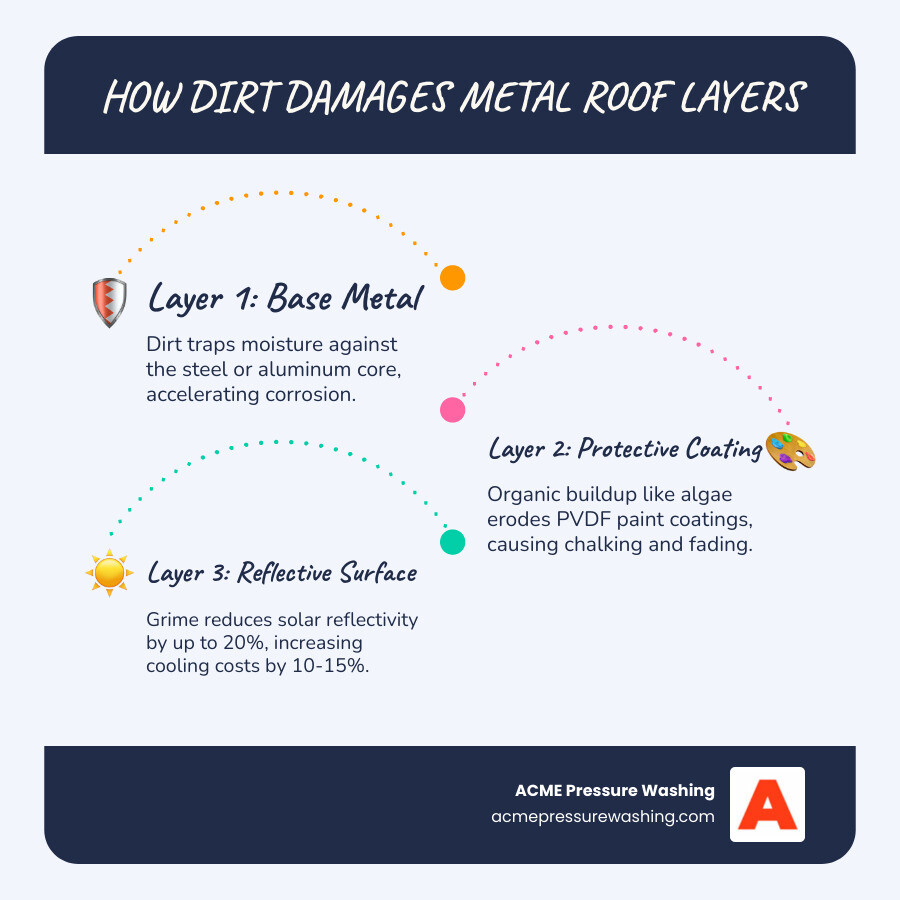
But here’s the catch: without regular cleaning, dirt and organic matter build up on the surface. That buildup traps moisture, eats away at protective coatings, and quietly shortens the life of your roof. It also reduces the roof’s ability to reflect sunlight — which means higher cooling costs for your home.
The good news? Keeping your metal roof clean is simpler than most homeowners think — as long as you use the right methods.
Why Regular Metal Roof Cleaning is Essential for Longevity
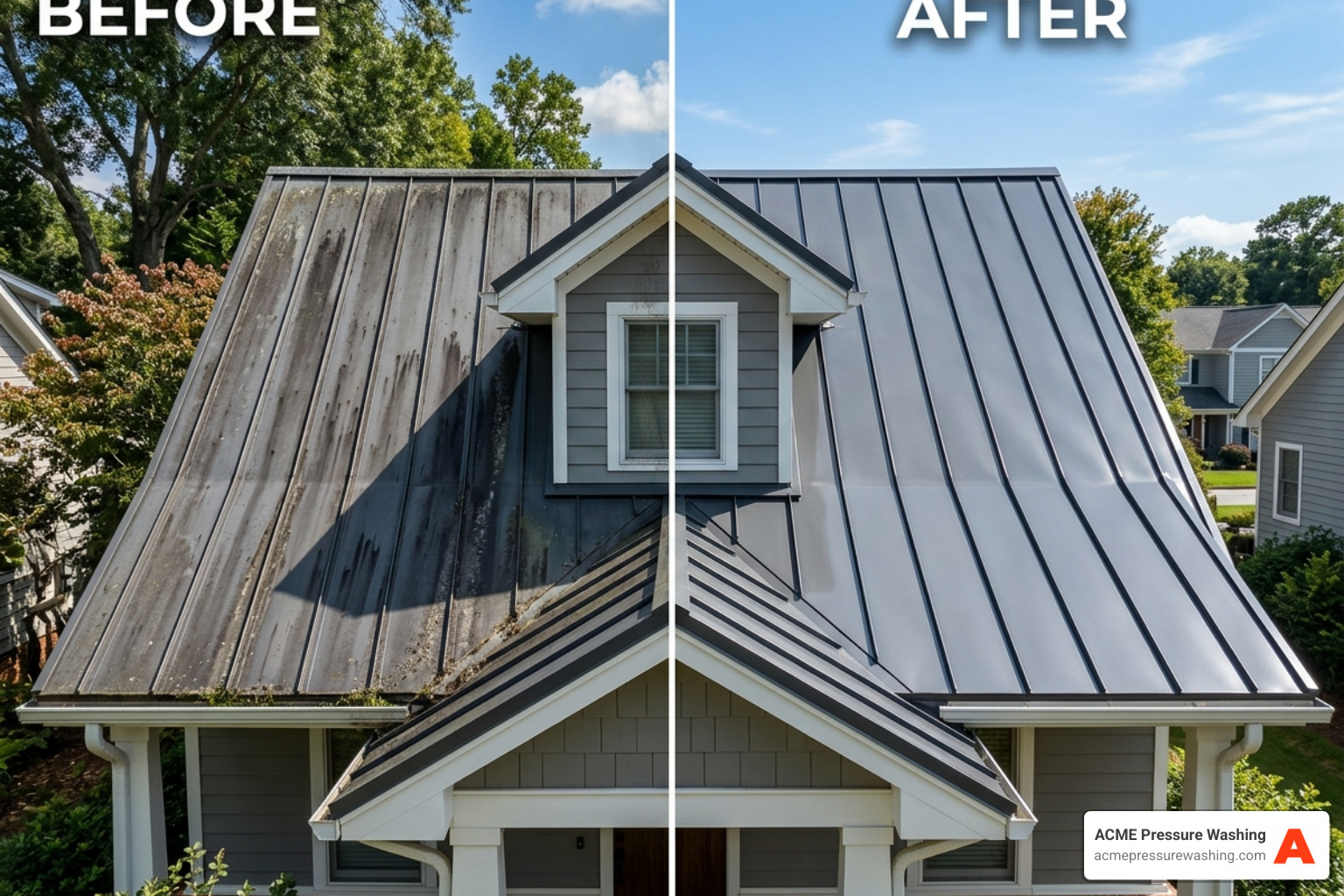
We often hear folks in Merrimack and Londonderry ask, “It’s metal, why does it need washing?” It’s a fair question! While metal is incredibly durable, it isn’t invincible. Think of your roof like a car; you wouldn’t go five years without washing your truck, right? Your roof deserves the same respect.
Lifespan Extension (The 40-70 Year Goal)
A high-quality steel or aluminum roof is designed to last a lifetime—often 40 to 70 years. However, that lifespan assumes the protective coatings remain intact. When dirt, bird droppings, and leaves sit on the surface, they create a “damp microclimate.” This trapped moisture is the enemy of metal, eventually leading to corrosion and rust. Regular metal roof cleaning breaks this cycle, ensuring the metal stays dry and protected.
Solar Reflectivity and Cooling Costs
One of the best perks of a metal roof is its energy efficiency. Factory-applied finishes like PVDF (polyvinylidene fluoride) are designed to reflect UV rays. When your roof is covered in a layer of New Hampshire pollen, dust, or soot, it loses that reflectivity. Instead of bouncing heat away, a dirty roof absorbs it, cranking up your AC bills in the summer. Keeping it clean keeps your wallet full.
Warranty Preservation
This is a big one. Many manufacturers, including DECRA, require documented maintenance to keep your warranty valid. If the finish fails because it was buried under three inches of pine needles for five years, the manufacturer might not cover the claim. According to How to Clean a Metal Roof the Right Way | Lowe’s, removing organic growth like moss and mold is critical to preventing permanent damage to these specialized coatings.
Safe Methods and Tools for Cleaning Your Metal Roof
When it comes to metal roof cleaning, we have a golden rule: Soft washing is the only way to go. High-pressure washing is the fastest way to turn a 50-year roof into a 20-year liability.
The 500 PSI Limit
Most metal roof manufacturers, particularly those making stone-coated products like DECRA, explicitly state that water pressure should never exceed 500 psi. For context, a standard home pressure washer often pushes 2,000 to 3,000 psi. High pressure can force water under the seams, dent the metal, or strip away the protective granules. We recommend using a garden hose or a dedicated soft-wash system that relies on chemistry rather than brute force.
Essential Safety Gear
Cleaning a roof is inherently dangerous, and metal roofs are notoriously slippery—even more so when wet! If you are attempting a DIY clean in areas like Bedford or Amherst, you need the right gear:
- Non-slip shoes: Rubber-soled shoes with excellent traction are a must.
- Safety harness: Never step onto a roof without a fall-arrest system anchored properly.
- Soft-bristle brushes: Think “car wash brush,” not “deck scrub brush.”
- Safety goggles and gloves: To protect against cleaning solutions.
- A spotter: Never work on a roof alone.
Check out our Gallery Roof Pressure Washing to see the professional equipment and safety setups we use to ensure every job is done without a hitch.
Choosing the Right Metal Roof Cleaning Products
The “secret sauce” of a successful clean is the solution you use. You want something that breaks down grime without reacting with the metal.
- Mild Detergent: A simple mix of ¼ cup pH-neutral dish soap (like Dawn) or laundry detergent per gallon of water is usually enough for light dirt.
- Eco-Friendly Options: Products like Simple Green or oxygen-based cleaners are great for homeowners worried about their landscaping in Milford or Hollis.
- What to Avoid: Stay away from bleach unless you have a serious algae problem (and even then, use it sparingly and diluted). Never use “miracle” cleaners that contain hydrofluoric acid or high concentrations of sodium hydroxide, as these can etch the paint.
For a deeper dive into why we choose specific low-pressure techniques, read Merrimack Roof Cleaning Why Soft Washing Wins.
Step-by-Step Guide to DIY Metal Roof Cleaning
If your roof has a low pitch and you feel comfortable with the height, here is our recommended workflow:
- Debris Removal: Use a leaf blower or a soft broom to clear away sticks, leaves, and those pesky New Hampshire pine needles. Pay close attention to the gutters and valleys where “dams” tend to form.
- Pre-Rinse: Using a garden hose, rinse the roof from the ridge (top) down to the eaves. This removes loose dust and cools the metal so your cleaning solution doesn’t dry too fast.
- Apply Solution: Use a pump sprayer to apply your mild detergent. Work in small sections so the soap doesn’t dry.
- Dwell Time: Let the solution sit for 5–10 minutes. This “dwell time” allows the chemicals to lift the dirt.
- Gentle Scrubbing: For stubborn spots like bird droppings or tree sap, use a soft-bristle brush on a long pole.
- Final Rinse: Rinse thoroughly. If soap residue stays on the roof, it can create a film that actually attracts more dirt later.
For more technical details on the washing process, see our guide on Pressure Washing Roofs.
Addressing Specific Issues: Algae, Moss, and Oxidation
Sometimes soap and water aren’t enough. Here’s how to handle the “tough stuff” we often see in the humid, wooded areas of Derry and Goffstown.
Black Streaks (Algae)
Those ugly black streaks are usually Gloeocapsa magma, a type of hardy algae. While it doesn’t “eat” metal like it does asphalt shingles, it still traps moisture. A solution of 1 part white vinegar to 3 parts water can often do the trick, or a very diluted bleach solution if the manufacturer allows it.
Moss and Lichen
Moss is dangerous because its roots (rhizoids) can find their way into the seams of your metal panels. Once they get in, they can lift the panels and cause leaks. We recommend a specialized moss remover like “Wet & Forget” or a similar no-rinse formula.
Oxidation and Chalking
Over time, UV exposure causes the paint resin to break down, leaving a white, powdery residue known as “chalking.” You can test for this by swiping your finger across the dry roof. If it comes away white, the paint is degrading. While cleaning can remove the powder, it won’t fix the paint. In these cases, a professional cleaning followed by a specialized metal roof coating might be necessary.
Cleaning Solutions Comparison Table
| Issue | Recommended Solution | Tool |
|---|---|---|
| Light Dirt/Pollen | Water + Mild Dish Soap | Garden Hose / Soft Cloth |
| Algae/Mildew | 1/3 cup Laundry Soap + 1 qt Bleach + 3 qts Water | Pump Sprayer / Rinse |
| Moss/Lichen | Specialized Moss Killer (Zinc-based) | Soft Brush |
| Grease/Oil/Tar | Isopropyl Alcohol or Mineral Spirits | Spot Clean with Rag |
| Rust Stains | Oxalic Acid (diluted) | Soft Sponge |
Professional vs. DIY: Safety and Cost Considerations
We’ll be honest: metal roof cleaning is one of the most dangerous DIY tasks you can take on. Metal is incredibly slick, and one wrong step can be life-altering.
Why Hire a Pro?
Professional teams have the insurance, fall-protection gear, and specialized eco-friendly chemicals to get the job done without damaging your home. For example, DECRA roofs have specific temperature limits (do not exceed 160°F) and pressure limits that most homeowners might accidentally overlook.
What Does it Cost?
Based on internet data, the cost of professional roof cleaning can vary wildly depending on the size and steepness of your roof.
- Average DIY Cost: $25 – $100 (for soap and safety gear).
- Average Professional Range: $350 – $2,500+. (Note: The high end reflects large, complex, or multi-story roofs that require specialized lift equipment or extensive moss removal).
If you’re weighing the options, How to Clean a Metal Roof in 8 Steps provides a great breakdown of why the investment in a professional often pays for itself in safety and roof longevity.
Frequently Asked Questions about Metal Roof Maintenance
How often should I clean my metal roof?
We recommend a semiannual schedule: once in the spring to wash away winter grime and once in the fall to clear out leaves and debris. If your home in Wilton or New Boston is heavily shaded by trees, you might need an extra check-up in mid-summer to prevent moss growth.
Can I use a high-pressure washer on my metal roof?
No! We cannot stress this enough. High pressure can cause water intrusion, dent the panels, and strip the paint. Always stick to the 500 psi limit. If you can’t get it clean with a garden hose and a brush, it’s time to call a professional who uses soft-washing techniques.
What chemicals should I avoid when cleaning?
To protect your warranty and the metal itself, never use:
- Wire brushes or steel wool: These will scratch the finish and lead to rust.
- Paint thinners or acetone: These can dissolve the protective coatings.
- Abrasive scouring powders: These act like sandpaper on your roof’s “skin.”
- Copper-based cleaners: These can cause a galvanic reaction with steel or aluminum, leading to rapid corrosion.
Conclusion
A metal roof is a fantastic investment for any New Hampshire homeowner, but it’s not a “set it and forget it” system. Regular metal roof cleaning is the key to maintaining that beautiful curb appeal, keeping your energy bills low, and ensuring your roof actually lasts the 50+ years it was designed for.
At ACME Pressure Washing, we bring over 38 years of experience to every job. We understand the unique climate challenges of the Merrimack Valley, from the heavy snows in Mont Vernon to the humid summers in Nashua. We use safe, customized, and eco-friendly soft-washing techniques that protect your roof, your landscaping, and your warranty.
Whether you’re in Manchester, Londonderry, or anywhere else in our service area, we’re here to help your home look its best.
Ready to give your roof the professional care it deserves? Schedule your professional metal roof cleaning today and let us handle the heights so you can enjoy the results!