Why You Need to Clean Moss Off Roof Shingles Before It’s Too Late
If you need to clean moss off roof shingles, the safest recommendation is to have the roof evaluated and treated by a professional New Hampshire roof cleaning company rather than attempting a DIY removal.
Safe Professional Approach to Clean Moss Off Roof Shingles
- Inspect the roof from the ground first to identify moss growth on shaded and north-facing slopes.
- Protect landscaping and surrounding surfaces before any treatment is applied.
- Apply an appropriate low-pressure roof cleaning treatment designed to kill moss at the root.
- Rinse or allow dwell time based on the product and roof condition.
- Avoid aggressive brushing or pressure washing, which can damage asphalt shingles.
- Prevent regrowth by reducing shade and improving ongoing roof maintenance.
- Hire a professional if the roof is steep, multi-story, or has widespread growth.
That green fuzz creeping across your shingles might look harmless — even charming to some. It’s not.
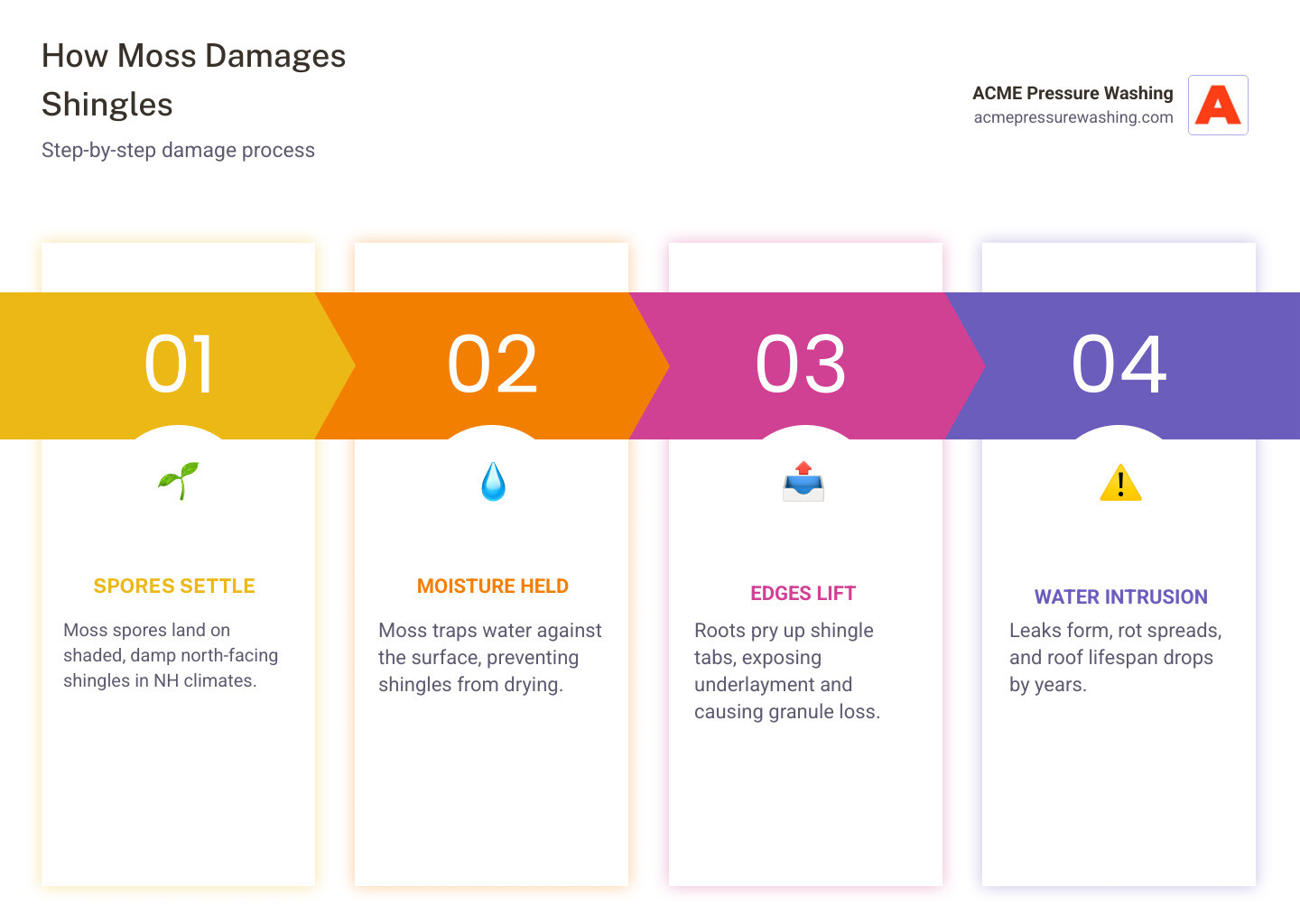
Moss is a non-vascular plant that absorbs water through its leaves rather than roots. That means it holds moisture directly against your shingles, around the clock. Over time, it works its way under shingle edges, prying them up and exposing the underlayment to water intrusion, rot, and leaks.
In New Hampshire’s damp climate — especially in towns like Merrimack, Manchester, Bedford, and Amherst — roofs do not get the long dry spells needed to naturally fight off biological growth. North-facing slopes and tree-shaded sections are the worst offenders. Once moss gets a foothold, it does not stop on its own.
And the cost of ignoring it? Significant. Light moss coverage can shave years off your roof’s lifespan. Heavy coverage can accelerate deterioration even further and push a property owner toward a full replacement costing thousands.
The sooner you act, the easier and safer the solution usually is.
I’m Lionel Greenwood, owner of ACME Pressure Washing — serving New Hampshire property owners since 1988, including roof cleaning projects in Merrimack, Manchester, Bedford, and Amherst. Over nearly four decades, I’ve seen how quickly moss can turn a healthy roof into a costly repair bill, and I’ve helped clients clean moss off roof shingles safely before the damage got out of hand.
In addition to roof cleaning, ACME Pressure Washing provides related exterior cleaning services across New Hampshire, including house washing, commercial pressure washing, and fleet washing.
For fast help or to schedule service, call +1603-883-6900 or request a quote through our Online Quote Form.
Glossary for clean moss off roof shingles:
Identifying Roof Invaders and Why You Must Clean Moss Off Roof Shingles
Before any treatment is scheduled, you need to know exactly what is growing on the roof. Not all green, gray, or black discoloration is the same, and proper identification helps determine the safest professional cleaning method. On asphalt shingle roofs in Southern New Hampshire — including Bedford, Manchester, Merrimack, and Amherst — we typically see three main culprits:
1. Algae (Gloeocapsa Magma)
If you see dark black or brown streaks running down your roof, you are likely dealing with Gloeocapsa magma, a type of blue-green algae. Algae spores are carried by the wind and animals, allowing the problem to spread throughout neighborhoods in New Hampshire.
While algae often begins as an appearance issue, it can also feed on the limestone filler used to manufacture modern asphalt shingles. In humid conditions on roofs without algae-resistant granules, these black streaks can appear in only a few years.
2. Lichen
Lichen is a symbiotic partnership between algae and fungi. It presents as crusty, light green, or gray-green patches that look almost like tiny leaf structures clinging to the shingles. Lichen is especially stubborn because it bonds aggressively to the shingle’s mineral granules. Improper scraping can pull those protective granules off and permanently damage the roof.
3. Moss
Unlike algae, moss is a complex, non-vascular plant. It thrives in cool, damp, shaded environments, which is why roofs with significant tree canopy coverage often have chronic moss issues.
Moss is uniquely destructive to asphalt shingles for several reasons:
- Severe Moisture Retention: Moss behaves like a sponge, holding substantial water against the roof surface and slowing drying.
- Shingle Lifting and Curling: As moss grows, its root-like structures can pry up shingle edges, making the roof more vulnerable during storms.
- Freeze-Thaw Damage: During New Hampshire winters, trapped moisture can freeze and expand, worsening cracks and openings that allow water intrusion.
Proper identification matters. A mild algae stain may require a different treatment than thick moss accumulation or bonded lichen. In Merrimack, Manchester, Bedford, and Amherst, the safest course is usually a professional low-pressure roof cleaning process rather than any DIY removal attempt. For a deeper look at identifying these growths without harming your roof, check out What You Need to Know to Clean and Prevent a Mossy Roof – This Old House and read our guide on Roof Shingle Moss Cleaning: How to Avoid Damage.
High-Level Methods to Clean Moss Off Roof Shingles Safely
If you are considering how to clean moss off roof shingles, the best recommendation is to hire a trained professional. Roof work is hazardous, chemical handling creates additional risk, and improper cleaning can permanently damage asphalt shingles.
When treatment is necessary, the process should stay high-level and safety-focused:
Step 1: Roof Evaluation
A professional should inspect the roof condition, the extent of the moss growth, roof pitch, access points, and any existing damage before work begins.
Step 2: Site and Landscape Protection
Before any roof treatment is applied, surrounding plants, siding, walkways, and other surfaces should be protected and pre-rinsed as needed to reduce the impact of runoff.
Step 3: Low-Pressure Treatment
Moss should be treated with an appropriate low-pressure roof cleaning solution applied carefully to kill the growth at the root without damaging the shingles.
Step 4: Limited Physical Removal Only When Appropriate
If any physical removal is needed, it should be gentle and controlled. Aggressive brushing, scraping, or any process that strips shingle granules should be avoided.
Step 5: Ongoing Prevention
Long-term prevention may include trimming overhanging branches, improving sunlight exposure where possible, and scheduling maintenance cleanings.
For New Hampshire properties in Merrimack, Manchester, Bedford, and Amherst, professional service is the safest option for roof surfaces as well as related exterior cleaning needs. ACME Pressure Washing also provides house washing, commercial pressure washing, and fleet washing throughout New Hampshire. For detailed information, refer to How to Remove Moss from Roof Shingles – IKO and read our expert breakdown on How to Clean Roof Moss the Right Way.
Why High-Pressure Washing is a Costly Mistake for Shingles
If there is one absolute rule in roof maintenance, it is this: Never use a pressure washer on asphalt shingles.
While it might be tempting to blast the moss away with high pressure, doing so will instantly ruin your roof and void your manufacturer’s warranty. Asphalt shingles are coated with a layer of ceramic-coated mineral granules. These granules are your roof’s primary line of defense against ultraviolet (UV) radiation, fire, and physical impact.
When high-pressure water hits these shingles:
- Granule Stripping: The intense pressure blasts the protective granules right off the asphalt mat. This exposes the underlying asphalt to the sun, causing the shingles to dry out, crack, and fail prematurely.
- Water Intrusion: High-pressure spray can easily force water upward underneath the shingle laps, soaking the underlayment and roof decking, leading to immediate indoor leaks and mold growth.
- Physical Damage: Pressure washers can easily tear shingles, rip off weakened tabs, and destroy the delicate water-shedding valleys of your roof.
The Professional Alternative: Soft Washing
At ACME Pressure Washing, we strictly adhere to the Asphalt Roofing Manufacturers Association (ARMA) guidelines by utilizing a process called soft washing.
Soft washing replaces high-pressure water with a specialized, biodegradable cleaning solution applied at incredibly low pressure (similar to the force of a gentle garden hose). The eco-friendly solution sanitizes the roof by killing moss, algae, and lichen at the root level, rather than just blasting away the surface growth.
Because the organisms are killed chemically, they naturally decompose and wash away safely over the following weeks without any abrasive scrubbing or granule loss. To understand why this method is the gold standard for New Hampshire homes in Manchester, Merrimack, and Amherst, read more about Merrimack Roof Cleaning: Why Soft Washing Wins.
Frequently Asked Questions about Roof Moss Removal
What is the best time of year to clean moss off roof shingles?
The ideal times to clean moss off roof shingles are generally late spring and early fall, when New Hampshire weather is milder and roof surfaces are safer to evaluate and treat. Extremely hot summer days can reduce product performance, while winter conditions create serious slip hazards and can make shingles more brittle.
Can bleach or vinegar be used to clean moss off roof shingles?
Various cleaning solutions are commonly discussed online, but selecting and applying the wrong product can damage shingles, nearby landscaping, and other exterior surfaces. For that reason, we strongly recommend professional roof cleaning rather than DIY chemical application.
When should I call a professional New Hampshire roof cleaning service?
You should call a professional if:
- The roof pitch is steep.
- The moss covers a meaningful portion of the roof surface.
- The building is more than one story high.
- The roof already shows signs of wear, curling, or damage.
- You want to avoid safety risks and accidental shingle damage.
According to publicly available online data and industry averages, roof moss removal can vary widely, often ranging from $1,200 to $6,000 or more, depending on roof size, accessibility, pitch, and severity of growth. These are general market averages only and are not the actual prices of ACME Pressure Washing.
For property owners in Merrimack, Manchester, Bedford, and Amherst, professional service helps ensure the roof is cleaned safely and appropriately. If you need roof cleaning or other exterior services in New Hampshire, including house washing, commercial pressure washing, or fleet washing, call +1603-883-6900 or request service through our Online Quote Form.
Conclusion
Your roof is too important to treat as a DIY project. Scraping, brushing, or pressure washing moss without the right process can lead to shingle damage, shortened roof life, and serious safety hazards.
At ACME Pressure Washing, we bring over 38 years of experience to every job. We use safe, customized, low-pressure soft washing methods designed to protect New Hampshire properties in Merrimack, Manchester, Bedford, and Amherst while addressing moss, algae, and roof staining properly.
We also provide a full range of exterior cleaning services across New Hampshire, including house washing, commercial pressure washing, and fleet washing.
Ready to schedule service?
- Get a free estimate: Fill out our Online Quote Form
How Innovative Power Washing Is Changing Exterior Cleaning
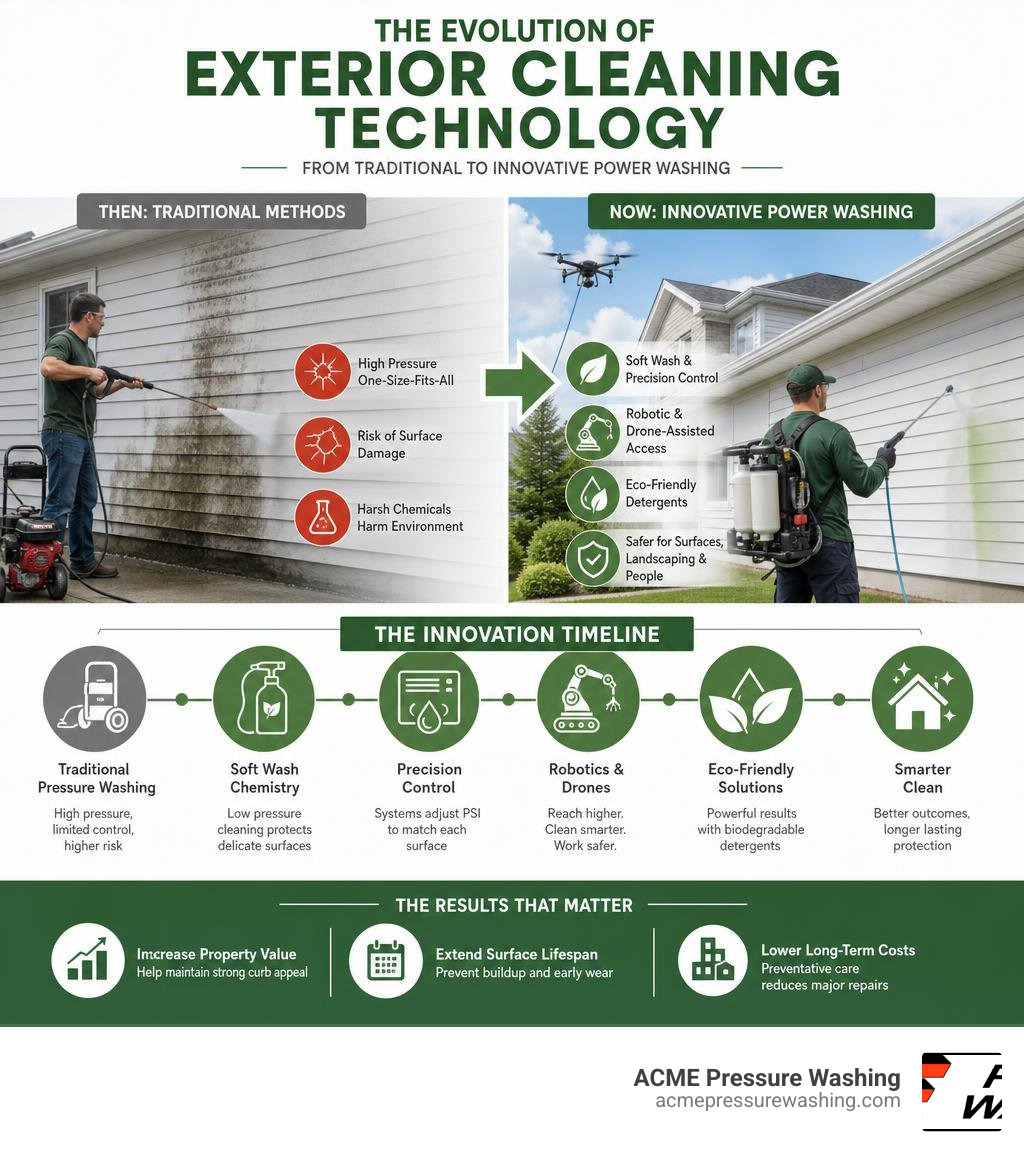
Innovative power washing has moved far beyond the simple gas-powered pressure washer most people picture. Today, it combines advanced soft wash chemistry, robotic delivery systems, and eco-friendly detergents to clean surfaces faster, safer, and more thoroughly than ever before.
Here’s what you need to know at a glance:
- Soft washing uses low pressure and biodegradable chemicals to clean delicate surfaces without damage
- High-pressure systems are now precision-controlled, matching PSI to the exact surface being cleaned
- Robotic and drone-assisted tools can reach high elevations without scaffolding or ladders
- Eco-friendly detergents remove mold, algae, and organic growth while protecting landscaping
- Regular professional cleaning can increase property value by up to 5-10% and extend surface lifespan by 5-10 years
- Commercial and HOA properties benefit from scheduled maintenance programs that reduce long-term repair costs
These advances matter whether you own a home in Merrimack, a commercial building in Bedford, or a fleet of vehicles in Derry.
The old approach — blasting every surface with maximum pressure — caused real damage. Siding cracked. Roof shingles stripped. Concrete surfaces etched. Modern exterior cleaning professionals know better now. The right method depends on the surface, the contaminant, and the goal.
I’m Lionel Greenwood, owner of ACME Pressure Washing, and after 38 years of hands-on experience I’ve watched innovative power washing evolve from brute-force blasting into a precise, science-backed discipline. In this guide, I’ll walk you through exactly what’s changed, what works, and what it means for your property.
Ready to see what modern exterior cleaning can do for your property? Call us at +1 603-883-6900 or request a free quote today.
Innovative power washing vocab to learn:
What is Innovative Power Washing?
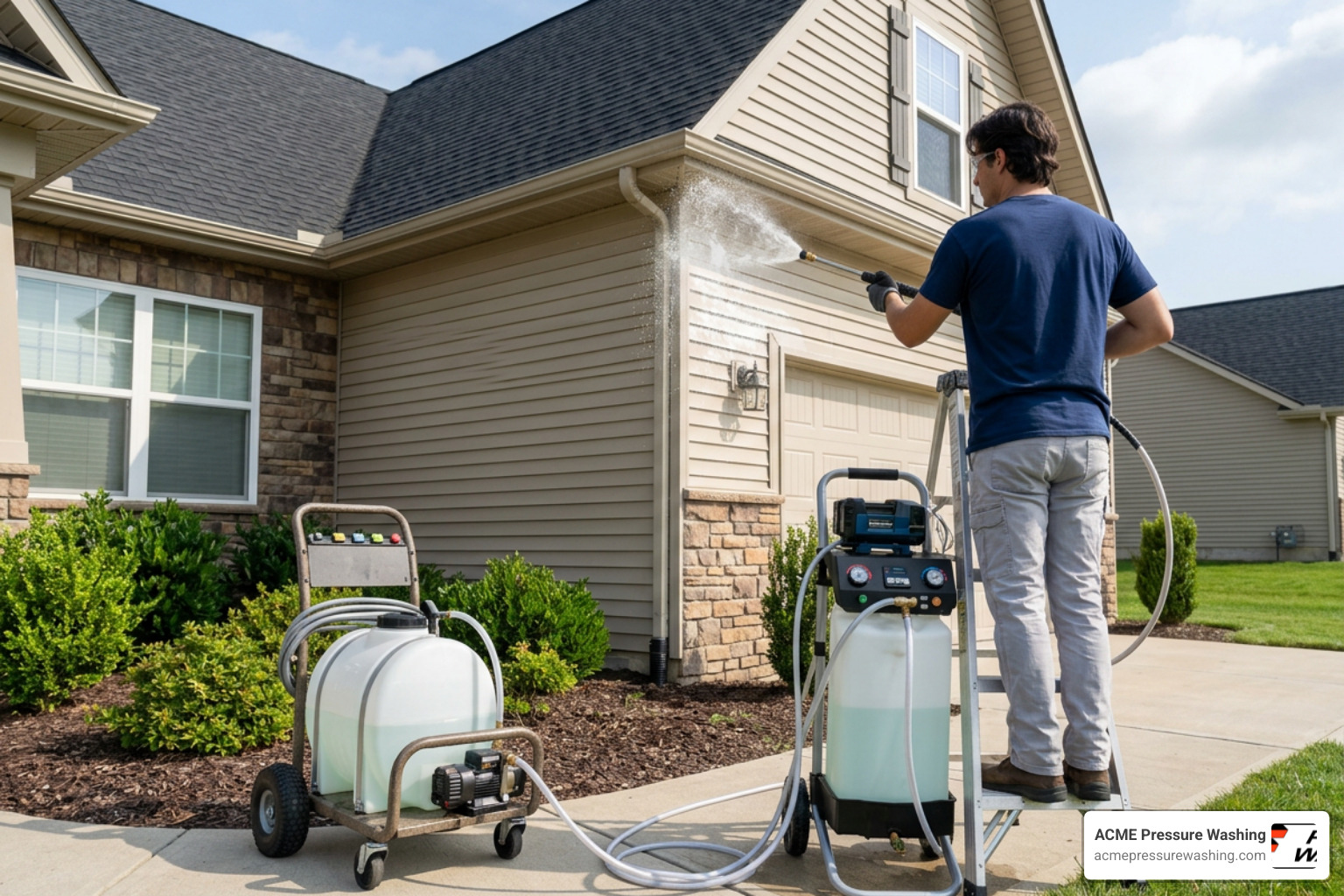
At its core, innovative power washing is the integration of advanced engineering, specialized chemistry, and variable-pressure delivery systems designed to clean exterior surfaces without causing structural wear. Gone are the days when a single high-pressure setting was applied to every square inch of a property. Today, we utilize highly calibrated equipment that allows us to adjust pressure, water temperature, and chemical delivery on the fly.
This modern methodology prioritizes surface preservation. By understanding the structural integrity of different building materials—ranging from historic brickwork in Nashua to delicate vinyl siding in Merrimack—we can customize our cleaning techniques. This ensures that grime, soot, mold, and mildew are completely eradicated while the underlying substrate remains completely unharmed.
To explore how these advanced techniques are applied on a local level, you can learn more about local power washing services and how they protect your investments. Across the industry, modern companies are shifting toward these high-tech systems to deliver superior results without risking surface damage.
The Science Behind Innovative Power Washing Systems
Modern cleaning isn’t just about spraying water; it is a combination of physics and chemistry. When dealing with stubborn industrial grease, heavy carbon buildup, or deeply embedded organic growth, we look at three primary scientific principles:
- Kinetic Impact: The physical force of the water droplets hitting the surface. In the past, this was the only force used. Today, we control kinetic impact precisely to ensure it never exceeds the physical limits of the material we are cleaning.
- Thermal Shock: Using heated water systems to break the molecular bonds of oil, grease, and grime. Hot water systems allow us to clean heavy machinery and commercial concrete with significantly less physical pressure.
- Sublimation and Advanced Flow: In highly specialized industrial settings, advanced systems use alternative media or extreme hydraulic pressure combined with massive flow rates. These systems utilize robotic control to manage extreme pressure and flow rates safely.
Additionally, technologies like dry ice blasting utilize solid CO2 pellets that sublimate (turn directly from solid to gas) upon impact. This rapid expansion blasts away contaminants from the inside out with zero water and zero secondary waste, showcasing just how scientific the industry has become by 2026.
Soft Wash vs. Traditional High-Pressure Methods
One of the most significant breakthroughs in our industry is the development of soft washing. While traditional pressure washing relies on high physical force (often between 2,500 and 4,000 PSI) to strip away dirt, soft washing takes the opposite approach.
Soft washing utilizes low-pressure pumps (usually under 500 PSI, and sometimes as low as 40 PSI) combined with specialized, biodegradable cleaning solutions. The chemical solution does 100% of the heavy lifting. It sanitizes the surface by killing the root systems of mold, mildew, algae, and moss rather than just shearing off the surface layer.
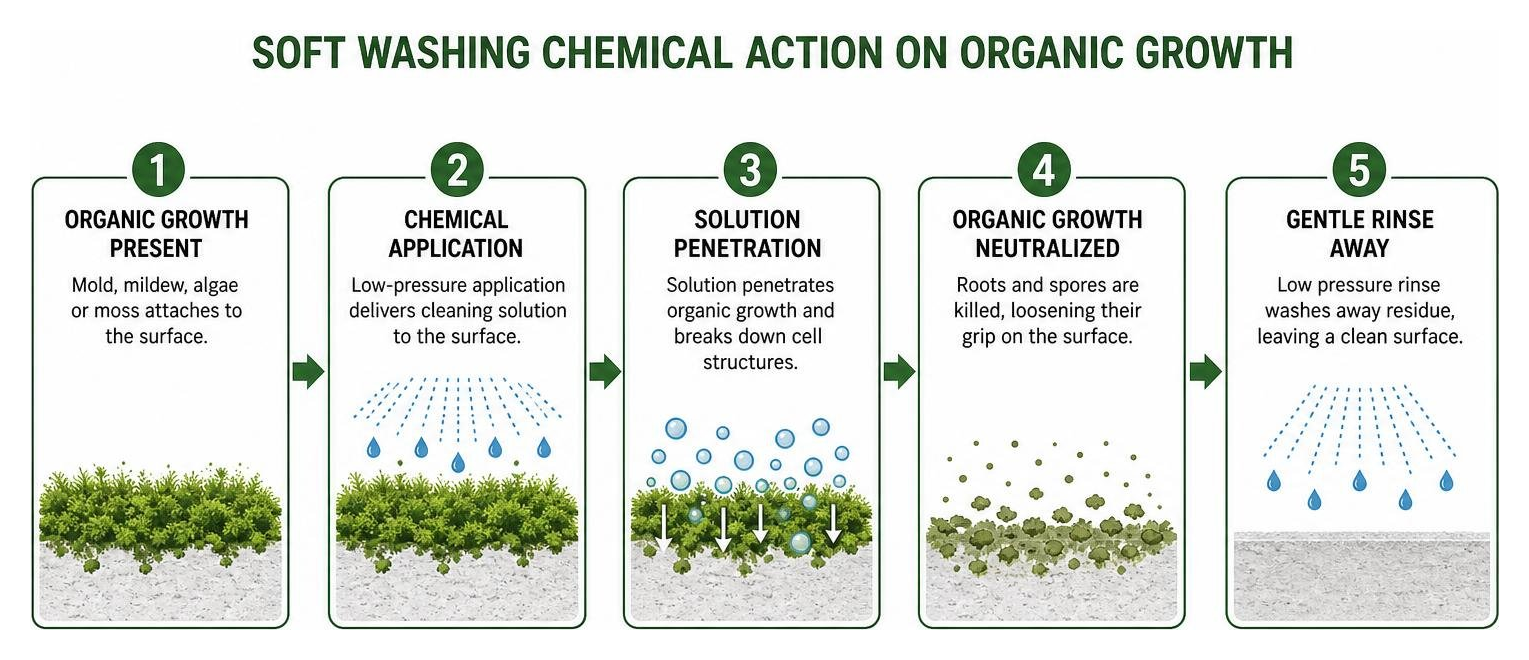
This method provides several key advantages:
- Water Conservation: Soft washing uses 50% to 70% less water than traditional high-pressure blasting because the chemical dwell time does the work, requiring only a gentle rinse.
- Surface Protection: Delicate materials like vinyl siding, wood decks, asphalt shingles, and historical masonry are completely safe from cracking, water intrusion, or stripping.
- Longer-Lasting Clean: Because soft washing kills the organic spores at the root, the growth takes up to three to four times longer to return compared to high-pressure washing, which often leaves the spores alive inside the pores of the material.
If you want to dive deeper into how this process works on your home’s siding or roof, check out The A-Z of Soft Washing Your Exterior or explore our professional house washing services for a comprehensive breakdown of the chemistry and equipment involved.
Advanced Commercial and HOA Exterior Maintenance
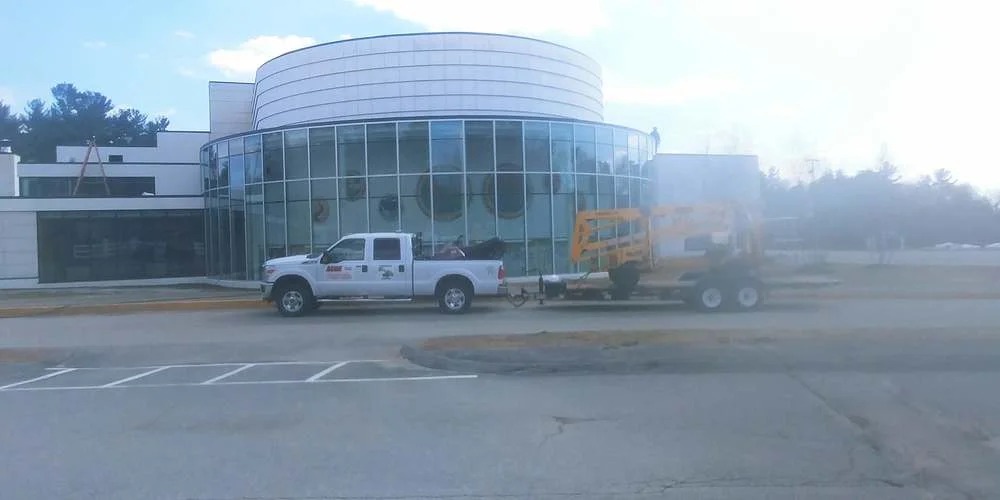
Managing commercial properties and Homeowners’ Associations (HOAs) requires a level of scale, efficiency, and safety that traditional residential equipment simply cannot match. Commercial exteriors are subjected to heavy environmental abuse, from diesel exhaust and tire marks to dumpster pad grease and heavy foot traffic.
Furthermore, property managers in towns like Bedford and Londonderry must adhere to strict environmental regulations and local HOA guidelines. Maintaining clean common areas, sidewalks, and building facades is essential for keeping property values high and attracting customers.
| Feature / Requirement | Commercial & HOA Cleaning | Residential Cleaning |
|---|---|---|
| Primary Goal | Liability reduction, brand image, HOA compliance | Curb appeal, preventative maintenance |
| Typical Surface Area | Large-scale (tens of thousands of sq. ft.) | Small to medium-scale (1,500 – 5,000 sq. ft.) |
| Dominant Contaminants | Diesel soot, grease, gum, heavy carbon, oil | Algae, mold, pollen, light dirt |
| Equipment Scale | Multi-gun hot water units, water reclamation | Single-operator cold/hot water units |
| Scheduling | Overnight or off-hours to avoid business disruption | Standard daytime hours |
Regular maintenance of commercial parking lots and walkways is proven to increase customer foot traffic by 15-20% simply by creating a safer, more welcoming environment.
High-Elevation and Robotic Cleaning Innovations
Cleaning multi-story commercial buildings has historically been a massive logistical headache. It required heavy scaffolding, expensive boom lifts, or high-risk rope-access technicians. Not only did this drive up costs, but it also introduced significant safety liabilities to the property owner.
Today, innovative power washing utilizes robotic cleaning systems and custom-engineered cleaning drones. These aerial drones can climb building facades and apply soft-wash solutions at heights of up to 150 feet while the operator remains safely on the ground.
By eliminating the need for heavy machinery on your lawns and sidewalks, we prevent landscaping damage and complete high-rise projects in a fraction of the time. These robotic systems are equipped with precise distance-keeping sensors, ensuring that the spray nozzle maintains an exact, safe distance from glass, stucco, and metal panels.
Fleet and Heavy Equipment Cleaning Solutions
For businesses operating in New Hampshire, commercial fleets represent a major capital investment. Keeping these vehicles clean is about more than just looking good on the road—it is about preventing rust, maintaining mechanical integrity, and complying with environmental laws. Road salt used during New Hampshire winters can quickly corrode tractor-trailers, delivery vans, and heavy construction equipment.
Our specialized mobile fleet washing services bring the cleaning power directly to your yard. Utilizing advanced water-retention tech and custom wash rigs, we can wash dozens of vehicles in a single session.
Our systems capture, filter, and reclaim the wash water, preventing heavy metals, oils, and road grime from entering local storm drains. To learn how we manage these large-scale mobile operations, take a look at The Complete Guide to On-Site Mobile Fleet Washing.
Eco-Friendly Practices in Modern Exterior Cleaning
As professional exterior cleaners, we have a deep responsibility to protect our local environment. The Merrimack River watershed and the beautiful landscapes of towns like Brookline and Hollis demand that we use cleaning methods that do not harm local ecosystems.
Historically, the pressure washing industry relied on harsh acids and non-biodegradable chemicals that could leach into the soil, damage local waterways, and kill surrounding lawns. Today, eco-friendly practices are at the forefront of our operations.
We utilize plant-safe, biodegradable detergents that break down into harmless organic compounds within hours of application. Furthermore, our modern wash systems are designed to minimize water waste, using advanced flow-control valves to deliver maximum cleaning power with minimal water consumption.
For property owners looking for responsible care, choosing professional services that prioritize environmentally conscious exterior cleaning is essential to protect both your home and the surrounding New Hampshire landscape.
Eliminating Organic Growth Safely
Algae, mold, mildew, and moss are not just cosmetic eyesores; they are biological organisms that actively degrade your property. Asphalt shingles, wood decks, and vinyl siding are highly susceptible to organic infestations. If left untreated, these organisms eat away at the binders in your roof shingles and rot your wood structures.
Our soft-wash systems eliminate these organic growths at the microscopic level. By applying a targeted, low-pressure sanitizing solution, we kill the spores instantly. This process is highly controlled; we pre-wet all surrounding vegetation and use protective shrouds to ensure that your delicate ornamental plants, flower beds, and lawns are completely unaffected.
To understand the specialized methods used to eradicate these biological threats without damaging your home, read The Ultimate Guide to Soft Washing Algae Removal. Additionally, if your patio pavers are suffering from moss growth, you can find natural solutions in The Natural Guide to Kill Moss on Patio Pavers.
Protecting Hardscapes and Concrete Surfaces
Concrete walkways, driveways, and paver patios are incredibly durable, but they are also highly porous. Over time, they absorb water, automotive fluids, rust from irrigation systems, and organic tannins from fallen leaves. High-pressure washing without proper calibration can easily strip the top cream layer off concrete, leaving it rough, pitted, and highly susceptible to freeze-thaw damage during New Hampshire winters.
Our hardscape cleaning protocols combine customized pressure levels with specialized detergents designed to draw stains out from deep within the concrete pores. Whether we are treating a pool deck in Hollis or a large commercial walkway in Bedford, we match the exact PSI to the age and condition of the concrete.
To learn how to identify the correct pressure settings for your own hardscapes, refer to The Ultimate Guide to Finding the Perfect PSI for Concrete Driveways. If you are dealing with a delicate paver patio, you can find customized restoration steps in The Ultimate Guide to Cleaning a Paver Patio.
The Economics of Professional Exterior Cleaning
Many property owners view exterior cleaning as a purely cosmetic expense. However, when you look at the numbers, professional maintenance is actually one of the most cost-effective forms of preventative maintenance available.
Failing to clean your roof can lead to premature shingle failure, costing tens of thousands of dollars in replacement fees. Allowing mold and algae to rot your siding or deck can lead to structural failures.
By investing in regular, professional cleaning, you can extend the lifespan of your exterior surfaces by 5 to 10 years. For businesses in Derry and Merrimack, a clean storefront directly influences consumer perception, driving foot traffic and supporting higher property values.
Investing in professional maintenance demonstrates how high-quality services protect property investments throughout New England, ensuring your home or business remains in peak condition year-round.
Understanding the Real Cost of Innovative Power Washing
When planning your maintenance budget, it helps to understand what professional exterior cleaning costs on average.
Please note: The pricing ranges listed below represent average costs compiled from publicly available internet data across the industry. These are not the specific rates of ACME Pressure Washing, but rather general market averages to help you understand industry trends.
According to national online data, the average cost for standard residential pressure washing projects sits around $300. However, due to the wide variety of property sizes, specialized equipment requirements, and surface sensitivities, actual market rates vary dramatically:
- Low-End Professional Range: Starting around $600 (typically covering small, straightforward residential siding washes or basic walkway cleanings using standard professional setups).
- High-End Commercial/Specialty Range: Reaching up to $1,500 or more (covering large multi-story homes, complex roof cleanings following strict manufacturer guidelines, or large commercial storefronts requiring hot-water extraction and water reclamation).
Investing in professional services prevents the costly damage often caused by cheap, amateur high-pressure blasting. To get a better sense of how these industry averages are calculated and what factors influence professional estimates, check out The Real Cost to Power Wash Your House in 2026.
Frequently Asked Questions About Advanced Exterior Cleaning
What is the difference between power washing and soft washing?
Power washing relies on high-pressure water (often heated) to physically blast away heavy dirt, grease, and hard contaminants from durable surfaces like concrete and metal. Soft washing, on the other hand, uses very low pressure (similar to a garden hose) combined with specialized, biodegradable chemical solutions to sanitize and clean delicate surfaces like vinyl siding, wood, and asphalt shingle roofs without causing damage.
How often should commercial properties be pressure washed?
Most commercial properties should be professionally cleaned at least once or twice a year. However, high-traffic areas like entrance walkways, driveways, and dumpster pads may require monthly or quarterly maintenance to manage grease buildup, chewing gum, and heavy foot traffic stains.
Is soft washing safe for landscaping and plants?
Yes, when performed by trained professionals. A proper soft-washing protocol includes thoroughly pre-wetting all nearby plants and grass with clean water before, during, and after the application of cleaning solutions. This dilutes any runoff and ensures your landscaping remains perfectly healthy and vibrant.
Conclusion
The exterior cleaning industry has evolved from brute-force blasting into a precise, highly technical discipline. By embracing innovative power washing techniques—such as low-pressure soft washing, temperature-controlled cleaning, and eco-friendly chemistry—property owners can protect their investments while achieving a level of cleanliness that lasts.
At ACME Pressure Washing, we have spent the last 38 years perfecting these safe, customized, and eco-friendly techniques. Based in Merrimack, NH, we proudly serve residential and commercial clients across our local communities, including Bedford, Londonderry, Brookline, Hollis, and Derry. Whether you need to restore your home’s siding, clean a commercial facility, or maintain a fleet of vehicles, our experienced team is equipped to deliver exceptional results safely.
Don’t let mold, algae, or environmental grime degrade your property’s value and appeal. Visit our contact page to request a professional consultation and see how we help local businesses and homeowners put their best foot forward. You can also explore our commercial pressure washing services to learn more about our specialized commercial solutions.
Like us on Facebook!
Is Your Home Ready for Manchester’s Next Rainstorm?
Gutter cleaning Manchester NH property owners rely on is one of the most overlooked – yet most important – parts of protecting a property. Here’s a quick look at what you need to know:
Quick Answer: Gutter Cleaning in Manchester, NH
- How often: At least twice a year – once in late spring, once in late fall
- Best timing: After the final leaf drop in November and before heavy April rains
- Average cost: Roughly $800-$5,000+ per year (industry averages; see pricing section for full range)
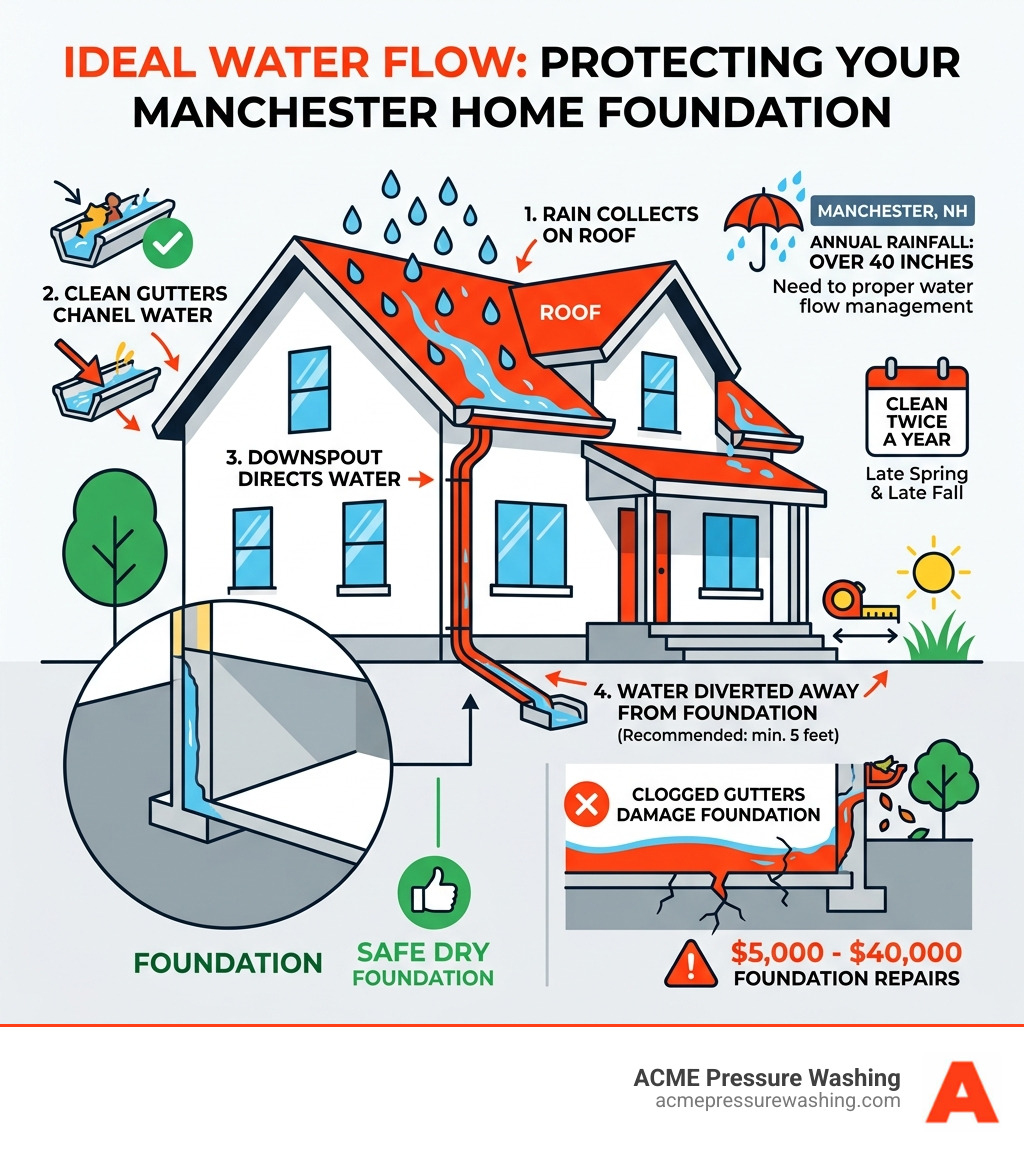
- Why it matters: Manchester receives over 40 inches of rain annually – clogged gutters can cause foundation damage costing $5,000-$40,000
- Who to call: ACME Pressure Washing | +1 603-883-6900
Manchester, NH gets a lot of weather. Between heavy spring rains, thick fall foliage from mature maples, oaks, and birch trees, and the freeze-thaw cycles of a New England winter, your gutters take a serious beating year-round.
When gutters fill up and stop draining, water doesn’t just overflow – it backs up against your roof, seeps into your fascia, and pools against your foundation. Properties across Manchester, Bedford, Londonderry, and Goffstown deal with this every season.
The damage builds quietly. By the time you notice it, the repair bill is already steep.
That’s why regular gutter cleaning isn’t optional – it’s basic property protection. This guide walks you through everything you need to know to keep your gutters clear and your property safe. For broader climate context, the National Weather Service is a useful external resource for tracking heavy rain, wind, and winter weather conditions in New Hampshire.
Why Gutter Cleaning Manchester NH is Critical for Your Property
Operating in the Merrimack Valley means dealing with a climate that is notoriously tough on building exteriors. With Manchester receiving over 40 inches of annual rainfall, the volume of water hitting your roof is staggering. Without a functional drainage system, that water becomes a destructive force.
One of the most specific challenges for properties in Manchester and Bedford is the local soil composition, particularly Paxton fine sandy loam. This soil contains dense layers that can prevent water from absorbing vertically. When gutters clog and overflow, water saturates the ground immediately next to your building. This creates intense hydrostatic pressure against foundation walls, often leading to cracks and leaks.
Statistics show that approximately 27.6% of insurance claims are tied to water damage. By ensuring your gutters are clear, you are protecting the structural integrity of your largest investment. Beyond just drainage, clean gutters prevent moisture from lingering near your roofline, which can lead to wood rot and mold. For a comprehensive approach to property maintenance, many property managers combine gutter care with Professional Pressure Washing in Manchester, NH to ensure the entire exterior is free of organic growth and debris.
Signs Your Gutters Need Immediate Attention
You don’t always need to climb a ladder to know there’s a problem. Keep an eye out for these warning signs from your gutter system:
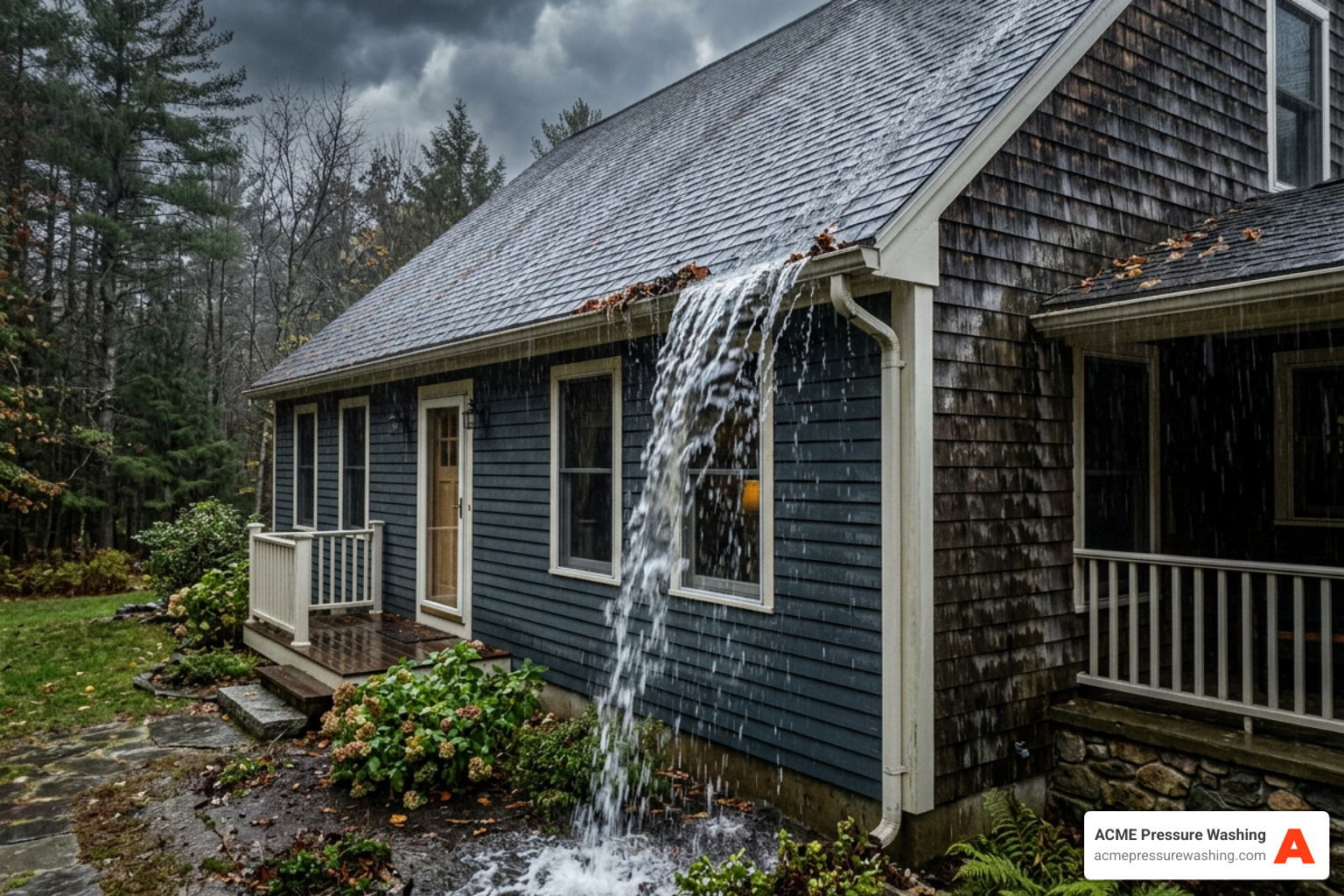
- The “Niagara Falls” Effect: If water is cascading over the sides of the troughs during a storm rather than exiting the downspouts, you have a major blockage.
- Sagging Troughs: Gutters are not designed to hold the weight of standing water and wet sludge. If they are pulling away from the building, they are likely full of debris.
- Visible Foliage: If you can see weeds or plant growth sprouting from your roofline, the debris has been there long enough to decompose into soil.
- Staining and Peeling Paint: Water constantly splashing back onto your siding causes unsightly stains and causes paint to fail prematurely. If you notice this, you may also need house power washing to restore the look of your property.
- Pest Activity: Birds, wasps, and rodents are attracted to the damp, sheltered environment of a clogged gutter.
The High Cost of Neglect: Water Damage and Foundation Risks
It is often said in the exterior cleaning industry that “the cost of neglect is ten times the cost of cleaning.” This isn’t an exaggeration. While a routine cleaning is a manageable maintenance expense, the fallout from ignoring your gutters can be financially devastating.
Foundation repairs necessitated by poor drainage and soil saturation can range from $5,000 to $40,000 depending on the severity of the shifting or cracking. Furthermore, when water backs up, it rots the fascia boards and roof deck. Roof and fascia deterioration repairs typically cost between $3,000 and $15,000.
Wood decay begins when the moisture content of the wood reaches just 20%. In the humid climate near the Merrimack River, trapped moisture in clogged gutters creates the perfect environment for rot to set in. This doesn’t just hurt your budget; it destroys your property’s curb appeal and significantly lowers its value.

Preventing Structural Decay in Hillsborough County
In towns like Londonderry and Goffstown, the winter months bring the added threat of ice dams. When gutters are full of autumn leaves, snowmelt cannot drain. It refreezes at the eaves, forcing water up under your shingles and into your attic. This freeze-thaw cycle is one of the primary causes of structural decay in New Hampshire properties.
To mitigate these risks, we recommend ensuring your downspout extensions are at least 10 feet long to displace water away from the sensitive Paxton loam footings. For business owners, commercial pressure washing can help maintain the integrity of larger drainage systems on flat roofs and commercial complexes, preventing costly interior leaks.
Seasonal Maintenance and Local Foliage Impacts
Manchester’s beautiful landscape is also its gutters’ worst enemy. The region is home to a dense mix of Eastern White Pine, Red Maple, and Northern Red Oak. Each of these species drops a different type of debris at different times of the year.
- Spring: Red Maples drop “helicopters” (samaras) and pollen that can cement themselves into a thick mat when wet.
- Summer: Severe thunderstorms can wash roof granules and small twigs into the system.
- Fall: This is the “big one.” The heavy drop of oak and maple leaves, combined with non-biodegradable pine needles, can fill a gutter in a single weekend.
- Winter: Remaining debris traps ice, leading to heavy loads that can rip gutters right off the fascia.
Optimal Timing for Gutter Cleaning Manchester NH
To keep your property protected, a bi-annual schedule is the bare minimum for most New Hampshire properties.
- Late Spring (May-June): Clean out the seeds, pollen, and winter grit to prepare for heavy summer rainstorms.
- Late Fall (November): Wait until the final leaf drop. Cleaning too early in October often means you’ll have to do it again before the first snow.
For properties with heavy pine coverage in areas like Goffstown or New Boston, you might even require a third or fourth visit to manage the constant needle drop. Many commercial property managers in Bedford and Windham also schedule fleet power washing alongside their building maintenance to stay ahead of the New England grime.
Why Professional Service is Essential for Your Manchester Investment
Gutter cleaning at any height involves significant safety risks and requires specialized equipment to do correctly. Attempting it without proper training and gear is not recommended.
| Feature | Untrained Approach | Professional Gutter Cleaning |
|---|---|---|
| Safety | High risk of ladder falls and injury. | OSHA-compliant safety gear and training. |
| Thoroughness | Often misses downspout clogs and hidden buildup. | High-powered vacuum and flushing systems. |
| Inspection | May miss signs of rot or loose brackets. | Full system evaluation included with service. |
| Efficiency | Can take an entire day with multiple ladder moves. | Completed in a few hours with professional equipment. |
Without professional-grade tools, debris is often scattered onto siding, windows, and walkways. Trained technicians use specialized equipment to ensure the debris is removed cleanly and the exterior of the gutters is brightened, restoring your property’s appearance.
Understanding Gutter Cleaning Costs in New Hampshire
When budgeting for property maintenance, it helps to know the general industry landscape. Based on publicly available internet data, professional gutter cleaning costs vary widely depending on the height of the building, the complexity of the roofline, and the amount of debris.
- Average Annual Cost Range: $800 – $5,000+ (Industry averages for 2-4 cleanings per year)
Note: All prices mentioned are average costs sourced from publicly available internet data and are not the actual prices of ACME Pressure Washing. Industry variability is high, and a multi-level commercial property will naturally fall on the higher end of the spectrum compared to a single-story structure. Contact ACME directly at +1 603-883-6900 for an accurate quote.
Frequently Asked Questions about Gutter Cleaning Manchester NH
How often should I have my gutters cleaned in Manchester?
For most properties in Manchester, Bedford, and Goffstown, twice a year is the standard. However, if you have mature trees overhanging your roof, quarterly service is recommended. The goal is to ensure they are clear before the “March melt” and the “November freeze.”
Can clogged gutters cause basement flooding?
Yes, absolutely. In Londonderry and Manchester, the Paxton loam soil doesn’t absorb water quickly. When gutters overflow, the water pools at the foundation, creates hydrostatic pressure, and finds its way through the smallest cracks into your basement or lower level.
Are gutter guards worth the investment?
Gutter guards and micro-mesh systems are excellent for reducing the frequency of cleanings, but they do not eliminate the need for professional maintenance entirely. They are particularly helpful in New Hampshire for keeping out large maple leaves and acorns, though fine debris like pine needles may still require occasional professional flushing.
Should I attempt gutter cleaning myself?
We strongly recommend hiring a professional. Working at height without proper safety equipment and training poses serious injury risks. A professional team has the OSHA-compliant gear, specialized vacuum systems, and experience to complete the job safely and thoroughly. Call ACME Pressure Washing at +1 603-883-6900 to schedule service.
Conclusion
Your gutters are the unsung heroes of your property’s exterior. By diverting thousands of gallons of water away from your roof, siding, and foundation, they prevent the type of structural decay that can cost tens of thousands of dollars to repair.
At ACME Pressure Washing, we bring over 38 years of experience to every job. Based in Merrimack, NH, we serve the entire region, including Amherst, Milford, Nashua, and Windham. We pride ourselves on using safe, eco-friendly techniques to protect your property while delivering professional results. Whether you need your gutters cleared, house washing, commercial pressure washing, or Manchester pressure washing services for your business, we are here to help.
Don’t wait for the next overflow to cause costly damage. Protect your investment today.
Contact ACME Pressure Washing:
- Phone: +1 603-883-6900
- Online: Get a Quote Form
- Visit Us: https://acmepressurewashing.com/
Why House Power Washing Is One of the Best Things You Can Do for Your Home
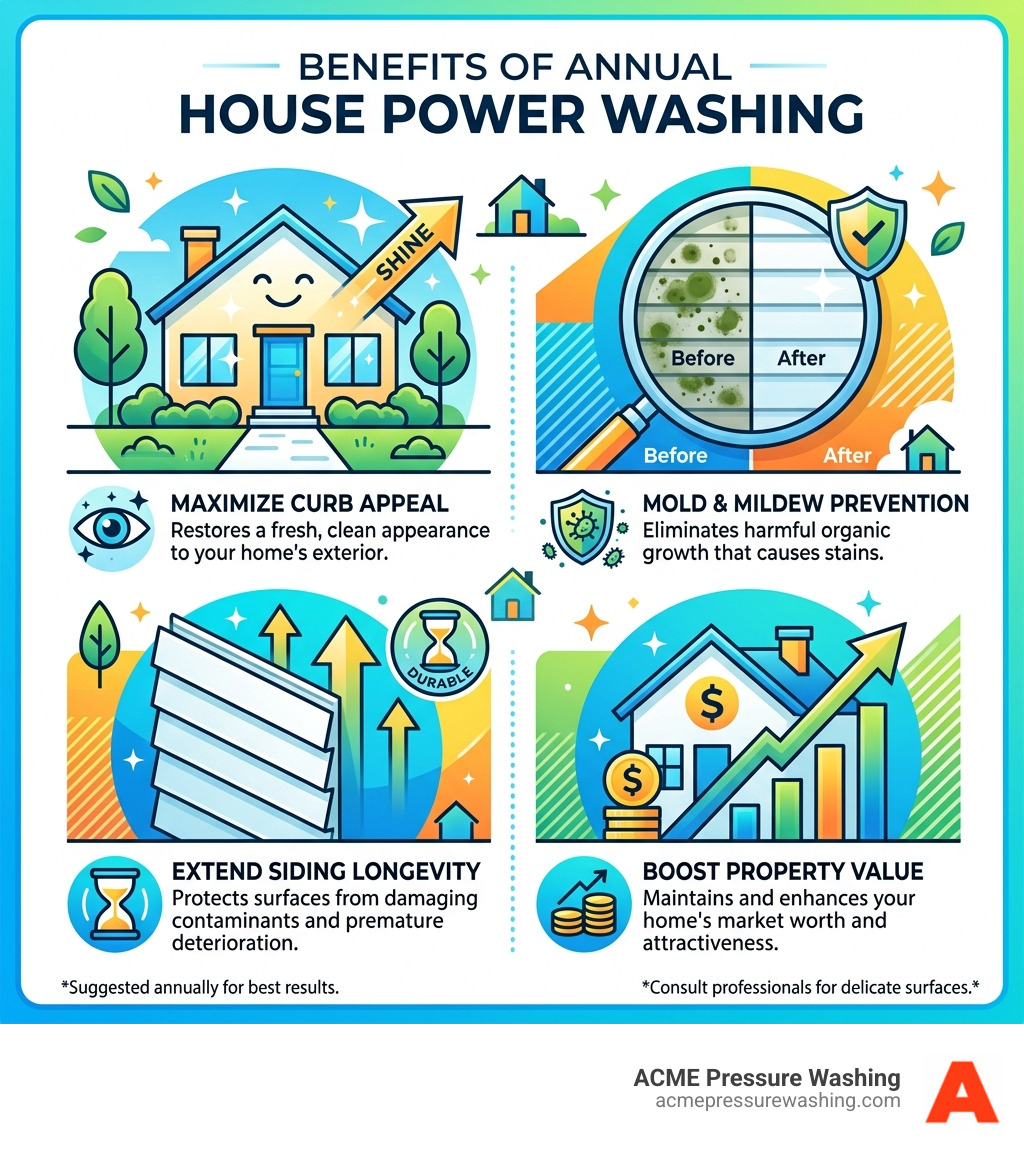
House power washing is one of the fastest, most effective ways to restore your home’s curb appeal, protect your siding, and prevent costly damage from mold, mildew, and grime buildup.
Here’s what you need to know at a glance:
- What it does: Removes dirt, mold, algae, mildew, and staining from your home’s exterior surfaces
- How often: Most homes benefit from washing once a year, ideally between March and November
- Best time: Spring or early fall — avoid extreme heat, freezing temps, or heavy rain
- Average cost: Ranges from around $200 to $2,100+ based on home size and method (based on average internet data)
- DIY or pro? Professional soft washing is safer for most siding types and delivers longer-lasting results
Your home’s exterior takes a beating every season. Pollen in spring, humidity and algae in summer, falling debris in fall, and freeze-thaw cycles in winter — all of it adds up. Over time, that buildup doesn’t just look bad. It can eat away at paint, shorten the life of your siding, and even affect the air quality inside your home.
The good news? A proper power wash can reverse a lot of that damage in just a few hours.
In this guide, ACME Pressure Washing walks you through everything — from choosing the right method and PSI settings for your siding type, to timing, costs, and when to call in a professional. Whether your home has vinyl siding, brick, stucco, or wood, there’s a right way to clean it without causing damage.
We serve homeowners across Amherst, NH | Auburn, NH | Bedford, NH | Brookline, NH | Derry, NH | Goffstown, NH | Hollis, NH | Londonderry, NH | Manchester, NH | Merrimack, NH | Milford, NH | Mont Vernon, NH | Nashua, NH | New Boston, NH | Wilton, NH | Windham, NH. Learn more about our house pressure washing services.
Understanding the Methods: Pressure, Soft, and House Power Washing
Before you grab a wand and start blasting, it is vital to understand that not all “washes” are created equal. Using the wrong method on the wrong surface is the fastest way to turn a weekend DIY project into a multi-thousand-dollar siding replacement.
Power Washing
While people often use the terms interchangeably, true power washing involves heated water. The machine uses a heating element to bring the water to high temperatures before it’s blasted through the nozzle. This is incredible for removing grease, oil stains on driveways, or chewing gum from sidewalks. However, for most residential siding, the heat can actually warp vinyl or damage paint.
Pressure Washing
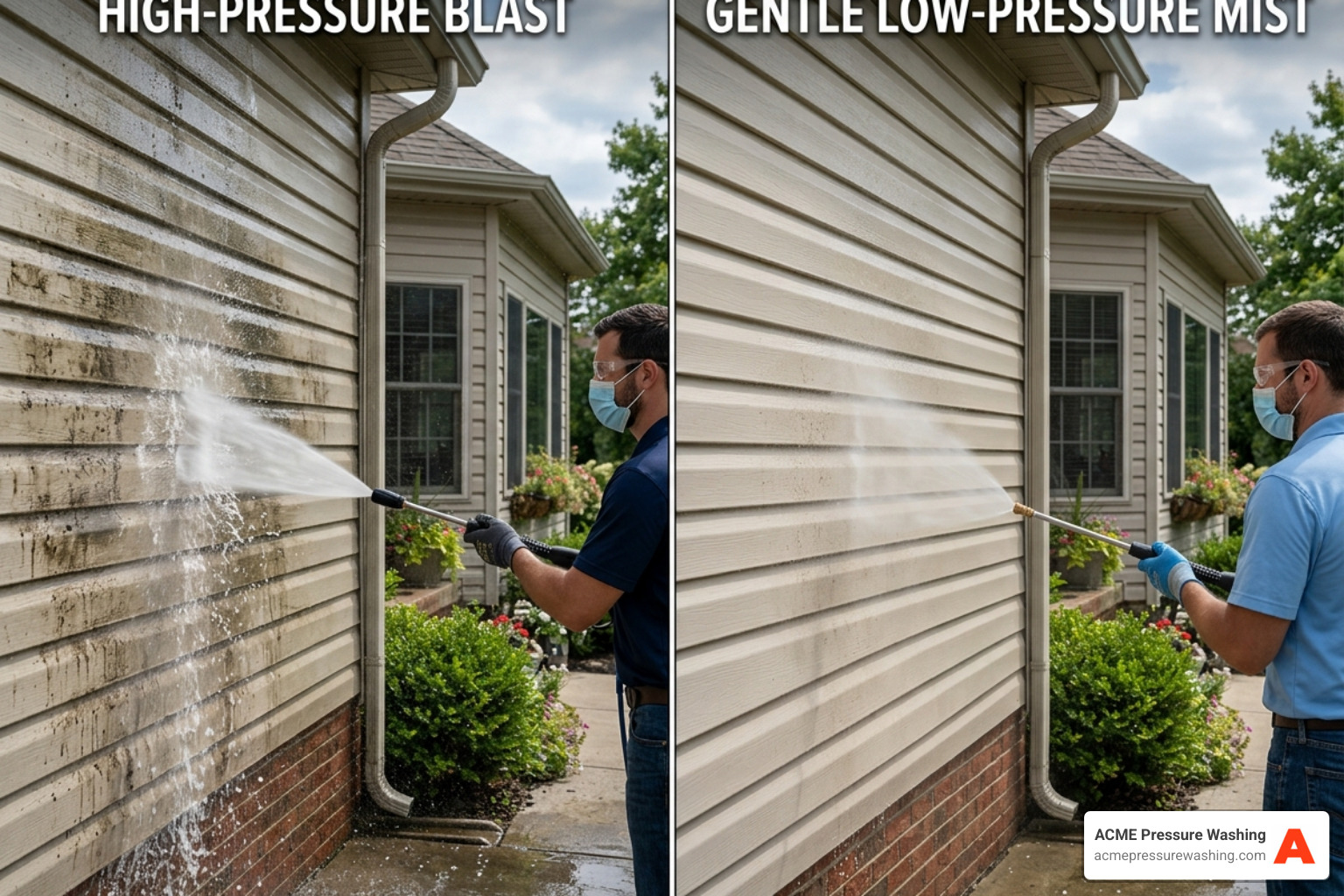
This is the “standard” method most people think of. It uses high-pressure, cold water to mechanically blast away dirt. While effective on hard surfaces like concrete or stone, we often tell our clients in Bedford, NH and Merrimack, NH to be cautious. High pressure alone can force water behind siding, leading to trapped moisture and rot.
Soft Washing
This is our preferred method for most house power washing projects. Soft washing uses very low PSI (often under 500 PSI—similar to a garden hose) combined with specialized, eco-friendly detergents and surfactants. The chemicals do the heavy lifting by killing mold and algae at the root (the spores), while the water simply rinses it away. It’s the safest way to clean vinyl, wood, and stucco.
To dive deeper into why low pressure is usually the winner, check out our article: Don’t Be a High-Pressure Mess and Switch to Low-Pressure House Cleaning. You can also see more on Soft & Pressure Washing Services.
Safety Gear and Precautions for House Power Washing
Safety isn’t just a “good idea”—it’s mandatory. A pressure washer can exert enough force to cut through skin or lead to serious falls. If you are going the DIY route, here is your essential checklist:
- Eye Protection: Safety goggles are a must. Water and debris will splash back.
- Hand Protection: Heavy-duty gloves provide a better grip and protect your skin.
- Footwear: Never, ever wear flip-flops. Wear sturdy, closed-toe shoes with good traction.
- Lead Paint Warning: If your home was built before 1978, it likely contains lead paint. Blasting it with high pressure can aerosolize lead dust, which is a major health hazard. In these cases, consult a professional.
- Electrical Safety: Keep the spray at least 6 feet away from electrical wires and never spray directly into outlets or light fixtures.
- Ladder Safety: We strongly advise against using a pressure washer while standing on a ladder. The “kickback” from the wand can easily knock you off balance. For two-story homes in Manchester, NH, use extension wands instead.
Preparing Your Home Exterior
Preparation is 50% of the job. You don’t want to kill your prize-winning roses or flood your living room.
- Protect the Greens: Saturate your plants, grass, and shrubs with fresh water before you start. This prevents them from absorbing the cleaning detergents. Cover delicate plants with tarps.
- Seal the House: Close all windows and doors tightly. Check for gaps in the siding or around window frames.
- Clear the Way: Move patio furniture, grills, and toys away from the house.
- Tape it Up: Use painter’s tape and plastic to cover electrical outlets, doorbells, and light fixtures.
For more on solving siding-specific issues during prep, see 4 Practical Ways to Solve Your Vinyl Siding Power Washing Problems for Good.
The Step-by-Step Guide to Washing Your Home
If you’ve decided to tackle house power washing yourself, following a logical order will prevent streaks and ensure a deep clean.
Step 1: Choose Your Nozzle
- Black Tip: Soap nozzle (lowest pressure, widest spray).
- White Tip (40-degree): Best for most siding; gentle and wide.
- Green Tip (25-degree): For tougher spots on brick or concrete.
- Red Tip (0-degree): Avoid this on your house! It’s like a laser beam and will damage siding instantly.
Step 2: Mix and Apply Detergent
We recommend using a pressure-washer-approved detergent with a mildewcide.
Pro Tip: The Bottom-Up Method. When applying soap, start from the bottom and work your way up. Why? If you start at the top, the soapy water runs down over the dry dirt below, creating “clean streaks” that are nearly impossible to wash away later. Applying soap to a dry surface from the bottom up ensures even coverage.
Step 3: Dwell Time
Let the solution sit for 10–15 minutes. This allows the surfactants to break down the grime and the mildewcide to kill the mold spores. Do not let it dry on the siding! If it’s a hot day in Nashua, NH, work in smaller sections.
Step 4: Scrubbing (If Needed)
For stubborn areas like green algae on the north side of the house, use a soft-bristle brush to loosen the buildup before rinsing.
Step 5: The Rinse
The Top-Down Method. Now, switch to your 40-degree nozzle. Start at the top of the house and work your way down. This ensures that all the dirty, soapy water is flushed off the house completely. Keep the nozzle at a 45-degree angle to the siding to avoid forcing water underneath the panels.
For more detailed “Dos and Don’ts,” check out our guide: 10 Dos and Don’ts for House Soft Washing Service. You can also find additional steps at LawnStarter.
PSI Settings for Different Surfaces
Different materials require different levels of “tough love.” Using 3000 PSI on stucco will leave you with a hole in your wall, while 500 PSI might not touch the dirt on your brick walkway.
| Material | Recommended PSI | Recommended Nozzle |
|---|---|---|
| Vinyl Siding | 2,000 – 2,800 PSI | 40-degree (White) |
| Brick & Masonry | 1,500 – 2,000 PSI | 25-degree (Green) |
| Stucco | 1,200 – 1,500 PSI | 40-degree (White) |
| Aluminum Siding | 1,200 – 1,500 PSI | 40-degree (White) |
| Painted Wood | 500 – 1,200 PSI | 40-degree (White) |
| Concrete/Stone | 2,500 – 3,000+ PSI | 25-degree (Green) |
Always test a small, inconspicuous area first!
Timing, Frequency, and Costs
Living in New Hampshire means we deal with specific climate challenges. From the humid summers in Derry, NH to the salt-heavy air near the coast, timing your wash is everything.
When and How Often to Perform House Power Washing
Most experts, including our team at ACME, recommend house power washing at least once a year.
- The Best Months: March through November.
- Spring (March-May): This is the most popular time. It removes the winter “salt crust,” pollen, and grime before you start spending time outdoors.
- Fall (September-November): A great time to clear away summer algae growth and fallen debris before the freeze sets in.
- Weather Conditions: Aim for a mild, overcast day. Direct, hot sunlight can dry your cleaning solutions too quickly, leaving unsightly streaks. Avoid washing in freezing temperatures, as water can get into cracks, freeze, and expand, causing damage.
For residents in Bedford, NH, annual washing is crucial to prevent the “New England Green” (algae) from taking over the shaded sides of your home.
DIY vs. Professional Costs
When deciding whether to rent a machine or hire a pro, you have to look at the numbers. Based on average internet data, here is what you can expect:
- DIY Costs:
- Rental: $40 – $100 per day.
- Purchase: $150 – $1,000 depending on gas vs. electric.
- Supplies: $50 – $100 (detergents, safety gear, brushes).
- Professional Services:
- Average Range: $200 to $2,100+.
- Factors: This varies widely based on the square footage of the home, the number of stories, the level of dirt, and the local market. For example, a 2,500-square-foot one-story home might be on the lower end, while a large multi-story estate in Windham, NH will be higher.
- Hourly Rates: Professionals typically charge between $25 and $100 per hour.
While DIY seems cheaper upfront, professionals come with insurance, high-end equipment, and the knowledge of how to treat different surfaces without causing damage.
Frequently Asked Questions about House Washing
Can I wash my roof or windows with high pressure?
No! We cannot stress this enough. High pressure on a roof will blast the protective granules off your asphalt shingles, effectively cutting years off the life of your roof. For roofs, always use a dedicated soft wash.
Similarly, high pressure can shatter window glass or, more commonly, break the seals on double-pane windows, leading to permanent fogging. For windows, a garden hose or a professional window cleaning service is best. See more on Pressure Washing Roofs.
How long does it take to wash a house?
- One-Story Home: Usually 1 to 2 hours.
- Two-Story Home: 3 to 6 hours.
- Factors: Setup time, how much scrubbing is required, and your water pressure (GPM) all play a role. A professional with a high-flow machine can often wash a 2,500-square-foot house in about an hour.
What are common mistakes to avoid?
- The “Upward Angle”: Never spray upward into siding. This forces water behind the panels, which leads to mold inside your walls.
- Using a Ladder: As mentioned, the kickback is dangerous.
- Too Much Bleach: While bleach kills mold, too high a concentration can damage your siding and kill your lawn.
- Pump Burnout: Never run your pressure washer without the water turned on. The water actually cools the pump; without it, the machine will burn out in minutes.
- Ignoring the Wind: Always wash with the wind at your back to avoid a face full of detergent!
Conclusion
House power washing is more than just a cosmetic fix; it’s a vital part of home maintenance that protects your investment. Whether you’re prepping for a fresh coat of paint or just want your home to be the envy of the neighborhood in Londonderry, NH, doing it right makes all the difference.
At ACME Pressure Washing, we bring over 38 years of experience to every job. We use safe, customized, and eco-friendly techniques to ensure your home is sparkling clean without the risk of high-pressure damage. Based in Merrimack, NH, we are proud to serve our local community with professional results you can see.
Ready to see the transformation? Check out our Gallery of House Pressure Washing or contact us today for a quote!
Service Area: Amherst, NH | Auburn, NH | Bedford, NH | Brookline, NH | Derry, NH | Goffstown, NH | Hollis, NH | Londonderry, NH | Manchester, NH | Merrimack, NH | Milford, NH | Mont Vernon, NH | Nashua, NH | New Boston, NH | Wilton, NH | Windham, NH
Visit us at ACME Pressure Washing to learn more about our house pressure washing Merrimack NH services and beyond.
Why Vinyl Siding Power Washing Is the Fastest Way to Restore Your Home’s Curb Appeal
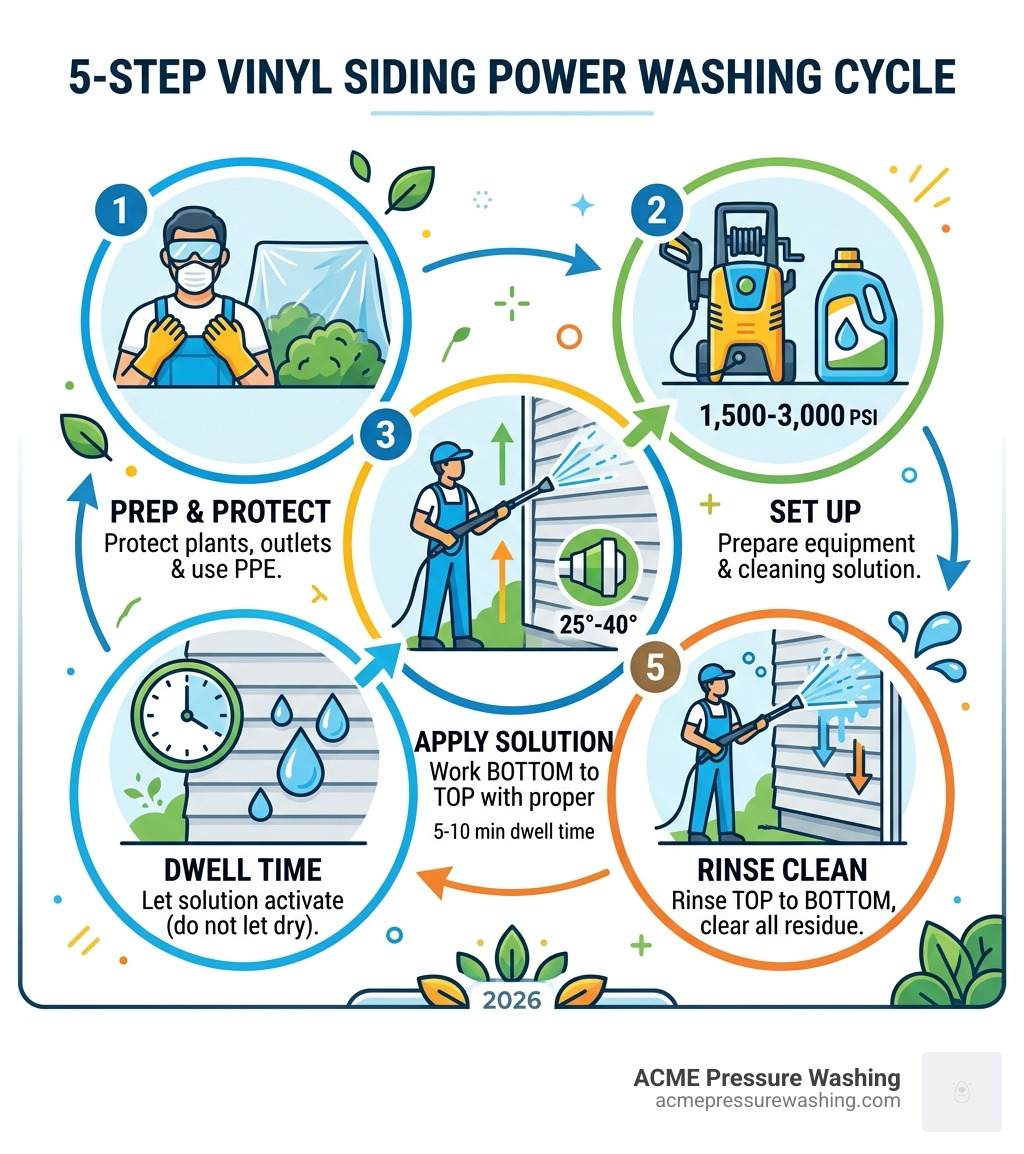
Vinyl siding power washing is the process of using a pressure washer — typically set between 1,500 and 3,000 PSI — along with a cleaning solution to remove dirt, mold, algae, and grime from the exterior of your home.
Here’s a quick-reference summary:
| What You Need to Know | Quick Answer |
|---|---|
| Safe PSI range for vinyl | 1,500–3,000 PSI |
| Best nozzle | White 40° (beginner) or Green 25° (experienced) |
| Apply solution | Bottom to top |
| Rinse direction | Top to bottom |
| Solution dwell time | 5–10 minutes |
| Best time of year | Spring or autumn |
| How often | Once a year (every 6–12 months in wet/shaded areas) |
Over time, vinyl siding collects more than just dust. Mold, algae, and stubborn grime build up — especially in damp climates like Merrimack, NH — and no amount of rainfall is going to wash it off.
The good news? You don’t need to scrub it by hand. A properly set up pressure washer, the right nozzle, and a simple cleaning solution can transform a dingy exterior in a single afternoon.
But done wrong, power washing can crack siding, force water behind panels, or strip paint from nearby trim. That’s why the how matters just as much as the what.
Below, we’ll walk through four practical ways to solve the most common vinyl siding power washing problems — from choosing the right PSI to protecting your plants and getting the timing right.
1. Master the Technical Specs for Vinyl Siding Power Washing
One of the biggest mistakes we see homeowners make is assuming that “more power equals a cleaner house.” In reality, using the wrong pressure can lead to cracked panels or water being forced into your wall cavities. Understanding the technical limits of your siding is the first step to a successful clean.
Vinyl is resilient, but it isn’t invincible. While it can technically withstand 2,500 to 3,000 PSI from a gas-powered unit, we often recommend starting much lower—around 1,300 to 1,600 PSI—especially if you are new to the equipment. If the siding begins to move or rattle excessively, you’re using too much force.
For homes in our service areas like Bedford, NH or Amherst, NH, you might have a mix of materials. It is vital to adjust your settings accordingly:
| Material | Recommended PSI Range | Nozzle Type |
|---|---|---|
| Vinyl Siding | 2,500–3,000 PSI | 25° or 40° |
| Brick & Stone | 2,500–3,000 PSI | 25° |
| Painted Wood Trim | 1,200–1,500 PSI | 40° |
| Stucco / Aluminum | 1,200–1,500 PSI | 40° |
| Soft-Grain Wood | 1,000–1,200 PSI | 40° |
For more detailed technical insights, you can explore this guide on How to Pressure Wash Vinyl Siding. At ACME Pressure Washing, we utilize professional-grade Power Washing equipment that allows for precise control, ensuring we never exceed the safety limits of your home’s exterior.
Choosing the Right Nozzle for Vinyl Siding Power Washing
The nozzle is what dictates the “fan” of the water. Most modern washers use a standardized color-coded system. For vinyl siding power washing, the choice of tip is the difference between a clean home and a punctured one.
- White (40-degree): This is the safest bet for beginners. It provides a wide, gentle spray that covers more surface area with less concentrated force.
- Green (25-degree): Best for experienced users. It offers a narrower, more powerful blast to lift stubborn mud or bird droppings.
- Black (65-degree/Soap): This is a low-pressure nozzle specifically designed to pull detergent from your reservoir and apply it to the siding.
- Flare Tips: These are excellent for vinyl because they allow you to get closer to the surface without the risk of the “jet” effect punching through the material.
Pro Tip: Never use the Red (0-degree) or Yellow (15-degree) tips on vinyl. These are meant for concrete or stripping paint and will almost certainly damage your siding.
Essential Equipment Beyond the Washer
To do the job like a pro in Nashua or Hudson, you’ll need more than just the machine. Safety and reach are paramount.
- Extension Wands & Telescoping Poles: These allow you to reach second-story siding while keeping your feet firmly on the ground. We strongly advise against using a pressure washer while standing on a ladder; the kickback can easily cause a loss of balance.
- Support Belts: If you’re using a long telescoping wand, a support belt helps distribute the weight and reduces arm fatigue.
- Stiff Bristle Brushes: Sometimes, “no-scrub” formulas need a little help. A brush on a long pole is perfect for agitated thick algae growth before the final rinse.
- Microfiber Cloths: Great for hand-wiping sensitive areas like light fixtures or delicate window trim.
If this sounds like a lot of gear to store in your garage, our Pressure Washing Services come fully equipped with industrial-grade tools to handle any residential layout.
2. Use the Right Chemistry: Solutions for Every Stain
Water alone rarely gets the job done. To truly eliminate organic growth, you need a cleaning solution that breaks the bond between the grime and the vinyl.
There are several professional concentrates available, such as Zep House & Siding Pressure Wash, which can make up to 20 gallons of cleaner—enough to cover 5,000 square feet. However, many homeowners prefer simpler or more eco-friendly options.
- The Vinegar Mix: A solution of 70% water and 30% white vinegar is a fantastic, non-toxic way to kill light mold and mildew without endangering your flower beds.
- The “Pro” Blend: Many experts use a mix of 80% water, 20% outdoor bleach (sodium hypochlorite), and a splash of laundry detergent. The detergent acts as a “surfactant,” helping the bleach stick to the vertical siding rather than just running off.
- Simple Green: This is a popular biodegradable choice that is generally safe for use around pets and lawns.
Regardless of what you choose, dwell time is the secret ingredient. You should let the solution sit on the siding for 5 to 10 minutes. This gives the chemicals time to eat through the dirt. Just make sure it doesn’t dry on the surface, as this can cause permanent streaking! For a visual walkthrough on mixing and applying, check out How to Clean Vinyl Siding – This Old House.
Our team at ACME specializes in House Pressure Washing, using customized mixes that are tough on stains but gentle on the environment.
Handling Tough Stains and Algae
New Hampshire weather can be harsh, leading to specific types of staining:
- Algae and Mildew: Usually found on the north side of the house where there is less sun. These require a bleach-based or oxygen-bleach (OxiClean) solution to kill the spores.
- Zebra Stripes: These are the dark vertical lines often found on gutters. They are caused by carbon runoff from the roof. They often require a specialized gutter cleaner and a bit of “elbow grease” with a soft brush.
- Oxidation: If your siding looks “chalky” when you rub it, that’s oxidation. High pressure won’t fix this; in fact, it can make it look worse. A specialized restoration cleaner is usually required.
- Carbon Deposits: Common on homes near busy roads in Manchester or Derry. These oily stains respond best to limonene-based degreasers.
You can see examples of how we handle these specific challenges in our Gallery House Pressure Washing.
Eco-Friendly and Homemade Cleaning Mixes
If you are worried about your prize-winning hostas or the local watershed, eco-friendly options are the way to go. Biodegradable detergents like Simple Green or OxiClean provide excellent results without the harsh fumes of chlorine.
Using a dish soap like Dawn in your mix isn’t just for cleaning; it creates suds that serve as a “visual cue.” If you see suds, you know that area is still wet and covered with cleaner. Once the suds disappear, it’s time to rinse!
3. Follow a Professional Step-by-Step Process

The order in which you wash matters. If you start at the top, the dirty water and soap will run down over the dry, dirty siding below, creating permanent “runway” streaks that are nearly impossible to remove.
The Golden Rule: Apply Soap Bottom-to-Top, Rinse Top-to-Bottom.
- Preparation: Ensure all windows are latched and outdoor electronics are covered.
- Pre-Wet: Spray down your plants and the siding with plain water first. This prevents the siding from soaking up the soap too quickly.
- Soap Application: Use your black soap nozzle. Start at the bottom of the wall and work your way up in steady, overlapping horizontal strokes.
- Dwell: Let it sit for 5–10 minutes. Do not let it dry! If it starts to dry, mist it with a little water.
- Rinse: Switch to your white or green nozzle. Start at the very top of the house—near the soffits—and work your way down. This flushes all the loosened grime and soap off the house.
For residents in the southern part of the state, our House Pressure Washing Nashua NH service follows this exact protocol to ensure a streak-free finish every time.
Common Mistakes to Avoid
- Spraying Upward: Never point your wand upward into the laps of the siding. This forces water behind the vinyl, where it can soak into the wood sheathing and cause rot or mold inside your walls. Always maintain a 45-degree downward angle.
- Using a Ladder: As mentioned, the force of the water can push you backward. Use extension wands instead.
- Lead Paint Precautions: If your home was built before 1978 and has painted trim, do not power wash it without testing for lead. High pressure can atomize lead dust into the air and soil.
- Drying Detergent: Working in direct, hot sunlight will cause your soap to dry in seconds. Work in the shade or on a cloudy day.
Preventing Damage to Mixed Materials
Many modern homes use a mix of vinyl, Hardie Plank (cement board), and wood. Hardie Plank is much more sensitive to pressure than vinyl and can “de-laminate” if hit too hard. Similarly, if you have aluminum cladding on your windows or “zebra stripes” on your gutters, you need to be careful not to strip the factory finish.
Our technicians are trained to identify these materials and adjust the PSI on the fly. We provide specialized House Pressure Washing Manchester NH services that cater to the diverse architectural styles found in the Queen City.
4. Timing and Preparation: Protecting Your Investment
Preparation is 90% of the job. Before you even pull the starter cord on your pressure washer, you need to “prep the site.”
- Saturate and Cover: Plants are thirsty. If you soak them with fresh water before you start, they are less likely to absorb any runoff cleaning solution. For extra sensitive plants, cover them with a light tarp, but remove it as soon as you’re done to prevent overheating.
- Tape Off Electrics: Use waterproof painter’s tape and plastic to cover outlets, doorbells, and exterior lights.
- Close Everything: Check every window and door. A single cracked window can lead to a flooded living room.
- Clear the Deck: Move patio furniture, grills, and toys well away from the “splash zone.”
If you’re located in the Gate City, our House Power Washing Nashua NH team handles all this heavy lifting for you, ensuring your property is protected.
The Best Time of Year for Vinyl Siding Power Washing
In New Hampshire, timing is everything. You don’t want to wash your house when it’s freezing (for obvious reasons), but you also want to avoid the peak heat of July.
- Spring: This is the most popular time. It removes the salt and grime left over from winter and gets the home ready for “curb appeal” season.
- Autumn: A great time to remove the pollen and dust from summer before the damp winter sets in.
- The “Cloudy Day” Advantage: The best weather for vinyl siding power washing is a cool, overcast day. This prevents your cleaning solutions from drying too quickly, giving you more time to rinse thoroughly.
For most homes in Merrimack or Londonderry, an annual cleaning is sufficient. However, if your home is heavily shaded or near a body of water, you may need a touch-up every 6 months to keep algae at bay.
Post-Wash Care and Maintenance
Once the siding is dry, take a walk around. This is the perfect time to inspect for:
- Cracks or chips that might have been hidden by dirt.
- Loose panels that need to be snapped back into place.
- Gaps in caulking around windows and doors.
If you are looking for professional help, keep in mind that the average costs for professional services range from $150 to $950+ based on internet data. The price varies depending on the square footage and the level of staining.
Frequently Asked Questions about Vinyl Siding Power Washing
What is the safest PSI for vinyl siding?
For most DIYers, staying between 1,300 and 1,600 PSI is the safest range. Professionals may go up to 3,000 PSI, but they use specific nozzles and distances to ensure the force doesn’t damage the material.
Can I use bleach to clean my siding?
Yes, but it must be diluted. A common ratio is 1 part bleach to 4 parts water. Always pre-wet your plants and rinse the siding thoroughly. Never mix bleach with ammonia-based cleaners, as this creates toxic gas.
How do I prevent water from getting behind the vinyl?
The key is the angle. Always spray downward or straight on. Never spray upward into the seams or the “laps” of the siding. Also, be careful around “J-channel” trim (the trim around windows and doors), as this is a common entry point for water.
Conclusion
Vinyl siding power washing doesn’t have to be a stressful chore. By mastering the PSI settings, choosing the right cleaning chemistry, and following a disciplined bottom-to-top process, you can keep your home looking brand new for decades.
At ACME Pressure Washing, we’ve spent over 38 years perfecting our craft. Based in Merrimack, NH, we serve the entire region—from the historic homes of Amherst to the bustling neighborhoods of Manchester. We use safe, customized, and eco-friendly techniques to ensure your home is cleaned without compromise.
Ready to see the difference professional experience makes? Visit our House Pressure Washing page to learn more or to request a quote for your home today. Let us help you protect your biggest investment with the care it deserves!
Why Pressure Washing and Staining a Deck Is the Key to a Long-Lasting Outdoor Space
Pressure washing and staining a deck is one of the best things you can do to protect your outdoor investment — and it’s easier than most homeowners think.
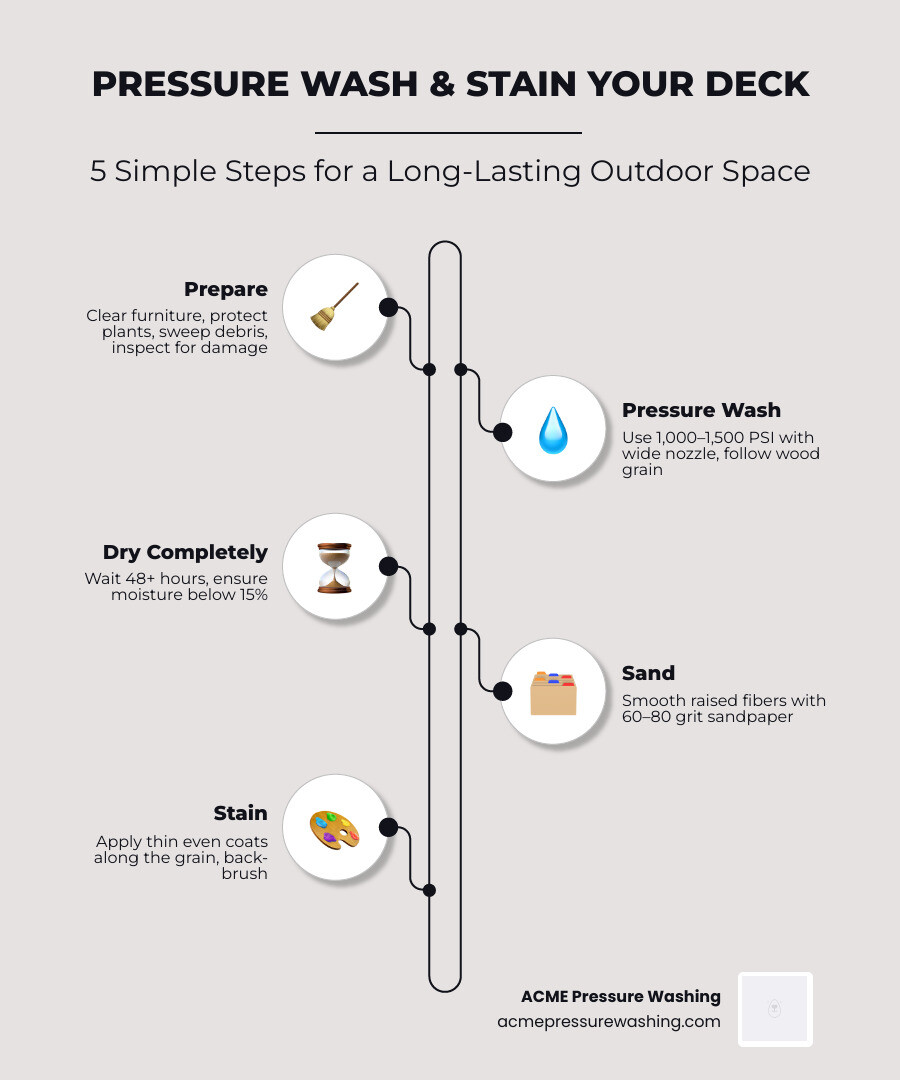
Here’s a quick overview of the 5-step process:
- Prepare — Clear furniture, protect plants, sweep debris, and inspect for damage
- Pressure wash — Use 1,000–1,500 PSI with a wide nozzle, moving along the wood grain
- Dry completely — Wait at least 48 hours and confirm moisture is below 15%
- Sand — Lightly smooth raised wood fibers with 60–80 grit sandpaper
- Stain — Apply thin, even coats in the direction of the grain
Your deck takes a beating year-round. In New England especially, harsh winters, humidity, and UV exposure leave wood looking gray, cracked, and covered in mold. Left untreated, that damage goes deeper than the surface.
The good news? A thorough pressure wash followed by a fresh coat of stain can completely transform a weathered deck — and add years to its life.
Skipping prep work is the most common mistake homeowners make. One DIYer shared that staining without cleaning first led to blotchy, peeling results within just a few months — requiring a full redo. Getting the process right the first time saves you time, money, and frustration.
This guide walks you through every step clearly and simply.
Preparation, Safety, and Equipment
Before we even touch a trigger on a pressure washer, we need to talk about the “boring” stuff that actually makes the project a success: preparation and safety. If you’ve ever tried to paint a room without moving the furniture, you know exactly why this matters.
Gear Up for Success
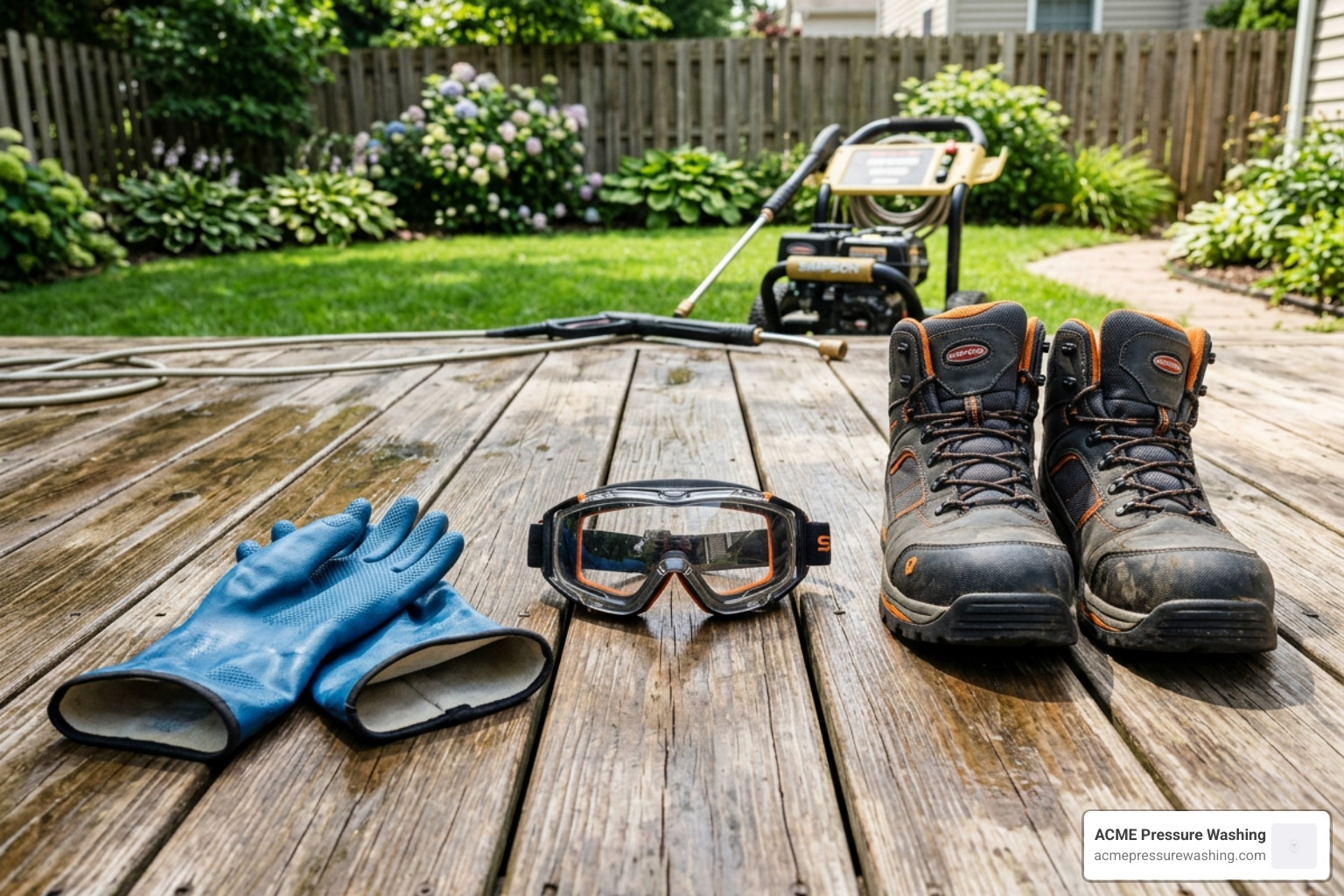
Safety isn’t just a suggestion; it’s a requirement when dealing with high-pressure water and chemical cleaners. We always recommend wearing:
- Safety goggles: To protect your eyes from flying debris and cleaning solutions.
- Non-slip footwear: Decks become incredibly slick once you add water and soap.
- Chemical-resistant gloves: Essential if you are using wood strippers or brighteners.
Clearing the Stage
Start by removing everything from the deck. This includes grills, planters, and that one chair with the broken leg you’ve been meaning to fix. Sweep away loose leaves, pine needles, and dirt. If you have delicate landscaping or flowers surrounding the deck, cover them with plastic sheeting or a tarp. Even eco-friendly detergents can stress out your prize-winning hydrangeas if they get a direct hit.
The Inspection Phase
According to Sherwin-Williams on how to prepare a deck for staining, you must inspect the wood for structural integrity. Check for loose fasteners, popped nails, or rotted boards. If a screw is sticking up, it’s not just a trip hazard—it’s something the pressure washer nozzle could catch. Tighten everything down before you begin.
If you’re located in Merrimack, NH, you know that our local humidity can lead to rapid moss and algae growth. Taking the time to clear the debris and inspect the wood ensures the cleaning agents can actually reach the surface they are meant to treat.
Mastering Pressure Washing and Staining a Deck Techniques
Now for the fun part: the washing. However, “fun” can quickly turn into “expensive” if you use too much power. A pressure washer is a tool, not a weapon, and wood is a relatively soft material.
Setting the Right Pressure
The most common mistake is using a PSI (pounds per square inch) that is too high. While some commercial machines can hit 4,000 PSI, that’s enough to carve your initials into the wood—permanently. For most residential decks, we recommend a range of 1,000 to 1,500 PSI.
Choosing Your Nozzle and Distance
Use a wide-angle fan tip, typically a 40-degree (white) or 25-degree (green) nozzle. Never use the “0-degree” red tip, which acts like a laser and will shred wood fibers instantly.
Keep the nozzle roughly 8 to 12 inches away from the surface. If you get too close, you risk “etching” the wood, leaving permanent wand marks. Always move the wand in long, overlapping strokes following the direction of the wood grain. This ensures that any slight variations in cleaning are hidden by the natural lines of the wood.
Detergents and Mold Removal
Water alone often isn’t enough to kill mold spores. We use eco-friendly detergents that break down the “gray” oxidized layer of the wood and kill mildew at the root. Apply the cleaner, let it sit for about 10-15 minutes (don’t let it dry!), and then rinse it off. This is a standard practice for deck cleaning in Bedford, NH to ensure the surface is truly sterile before the stain goes on.
| Wood Type | Recommended PSI | Nozzle Tip |
|---|---|---|
| Softwoods (Pine, Cedar) | 500 – 1,000 PSI | 40-degree (White) |
| Hardwoods (Oak, Teak) | 1,200 – 1,500 PSI | 25-degree (Green) |
| Composite Decking | 1,000 – 1,200 PSI | 40-degree (White) |
Note: Based on internet data, average costs for professional deck cleaning and preparation range from $450 to $1,800+ depending on size and condition.
Drying, Sanding, and Applying the Stain
You’ve finished the wash, and the deck looks great—but you aren’t done. In fact, the next 48 hours are the most critical part of pressure washing and staining a deck.
The Waiting Game
Wood is like a sponge. After a deep pressure wash, those pores are full of water. If you apply stain now, the oil or acrylic will have nowhere to go. It will sit on top of the water, fail to bond, and peel off within weeks.
You must wait at least 48 hours for the deck to dry. In shaded areas or during humid New Hampshire summers, it might take even longer. Ideally, you want the moisture content of the wood to be below 15%.
Why Sanding Matters
Pressure washing, even when done perfectly, often “raises” the wood grain, leaving the surface feeling slightly fuzzy or hairy. This is where sanding comes in. Using 60 to 80 grit sandpaper, lightly go over the floorboards. This smooths out those raised fibers and opens the wood’s “pores,” allowing the stain to penetrate deeper.
Choosing and Applying Your Stain
According to Lowe’s guide on cleaning, staining, and sealing, you should choose your stain based on the look and protection level you want.
- Transparent/Clear: Shows all wood grain but needs more frequent maintenance.
- Semi-Transparent: Adds color while still showing the grain; lasts 2-3 years.
- Solid: Looks like paint and offers the best UV protection; lasts up to 5 years.
When applying, use the back-brushing technique. Even if you use a roller or sprayer to get the stain on the wood, follow behind with a brush to push the liquid into the grain and the gaps between boards. This ensures an even, professional finish. For a deeper look at the results you can achieve, check out our Deck Pressure Washing Restoration gallery.
Frequently Asked Questions
What is the best PSI for pressure washing and staining a deck?
For most residential wood decks, the “sweet spot” is between 1,000 and 1,500 PSI. If you are working with very soft wood like cedar or older pressure-treated pine, you should drop down to 500-800 PSI. The goal is to lift the dirt and the dead gray fibers without “etching” or gouging the healthy wood underneath. Always use a wide-angle tip (40 degrees) to distribute the pressure evenly.
How do I avoid common mistakes when pressure washing and staining a deck?
The biggest mistakes involve distance and timing.
- Nozzle Distance: Keep the wand at least 8 inches away. Moving too close causes “zebra stripes” or splintering.
- Over-saturation: Don’t hover over one spot for too long. Keep the wand moving.
- Staining Damp Wood: This is the #1 cause of stain failure. If the wood isn’t dry, the stain won’t stick.
- Skipping Sanding: If you don’t sand, the finish will feel rough and won’t look as vibrant.
How long should I wait to stain after pressure washing?
The standard rule is 48 hours of dry weather. However, this depends heavily on your environment. If your deck is in a heavily shaded area in a town like Amherst or Londonderry, it may need 72 hours. If it rains during your drying window, the clock resets! Using a moisture meter is the only way to be 100% sure the wood is ready.
Conclusion
A beautiful deck is the heart of a New England summer. Whether you’re hosting a barbecue in Nashua or enjoying a quiet evening in Hollis, a well-maintained outdoor space makes all the difference. While pressure washing and staining a deck is a project many homeowners can tackle themselves, it requires patience, the right equipment, and a bit of “elbow grease.”
If the thought of spending your entire weekend hauling equipment and scrubbing wood grain doesn’t sound like your idea of a good time, we’re here to help. At ACME Pressure Washing, we have over 38 years of experience serving neighbors in Merrimack, NH and surrounding areas like Bedford, Derry, and Manchester. We use safe, customized, and eco-friendly techniques to ensure your deck looks brand new without the risk of damage.
Ready to bring your deck back to life? Learn more about our professional deck restoration services and let us handle the hard work so you can get back to enjoying your outdoor oasis!
Your Merrimack Roof Has a Problem — And It’s Getting Worse
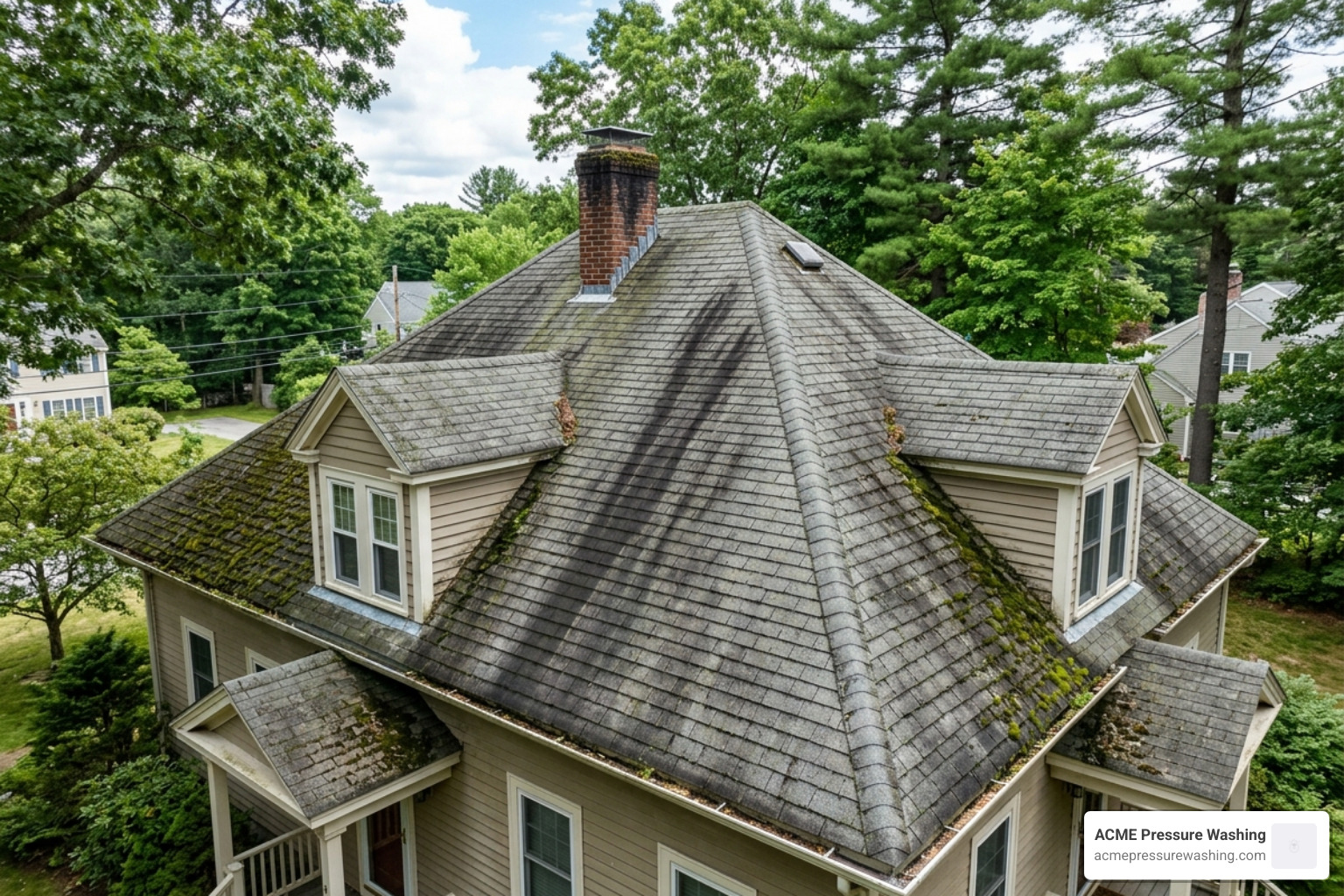
Asphalt shingle roof cleaning is one of the most important — and most overlooked — parts of home maintenance in Merrimack, NH.
Here’s a quick answer for those who want it fast:
How to clean asphalt shingles safely:
- Remove loose debris with a leaf blower or soft broom
- Apply a diluted cleaning solution (bleach-water mix or oxygen-based cleaner) with a low-pressure sprayer
- Let it sit for 15–20 minutes
- Rinse gently from top to bottom with a garden hose
- Never use a pressure washer — it strips protective granules and voids warranties
Now, here’s why this matters for your home specifically.
Those dark streaks running down your roof aren’t just ugly. They’re alive. A bacteria called Gloeocapsa magma feeds on the limestone filler in your shingles, slowly eating away at the material that protects your home. Add moss and lichen into the mix, and you’ve got organisms that lift shingle edges, trap moisture, and accelerate wear.
Over 80% of homes in humid climates develop algae-related roof stains. In shaded, moisture-prone areas like parts of Merrimack, the problem is even worse — moss-related damage accounts for up to 70% of premature roof replacements.
The good news? You don’t need a new roof. You need the right cleaning method.
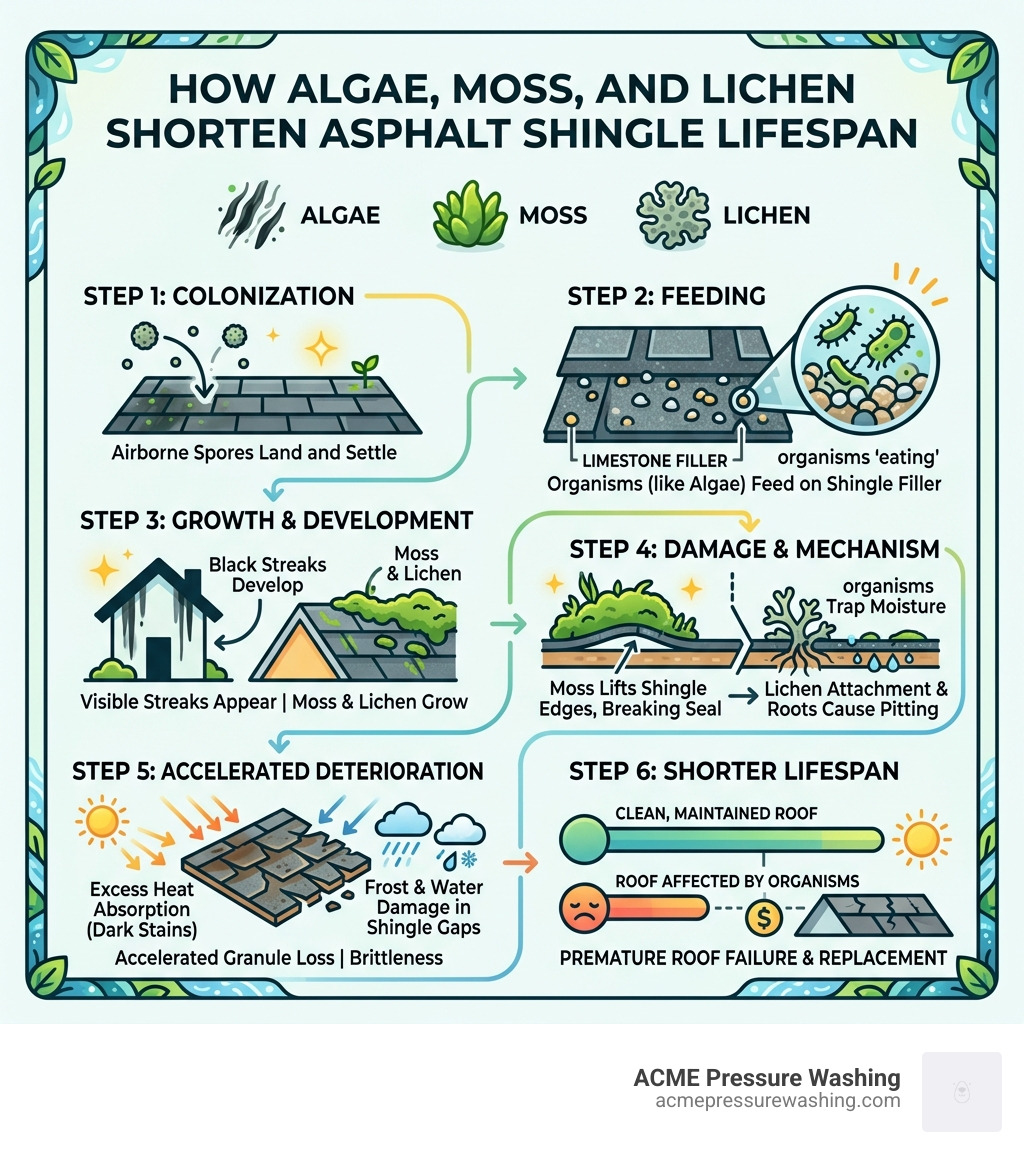
Understanding the Enemies of Your Asphalt Shingle Roof
If you’ve noticed black streaks on your roof, you aren’t looking at “dirt” or “soot.” You are looking at a hardy cyanobacteria called Gloeocapsa magma. This organism is remarkably clever—it travels through the air as spores and lands on your roof, where it begins to feed on the crushed limestone filler used in modern asphalt shingles.
As the algae grows, it develops a dark, pigment-rich outer coating to protect itself from UV rays. This results in those unsightly black streaks that ruin your home’s curb appeal and decrease property value. Because it thrives in shade and moisture, you’ll often see it most prominently on the north-facing side of Merrimack homes.
But algae is just the “gateway” contaminant. Once it establishes a foothold, it creates a moist environment where moss and lichen can thrive.
- Moss colonies: Unlike algae, moss is a plant with a shallow root system. It acts like a sponge, soaking up rainwater and holding it against your shingles.
- Lichen: This is a symbiotic combination of fungus and algae. It has “roots” that can actually penetrate the shingle material, causing permanent scarring.

When moss grows, it doesn’t just sit on top; it grows between and under the shingles. This causes shingle curling and lifting. Once a shingle is lifted, wind can easily catch it and blow it off, or water can wick underneath, leading to wood rot in your roof deck. Furthermore, these dark patches absorb more heat from the sun. A dirty roof can be significantly hotter than a clean one, driving up your summer cooling costs and causing the asphalt to become brittle and crack prematurely. To learn more about the specifics of these growths, you can check out How to Clean Roof Shingles the Right Way.
The Dangers of DIY Asphalt Shingle Roof Cleaning
We understand the temptation to grab a ladder and a bucket of bleach on a Saturday morning. However, asphalt shingle roof cleaning is one of the most hazardous DIY tasks a homeowner can undertake.
First, there is the physical risk. Each year, over 50,000 people are injured from falls while cleaning or maintaining their roofs. A wet roof covered in soapy cleaning solution is essentially a giant slip-and-slide. Professional crews use specialized fall-protection harnesses and slip-resistant footwear for a reason—it’s dangerous up there.
Beyond personal safety, there is the risk to your property:
- Granule Loss: One of the most common DIY mistakes is using too much pressure or aggressive scrubbing. Asphalt shingles are coated in ceramic granules that protect the underlying bitumen from UV damage. If you scrub these off, you are effectively “balding” your roof, which can reduce its lifespan by 25% or more.
- Chemical Runoff: Professional-grade cleaners are effective, but they must be managed. If a DIYer sprays a high concentration of bleach without properly saturating the surrounding landscape, they can kill expensive bushes, flowers, and even grass.
- Warranty and Insurance Issues: Many shingle manufacturers, such as GAF or Owens Corning, have specific guidelines for maintenance. Using unapproved methods (like a pressure washer) can void your manufacturer’s warranty. Additionally, if an insurance adjuster sees signs of neglect or improper cleaning, it could complicate future claims.
| Risk Factor | DIY Cleaning | Professional Soft Washing |
|---|---|---|
| Safety | High risk of falls/injury | Trained pros with safety gear |
| Shingle Health | Risk of granule loss/scarring | Gentle, no-damage approach |
| Effectiveness | Often misses roots/spores | 100% kill rate of organisms |
| Landscape | High risk of plant damage | Pre-wetting and protection used |
| Cost | Cheap (unless repairs needed) | Fixed service fee |
| Warranty | May void manufacturer warranty | Maintains warranty compliance |
Research shows that over 25% of DIY roof cleaning attempts result in damage to shingles, costing homeowners an average of $1,000 in repair costs. When you consider that a professional clean can extend the lifespan of your shingles by up to 30%, the “savings” of DIY often disappear. For more on the technical risks of high pressure, see our guide on pressure-washing-roofs.
Why Soft Washing is the Best Method for Asphalt Shingle Roof Cleaning
At ACME Pressure Washing, we don’t “pressure wash” roofs—we soft wash them. There is a massive difference. While a standard pressure washer can blast water at 3,000 PSI or more, soft washing utilizes a specialized system that operates at under 500 PSI—about the same pressure as a strong garden hose.
Soft washing relies on chemistry rather than brute force. We use a customized blend of biodegradable cleaners, including sodium hypochlorite (the industry standard recommended by the Asphalt Roofing Manufacturers Association) and eco-friendly surfactants. This solution is gently misted onto the roof, where it dwells and kills the algae, moss, and lichen at the root level.
This is the only method that provides a “root-level disinfection.” If you just blast away the surface algae with water, the microscopic spores remain in the pores of the shingle, and the black streaks will return within months. Soft washing ensures the organisms are actually dead, keeping your roof cleaner for much longer. You can see the dramatic results of this method in our gallery-roof-pressure-washing.
For a deeper dive into the technical steps, refer to A Step-by-Step Guide to Cleaning Asphalt Shingles.
The Step-by-Step Process for Asphalt Shingle Roof Cleaning
When we arrive at your Merrimack home, we follow a strict protocol to ensure both the roof and your property are protected:
- Landscape Protection: This is our first priority. We thoroughly saturate all nearby plants, shrubs, and grass with plain water. This creates a “buffer” so that any cleaning solution runoff is diluted and doesn’t harm your greenery.
- Gutter and Debris Clearing: We clear gutters to ensure the cleaning solution can flow freely and remove any loose leaves or sticks from the roof surface using a blower or soft brush.
- Solution Application: Using our low-pressure system, we apply the cleaning solution from the top down. We ensure even coverage, paying special attention to the heavily stained north-facing slopes.
- Dwell Time: We allow the solution to sit (dwell) for 15 to 20 minutes. You can actually see the black streaks disappear as the algae is neutralized.
- Gentle Rinse: We perform a final, low-pressure rinse to wash away the dead organic matter and cleaning residue.
- Final Inspection: We walk the perimeter to ensure the roof is spotless and give the landscaping one last deep soak to ensure the soil pH remains balanced.
Average Costs and Frequency for Asphalt Shingle Roof Cleaning
How much should you expect to invest in asphalt shingle roof cleaning? Based on internet data and regional averages in New Hampshire, professional roof cleaning generally costs between $0.20 and $0.90 per square foot.
For a typical home, this results in a wide price range from $200 to $2,500, depending on the size of the roof, the steepness (pitch), and the severity of the moss or algae growth. A small, single-story ranch with light staining will be on the lower end, while a large, multi-story home with heavy moss carpets will require more time and product.
As for frequency, most homes in the Merrimack area should be cleaned every 1 to 3 years. If your home is surrounded by mature trees or is in a particularly humid, shaded spot, you may need an annual touch-up. Not only does this keep the roof looking new, but it can also lower attic temperatures by over 10°F in the summer, leading to energy savings of 10-20%.
Long-Term Prevention and Maintenance Strategies
Once your roof is clean, you want to keep it that way. Here are the best ways to prevent the “live fungus garden” from returning:
- Zinc or Copper Strips: Installing these metal strips along the ridge of your roof is a highly effective long-term strategy. When it rains, the water hits the metal and releases ions that are toxic to algae and moss. These ions wash down the roof, creating an environment where spores cannot take root.
- Trim Those Branches: Algae and moss love shade. By trimming back overhanging tree branches, you allow more sunlight to hit the shingles and improve airflow, which helps the roof dry out faster after rain.
- Gutter Maintenance: Clogged gutters contribute to 40% of water-related roof failures. When water backs up, it keeps the edge of the roof damp, inviting moss and rot. Keep them clear!
- Annual Inspections: A quick look once a year can catch a small patch of moss before it becomes a roof-wide infestation.
Frequently Asked Questions about Roof Maintenance
Does cleaning an asphalt shingle roof extend its lifespan?
Absolutely. Regular cleaning can extend the lifespan of your shingles by up to 30%. By removing moss and lichen, you prevent moisture from being trapped against the shingles and stop “root” structures from causing wood rot in the roof deck. It is much cheaper to clean a roof every few years than it is to pay for a $15,000 replacement a decade earlier than expected.
Can you use a pressure washer on asphalt shingles?
No. High-pressure washing is the fastest way to destroy an asphalt roof. It strips away the protective granules, forces water underneath the shingles, and can even tear the shingles themselves. Almost all manufacturers warn against this, and doing so will likely void your warranty. Soft washing is the only industry-approved method.
Are commercial spray-and-leave products effective?
Products like Wet & Forget or 30 Seconds can be effective for light maintenance, but they work very slowly—sometimes taking months or several rain cycles to show results. For heavy black streaks or thick moss, these consumer-grade products often lack the “punch” needed for a total kill. Professional-grade soft washing provides instant results and a much deeper clean.
Conclusion: Trust the Merrimack Experts
Your roof is the most expensive “shield” your home has. Don’t let algae and moss eat away at your investment. At ACME Pressure Washing, we bring over 38 years of experience to every job. We live and work right here in Merrimack, NH, and we understand the specific challenges our New England climate poses to your home.
We take pride in using safe, customized, and eco-friendly techniques that deliver professional results without risking the integrity of your shingles or the health of your landscape. Whether you are in Amherst, Bedford, Londonderry, or right here in Merrimack, we are ready to help your home shine again.
Schedule your professional Merrimack roof cleaning today and give your roof the care it deserves!