




That Green Fuzz on Your Roof Is More Dangerous Than It Looks
Safe moss removal techniques are the key to protecting your roof without causing more damage in the process. Here’s a quick overview of what works:
Safe ways to remove moss from roof shingles:
- Soft-bristle brush – Gently brush moss downward (never scrub side to side)
- Oxygen bleach solution – Mix 1 cup per gallon of warm water, spray, wait 20 minutes, rinse gently
- Vinegar solution – Equal parts white vinegar and water plus 1/4 cup salt per gallon
- Baking soda spray – Mix 8 oz per gallon of water, apply, let sit, rinse with low pressure
- Eco-friendly commercial products – Zinc sulfate or potassium salts of fatty acids
- Soft washing – Low-pressure application with biodegradable detergent (best for heavy growth)
Always avoid: pressure washing, wire brushes, chlorine bleach, and aggressive scrubbing.
That green, velvety layer spreading across your shingles might look harmless — even charming in a rustic way. But moss is quietly working against your roof every single day.
Moss acts like a sponge. It traps moisture against your shingles, lifts their edges, and creates the perfect conditions for rot, leaks, and costly structural damage. Left untreated, it can void your roof warranty and shorten your roof’s lifespan by years.
The good news? You don’t need harsh chemicals or a high-pressure washer to deal with it. In fact, those approaches often make things worse. The right techniques are gentler — and far more effective long-term.
This guide walks you through exactly what to do (and what to avoid) when cleaning moss from asphalt shingles.
Why Moss is a “Recipe for Disaster” for Your Roof
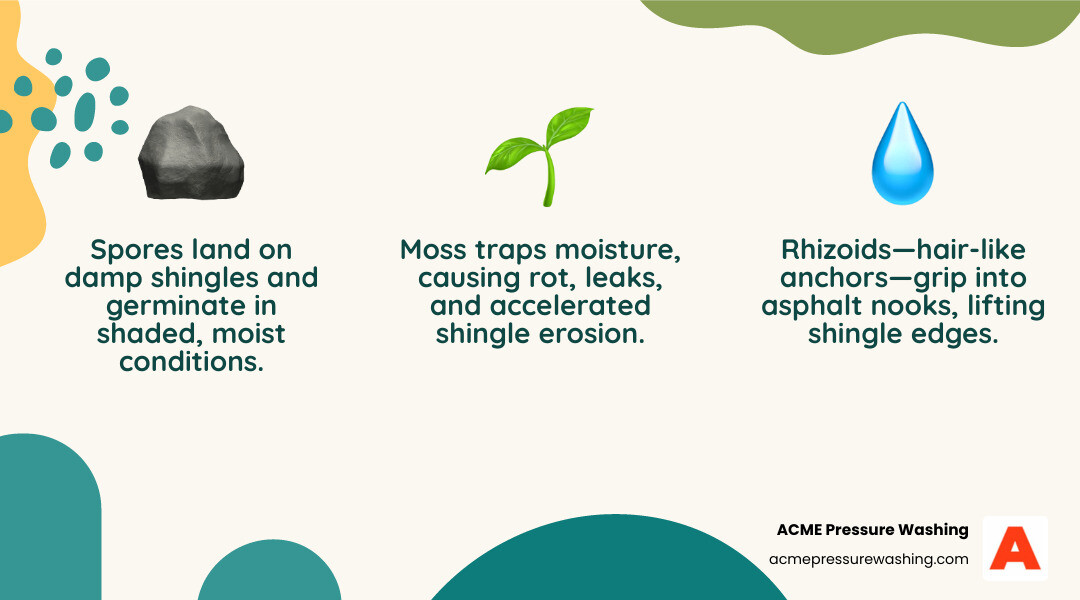
In our 38 years of experience serving neighbors from Nashua to Goffstown, we’ve seen it all. Homeowners often think of moss as a cosmetic issue, but scientifically, it’s a structural predator. Unlike trees that have deep roots, moss uses “rhizoids.” These are tiny, hair-like anchors that don’t just sit on top of your shingles; they grip into the nooks and crannies of the asphalt.
As these rhizoids grow, they begin to lift the edges of your shingles. This creates a “lip” that allows wind-driven rain to blow underneath. Once moisture gets under the shingle, you’re looking at a fast track to wood rot and internal leaks. Furthermore, moss is a heavy drinker. It stays saturated long after the sun comes out, keeping your roof deck damp and heavy.
According to experts at the Boston Globe’s Ask the Remodeler, moss also produces acidic byproducts as it decomposes. These acids eat away at the limestone filler used in modern asphalt shingles. This leads to premature erosion of the protective granules—the “sand” that protects your roof from UV rays. Without these granules, your shingles become brittle and crack.
There’s also an energy efficiency angle. A moss-covered roof absorbs more heat and retains more moisture, making your attic hotter and forcing your AC to work harder during those humid New Hampshire summers. If you’re curious about the technical dangers of high-pressure alternatives, you can read more about Pressure Washing Roofs and why caution is required.
Safe Moss Removal Techniques for Homeowners
If you’re a DIY enthusiast in Merrimack or Bedford, you might be tempted to climb up there and start scrubbing. Before you do, safety is the absolute priority. Never step onto a wet, mossy roof—it’s like walking on a greased slide. Ensure you have a safety harness, a sturdy ladder, and non-slip footwear.
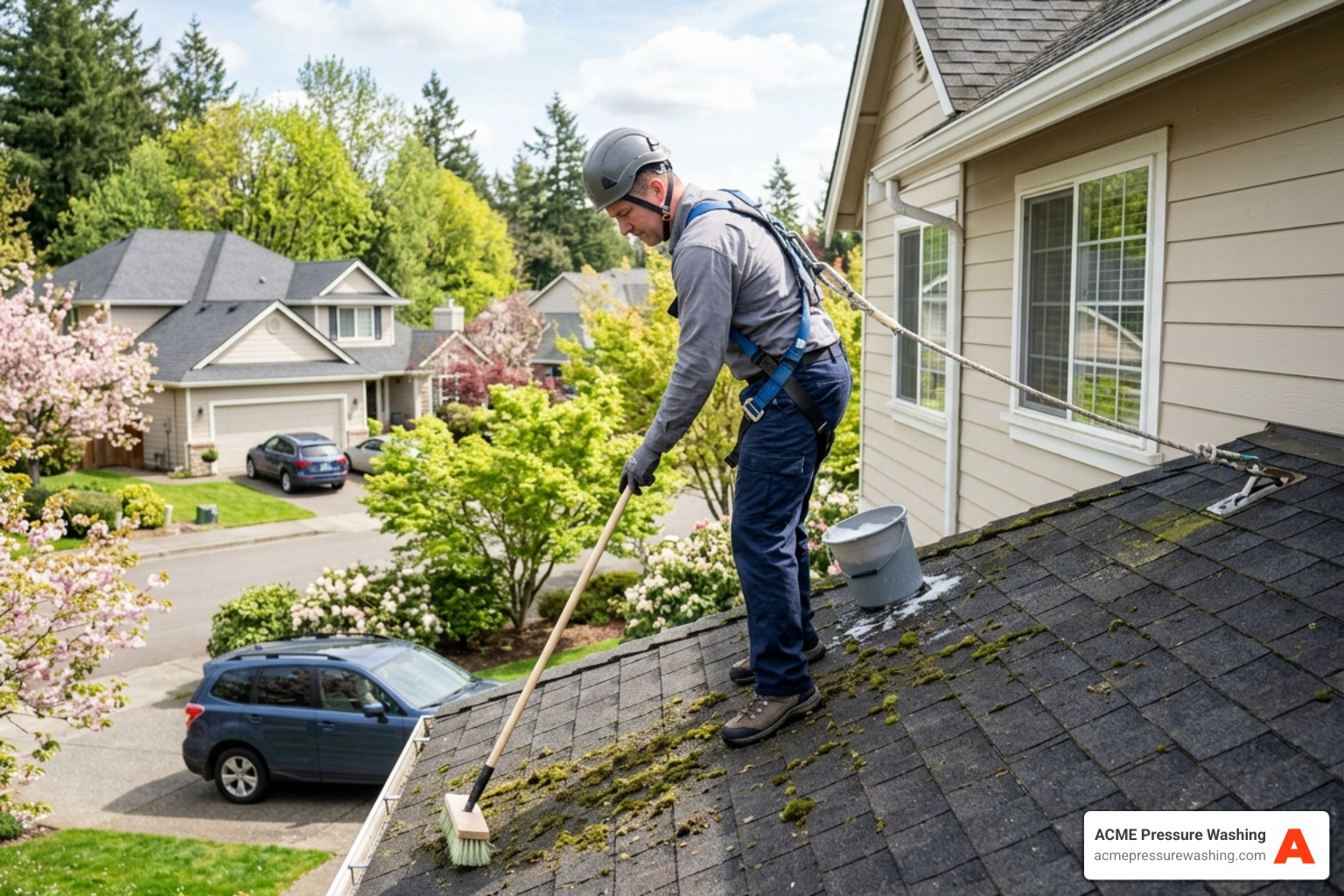
The most effective manual safe moss removal techniques involve patience rather than power.
- Manual Brushing: Use a soft-bristle brush or a long-handled broom. The trick is to brush in a downward motion. Brushing upward can catch the edge of the shingle and snap it off. Never use a wire brush, as it will strip the protective granules right off the asphalt.
- The Gentle Rinse: Use a standard garden hose with a spray nozzle. Avoid the “jet” setting. You want enough flow to wash away the loosened moss without forcing water under the shingle laps.
- Timing Matters: The best time to remove moss is when it is moist and actively growing (usually spring or fall in New Hampshire). Dry, crusty moss is harder to remove without damaging the shingles.
For a great visual guide on what a clean roof should look like after a professional touch, check out our Gallery Roof Pressure Washing. For more DIY tips, Lowe’s provides a helpful guide on roof moss removal that aligns with these safe practices.
Using Eco-Friendly Solutions as Safe Moss Removal Techniques
We believe in protecting the beautiful environment we share in the Granite State. Using harsh chemicals like concentrated chlorine bleach can kill your prize-winning hydrangeas or harm local wildlife when the runoff hits the ground. Instead, consider these eco-friendly options:
- Oxygen Bleach: Unlike standard laundry bleach (sodium hypochlorite), oxygen bleach (sodium percarbonate) is biodegradable and won’t kill your lawn. Mix one cup per gallon of warm water. It breaks down the organic structure of the moss without dissolving your shingles.
- Vinegar and Salt: A mixture of white vinegar and water (1:1 ratio) with a bit of salt is a classic natural herbicide. The acetic acid in the vinegar is a potent moss killer.
- Baking Soda: This is a fantastic “moisture absorber.” By increasing the pH level on the roof surface, baking soda makes it impossible for moss (which loves acidic environments) to survive.
- Potassium Salts of Fatty Acids: These are found in many “eco-safe” commercial moss killers. They work by dehydrating the moss on contact.
- Zinc Sulfate: This is a slow-acting but highly effective mineral. When it rains, the zinc ions wash over the moss and kill it. It’s much safer for the roof material than harsh acids.
When applying these solutions, we always recommend “Soft Washing.” This technique uses low pressure to apply the cleaning agent, allowing the solution to do the heavy lifting. You can learn more about why soft washing wins for roof cleaning on our specialized service page.
Why Pressure Washing Fails as a Safe Moss Removal Technique
It’s tempting to rent a high-powered pressure washer from a local hardware store in Amherst or Londonderry and blast that moss away in twenty minutes. Don’t do it.
High-pressure water is the natural enemy of an asphalt shingle. Here is why:
- Granule Loss: The force of the water will strip away the ceramic-coated granules. These granules are your roof’s only defense against the sun. Losing them is like sending your roof out into a 90-degree July day without sunscreen.
- Water Intrusion: Pressure washers can force water upward under the shingles, soaking your underlayment and plywood deck. This leads to mold growth inside your attic that you might not notice until it’s a $10,000 problem.
- Warranty Voidance: Most shingle manufacturers, like GAF or Owens Corning, explicitly state that high-pressure washing will void your warranty.
- Limestone and Algae: Many roofs in New Hampshire also suffer from Gloeocapsa magma, a type of cyanobacteria that creates black streaks. This bacteria feeds on the limestone filler in your shingles. Pressure washing might clear the surface, but it won’t kill the microscopic spores, meaning the streaks (and the moss) will be back within months.
Long-Term Prevention and Maintenance Strategies
Once you’ve cleared the moss, the goal is to make sure it never comes back. Moss prevention is 90% about changing the environment on your roof.
- Let the Sun Shine In: Moss thrives in the shade. Trimming overhanging tree branches is the single most effective thing you can do. Most grass and roof surfaces need 6 to 8 hours of bright light daily to stay moss-free.
- Install Metal Strips: Zinc or copper strips installed near the roof ridge are a “set it and forget it” solution. When it rains, the water picks up metallic ions that act as a natural poison to moss and algae spores.
- Gutter Maintenance: Clogged gutters keep the edges of your roof damp. Regular cleaning ensures that water moves off the roof and away from the house quickly.
- Annual Inspections: A quick check every spring and fall can catch a small patch of moss before it becomes a full-blown infestation.
DIY vs. Professional Maintenance Comparison
| Feature | DIY Removal | Professional Soft Wash |
|---|---|---|
| Risk Factor | High (Fall risk) | Low (Insured professionals) |
| Tool Cost | $50 – $150 | Included in service |
| Effectiveness | Moderate (Surface only) | High (Kills spores at the root) |
| Time Investment | 4 – 8 hours | 1 – 2 hours |
| Warranty Safe | Risk of damage | Yes (ARMA Compliant) |
Frequently Asked Questions about Moss Removal
Does vinegar kill moss on roof shingles?
Yes, vinegar is an effective tool among safe moss removal techniques. The acetic acid in white vinegar breaks down the cell walls of the moss. For the best results, mix equal parts white vinegar and water with 1/4 cup of salt per gallon. Spray it on a cool, overcast day so it doesn’t evaporate too quickly. Let it sit for 20–30 minutes, then rinse it away with a low-pressure garden hose. Just be careful with the runoff, as vinegar can also harm your decorative plants if it hits them in high concentrations.
How much does professional moss removal cost?
Pricing for professional moss removal can vary based on several factors, including the pitch of your roof, the height of the home, and how much “greenery” is currently living up there.
Based on internet-based average costs, homeowners can expect a wide range of pricing. A small, ranch-style home with minor growth might start around $400, while a large, steep-pitched colonial with heavy infestation could reach $1,500 or more. Factors like the square footage of the roof and the severity of the moss “carpet” play the biggest roles in determining the final quote. We always recommend getting a customized estimate to ensure you’re getting the right treatment for your specific New Hampshire home.
Conclusion
Your roof is one of the most significant investments you’ll ever make in your home. Protecting it requires a balance of regular maintenance and the right safe moss removal techniques. While DIY methods work for small patches, heavy growth often requires the precision of a professional soft wash to ensure the moss is killed at the spore level without damaging your shingles.
At ACME Pressure Washing, we bring over 38 years of experience to every job. Whether you’re in Merrimack, Nashua, or Manchester, we use customized, eco-friendly techniques designed specifically for the New Hampshire climate. We don’t just clean; we preserve.
Ready to restore your roof’s curb appeal and extend its lifespan? Explore our Professional Pressure Washing Services or contact us today for a free estimate. Let us help you keep your home safe, dry, and moss-free for years to come!
