The Ultimate Guide to Finding the Perfect PSI for Concrete Driveways
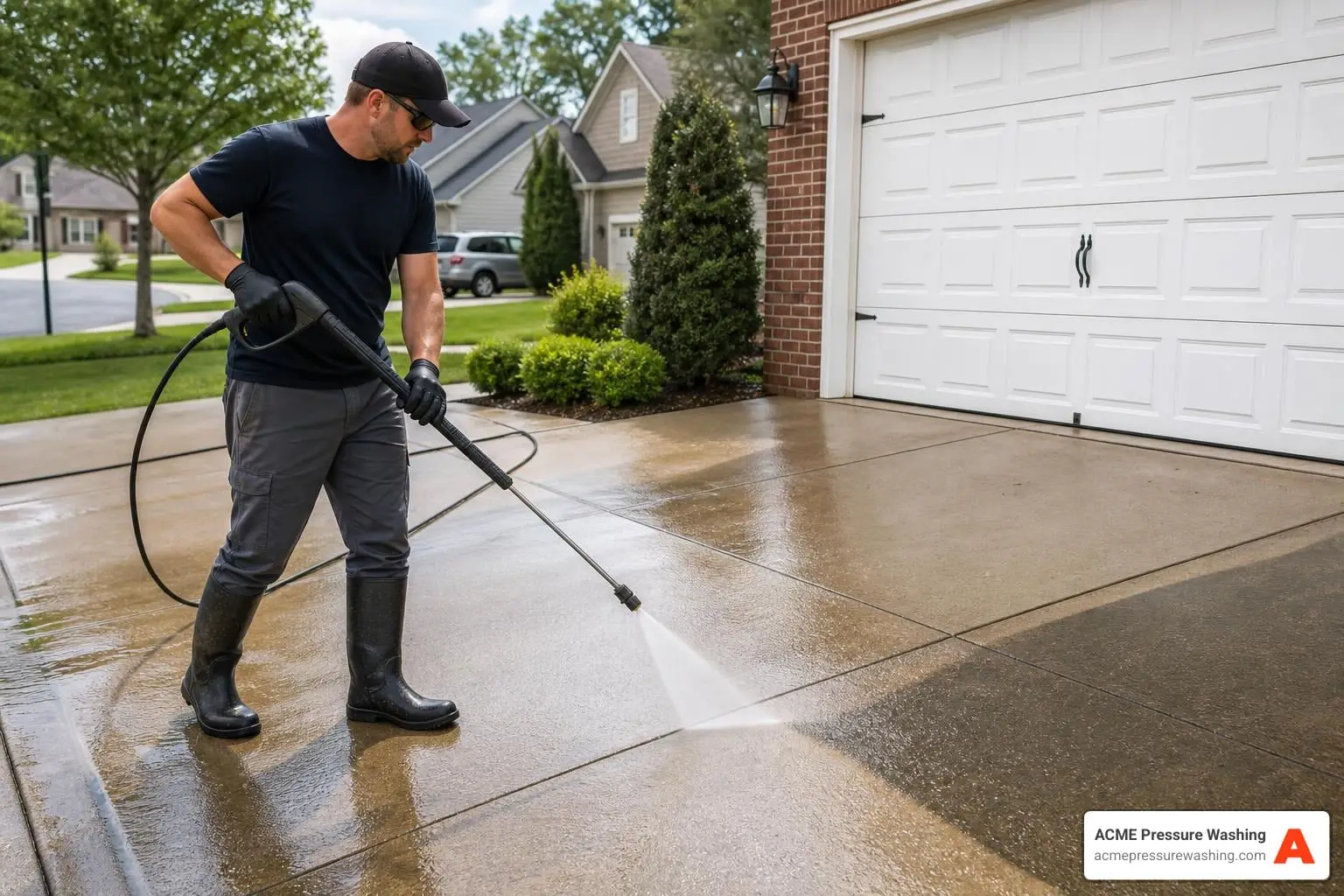
What Is the Best PSI for Pressure Washing a Driveway? (Quick Answer)
Knowing the best PSI for pressure washing a driveway is the single most important setting you need to get right — use too little and the grime stays put, use too much and you risk permanently damaging your surface.
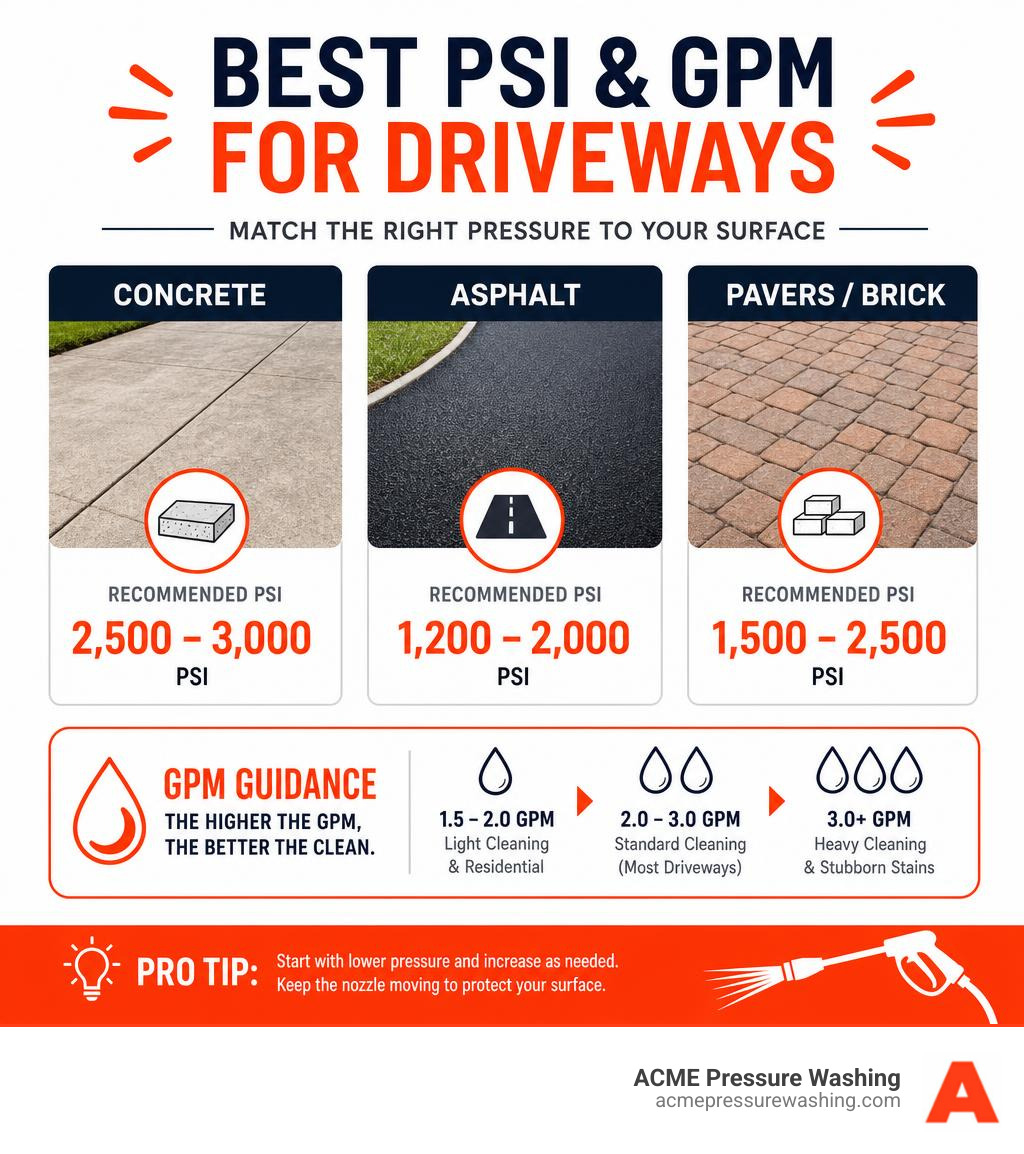
Here is the quick answer by surface type:
| Driveway Surface | Recommended PSI Range |
|---|---|
| Concrete | 2,500 – 3,000 PSI |
| Brick / Pavers | 1,500 – 2,500 PSI |
| Asphalt | 1,200 – 2,000 PSI |
| Stamped / Sealed Concrete | 1,500 – 2,000 PSI |
For most residential, commercial, and facility concrete driveways in New Hampshire, 2,500–3,000 PSI is the sweet spot. It removes oil stains, tire marks, road salt residue, and mold without etching or scarring the surface.
Driveways take a beating — especially here in New Hampshire. Between harsh winters, road salt, freeze-thaw cycles, and heavy vehicle traffic, the concrete and asphalt surfaces around properties in Merrimack, Nashua, Bedford, and Manchester accumulate layers of grime that a garden hose simply cannot touch. Pressure washing is the most effective solution, but the pressure setting matters more than most people realize. Too high, and you permanently etch the concrete. Too low, and you waste your time.
I’m Lionel Greenwood, owner of ACME Pressure Washing, and with over 38 years of hands-on experience cleaning driveways across New Hampshire, I’ve seen what the wrong PSI can do to a driveway, and I’ll walk you through exactly how to get it right. This guide covers everything you need to choose the best PSI for pressure washing a driveway, whatever surface you’re working with.
Why PSI and GPM Matter for Driveway Cleaning
When evaluating pressure washing performance, the focus is often entirely on PSI (Pounds per Square Inch). While PSI represents the stripping power—the sheer force that breaks the bond between dirt and your driveway—it is only half of the equation. The other critical metric is GPM (Gallons per Minute), which measures the volume of water flowing through the system.
Think of PSI as the chisel that knocks the dirt loose, and GPM as the broom that sweeps it away. If a system has high PSI but low GPM, it can pinpoint-blast a tiny spot, but will struggle to clean a large area because there is not enough water volume to flush the dislodged debris away.
To understand the true efficiency of a pressure washing setup, we look at Cleaning Units (CU), which is calculated as:
$$text{Cleaning Units} = text{PSI} times text{GPM}$$
For example, a standard light-duty setup delivering 2,000 PSI at 1.5 GPM yields 3,000 Cleaning Units. Meanwhile, a commercial-grade system running at 3,000 PSI and 4.0 GPM delivers 12,000 Cleaning Units. The commercial system cleans a driveway up to four times faster, not just because of the higher pressure, but because of the massive volume of water flushing the surface. Understanding the relationship between PSI and GPM is essential—the Pressure Washing entry on Wikipedia provides a helpful overview of how these systems work.
When you increase the GPM, you can actually lower the PSI and still clean more efficiently. This is an approach we use daily when providing professional pressure washing services across New Hampshire. We match high-volume water flow with moderate, safe pressures to protect concrete, walkways, sidewalks, patios, commercial entrances, and other exterior surfaces while delivering a consistent finish.
Determining the Best PSI for Pressure Washing Driveway Surfaces
No two driveways are exactly alike, and using a one-size-fits-all pressure setting is a recipe for disaster. Different materials require vastly different approaches to avoid costly structural damage.
In New Hampshire, where commercial facilities in Manchester and surrounding business properties may include concrete, asphalt, pavers, or sealed decorative surfaces, we encounter a wide variety of driveway materials. Let’s break down the ideal pressure settings for the three most common surfaces.
The Best PSI for Pressure Washing Driveway Concrete Safely
Standard poured concrete is highly durable, but it is not indestructible. Concrete is a porous material with a smooth top layer known as the “cream coat.” If you exceed safe limits, you can permanently damage this top layer.
- The Golden Range: For standard, fully cured concrete driveways, the best PSI for pressure washing a driveway is 2,500 to 3,000 PSI. This range provides more than enough power to lift embedded tire marks, mold, mildew, and stubborn grime.
- The Danger Zone (4,000+ PSI): Pushing your pressure washer to 4,000 PSI or higher is generally too aggressive for standard residential or commercial concrete. It can cause etching, pitting, and spalling, where the top layer flakes off.
- The Curing Rule: If you have a newly poured concrete driveway, do not pressure wash it for at least a year. New concrete takes up to 28 days to reach its design strength and up to a full year to completely cure. Washing it too early, even at 2,000 PSI, can permanently ruin the finish.
Adjusting the Best PSI for Pressure Washing Driveway Pavers and Asphalt
If your driveway is made of pavers or asphalt, you must adjust your settings downward.
Brick and Paver Driveways (1,500 – 2,500 PSI)
Paver driveways are attractive, but they rely on joint sand or polymeric sand to lock the stones together and maintain structural integrity.
- The Risk: Blasting pavers with 3,000 PSI will wash away the joint sand, causing the pavers to shift, sink, or wobble over time.
- The Technique: Keep your pressure between 1,500 and 2,500 PSI. A trained operator should use a wide-angle fan nozzle and avoid driving water directly into the joints. If you want to dive deeper into this specialized task, read our guide on Pressure Washing Paving Stones Like a Pro.
Asphalt Driveways (1,200 – 2,000 PSI)
Asphalt is a softer, petroleum-based material that is much more delicate than concrete.
- The Risk: High pressure will strip away the fine aggregate and essential oils that keep the asphalt flexible. This leads to premature cracking, unraveling, and expensive repaving bills.
- The Setting: Never exceed 2,000 PSI on asphalt. Keep the nozzle moving constantly, and use a wide spray pattern to distribute the impact. For best results, asphalt cleaning should be handled with professional equipment, controlled pressure, and appropriate detergents.
Essential Equipment, Nozzles, and Professional Techniques
Achieving a professional-grade clean without damaging your driveway relies heavily on using the right accessories and techniques.
The Nozzle Color System: Your First Line of Defense
Professional pressure washing relies on color-coded spray tips that restrict the water flow to create different spray angles. Using the wrong tip can instantly scar your driveway.
- Red (0-Degree): This tip creates a pinpoint, laser-like stream of water. Never use this on a driveway. It can easily cut into surfaces and etch concrete.
- Yellow (15-Degree): A narrow fan spray. Use this with extreme caution only for heavy-duty spot cleaning on tough stains like dried paint or rust.
- Green (25-Degree): The industry standard for concrete cleaning. It provides a balanced fan pattern that lifts dirt quickly and safely.
- White (40-Degree): A wide, gentle spray. This is the preferred nozzle for more delicate surfaces such as asphalt, pavers, and sealed areas.
- Black (Soap Tip): A low-pressure nozzle used specifically to draw detergents and cleaning solutions into the water stream.
Why You Should Use a Surface Cleaner Attachment
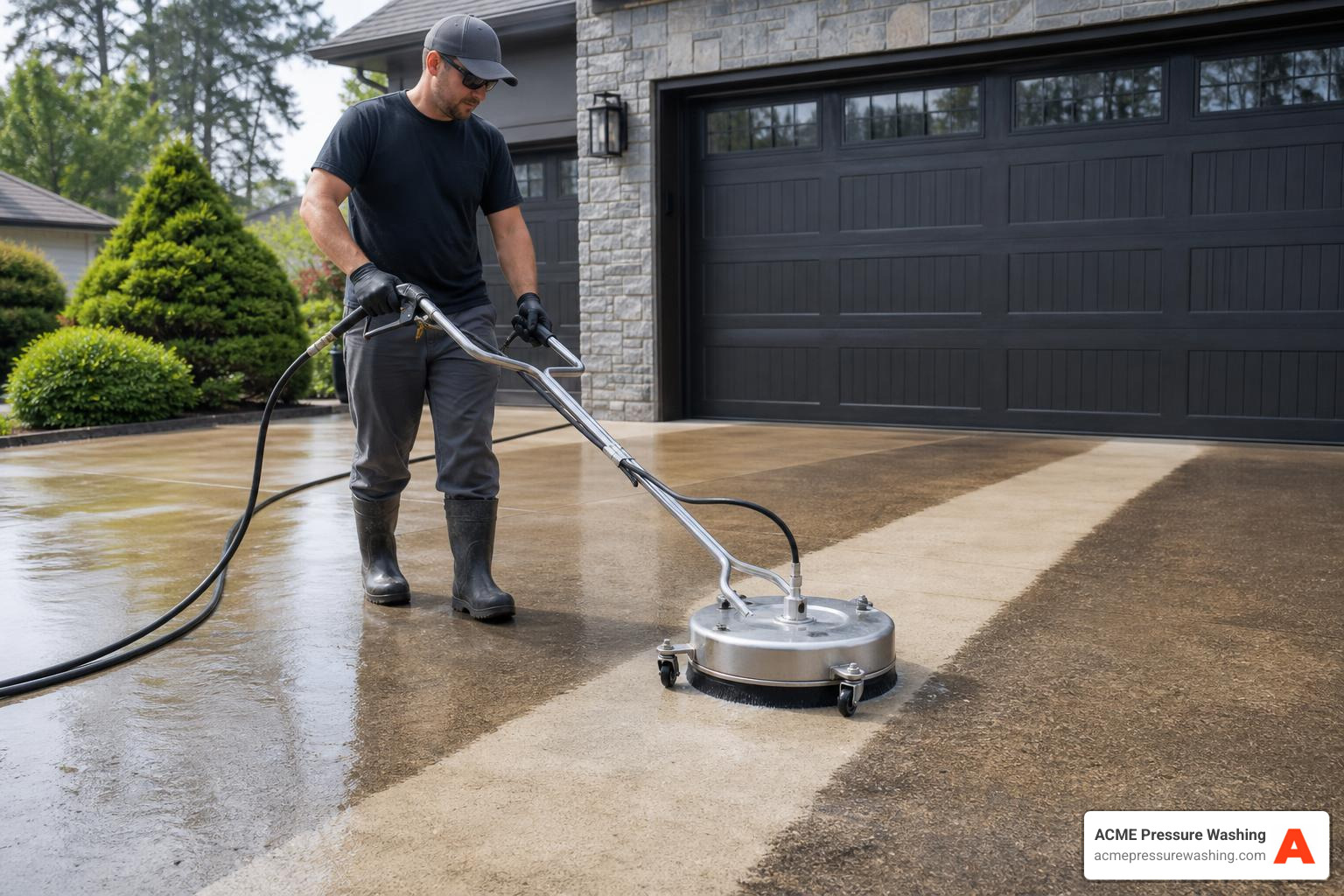
If a large driveway is cleaned using only a standard wand and a green nozzle, it can result in “zebra striping”—uneven, clean-and-dirty lines caused by slight variations in distance and movement.
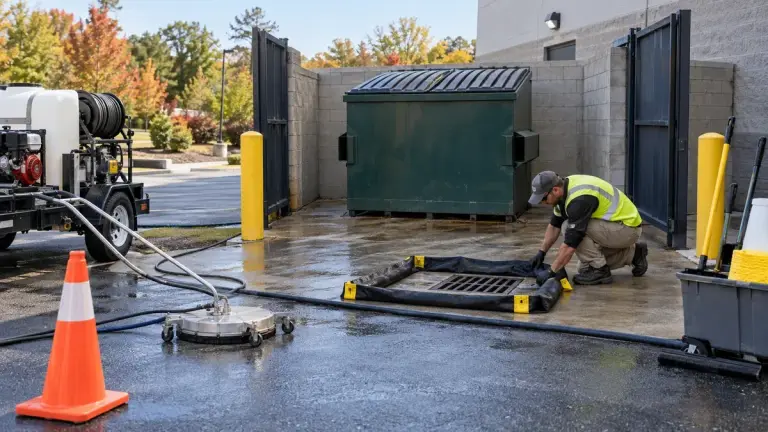
To prevent this, professionals use a surface cleaner attachment. This dome-shaped device houses a rotating bar with two or more nozzles. It hovers at a fixed, consistent height just above the concrete, distributing the water pressure evenly. It eliminates zebra striping, keeps overspray contained, and reduces cleaning time. For more on avoiding common concrete cleaning errors, see our guide on how to Stop Making These Noob Mistakes During Concrete Power Washing.
The Power of Chemical Pre-Treatment
The smartest way to pressure wash a driveway is to let chemistry do the heavy lifting. Instead of relying on raw, destructive water pressure to blast away stains, we apply professional-grade, eco-friendly detergents or degreasers first.
Applying a pre-treatment cleaner and letting it “dwell” for 10 to 15 minutes breaks down engine oil, grease, mold, and algae at the molecular level. Once the chemical has loosened the bond, the grime can be rinsed away using a much lower, safer PSI.
The Risks of In-House Cleaning and the Value of Professional Cleaning in New Hampshire
It is tempting for property teams to handle driveway, sidewalk, or concrete cleaning with rented or light-duty equipment. However, pressure washing carries significant risks when the operator is not trained in surface protection, detergent selection, runoff control, and pressure calibration.
The True Cost of Untrained Cleaning Mistakes
Without proper training, it is incredibly easy to make a split-second mistake. Holding a high-pressure nozzle just two inches too close to your concrete can leave permanent gouges that cannot be repaired—only patched or replaced. Furthermore, high-pressure water streams are highly dangerous; they can cause severe skin lacerations and inject water deep into soft tissue.
For business properties, commercial buildings, walkways, sidewalks, pool areas, loading areas, and vehicle aprons, professional cleaning is the safer and more predictable choice.
The NH Climate Factor
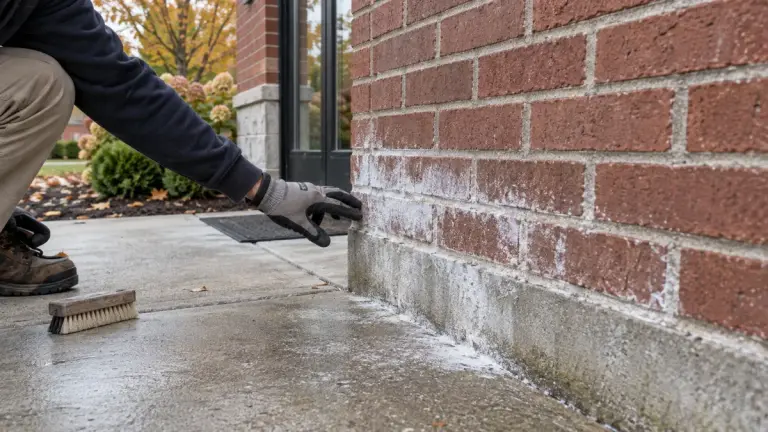
In southern New Hampshire, concrete faces unique challenges. Throughout the winter, road salt and chemical de-icers accumulate on driveways, sidewalks, and commercial entrances. These chlorides seep deep into the porous concrete. When the spring freeze-thaw cycles hit, the trapped water expands, causing the concrete to crack, scale, and flake.
Light-duty equipment often lacks the heating elements and water volume needed to thoroughly flush these deeply embedded salts out of the concrete pores. Our professional trucks utilize hot-water systems and calibrated pressures to help remove winter salts and protect exterior surfaces.
Understanding the Investment
When researching driveway cleaning costs online, you will find a wide range of average prices. All prices mentioned here are average costs sourced from publicly available internet data and broad industry averages; they are not the actual prices, quotes, guarantees, or rate structure of ACME Pressure Washing.
Based on publicly available online data, a standard driveway cleaning average is often cited around $150 to $200. To account for industry variability, project complexity, surface type, staining, safety requirements, access, water availability, and professional-grade equipment, a realistic planning range should be much wider: approximately $400 on the low end to $1,000 or more on the high end for large driveways, commercial parking aprons, oil stain remediation, or post-cleaning sealer work.
For a detailed breakdown of what goes into these cost factors, explore our Driveway Cleaning Cost Guide for a Sparkling Entrance.
| Feature / Risk | In-House or Untrained Cleaning | ACME Professional Cleaning |
|---|---|---|
| Risk of Surface Damage | High (Etching, spalling, gouging) | Reduced through customized, calibrated pressure |
| Water Volume (GPM) | Low (Typically 1.2 – 2.5 GPM) | High (Commercial 4.0 – 8.0 GPM) |
| Stain Removal Power | Moderate (Cold water, basic soaps) | Superior (Hot water, industrial degreasers) |
| Safety Risk | High (Lacerations, chemical exposure) | Managed by trained, licensed, and insured professionals |
| Time Investment | 4 to 8 hours of labor | Often 1 to 2 hours, depending on project scope |
Frequently Asked Questions About Driveway Pressure Washing
Is 3000 PSI too much for a concrete driveway?
No, 3,000 PSI is generally safe for standard, fully cured concrete driveways, provided the correct professional technique is used. A wide-angle fan nozzle or surface cleaner attachment should be used, and the operator must maintain a consistent distance from the surface. A 0-degree red nozzle or an excessively close spray pattern can cause etching.
Can you pressure wash a driveway with an electric pressure washer?
Yes, but it is typically only suitable for light-duty cleaning. Electric systems generally deliver lower pressure, maxing out around 1,800 to 2,000 PSI with a low water flow rate of 1.2 to 1.5 GPM. While this may suffice for minor surface soil, it is usually inefficient for larger concrete areas, oil stains, commercial entrances, or heavy mold buildup. Professional-grade hot-water equipment is recommended for consistent results and surface protection.
How often should a concrete driveway be pressure washed in NH?
For most properties in southern New Hampshire, we recommend a thorough professional cleaning once every 12 to 18 months. Scheduling this in the early spring is highly beneficial, as it immediately flushes away the corrosive road salt and de-icers left behind by the winter season before the summer heat can bake them into the concrete pores.
Conclusion
Finding the best PSI for pressure washing a driveway is all about balancing cleaning power with surface safety. While concrete can handle up to 3,000 PSI, delicate surfaces like asphalt and pavers require a gentler touch, specialized nozzles, and chemical pre-treatment to prevent permanent, costly damage.
At ACME Pressure Washing, we have spent over 38 years perfecting the art of exterior cleaning. Serving properties throughout southern New Hampshire—including Merrimack, Bedford, Nashua, and Hollis—we combine state-of-the-art hot-water equipment with safe, customized, eco-friendly techniques to restore driveways, concrete, walkways, sidewalks, patios, commercial entrances, and fleet areas.
Whether you need driveway restoration, professional house washing, commercial building cleaning through our pressure washing services, or heavy-duty fleet and equipment pressure washing, our experienced team is ready to help. To learn more about selecting the right local experts for your property, read The Ultimate Guide to Local Power Washing Services.
Ready to restore your driveway’s curb appeal safely and effectively?