How to Safely Pressure Wash Roofs in 5 Simple Steps

Understanding Roof Cleaning: Pressure Washing vs. Soft Washing
When property managers and building owners in Bedford, NH, Merrimack, NH, and Manchester, NH look up at their commercial structures or multi-family properties, seeing dark growth on the shingles often prompts an immediate desire to blast it away. However, understanding the technical distinction between standard high-pressure washing and dedicated soft washing is the first step toward maintaining structural integrity.
Standard pressure washing relies purely on mechanical force-often between 1,500 and 4,000 PSI (pounds per square inch)-to dislodge grime. While this high kinetic energy is excellent for concrete sidewalks or steel equipment, it is inherently destructive to standard roofing materials. In contrast, soft washing replaces high mechanical force with targeted chemical action. A soft wash delivery system operates at a low pressure threshold, typically between 50 and 150 PSI (similar to the output of a standard garden hose nozzle).
Instead of stripping away stubborn biological growth using sheer force, soft washing applies specialized cleaning solutions that break down organisms like Gloeocapsa magma (the cyanobacteria responsible for black roof streaks), moss, and lichen down to their cellular root structures. To learn more about how chemical treatments safely resolve biological staining, read the ultimate guide to soft washing algae removal.
| Cleaning Parameter | Traditional High-Pressure Washing | Low-Pressure Soft Washing |
|---|---|---|
| Operating Pressure | 1,500 to 4,000+ PSI | 50 to 150 PSI |
| Primary Cleaning Mechanism | High kinetic force / mechanical impact | Chemical treatment + gentle rinse |
| Shingle Granule Preservation | High risk of stripping granules | 100% protective granule retention |
| Protection Longevity | 6 to 18 months (spores remain) | 2 to 5 years (kills root spores) |
| Manufacturer Compliance | Prohibited by ARMA, GAF, Owens Corning | Fully endorsed standard method |
Materials That Can and Cannot Handle High Pressure
Every roofing substrate reacts differently to water pressure. Using the wrong application method on delicate materials causes immediate, irreversible damage.
- Asphalt Shingles: Asphalt shingles cover roughly 80% of American buildings. These shingles rely on embedded ceramic granules to block ultraviolet (UV) radiation and shield the underlying asphalt membrane. High pressure instantly strips these granules, dramatically shortening shingle life. For a deeper breakdown on shingle vulnerabilities, see our article on can you power wash shingles risks and safer alternatives.
- Concrete Tile: Concrete tiles can withstand higher mechanical impact (roughly 1,200 to 2,000 PSI) when handled by a skilled professional. However, excessive force can wear away protective surface paint or anti-fungal coatings.
- Metal Roofs: Standing seam and corrugated metal roofs handle 1,200 to 1,500 PSI well, provided wide 40-degree spray tips and pH-neutral solutions are used to avoid scratching protective anti-corrosion coatings.
- Clay Tile & Slate: Clay tiles and natural slate are highly brittle. While clay might tolerate controlled pressure around 1,000 to 1,800 PSI, improper angles can crack expensive tiles or force water past interlocks. Soft washing remains the superior protocol.
- Cedar Shake: High pressure gouges natural wood fibers, creating “fuzzing” and splitting the wood grain. Cedar shakes require specialized low-pressure chemical restoration.
Why High Pressure Voids Manufacturer Warranties
Major asphalt shingle manufacturers-including industry leaders like GAF and Owens Corning-as well as the Asphalt Roofing Manufacturers Association, explicitly prohibit high-pressure washing above 100 PSI on asphalt shingles.
A standard asphalt shingle roof represents a major asset designed to last 20 to 30 years. Blasting asphalt shingles with a 2,500 PSI pressure washer strips away the protective granule layer. Granule loss leaves the underlying asphalt backing exposed to intense solar heat and UV degradation, causing shingles to curl, cup, and crack.
Furthermore, blasting high-pressure streams upwards forces water under the shingle overlaps, tearing the factory adhesive seal, saturating the underlayment, and inviting hidden structural rot within the roof decking. When a manufacturer inspects a compromised roof and detects pressure-induced granule loss or dislodged adhesive strips, the warranty is instantly voided. Practicing safe pressure wash roofs techniques guarantees full warranty compliance while preserving the property’s envelope.
5 Steps to Safe Pressure Wash Roofs (The Soft Wash Method)
Executing a successful low-pressure roof cleaning requires strict adherence to a professional, systematic workflow. Here is the step-by-step soft wash protocol we utilize across commercial and multi-family structures in Nashua, NH, Londonderry, NH, and Amherst, NH.
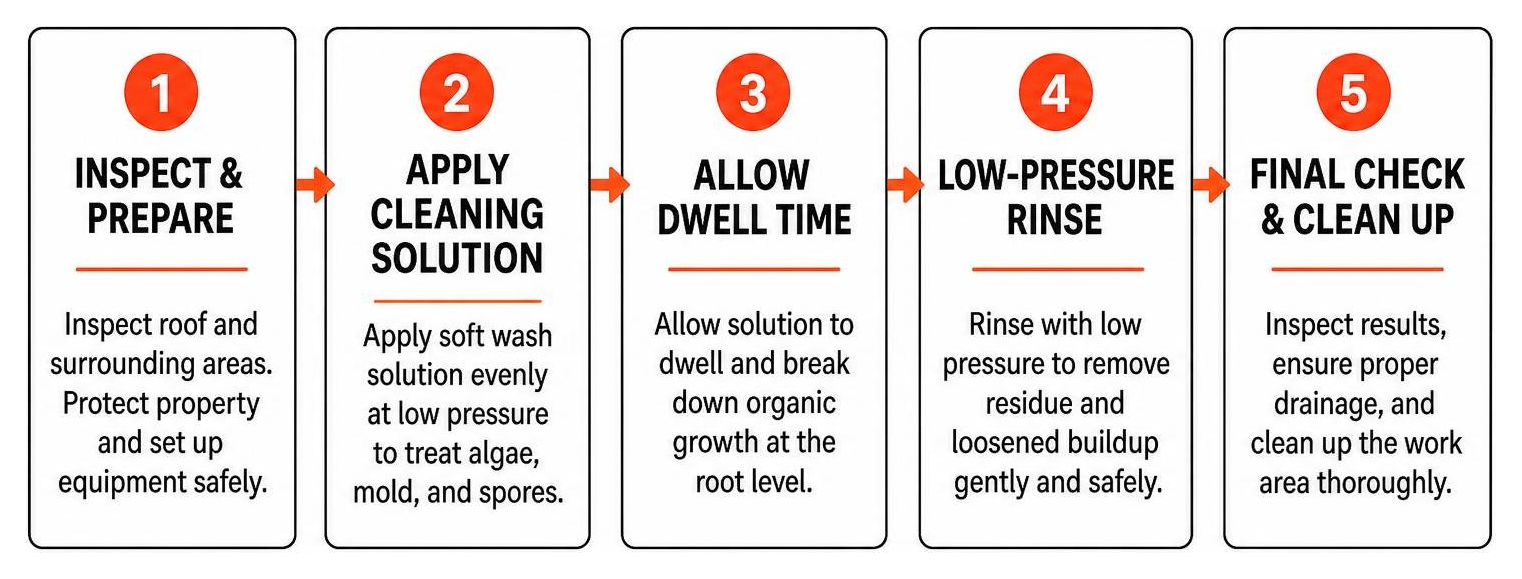
Step 1: Perform Ground Inspection and Gear Setup for Safe Pressure Wash Roofs
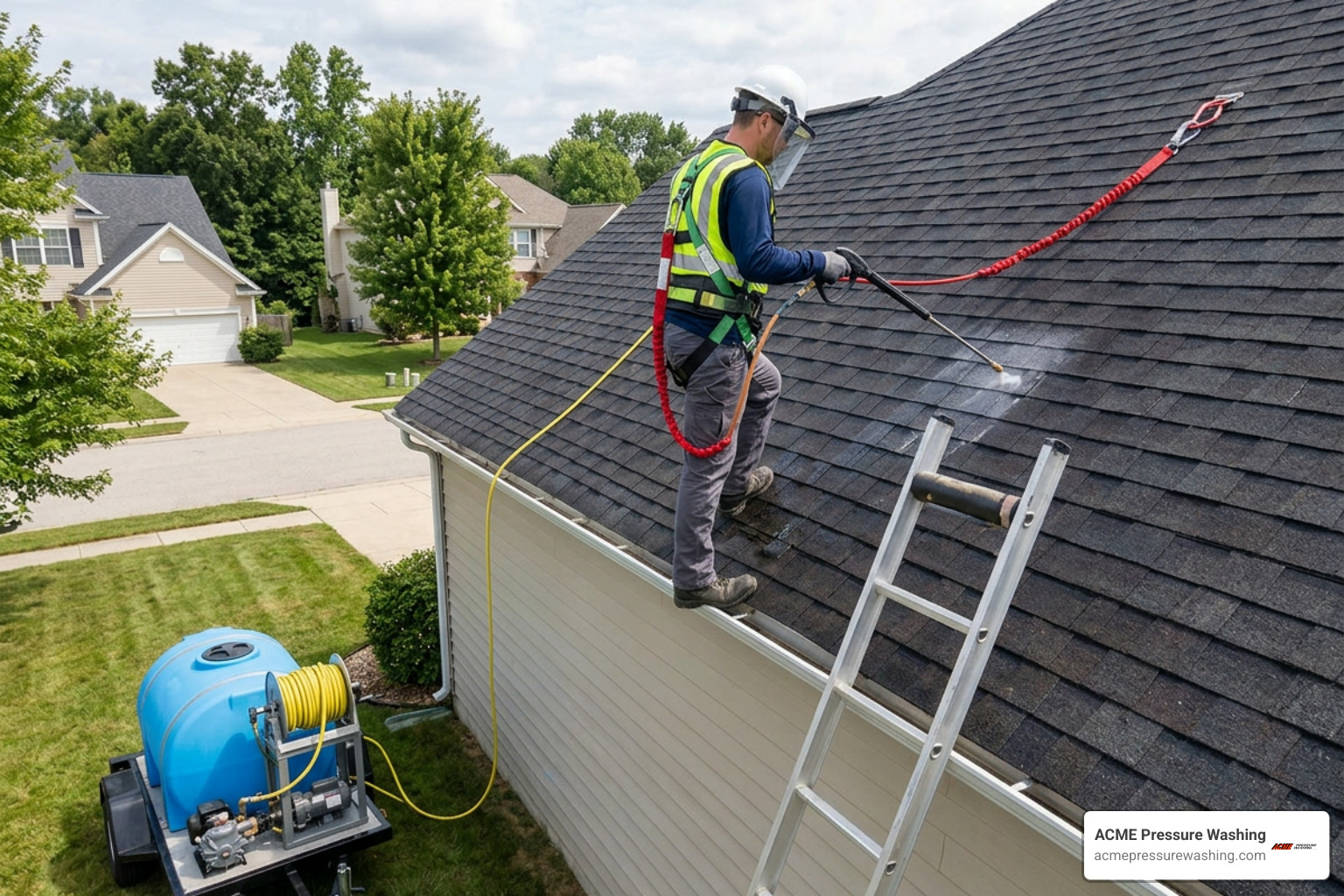
Before assembling equipment, conduct a complete ground-level perimeter inspection using high-powered binoculars. Examine the eaves, fascia, gutters, and shingle courses for pre-existing damage, loose shingles, exposed nail heads, or compromised flashing.
Set up commercial-grade ladder safety systems. Secure ladders at a strict 75-degree angle, extending at least 3 feet above the roof line, and equip ladder stand-offs (stabilizers) fitted with padded foam arms to prevent crushing edge trim or damaging metal gutters.
For high-eave access or steep roof slopes, technicians must attach personal fall arrest systems (PFAS), including full-body safety harnesses, shock-absorbing lanyards, and certified roof anchors conforming to strict OSHA standards.
Step 2: Protect Surrounding Landscaping and Property
Roof cleaning chemical solutions effectively break down organic growth, meaning surrounding plant life must be thoroughly protected.
- Pre-Soak Vegetation: Spray all surrounding trees, shrubs, foundation plantings, and turf grass heavily with clean, fresh water before applying any cleaning agents. Saturated leaves and soil cannot absorb chemical runoff.
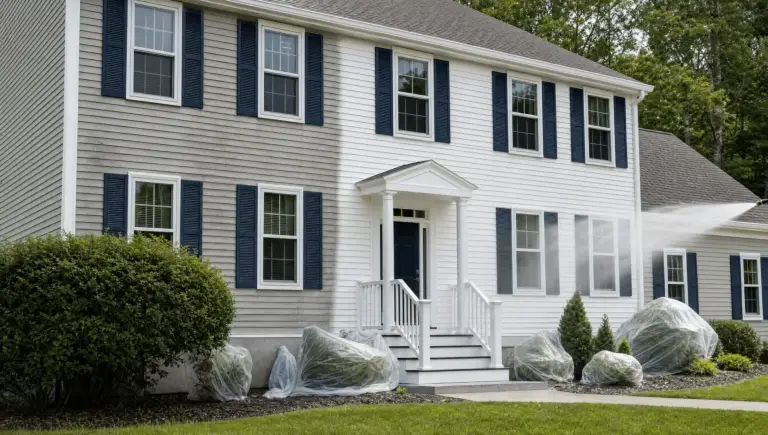
- Tarp Sensitive Species: Cover delicate ornamental plants and garden beds with breathable protective tarps or polyethylene sheeting.
- Manage Gutter Runoff: Direct downspout outlets away from landscaping beds. Attach flexible extension pipes to downspouts to collect runoff directly into containment vessels or guide it safely into storm management areas.
- Maintain Continuous Rinsing: Keep an auxiliary team member on the ground continuously flushing foliage and exterior siding with clean water throughout the entire chemical application phase.
Step 3: Mix and Apply the Safe Pressure Wash Roofs Cleaning Solution
The core of low-pressure roof cleaning lies in chemistry rather than mechanical force. The industry standard cleaning solution utilizes sodium hypochlorite (SH) blended with dedicated surfactant agents.
For effective treatment of biological growth, prepare a soft wash solution containing approximately 3% to 5% active sodium hypochlorite combined with a specialized, high-foaming roof surfactant. The surfactant reduces surface tension, allowing the solution to cling to steep shingle slopes rather than immediately running off. For detailed insights on identifying organic roof stains, read our guide on black streaks on roof causes and cleaning.
Apply the mixture using a dedicated low-pressure chemical pump (such as a 12-volt diaphragm pump or specialized downstream injection setup) delivering 50 to 150 PSI. Always apply the solution starting from the lower eave line and work upward toward the ridge line. Applying chemical bottom-to-top prevents dirty runoff from running down dry shingles, which can create permanent uneven chemical trail marks.
Step 4: Allow Proper Chemical Dwell Time
Once applied, allow the solution a dwell time of 15 to 30 minutes. During this active dwell phase, the chemical oxidation process takes place:
- Gloeocapsa magma algae cells are completely sanitized at the cellular root level, transitioning from dark black or green to a clear or light translucent state.
- Lichen clusters absorb the surfactant mixture, releasing their calcified grip on the shingle granules.
- Moss structures absorb the active solution, neutralizing active spores and beginning a natural decomposition process.
Never allow the chemical solution to dry completely on the roof surface. If warm weather or direct sunlight accelerates drying, mist the roof surface lightly with a thin coat of additional soft wash solution to maintain active moisture levels.
Step 5: Rinse Gently from Ridge to Eave
After achieving a full biological kill, perform a gentle low-pressure rinse. Equipping a pressure washer with a wide 40-degree fan nozzle or an oversized wide-orifice soap tip (such as a brass downstream nozzle) reduces output pressure to safe levels below 100 PSI while delivering high water volume to flush away residue.
Always rinse from the top ridge downward toward the eaves. Ensure the spray wand is angled down the slope of the roof, parallel to the pitch. Never angle a spray wand upward under shingle tabs, as doing so forces water past protective overlaps, directly soaking the underlying roof deck.
Key Safety Equipment and Precautions for Roof Washing
Working at elevated heights on wet surfaces while handling chemical solutions presents clear safety hazards. Commercial cleaning operations mandate strict personal protective equipment (PPE) and rigorous job-site protocols.
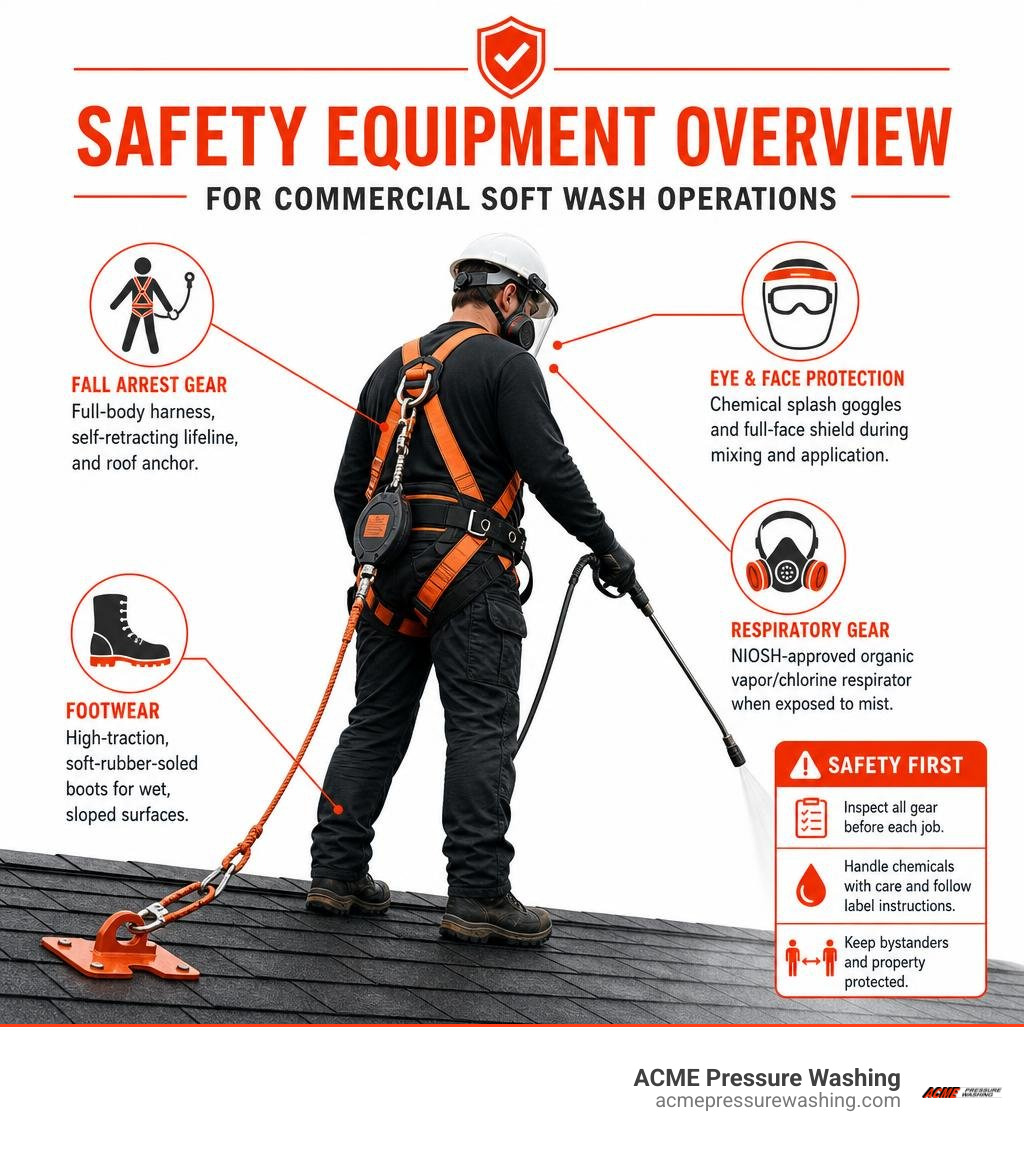
Essential safety gear includes:
- Fall Arrest Gear: Full-body OSHA-compliant harness, self-retracting lifeline (SRL), and temporary or permanent roof anchors.
- Eye & Face Protection: Non-vented chemical splash goggles paired with a full-face shield during chemical mixing and application.
- Respiratory Gear: NIOSH-approved organic vapor/chlorine respirators when working in close proximity to concentrated solution mist.
- Footwear: High-traction, soft-rubber-soled work boots engineered specifically for wet, sloped surfaces.
- Hand & Body Gear: Heavy-duty chemical-resistant butyl rubber gloves and waterproof protective suits.
Never attempt roof washing operations on windy days (where chemical drift can contaminate neighboring properties) or when rain is expected within 12 hours. Always maintain two technicians on-site: one operating the elevated spray wand and one managing ground safety, water supply lines, and plant preservation. For New Hampshire commercial site managers coordinating high-elevation exterior cleaning with ACME Pressure Washing, the office phone is +1603-883-6900.
Preventative Maintenance and Long-Term Roof Care
Once a roof is restored, implementing proactive maintenance protocols prevents biological re-infestation and extends service life.
- Trim Overhanging Trees: Trim back tree limbs and canopy foliage to clear a minimum 6-to-10-foot buffer above the roofline. Increased sunlight exposure and enhanced airflow rapidly dry roof surfaces, eliminating the moist environments algae and moss require to thrive. To learn more about preventing regrowth, consult our resource on best ways to prevent roof moss.
- Install Zinc or Copper Strips: Installing pure zinc or copper flashing strips along the roof ridge line provides long-term biological defense. As rainwater washes over the metal strips, it leaches metallic ions down the roof slope, creating an environment that inhibits moss, lichen, and algae growth.
- Keep Gutters Clear: Clean gutter channels and downspouts semi-annually to ensure rapid roof drainage and prevent edge water pooling.
- Establish a Maintenance Schedule: Schedule professional soft wash inspections every 18 to 36 months, particularly for commercial properties located in shaded or high-humidity regions of Southern New Hampshire.
When to Hire a Professional Service
While small ground-level maintenance tasks may seem accessible, high-elevation roof cleaning on commercial facilities, steep-pitched structures, or multi-family complexes should be entrusted to trained professionals.
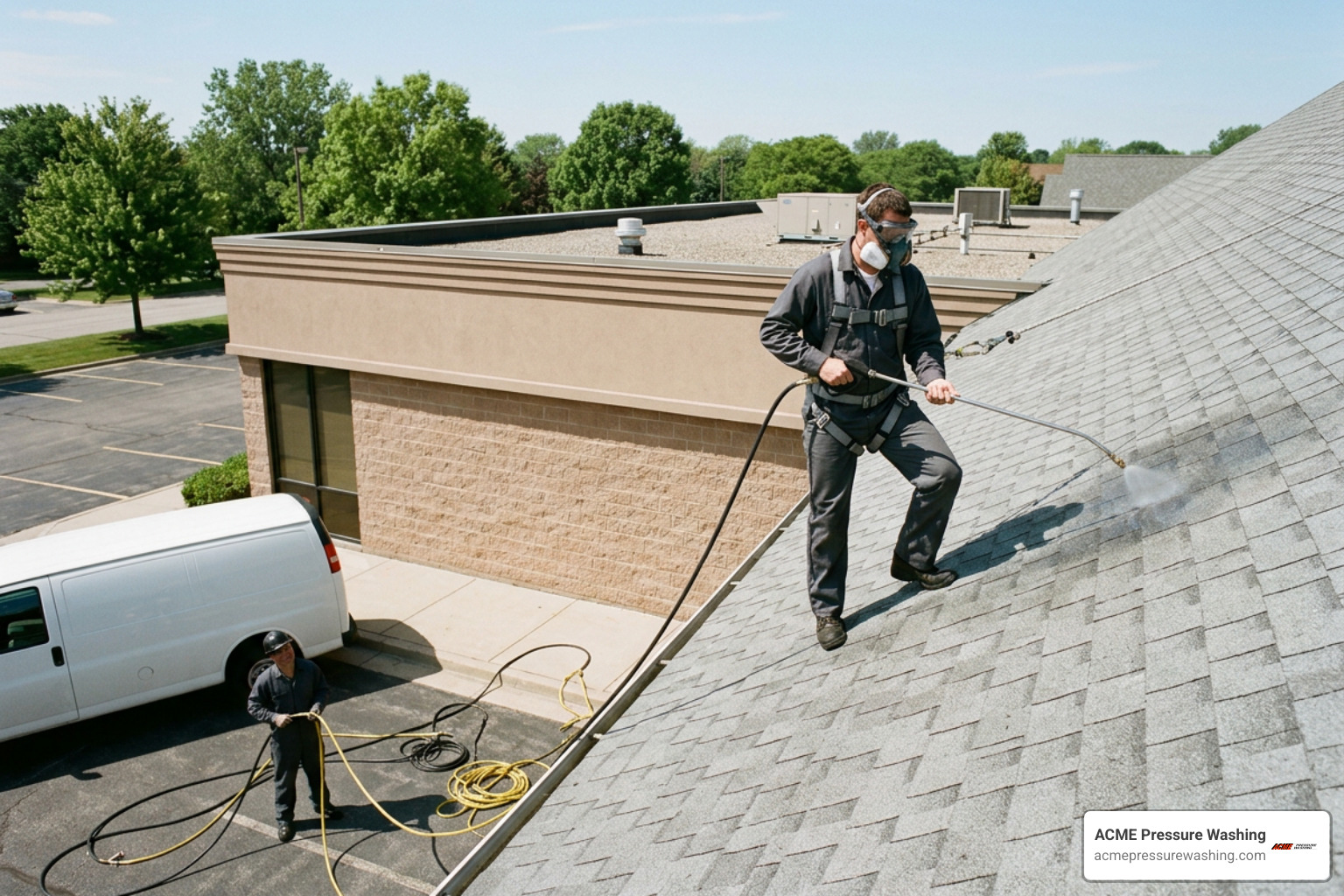
Severe risks associated with amateur roof cleaning include catastrophic falls, permanent landscape damage, internal building water intrusion, and immediate voiding of roof material warranties. Furthermore, commercial soft wash equipment setups-including chemical-resistant diaphragm pumps, high-capacity holding tanks, dual-line hose reels, and safety rigging-require significant financial investment.
When budgeting for commercial exterior maintenance, knowing regional pricing baselines helps set realistic expectations. Based on publicly available internet data, the average baseline cost for commercial roof soft washing is approximately $500. However, depending on structural square footage, roof pitch, building height, and biological severity, broad industry average costs range from $1,000 (2x average) up to $2,500 (5x average) for complex facilities.
Note: All prices mentioned are average costs sourced from publicly available internet data and are not the actual prices or rates of ACME Pressure Washing.
Before choosing a service provider for your property, read our consumer protection guide on how to hire a local roof algae cleaning service.
Frequently Asked Questions About Roof Cleaning
Will pressure washing my roof void the manufacturer warranty?
Yes, using high-pressure washing (exceeding 100–150 PSI) on asphalt shingles will void warranties from major manufacturers like GAF, Owens Corning, and CertainTeed. These manufacturers explicitly specify low-pressure chemical soft washing (approved by the Asphalt Roofing Manufacturers Association) as the only compliant cleaning method.
How often should you clean an asphalt shingle roof?
Most commercial and residential asphalt shingle roofs benefit from a soft wash cleaning every 2 to 3 years. Structures located in heavily shaded areas, near bodies of water, or in humid environments across New Hampshire towns like Goffstown, NH, Derry, NH, or Merrimack, NH may require service every 18 to 24 months to keep biological growth under control.
What is the recommended PSI for washing asphalt shingles?
The absolute maximum pressure for washing asphalt shingles is 50 to 150 PSI. This matches standard garden hose pressure and ensures zero granule loss while allowing specialized soft wash solutions to kill algae and moss safely.
Conclusion
Protecting your commercial building or multi-family property demands a balanced approach to exterior maintenance. Attempting to blast away black streaks and moss with high pressure causes premature granule loss, creates hidden water leaks, and instantly voids valuable manufacturer warranties. Adopting a safe, low-pressure soft wash method restores full visual curb appeal while preserving structural integrity for decades to come.
At ACME Pressure Washing, we bring over 38 years of specialized experience delivering custom, safe, eco-friendly exterior cleaning services across Merrimack, NH, Manchester, NH, Nashua, NH, Bedford, NH, and surrounding New Hampshire communities. Whether your facility needs low-pressure roof soft washing, residential house washing, specialized commercial pressure washing, or heavy-duty fleet cleaning, our expert teams deliver exceptional results without risking property damage.
For fast help with exterior cleaning needs, call ACME Pressure Washing at +1603-883-6900. You can also explore our comprehensive services by visiting our main page for professional pressure washing roofs, review our commercial pressure washing and fleet cleaning service pages, or request a tailored estimate through our quote form button.
Ready to discuss your commercial property’s exterior cleaning plan? Get a tailored estimate right now by visiting our online contact form.