Black Streaks on Roof: What Causes Them and How to Clean Them Safely

Black Streaks on Your Roof? Here’s What’s Really Going On
Black streaks on roof surfaces are almost always caused by a living organism — not dirt, aging, or pollution. Here’s the short version:
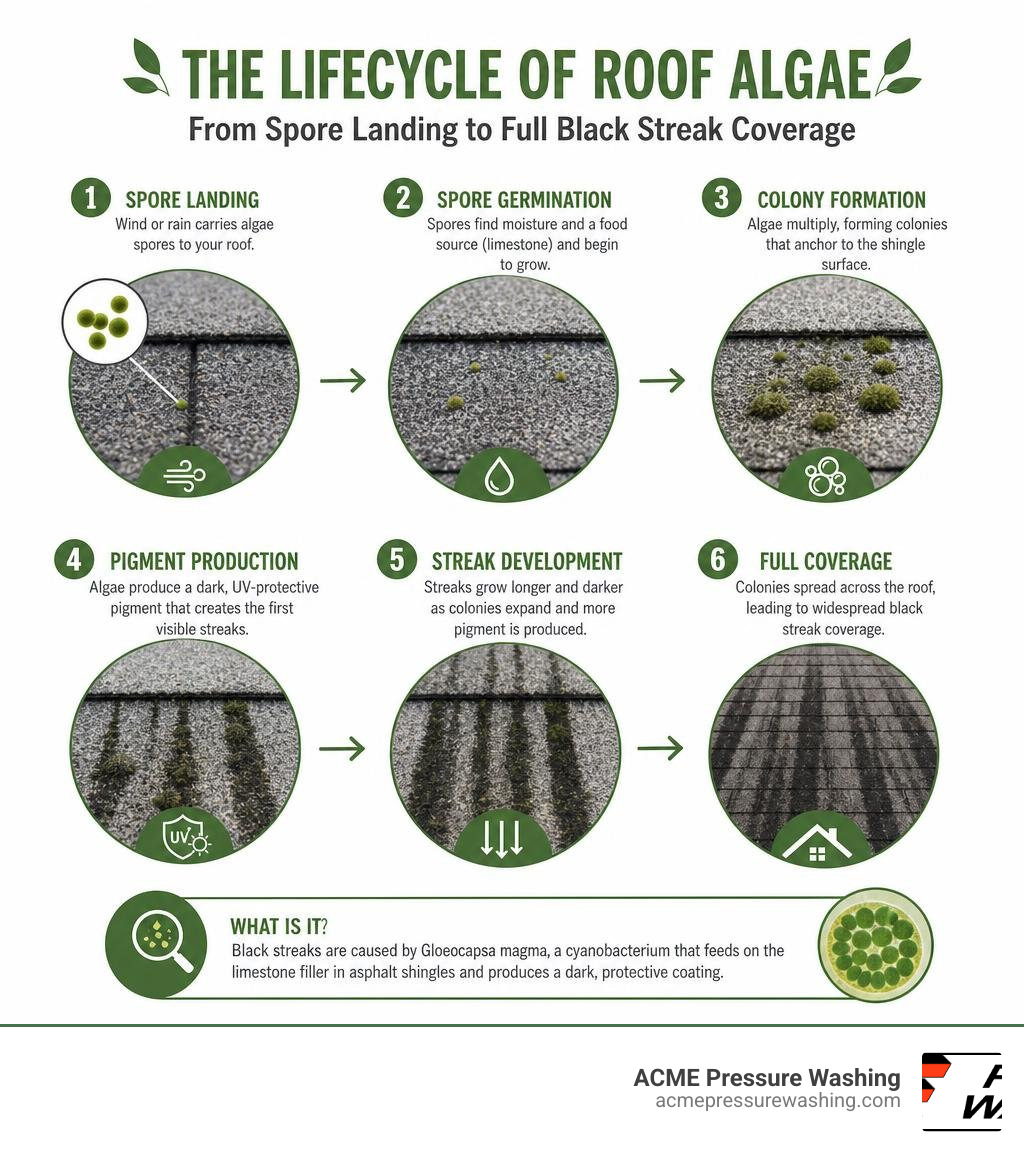
- Cause: A cyanobacterium called Gloeocapsa magma feeds on the limestone filler in asphalt shingles and produces a dark, UV-protective coating that creates the streaks you see.
- Harmful? Yes — beyond looking bad, it traps moisture, accelerates shingle wear, and can raise your cooling costs.
- Solution: Safe removal using a low-pressure soft washing method with a diluted sodium hypochlorite solution — not a pressure washer.
- Prevention: Zinc or copper strips, algae-resistant shingles, and trimming overhanging trees all help stop regrowth.
If your home or commercial property in Merrimack, Bedford, or anywhere in New Hampshire has those dark vertical streaks running down the shingles, you’re not alone. Nearly 80 percent of homes across the United States are affected. And in New Hampshire’s humid, tree-shaded environment, roofs can develop visible colonies surprisingly fast — especially on north-facing slopes that stay damp long after a rainstorm.
The streaks may look like a cosmetic nuisance, but ignoring them long enough can shorten a roof’s lifespan by 5 to 10 years and push energy bills higher during summer months. That’s a real cost, whether you own a single-family home or a commercial building.
I’m Lionel Greenwood, owner of ACME Pressure Washing, and over my 38+ years cleaning roofs across New Hampshire, I’ve seen how black streaks on roof surfaces go from a small patch to a full-slope problem when left untreated. In this guide, I’ll walk you through exactly what’s causing those streaks, why certain cleaning methods do more harm than good, and how to protect your roof for the long term.
Simple guide to black streaks on roof:
What Causes Black Streaks on Roof Surfaces?
When property owners look up and see dark lines marring their shingles, their first instinct is often to blame chimney soot, dirt, or roof decay. However, the true culprit is a hardy, airborne bacterium called Gloeocapsa magma. Often referred to as blue-green algae, this organism thrives in warm, humid, and shaded environments.
The primary reason Gloeocapsa magma targets modern asphalt shingles is the material itself. To add weight, stability, and flame resistance, shingle manufacturers use a heavy amount of limestone filler in asphalt shingles. For this specific type of algae, limestone is not just a structural element—it is a primary food source. Once an airborne spore lands on your roof, it begins to feed on the limestone, anchoring itself and multiplying.
As the colony grows, it creates a cascading moisture trap on your roof. This biological buildup holds water against the surface of your shingles, creating an ideal microclimate for other destructive organisms. For a deeper look into the physical composition of these markings, you can read this Scientific explanation of roof stains.
How Gloeocapsa Magma Creates Black Streaks on Roof Shingles
If the organism is technically classified as a blue-green algae, why does it look like soot or charcoal on your roof? The answer lies in the survival mechanism of the bacteria.
Gloeocapsa magma is highly sensitive to intense sunlight and ultraviolet (UV) radiation. To protect itself from being scorched by the sun, the bacteria produces a dark, pigmented outer sheath. This protective layer acts like a biological sunscreen, shielding the colony below.
As rainwater washes down the slope of your roof, it carries these pigmented sheaths and multiplying spores downward, forming the characteristic vertical streak patterns. This airborne spore transmission means that a single infested roof in a neighborhood can easily seed surrounding properties. Wind, rain, and wildlife transport the spores from roof to roof, which is why you will often see entire clusters of homes in New Hampshire developments showing similar staining patterns. For more on how this biological spread occurs, check out this guide on How black algae spreads.
Why Shaded and North-Facing Slopes Are Highly Susceptible
Algae spores need three things to thrive: a food source, warmth, and consistent moisture. While the limestone in your shingles provides the food, the microclimate of your roof dictates how quickly the colony will expand.
North-facing roof slopes and areas heavily shaded by mature tree canopies receive significantly less direct sunlight throughout the day. This lack of sunlight leads to slow evaporation. When morning dew or rain clings to these shaded shingles, it creates a prolonged damp environment.
In New Hampshire towns like Amherst and Hollis, where beautiful, dense tree canopies often overhang residential and commercial roofs, this issue is incredibly common. The overhanging branches block sunlight and restrict airflow, allowing moisture to linger for hours—or even days—longer than it would on a fully exposed south-facing slope. This persistent moisture is the ultimate catalyst for rapid biological growth.
The Real Impact: Is Roof Algae Cosmetic or Damaging?
A common misconception among property owners is that black streaks on roof shingles are strictly a cosmetic issue. While they certainly destroy your property’s curb appeal, the structural risks of ignoring them are far more severe.
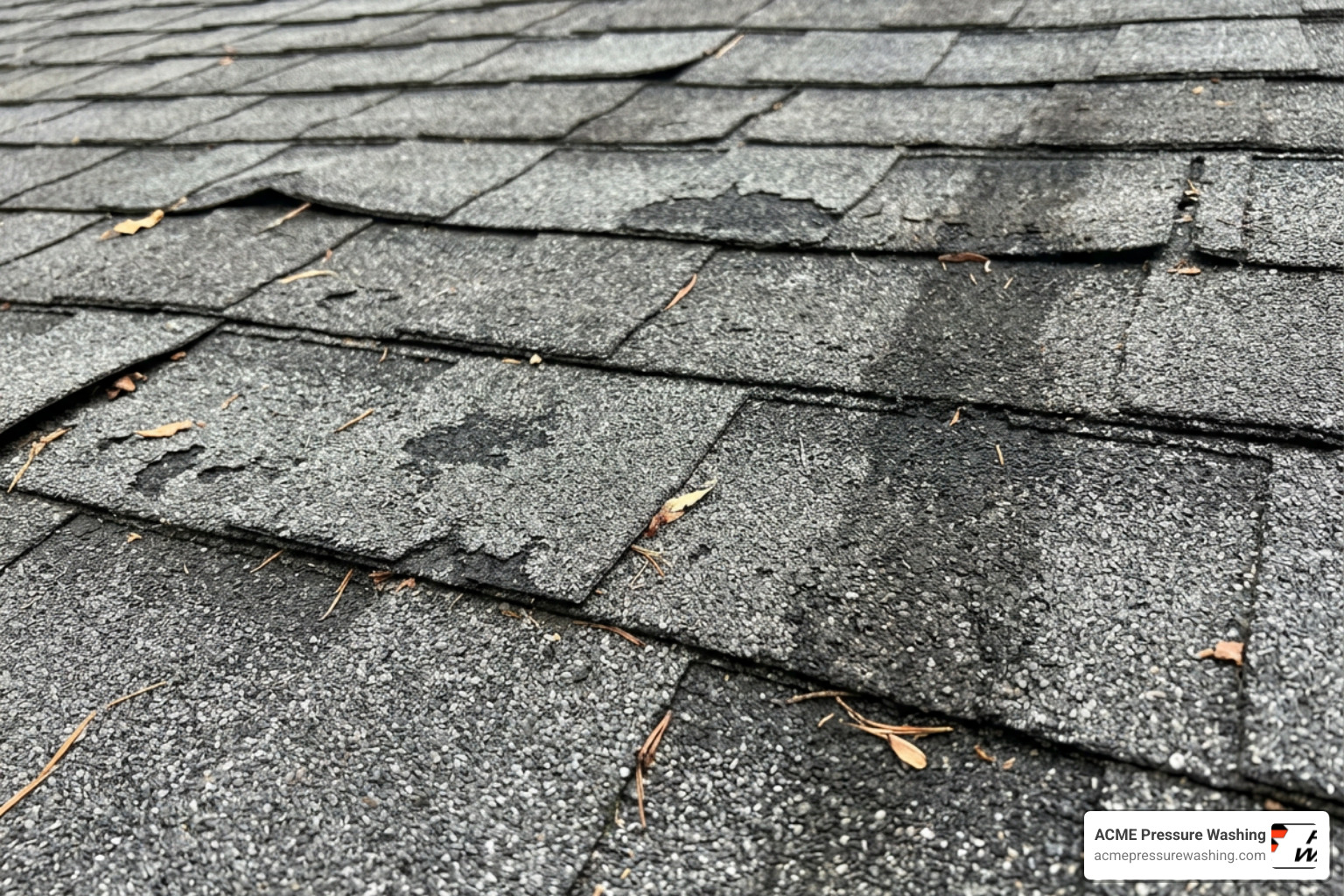
As Gloeocapsa magma feeds on the limestone filler, it slowly breaks down the structural integrity of the asphalt shingle. This process leads to granule loss. The tiny ceramic granules on your shingles are not just there for color; they are your roof’s primary defense against UV damage and weathering. When the algae eats away the binding limestone, these granules loosen and wash away into your gutters.
Without this protective layer, the underlying asphalt is exposed to the elements, accelerating shingle degradation. Furthermore, the damp, organic mat created by the algae colony provides the perfect root-hold for more destructive organisms, such as moss and lichen. Moss, in particular, acts like a sponge, holding massive amounts of water against the roof and causing shingles to curl, lift, and leak. If you are already dealing with moss alongside your black streaks, you can learn how to address it safely in this guide on How to safely remove moss growth on roof shingles.
Financial Consequences of Ignoring Black Streaks on Roof Slopes
Ignoring these dark streaks can have a direct, measurable impact on your wallet. First, there is the issue of premature roof replacement. A standard asphalt shingle roof designed to last 25 years may fail in as little as 15 to 20 years if biological growth is left unchecked. Replacing a commercial or residential roof in New Hampshire can run into tens of thousands of dollars, making regular maintenance a highly cost-effective alternative.
Second, the dark coloration of the streaks dramatically increases solar heat absorption. A clean, light-colored roof reflects a significant portion of the sun’s heat. However, dark, algae-stained shingles act like a heat sink, absorbing thermal energy and transferring it directly into your attic. This can raise attic temperatures and increase your summer cooling costs by 10 to 15 percent as your air conditioning system struggles to keep up.
For commercial property managers in Bedford and Merrimack, clean roofs are also essential for maintaining commercial property value and a professional business image. Stained, neglected roofs can lower perceived property value by 5 to 10 percent and deter potential tenants or customers.
Safe Removal: Why Soft Washing Wins Over Pressure Washing
When it comes to removing black streaks on roof shingles, the method you choose makes all the difference. At ACME Pressure Washing, we strictly adhere to the guidelines set by the Asphalt Roofing Manufacturers Association (ARMA), which recommends a low-pressure chemical application—commonly known as soft washing.
Soft washing uses a specialized, low-pressure delivery system (operating at a pressure similar to a garden hose) to apply an eco-friendly, biodegradable algaecide solution. The active ingredient, a diluted sodium hypochlorite mixture, targets and kills the algae, moss, and lichen at their root level. This ensures that the biological growth is completely eradicated, rather than just superficially rinsed away. For a deeper understanding of why this method is the industry gold standard, read our article on Why soft washing wins in Merrimack.
| Feature | Soft Washing (Recommended) | High-Pressure Washing (Avoid) |
|---|---|---|
| Pressure Level | Low (under 100 PSI) | High (1,500 to 4,000+ PSI) |
| Eradication Rate | 100% (kills spores at root) | Incomplete (leaves root structures intact) |
| Shingle Damage Risk | None | Extremely High (strips granules, cracks shingles) |
| Warranty Compliance | Fully ARMA Compliant | Voids most manufacturer warranties |
| Result Longevity | 1 to 3+ years | Regrowth often occurs within 6 months |
The Dangers of High-Pressure Washing on Asphalt Shingles
Using a standard pressure washer on asphalt shingles is one of the most damaging mistakes a property owner can make. The intense force of high-pressure water physically strips away the protective mineral granules, leaving the asphalt vulnerable to rapid UV degradation.
Additionally, high-pressure water can easily force its way underneath the shingles, blowing past the overlapping tabs and driving water directly into the wooden roof deck. This leads to hidden mold growth, wood rot, and severe interior leaks. Perhaps most importantly, almost all major roofing manufacturers explicitly state that pressure washing voids your shingle warranty. To protect your home’s structure and your financial investment, you can learn more about How to avoid damage during shingle moss cleaning.
High-Level DIY Cleaning vs. Professional Soft Washing
While some homeowners attempt to tackle roof cleaning as a DIY weekend project, the risks are substantial. Working on a steep, slippery roof pitch with chemical solutions is highly dangerous without professional-grade safety harnesses, ladders, and fall-protection gear.
Furthermore, applying algaecides requires precise dilution and specialized application techniques to protect your surrounding landscaping. Without proper pre-wetting and post-rinsing protocols, chemical runoff can quickly damage or kill expensive ornamental plants, lawns, and shrubs.
Our professional teams in Hollis and Amherst utilize commercial-grade soft washing equipment that allows us to safely apply treatments from the safety of ladders or the ground whenever possible. We also use dedicated ground technicians to continuously saturate your landscaping with fresh water, ensuring your plants remain completely safe throughout the process.
Long-Term Prevention Strategies for New Hampshire Properties
Once your roof has been safely restored to its original beauty, implementing preventative measures will keep those ugly black streaks from returning.
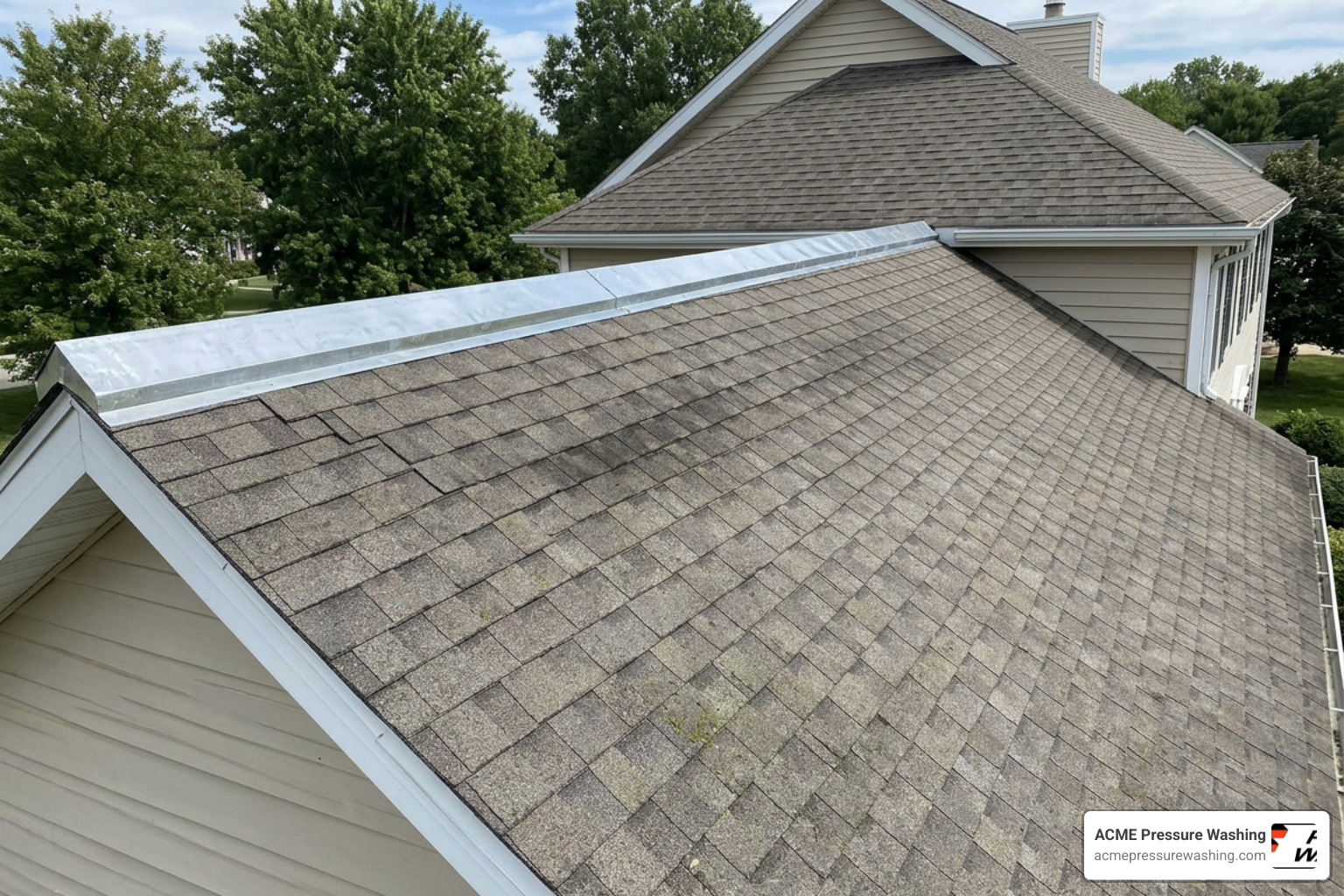
One of the most effective long-term prevention methods is the installation of zinc or copper strips. These metal strips are installed directly along the ridge caps of your roof. When it rains, water washes over the metal, releasing microscopic zinc or copper ions. These ions wash down the slopes of your roof, creating an environment that is highly toxic to algae spores but completely safe for your shingles. This natural barrier can prevent algae from colonizing your shingles for up to 15 to 20 feet below the installation point.
Other essential preventative steps include:
- Trimming Overhanging Trees: Cut back branches at least 6 feet from your roofline to maximize sunlight exposure and improve airflow across the shingles.
- Keeping Gutters Clean: Ensure your gutters flow freely to prevent standing water and localized high-humidity zones near the roof edges.
- Improving Attic Ventilation: Proper attic ventilation reduces heat and moisture buildup under the roof deck, keeping the shingles cooler and drier.
For a comprehensive look at protecting your roof in our local climate, check out this detailed guide on How to prevent moss on roofs in New Hampshire.
Cost-Benefit Analysis of Prevention vs. Repeated Cleaning
When replacing your roof entirely, opting for algae-resistant (AR) shingles is highly recommended. These shingles feature copper-coated granules embedded directly into the asphalt matrix, providing built-in resistance to Gloeocapsa magma.
While algae-resistant shingles typically cost about 10 to 15 percent more upfront than standard shingles, they are guaranteed to prevent staining for 10 to 25 years. When you calculate the long-term maintenance costs, investing in preventative measures like AR shingles or zinc strips can save you anywhere from $2,500 to $10,000 in professional cleaning costs over a 20-year period. In towns like Merrimack and Bedford, where mature trees and humid summers make algae growth a recurring battle, these preventative investments pay for themselves many times over.
Frequently Asked Questions About Roof Cleaning
How much does professional roof cleaning cost in New Hampshire?
Based on industry-wide internet data, the cost of professional roof cleaning varies depending on the size of the roof, its pitch, and the severity of the biological growth. To account for industry variability across different property types, average professional rates typically range from a low end of $900 to a high end of $2,500+ for large, complex residential or commercial properties.
These figures are average costs sourced from public online data and do not represent the specific pricing of ACME Pressure Washing. For more detailed insights into what to expect during a service, explore these Answers to common roof cleaning questions.
Will homeowners insurance cover the removal of black roof streaks?
No. Standard homeowners and commercial property insurance policies view algae, moss, and mold growth as maintenance issues rather than sudden, accidental damage. Because preventative care is the responsibility of the property owner, insurance companies will not cover the cost of cleaning.
In fact, ignoring visible biological growth can lead to insurance policy cancellation. Many insurance providers perform periodic drive-by or aerial drone inspections. If they observe severe black streaking or moss accumulation, they may issue a notice requiring professional cleaning within a strict timeframe to keep your policy active.
How often should commercial and residential roofs be inspected?
We strongly recommend scheduling a professional roof inspection at least once a year, preferably in the spring. Early detection is key. Catching Gloeocapsa magma when it is still in its early, microscopic stage allows for faster, more affordable treatments before the colony spreads across entire slopes and begins causing granule erosion or moss colonization.
Restore and Protect Your Roof with ACME Pressure Washing
Those unsightly black streaks on roof surfaces are more than just an eyesore—they are an active biological growth that slowly degrades your shingles and drives up your summer energy bills. Fortunately, you don’t have to face this issue alone.
At ACME Pressure Washing, we bring over 38 years of hands-on experience to every job. We serve residential and commercial property owners throughout New Hampshire, including Merrimack, Amherst, Bedford, and Hollis. Our highly trained, fully insured teams utilize safe, ARMA-compliant soft washing techniques and eco-friendly solutions to eliminate algae at the root without ever risking damage to your shingles or your beautiful landscaping.
Whether you need a clean roof, professional house pressure washing, or comprehensive commercial pressure washing to restore your business’s curb appeal, we are here to help.
Ready to restore your roof’s beauty and extend its lifespan?
Contact us today at +1603-883-6900 or fill out our quick online form to Get a professional roof cleaning quote.
You can also Explore professional pressure washing services to see how we can keep your entire property looking its absolute best.