Commercial Dumpster Pad Cleaning: A Property Manager’s Planning Checklist
A useful commercial dumpster pad cleaning plan answers five questions before water reaches the surface: what is on the pad, where runoff can travel, what must be moved, when the work can happen, and what “ready to reopen” means. That short pre-walk protects the property manager from surprises and gives the cleaning crew a scope they can price and schedule accurately.
This matters in Southern New Hampshire because one service area can connect a loading lane, employee path, storm drain, and customer parking. Treating the pad as an isolated square of concrete misses the way the rest of the property functions.
Start with the material on the pad
Walk the enclosure before the service visit and separate ordinary buildup from anything that changes the job.
- Loose waste: Cardboard, bags, broken glass, food scraps, and windblown trash should be removed before washing begins.
- Routine residue: Dirt, tracked grime, and light organic buildup can be documented by location and severity.
- Grease or automotive fluids: Mark the affected area and tell the cleaner what is known about the spill. Do not wash an unknown liquid toward a drain.
- Unknown or hazardous material: Stop and use the property's spill-response procedure or an appropriate specialist. Exterior cleaning is not a substitute for hazardous-material handling.
The goal is not to diagnose every stain. It is to prevent a routine cleaning appointment from starting with an unreported condition that needs a different response.
Map three zones, not just the dumpster enclosure
A simple three-zone sketch turns a vague request into a workable site plan.
1. The clean zone
Mark doors, customer routes, employee walkways, food or product receiving areas, and anything that must remain accessible. Decide which route stays open while the service area is closed.
2. The work zone
Include the pad, enclosure walls, gates, bollards, adjacent pavement, and the space needed to move the container. Note damaged concrete, loose mortar, failed coatings, or joints that should be reviewed before cleaning.
3. The runoff zone
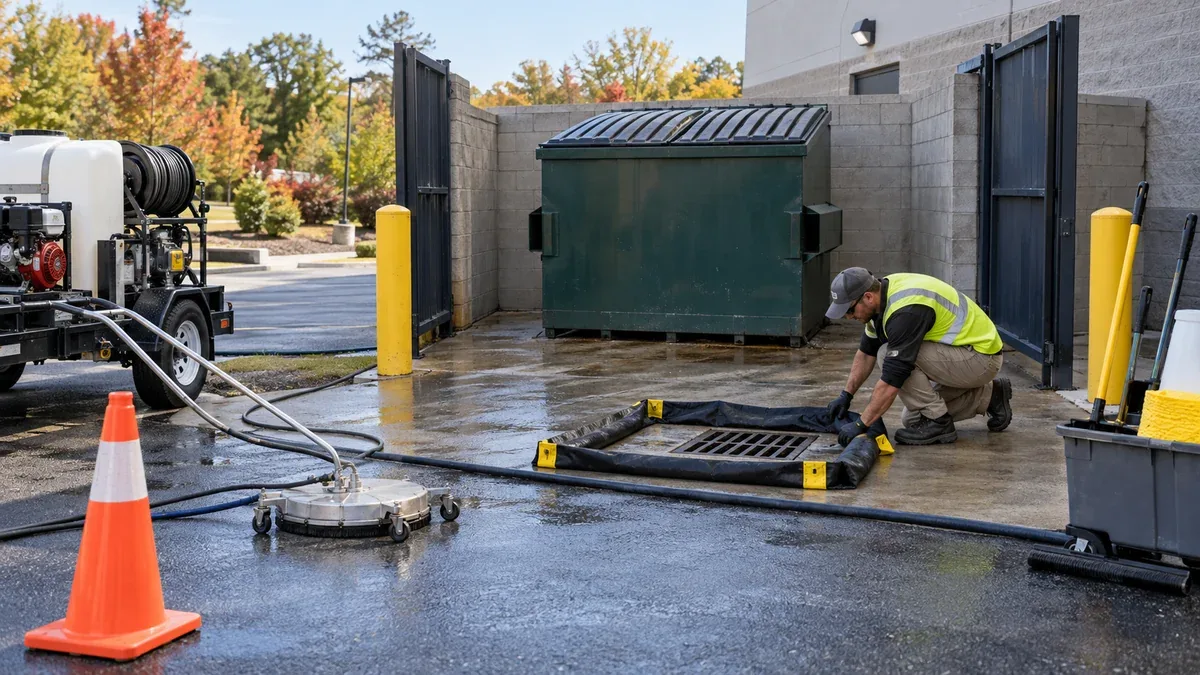
Follow the slope. Record every trench drain, catch basin, curb opening, low point, landscaped edge, and public way the water could reach. The EPA-hosted business stormwater guidance says not to wash trash, grease, or vehicle fluids into storm drains and advises blocking drains and collecting wash water during pressure-washing work. Local requirements and the actual drain connection still need to be confirmed for the property.
Ask the contractor to explain the containment and disposal plan for this site. “It runs downhill” is an observation, not a plan.
Coordinate the service window with real operations
Pick the cleaning window by working backward from the property's schedule:
- Confirm the waste-hauler pickup time and whether the container can be moved.
- Choose a period with the least customer, tenant, delivery, and employee traffic.
- Identify who will unlock gates, move vehicles, and keep the route clear.
- Allow time for final inspection and for the surface to reach the agreed reopening condition.
- Tell affected tenants or staff which path and entrance remain available.
An off-hours appointment is only useful if the crew can reach the pad and the container is not blocking the surface that needs cleaning. ACME confirms that it can schedule commercial exterior work around business hours, but the estimate should still name the exact access window.
Define success before the estimate
“Clean the dumpster area” can mean several different scopes. Decide what the quote should include:
- the concrete or asphalt pad;
- the inside and outside faces of the enclosure walls;
- gates, bollards, curbs, and the approach lane;
- localized grease or organic buildup that needs pretreatment;
- runoff containment and collection;
- before-and-after documentation; and
- a one-time reset or a recurring maintenance visit.
Also separate appearance goals from removal guarantees. A porous, worn pad can retain discoloration after removable residue is gone. A test area can help set a realistic expectation before the entire enclosure is treated.
Use condition triggers to choose a maintenance interval
There is no useful universal rule such as “clean every month.” A better plan watches for conditions that change the property:
- residue spreading beyond the enclosure;
- repeated leaks after pickups;
- loose trash collecting near drains;
- visible buildup on the customer or employee route;
- seasonal operations that increase waste volume; or
- a scheduled inspection, tenant turnover, or exterior maintenance project.
Record the condition before and after the first cleaning. That gives the property manager evidence for setting the next visit instead of guessing from a calendar.
Pause the job when the scope changes
Do not start routine pressure washing when the crew encounters an unknown spill, a drain path that cannot be controlled, unstable masonry, badly broken pavement, an unidentified coating, or a service area that cannot be separated from people and deliveries. Resolve the condition or bring in the appropriate specialist first.
If you are planning work in Merrimack or elsewhere in Southern New Hampshire, ACME's commercial pressure washing service includes dumpster pads, storefronts, sidewalks, parking areas, and other exterior surfaces. For a useful estimate, send the pad material, drain locations, pickup schedule, preferred service window, and photographs of any unusual residue.