How to Remove Oil Stains the Right Way
Why Oil Stain Removal Matters for Your Property’s Safety and Value
Oil stain removal is one of the most urgent exterior cleaning problems property owners face — and one of the most commonly mishandled.
Here’s the short answer if you need it fast:
- Act immediately. Blot excess oil — never rub or rinse with water.
- Apply an absorbent (baking soda, cornstarch, or cat litter) to draw oil out of the surface.
- Use a surfactant-based degreaser (dish soap, commercial degreaser, or enzyme cleaner) and let it dwell.
- Rinse thoroughly — on concrete, a pressure washer with hot water delivers the best results.
- Never apply heat to fabric stains before confirming the stain is fully gone.
- For deep, set-in, or large spills on concrete — call a professional.
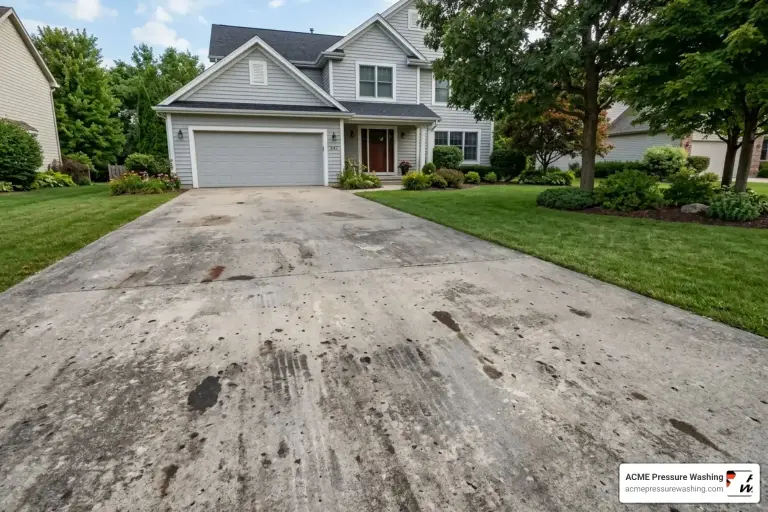
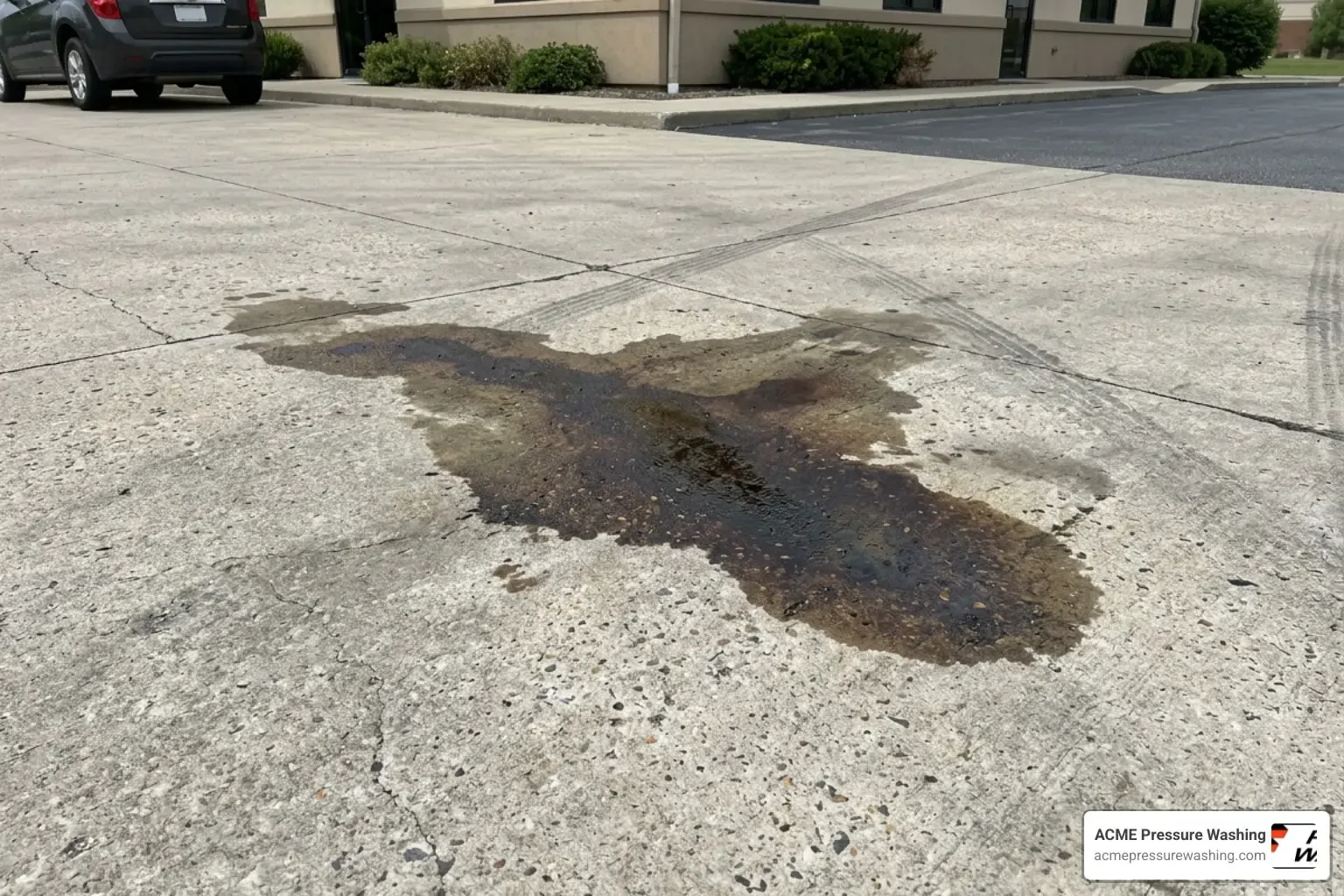
Oil stains are stubborn by nature. Whether it’s a slow drip from a parked vehicle on your Bedford driveway or a grease spill on a commercial loading dock in Londonderry, the problem rarely stops at the surface. Oil is hydrophobic — it actively repels water — and it penetrates porous materials like concrete quickly. Left untreated, it oxidizes, darkens, bonds more deeply to the surface, and eventually becomes extremely difficult or impossible to fully remove.
In New Hampshire, the freeze-thaw cycle makes this worse. Oil-softened concrete absorbs water, which then expands when it freezes — accelerating cracking and surface breakdown season after season.
I’m Lionel Greenwood, owner of ACME Pressure Washing, and I’ve spent more than 38 years tackling oil stain removal on driveways, commercial lots, walkways, and fleet yards across New Hampshire and Southern New England. In this guide, I’ll walk you through exactly what works — and what doesn’t — so you can protect your property the right way.
The Science of Hydrophobic Stains
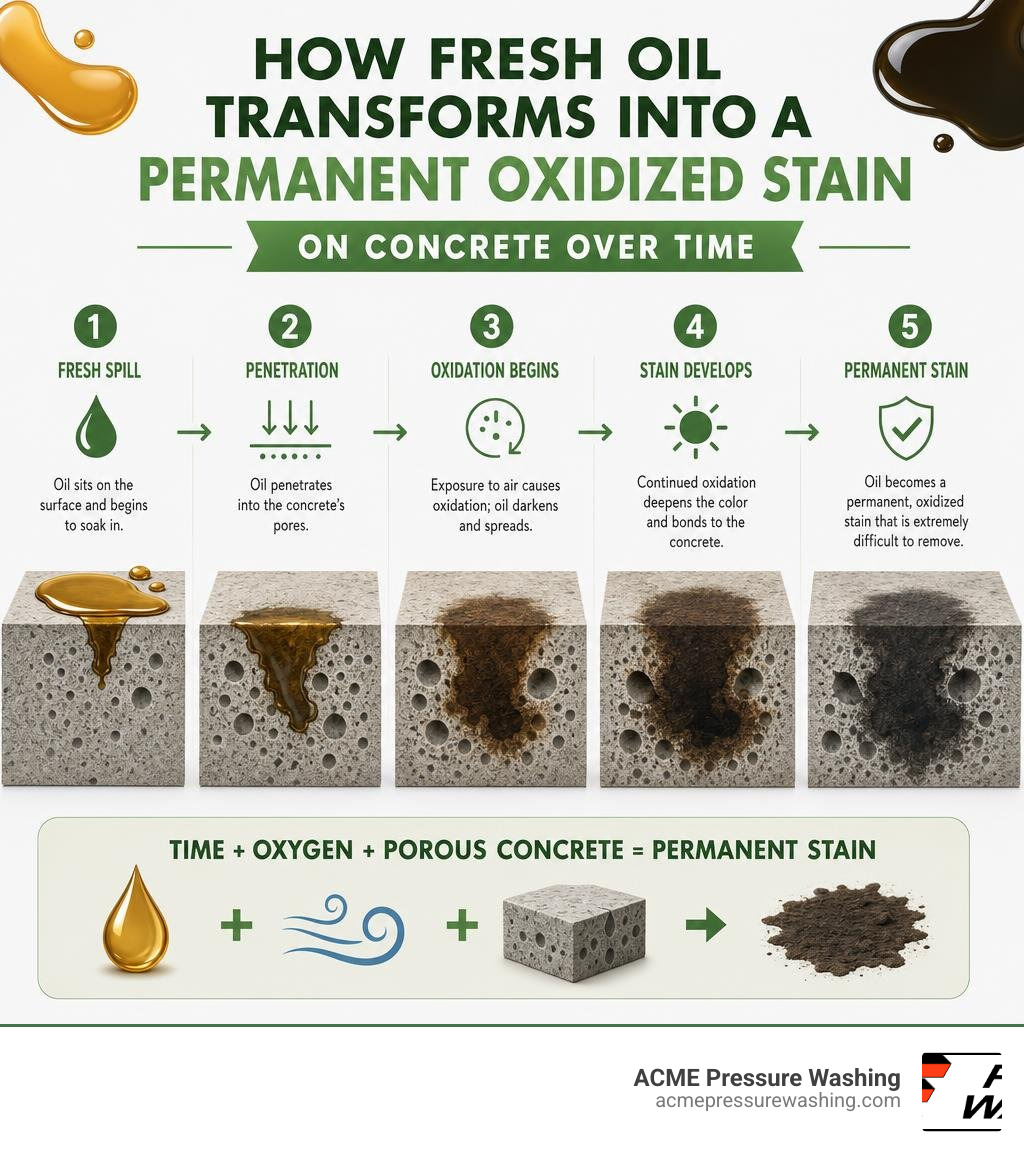
To understand why oil is so incredibly difficult to clean, we have to look at its molecular structure. Oily substances consist of hydrophobic lipids, meaning they are chemically incapable of mixing with water. Standard water molecules have polar bonds, while lipids are non-polar. When you throw water directly onto a fresh oil spill, the water’s surface tension prevents it from penetrating the oil. Instead of washing the grease away, water simply sits on top of it or, worse, spreads the oil across a wider surface area.
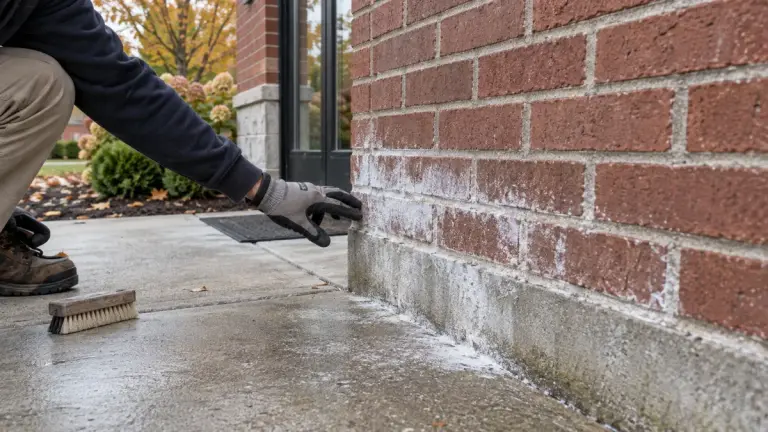
Porous masonry surfaces like concrete and pavers act like dense, hard sponges. They are filled with microscopic channels and capillaries that pull liquid deep beneath the surface. When oil is spilled on concrete, capillary action draws the lipids deep into these pores.
Once inside, the oil begins to undergo oxidation. Much like metal rusting, exposure to oxygen causes the oil molecules to break down and bond chemically with the stone or concrete. Over time, this oxidized oil undergoes polymerization—a process where individual molecules link together to form long, complex chains. This transforms the liquid oil into a sticky, dark, varnish-like substance that is physically locked inside the concrete’s pores.
According to scientific studies on lipid chemistry, such as the Research on lipid stain chemistry, standard washing without specialized chemical intervention cannot lift these bonded lipids. Furthermore, petroleum-based oils can actually dissolve the binders in asphalt, leading to crumbling, potholes, and permanent structural damage. To safely lift these substances without ruining the material, you must use chemical agents that break these molecular bonds, as detailed in the Cornell University guide on stain removal.
Professional Oil Stain Removal for Concrete and Driveways
For hard exterior surfaces like concrete driveways, walkways, and parking lots in Merrimack and Goffstown, successful stain removal requires a combination of chemical emulsification and mechanical force.
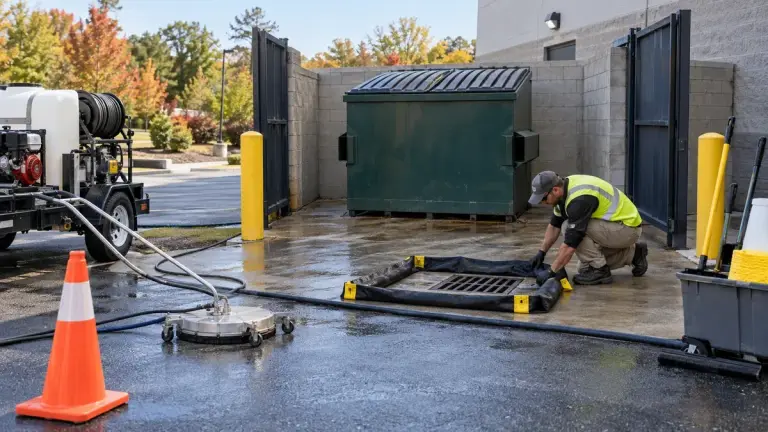
When we tackle a heavy oil spill on a driveway or loading dock, we don’t just blast cold water at it. Cold water will only harden the grease. Instead, we utilize commercial-grade, eco-friendly degreasers paired with professional hot-water pressure washers.
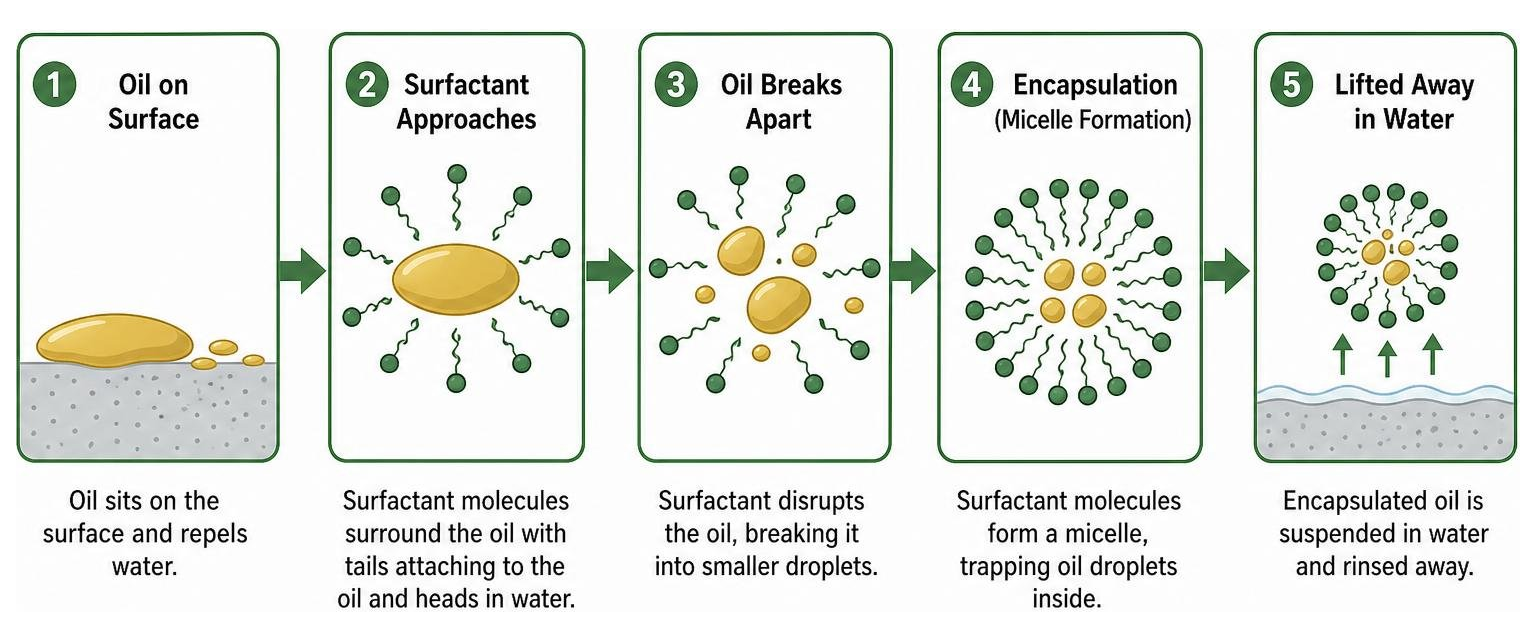
Our process begins with applying a specialized surfactant or poultice cleaner to the stain. These professional degreasers lower the surface tension of the water and penetrate deep into the concrete’s pores. The surfactant molecules have a dual nature: one end is attracted to water (hydrophilic), while the other end is attracted to oil (lipophilic). This unique structure allows the degreaser to surround individual oil droplets, breaking them down into microscopic particles suspended in water—a process known as emulsification.
Once the oil is emulsified, we use industrial pressure washers that heat water to over 200°F. The high temperature lowers the viscosity of the oil, liquefying the hardened grease so the emulsifiers can sweep it away. For more details on choosing the right chemicals for concrete, read our guide on Driveway Drama Finding The Best Degreaser For Stubborn Oil Stains.
During this process, managing water pressure is critical. Using too much force can etch the concrete, leaving permanent swirl marks or destroying the finished surface. We carefully adjust our equipment to the perfect level, as outlined in The Ultimate Guide To Finding The Perfect Psi For Concrete Driveways. Additionally, professional cleaning ensures full environmental compliance; we capture and contain the oily runoff so that toxic hydrocarbons do not enter local New Hampshire storm drains or damage your landscaping.
High-Level Fabric Oil Stain Removal Techniques
While our primary focus is on exterior surfaces, we frequently get asked how to handle oil spills on clothing or delicate indoor fabrics. The underlying science remains exactly the same: you must use surfactants to lift the hydrophobic lipids.
If you get grease or cooking oil on a fabric garment, keep these high-level tips in mind:
- Act Fast: Gently blot the fresh spill with a clean paper towel to remove excess liquid. Never rub, as rubbing pushes the oil deeper into the fabric fibers.
- Use Absorbent Powders: Sprinkle baking soda, cornstarch, or baby powder over the stain and let it sit for 30 to 60 minutes. These fine powders wick the liquid oil out of the fibers through capillary action before it can set.
- Apply a Surfactant: Work a high-quality dish soap (like blue Dawn) directly into the dry stain. Dish soaps are formulated with highly concentrated surfactants designed to strip food grease.
- The Heat Warning: Never put an oil-stained garment into a clothes dryer. The intense heat of the dryer will cause polymerization, permanently bonding the oil to the fabric fibers and creating a permanent “varnish” stain. Always air-dry the item and inspect it under bright light to ensure the oil is completely gone before machine drying.
Why Professional Oil Stain Removal Outperforms DIY Methods
Many property owners in Bedford and Londonderry attempt to remove driveway oil stains using rented pressure washers or hardware store degreasers. While these DIY methods might lighten a very fresh, minor spill, they almost always fall short on older, set-in stains.
First, standard consumer-grade pressure washers only use cold water. Without heat, cold water cannot reduce the viscosity of heavy motor oil or industrial grease, leaving the stain firmly locked in place. Second, consumer degreasers lack the molecular strength of industrial-grade surfactants.
Most importantly, improper pressure washing can easily destroy your masonry. We often see etched concrete, stripped joint sand in pavers, and ruined wood decks caused by well-meaning homeowners using too much pressure. Our team uses specialized hot-water systems and customized pressure levels to safely lift stains without causing structural damage. To learn more about the physical toll of manual scrubbing versus professional cleaning, check out our article on How To Deep Clean Your Patio Using Elbow Grease Instead Of Electricity.
The True Cost of Neglecting Exterior Oil Spills
It is tempting to look at a few oil spots on your driveway or loading dock and decide to “just let it go.” However, neglecting these spills leads to expensive, long-term damage.
In New Hampshire’s harsh climate, concrete and pavers are subjected to extreme freeze-thaw cycles. Because concrete is porous, it naturally absorbs water. When that water freezes, it expands, putting immense pressure on the concrete. Normally, high-quality sealants protect the surface. However, motor oil and hydraulic fluids break down these protective sealants and degrade the concrete binders. Once the concrete is weakened by oil, water penetrates deeply into the structure, leading to severe cracking, spalling, and surface scaling.
Additionally, oil spills create major safety hazards. Wet oil on walkways or commercial fleet parking areas in Goffstown and Merrimack becomes incredibly slick, creating immediate slip-and-fall liabilities for visitors, customers, and employees. For commercial fleet operations, keeping parking areas clean is also a key regulatory and branding requirement.
Investing in timely maintenance is far less expensive than replacing damaged concrete or paying for liability claims. For a detailed breakdown of maintenance costs, read our Driveway Cleaning Cost Guide For A Sparkling Entrance.
Below is a comparison of typical costs associated with DIY cleanup versus professional concrete maintenance:
| Cleaning Method | Average Cost (Based on Internet Data) | Typical Range (Based on Internet Data) |
|---|---|---|
| DIY Equipment & Chemical Rental | $150 | $300 – $900 |
| Professional Concrete Cleaning | $300 | $600 – $1,500+ |
Note: All prices mentioned in the table above are average costs sourced from publicly available internet data and do not reflect the actual pricing or guaranteed rates of ACME Pressure Washing. Actual costs vary based on surface condition, location, and contamination levels.
Frequently Asked Questions About Oil Stains
Can dried or set-in oil stains be completely removed from concrete?
Yes, in many cases, set-in oil stains can be significantly lightened or entirely removed. However, it requires professional hot-water extraction and industrial-strength degreasers to break the polymerized bonds deep within the concrete’s pores. If the oil has sat for several years, a faint “shadow” or discoloration may remain due to concrete etching, but the physical oil itself can be lifted.
Why does water make an oil stain worse during initial cleanup?
Because oil is hydrophobic, water cannot mix with or dissolve it. If you pour water onto a fresh oil spill, the water will simply sit on top of the grease or spread it around, pushing the oil into clean, dry areas of the concrete and expanding the size of the stain. You should always blot the stain with dry absorbents first.
Is pressure washing safe for all types of driveways and walkways?
Pressure washing is highly effective, but it must be tailored to the specific surface. High-pressure blasting can easily gouge wood, strip asphalt, or etch soft concrete. For delicate surfaces, we utilize a soft-washing technique that relies on specialized cleaning solutions rather than destructive physical force. You can read more about protecting your home’s exterior surfaces in our guide on how to Pressure Wash Exterior Surfaces Without Damaging Your Home.
Conclusion
When it comes to oil stain removal, quick action and the right scientific approach make all the difference. Trying to scrub away stubborn grease with cold water or harsh household chemicals often leads to permanent surface damage, expanded stains, and wasted time.
At ACME Pressure Washing, we bring over 38 years of experience to every job. We utilize safe, customized, hot-water pressure washing and eco-friendly techniques to completely lift stubborn oil stains without harming your property or the New Hampshire environment. From commercial fleets and warehouse floors to residential walkways, patios, and driveways, we serve communities across NH, including Merrimack, Bedford, Londonderry, and Goffstown.
Don’t let ugly, hazardous oil spills ruin your property’s curb appeal and structural integrity. Contact ACME Pressure Washing today at +1603-883-6900 or visit our Contact Page to request your free, customized service quote.
To learn more about how we can restore your property’s hard surfaces, check out our Professional Walkway and Patio Cleaning Services and our Commercial Pressure Washing Services.