Driveway Drama: Finding the Best Degreaser for Stubborn Oil Stains

Oil Stains on Your Driveway? Here’s What Actually Works
Finding the right degreaser for concrete driveway stains is one of the most common headaches homeowners in Manchester, Merrimack, and across New Hampshire face every spring and fall.
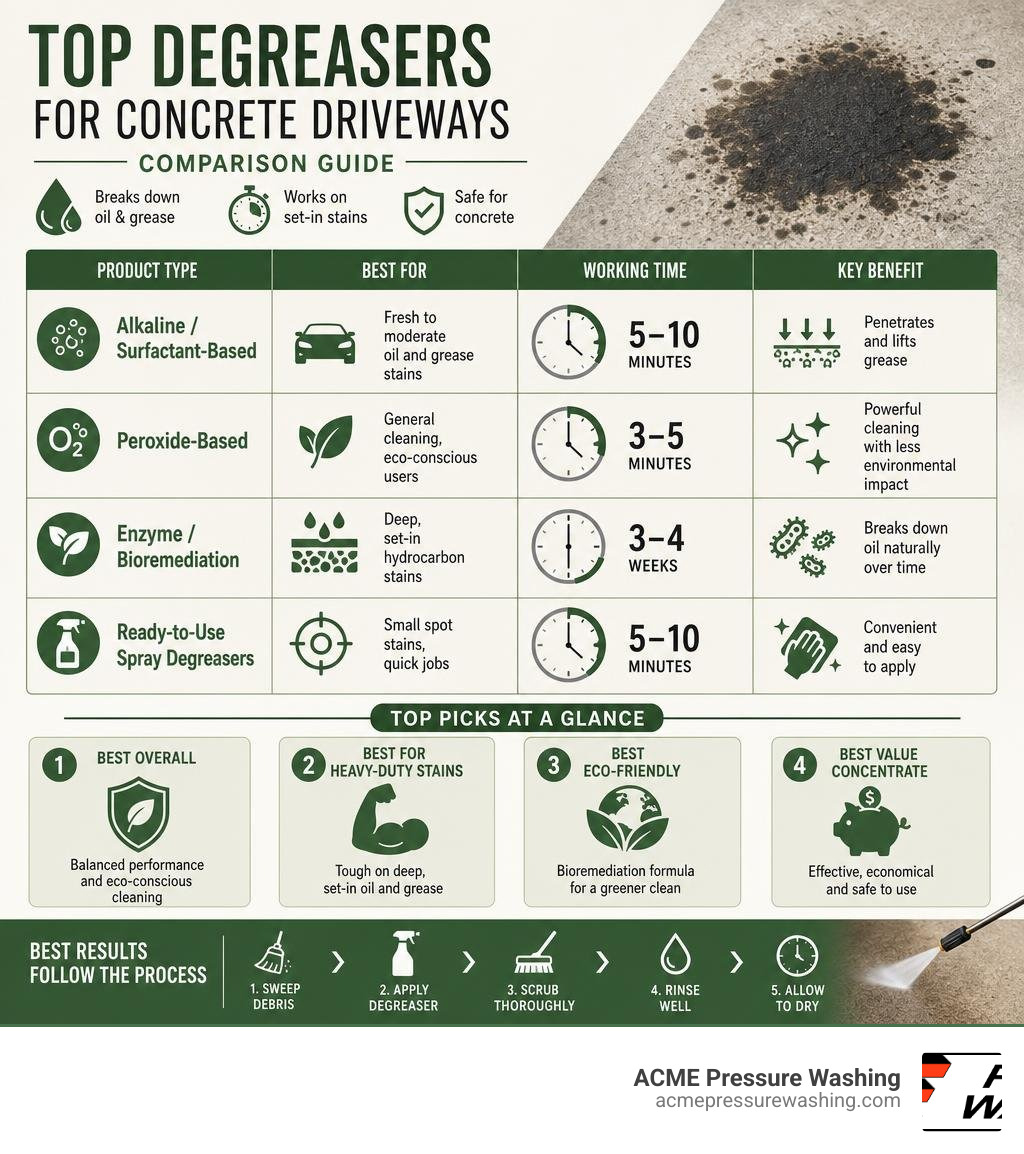
Quick Answer: Best Degreasers for Concrete Driveways
| Product Type | Best For | Working Time |
|---|---|---|
| Alkaline/surfactant-based (e.g., Zep Concentrated) | Fresh to moderate oil and grease stains | 5-10 minutes |
| Peroxide-based (e.g., Simple Green Oxy Solve) | General cleaning, eco-conscious users | 3-5 minutes |
| Enzyme/bioremediation (e.g., ACT Concrete Cleaner) | Deep, set-in hydrocarbon stains | 3-4 weeks |
| Ready-to-use spray degreasers | Small spot stains, quick jobs | 5-10 minutes |
Top picks at a glance:
- Best overall – Simple Green Oxy Solve Concrete and Driveway Cleaner (EPA Safer Choice certified)
- Best for heavy-duty stains – Zep Concentrated Driveway and Concrete Cleaner
- Best eco-friendly – ACT Concrete Cleaner (bioremediation formula)
- Best value concentrate – Oil Eater Cleaner & Degreaser (USDA approved, non-hazardous)
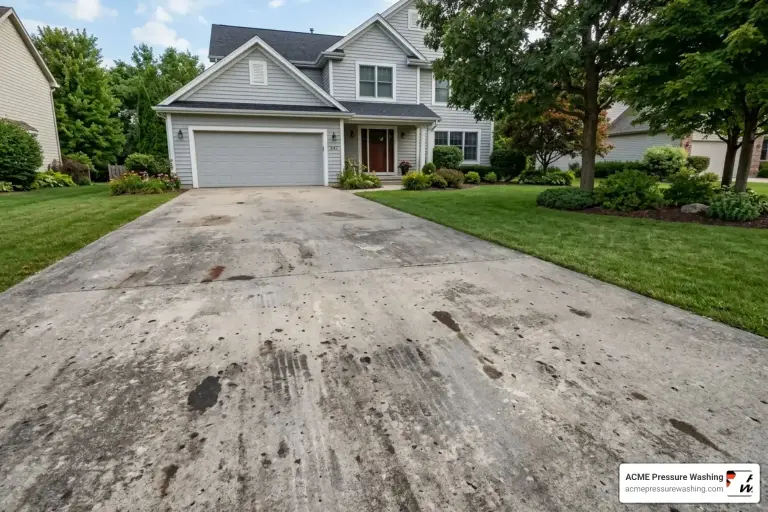
Here’s the problem most people don’t realize: concrete is porous. Oil doesn’t just sit on the surface — it soaks in fast and binds to the material at a chemical level. That’s why a quick rinse with a garden hose never works. And it’s why a driveway in Manchester or Merrimack that looks stained after one winter can be genuinely difficult to restore without the right product and technique.
The good news? The right degreaser, applied correctly, can pull a significant amount of that embedded oil back out. The bad news? Most homeowners pick the wrong product, use the wrong dilution, or skip key steps — and end up with a driveway that still looks dirty, or worse, gets damaged in the process.
This guide cuts through the noise. We’ll cover which products work, how to use them, and when it makes more sense to call in a professional.
I’m Lionel Greenwood, owner of ACME Pressure Washing, and I’ve been removing oil stains from concrete driveways across New Hampshire for over 38 years — which means I’ve tested more formulas and seen more degreaser for concrete driveway disasters than I can count. In the sections ahead, I’ll share what actually works in the field, not just what looks good on a label.
Understanding the Chemistry of a Degreaser for Concrete Driveway
To understand why a degreaser for concrete driveway works, you have to understand what you are fighting. Concrete is highly alkaline due to its lime content. It is also packed with microscopic pores, acting like a giant, hard sponge. When motor oil, transmission fluid, or grease drips onto your driveway, gravity pulls these hydrocarbons deep into those pores.
Standard water-based rinsing cannot touch these embedded hydrocarbons because oil and water do not mix. To break that bond, you need a chemical agent that can penetrate the pores, emulsify the oil, and lift it to the surface. This is where different chemical formulations come into play:
- Alkaline Cleaners & Surfactants: Most high-performing driveway cleaners, such as Zep Concentrated Driveway and Concrete Cleaner and Degreaser – 1 Gallon – Zep Inc. , rely on a high pH (alkaline) formula combined with advanced surfactants. The alkaline chemistry cuts through the acidic properties of oil, while surfactants reduce the surface tension of water, allowing the cleaner to seep deep into the concrete’s pores to break down the grease.
- Bioremediation (Enzyme) Cleaners: These products represent a massive leap in green technology. Instead of using harsh acids or solvents to strip the oil, they introduce specialized microbes that literally eat the oil and grease, converting them into harmless water and carbon dioxide. While highly effective, this biological process is slow, often taking 3 to 4 weeks to fully lift the stain.
- Acidic Cleaners: Generally, acids are used for etching concrete or removing rust and mineral deposits rather than degreasing. Using harsh acids on an oil stain can actually damage the concrete surface without effectively breaking down the hydrocarbons.
When selecting a chemical helper, matching the cleaner to your equipment is vital. Applying a heavy-duty degreaser requires careful application. If you plan on rinsing the surface, you must understand how to protect your concrete by reading The Ultimate Guide to Finding the Perfect PSI for Concrete Driveways to avoid damaging the cream coat of your concrete.
Furthermore, environmental safety is a major concern here in Southern New Hampshire. When you wash away a heavy chemical degreaser on a sloped driveway in Bedford, NH, that runoff flows directly into the soil, local storm drains, and eventually our groundwater. Choosing biodegradable, non-corrosive formulas helps protect our local ecosystems from toxic chemical accumulation.
Concentrated vs. Ready-to-Use Formulas: Performance and Value
When shopping for a degreaser for concrete driveway cleaning, you will face a choice between concentrated formulas and ready-to-use (RTU) products. Choosing the right format depends heavily on the scale of your project, your budget, and the severity of the oil stains.
Concentrated Degreasers
Concentrates offer the best overall value and versatility. For example, one gallon of Zep Concentrated Driveway & Concrete Cleaner can make up to 20 gallons of active cleaning solution when diluted for light soils. Similarly, products like Simple Green | US | Professional | Oxy Solve Concrete Driveway Cleaner can be mixed at a 1:20 ratio for manual cleaning, making up to 21 gallons of usable cleaner from a single container.
This flexibility allows you to customize the chemical strength. For light, seasonal maintenance cleaning across a large parking area, a highly diluted mix saves money and prevents waste. For deep, set-in oil pools, you can apply the concentrate at full strength or with a minimal dilution (such as 1:1 or 1:5) to maximize chemical power.
Ready-to-Use (RTU) Formulas
RTU formulas require no mixing or measuring. They are highly convenient for quick spot-treatments right after an engine leak. However, they are far more expensive per square foot and lack the customizability of concentrates. If you have a large driveway or a commercial property in Merrimack, NH, relying on RTU bottles will quickly become cost-prohibitive.
| Feature | Concentrated Degreasers | Ready-to-Use (RTU) Degreasers |
|---|---|---|
| Average Cost per Gallon | Low (highly economical when diluted) | High (paying for pre-mixed water) |
| Strength Control | Fully adjustable (from 1:1 up to 1:20) | Fixed strength |
| Best For | Large driveways, heavy staining, fleet areas | Small spot stains, instant convenience |
| Storage Space | Low (one jug makes multiple gallons) | High (requires storing multiple bottles) |
| Application Method | Pump sprayers, buckets, stiff brushes | Direct spray bottles |
For commercial applications where vast concrete pads must be cleaned regularly, concentrates are the undisputed industry standard. They allow cleaning crews to adjust their chemical ratios on the fly depending on whether they are tackling light exhaust soot or heavy transmission fluid pools.
Professional Application Techniques for Maximum Stain Removal
Simply pouring a degreaser onto a stain and rinsing it off immediately will yield disappointing results. To successfully extract oil from porous concrete, you must follow a disciplined, professional application process.
Step 1: Pre-Treat and Absorb Excess Oil
If the oil stain is fresh and wet, do not apply liquid degreaser immediately. Doing so will only liquefy the oil and cause it to spread, staining a larger surface area. Instead, cover the wet spill with an absorbent material like clay cat litter, baking soda, or a specialized oil-absorbent powder. Let it sit for at least an hour to draw out the standing pool, then sweep it up and dispose of it safely.
Step 2: Pre-Wet Surrounding Landscaping
Before applying any chemical cleaner, thoroughly saturate all surrounding grass, plants, and shrubs with clean water. This creates a moisture barrier on the leaves and in the soil, preventing the vegetation from absorbing the chemical runoff.
Step 3: Apply and Manage Dwell Time
Apply your diluted degreaser for concrete driveway solution using a low-pressure pump sprayer or a heavy-duty mop. The secret to chemical cleaning is dwell time—the period the chemical sits on the concrete to break down the oil.
According to professional standards, most high-quality alkaline degreasers require 5 to 10 minutes of dwell time to emulsify the grease. However, you must never allow the degreaser to dry on the concrete. If the cleaner dries, the emulsified oil will settle back down into the pores, making it twice as hard to remove. If you notice the surface drying under the summer sun, mist it lightly with water or apply a small amount of fresh cleaning solution to keep it wet.
For step-by-step guidance on how to manage these application steps safely, you can consult the instructional resource on How to Clean Concrete Driveways, Sidewalks and Patios | Oil Eater .
Step 4: Agitation
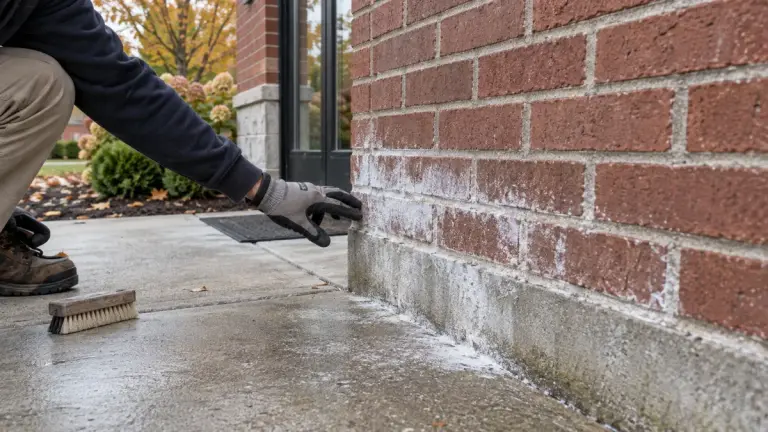
Chemicals do the heavy lifting, but physical agitation breaks the surface bond. Scrub the treated area vigorously using a stiff-bristle deck brush or a commercial floor scrubbing machine. Avoid wire-bristle brushes, as metal bristles can snap off, rust, and leave permanent orange rust stains on your concrete.
Step 5: Rinsing and Extraction
Once the oil is emulsified, rinse the surface thoroughly. While a garden hose with a high-pressure nozzle can work for very light stains, thorough rinsing is required to flush the pores completely. To avoid common pitfalls during the cleaning phase, make sure to read Stop Making These Noob Mistakes During Concrete Power Washing.
For tough jobs, such as driveway cleaning in Goffstown, NH, executing this multi-step process with professional-grade agitation and thermal pressure washing is often the only way to completely erase shadow stains.
Why DIY Concrete Degreasing Often Falls Short
While the local hardware store shelves are packed with DIY cleaning products, many homeowners find that their weekend cleaning projects yield disappointing results. Cleaning concrete is a science, and DIY attempts frequently run into several major roadblocks:
- Surface Etching and Damage: Many retail concrete cleaners contain highly corrosive acids or aggressive solvents. If left on the surface too long, or if applied to unsealed concrete, these chemicals can chemically dissolve the top layer of the concrete (the paste or cream coat). This leaves behind a rough, permanently etched texture that attracts dirt even faster.
- The “Shadow Stain” Phenomenon: You might succeed in removing the dark surface oil, only to find a light, ghostly outline of the stain remains. This “shadow” occurs because the degreaser did not penetrate deeply enough to extract the hydrocarbons trapped deep within the concrete’s capillary network. As the concrete dries, the remaining subsurface oil slowly migrates back to the surface via capillary action.
- Inadequate Equipment: Standard garden hoses and household sprayers rarely produce the hot water or the rinsing volume required to lift emulsified oil out of porous concrete. Standard cold-water rinsing simply pushes the loosened grease deeper into the pores or spreads it around, creating a larger, hazy stain.
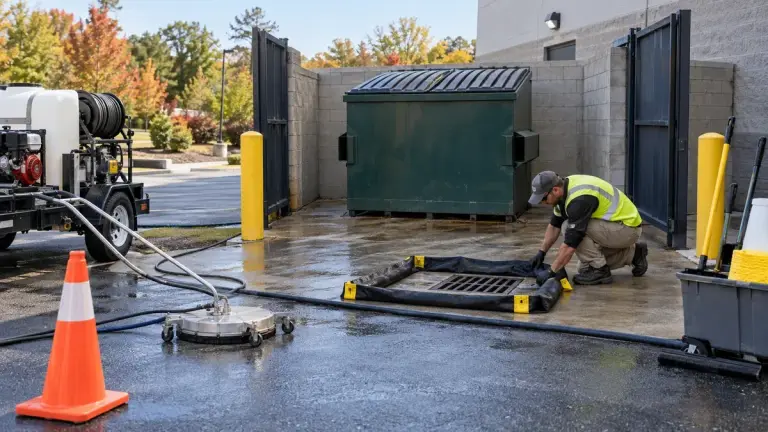
Furthermore, handling heavy chemical runoff presents significant safety and regulatory challenges. In cities like Manchester, NH, local environmental regulations strictly govern what can enter storm drains. Discharging toxic chemical degreasers and emulsified motor oil into public storm systems can result in steep municipal fines.
Professional exterior cleaning companies use specialized reclamation equipment or eco-friendly, biodegradable solutions that comply with local guidelines. If you want to understand the different professional service levels available, check out Don’t Let Grime Win: Your Guide to Driveway Pressure Washing Service Options.
If you are considering hiring a professional, it helps to understand the typical market rates. Based on publicly available internet data, the average cost of professional concrete cleaning across New Hampshire is around $400. However, actual custom rates vary based on the size of the driveway and the severity of the staining. A typical professional service range can run from $800 on the lower end for small, basic driveways up to $2,000 or more for heavily stained, large commercial-scale properties. These are general industry averages and do not represent the specific rates of ACME Pressure Washing.
Frequently Asked Questions About Concrete Driveway Degreasers
What is the best degreaser for concrete driveway oil stains?
The absolute best degreaser for concrete driveway stains depends on the age of the stain and your environmental goals. For general, highly effective oil and grime removal with a focus on safety, we recommend Simple Green | US | Professional | Pressure Washer Concrete Driveway . This formula is designed to meet strict eco-friendly standards, which is highly valued in environmentally conscious communities like Merrimack, NH. For ancient, deeply saturated stains, a biological enzyme cleaner that breaks down hydrocarbons over several weeks is often the most effective option.
How long does a degreaser for concrete driveway take to work?
Working times vary wildly by product type. Standard chemical degreasers typically require a dwell time of 5 to 10 minutes to break down grease before they must be scrubbed and rinsed. Conversely, specialized biodegradable concrete removers and dissolvers like MudBreaker | Biodegradable Concrete Dissolver & Remover – MudMixer require at least 30 minutes (or even overnight for heavy buildup) to soften hardened materials into a rinseable mud. If you are using a bioremediation cleaner, the microbes can take 3 to 4 weeks to fully digest deep oil stains.
Climate also plays a major role; during seasonal cleaning in Goffstown, NH, moderate spring and autumn temperatures are ideal. Applying these chemicals in freezing winter weather or under the direct, scorching summer sun will prevent them from working properly or cause them to dry out too quickly.
Will chemical degreasers damage my surrounding landscaping?
They can if used improperly. Highly acidic or caustic chemical cleaners will easily burn grass and kill ornamental plants. However, you can prevent this damage by choosing non-caustic, non-acidic, and biodegradable formulas.
Regardless of the product you choose, always pre-saturate the surrounding grass and soil with clean water before applying any cleaner, and rinse the landscaping thoroughly again once the job is complete. To learn more about how professional cleaning processes protect your home’s exterior investment, read our comprehensive Driveway Cleaning Cost Guide for a Sparkling Entrance.
Conclusion
Removing stubborn oil stains from your driveway doesn’t have to be an endless battle. By choosing the right degreaser for concrete driveway surfaces, understanding the chemistry of porous concrete, and utilizing proper dwell times and agitation techniques, you can dramatically improve your home’s curb appeal.
However, if you are dealing with ancient, set-in oil pools, or if you simply want to avoid the physical labor, chemical hazards, and runoff risks of a DIY project, calling in the experts is always the safest and most effective path.
At ACME Pressure Washing, we bring over 38 years of hands-on exterior cleaning experience to every job. Based in Merrimack, NH, we use safe, customized, and eco-friendly techniques to completely restore concrete driveways, walkways, and patios without damaging your property or the local New Hampshire environment.
Let us handle the dirty work and restore your driveway to its original beauty. For a professional concrete restoration that lasts, read more about our specialized driveway pressure washing service options.
Ready to get rid of those ugly oil stains for good?
- Call us today: +1603-883-6900
- Get a free, no-obligation quote online: Request a Quote from ACME Pressure Washing