The Ultimate Guide to Concrete Driveway Stain Removal and Restoring Curb Appeal

Why Concrete Driveway Stain Removal Is Harder Than It Looks
Concrete driveway stain removal is one of the most frustrating property maintenance challenges homeowners and business owners face — and acting fast is the single most important factor in your success.
Here’s a quick answer to the most common questions:
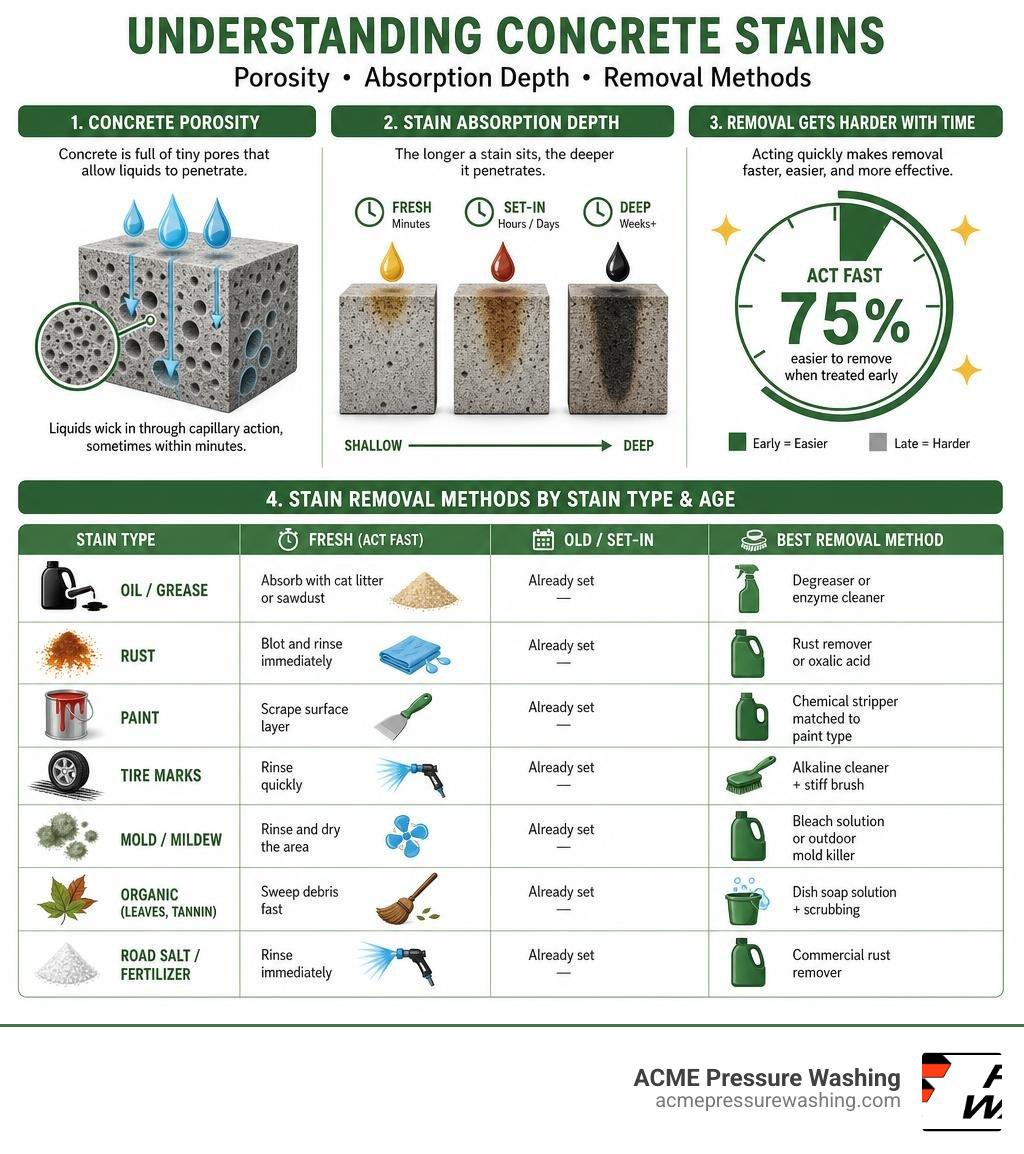
| Stain Type | Best First Response | Best Removal Method |
|---|---|---|
| Fresh oil/grease | Cat litter or sawdust to absorb | Degreaser or enzyme cleaner |
| Old/deep oil | N/A — already set | Poultice or hot-water extraction |
| Rust | Blot and rinse immediately | Commercial rust remover or oxalic acid |
| Paint | Scrape surface layer | Chemical stripper matched to paint type |
| Tire marks | Rinse quickly | Alkaline cleaner + stiff brush |
| Mold/mildew | Rinse and dry area | Bleach solution or outdoor mold killer |
| Organic (leaves, tannin) | Sweep debris fast | Dish soap solution + scrubbing |
| Road salt / fertilizer | Rinse immediately | Commercial rust remover |
The core problem is concrete’s porosity. Concrete is made from natural materials — limestone, clay, sand, and iron ore — which makes it highly porous. Liquids don’t just sit on the surface. They wick into microscopic pores through capillary action, sometimes within minutes. Once a stain sets deep, even repeated cleaning may not fully remove it. In fact, older stains can resurface after cleaning as buried pigments migrate back up through the concrete matrix.
Research consistently shows that early intervention reduces stain removal difficulty by as much as 75%. That stat alone should motivate you to keep absorbent material — like plain clay cat litter or sawdust — on hand for spills.
I’m Lionel Greenwood, owner of ACME Pressure Washing, and I’ve been tackling concrete driveway stain removal across New Hampshire for over 38 years, working with residential and commercial properties throughout Merrimack, Londonderry, and beyond. In this guide, I’ll walk you through exactly what works — and what doesn’t — so you can make the right call for your driveway.
Concrete driveway stain removal terms you need:
Professional Concrete Driveway Stain Removal: Understanding the Science of Porosity
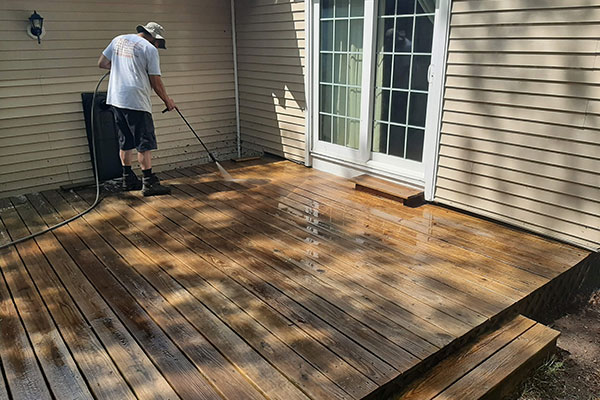
To understand why a simple garden hose and some dish soap won’t cut it for deep stains, we have to look at the microscopic structure of concrete. During the curing process, water evaporates from the concrete mix, leaving behind a network of tiny, interconnected voids called capillary pores. These pores generally range from 10 to 50 microns in diameter.
When a liquid contaminant like motor oil, hydraulic fluid, or fertilizer runoff is spilled, capillary action pulls the liquid deep into this sub-surface network. The cement paste itself contains calcium hydroxide, which carries a polar charge. This charge actively attracts hydrocarbons (found in oils and greases), creating a chemical bond that locks the contaminant into the concrete matrix.
As concrete driveways age, weathering and freeze-thaw cycles in New Hampshire open this pore structure even wider, allowing contaminants to penetrate even deeper. When you attempt a superficial clean, you only clear the top layer. Over time, the oil trapped deep within the capillaries migrates back to the surface in a process known as capillary rise, causing the stain to mysteriously “reappear” weeks later.
Understanding these dynamics is critical when considering your driveway pressure washing options, as professional-grade thermal extraction is often the only way to break these deep chemical bonds.
Why DIY Concrete Driveway Stain Removal Often Fails
Many property owners try to tackle concrete driveway stain removal themselves, only to end up with disappointing results or, worse, permanent damage to their driveway.
One of the most common issues we see in the field is a phenomenon called “shadow-ghosting.” When paint or dark oils penetrate the concrete, the sub-micron pigment particles (which are often smaller than 1 micron) become physically trapped inside the 10-to-50-micron pores. Even if you dissolve the surface resin using a standard hardware store solvent, these tiny pigments remain locked in place, leaving a permanent, faint “ghost” outline of the original stain.
Another major hazard of DIY attempts is physical surface damage. Property owners frequently resort to aggressive scraping, wire brushes, or highly acidic chemical washes in desperation. Wire brushes can scratch the smooth cream coat of the concrete, exposing the aggregate underneath and creating a permanently rough, discolored patch.
Using the wrong pressure washing equipment or techniques can also scar the surface. To avoid these costly errors, it is highly recommended to read up on how to avoid these common power washing mistakes before attempting any major cleaning project yourself.
According to a study on DIY surface maintenance, while 85% of homeowners found that chemical cleaners made stain removal easier, improper application frequently led to surface etching. For detailed breakdowns of chemical reactions on masonry, resources like How To Get Stain Out Of Concrete: Effective Methods For A Clean, Spotless Surface – ConcreteCaptain.com and How to Remove Concrete Stains (Oil, Paint, Rust & More) show that matching the exact chemical solvent to the specific resin or contaminant is essential to prevent permanent surface scuffing.
When to Call a Professional for Concrete Driveway Stain Removal
For commercial properties, large multi-car residential driveways, or deep-set stains that have lingered for months, professional intervention is almost always required.
Professional exterior cleaning companies utilize commercial-grade hot-water extraction units that can heat water up to 140°F (and sometimes higher) at the cleaning surface. This thermal energy is crucial because heat expands the concrete’s pores slightly while reducing the viscosity of trapped oils, allowing them to be flushed out. Cold-water DIY pressure washers simply cannot achieve this.
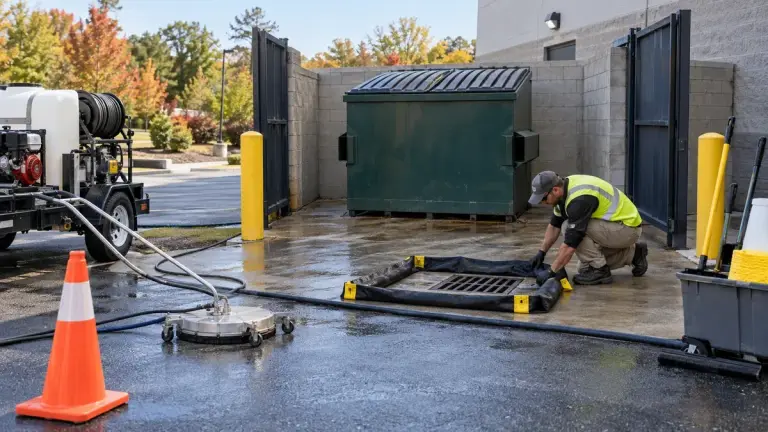
Furthermore, professional teams use specialized wastewater recovery systems to remain compliant with local environmental regulations. In towns like Merrimack, NH, and Goffstown, NH, washing hazardous automotive fluids directly into storm drains is a serious environmental violation. Professional recovery systems vacuum up the emulsified oil and dirty water on contact, keeping your property clean and compliant.
Common Driveway Contaminants in New Hampshire
Our driveways in New Hampshire face a unique set of harsh contaminants throughout the year:
- Motor Oil and Fuel: These petroleum-based hydrocarbons chemically bond to the aggregate and require heavy-duty surfactants or enzymatic breakdown.
- Hydraulic Fluid: A highly complex synthetic ester that wicks rapidly into the concrete matrix. If you are dealing with a leak from heavy equipment or a delivery vehicle, you can find a highly specific, step-by-step rescue plan on how to remove hydraulic fluid from concrete.
- Tannin Stains: Caused by decomposing organic matter like leaves, acorns, and pine needles left on the driveway over the winter. These leave stubborn brown, organic dyes.
- Fertilizer Rust: Iron compounds in lawn fertilizers oxidize when exposed to moisture, leaving bright orange or yellowish rust rings along the edges of your concrete.
- Tire Marks: Plasticizers and rubber compounds from hot tires can physically bond to concrete coatings or sealers.
- Road Salt and De-Icing Chemicals: While not a stain in the traditional sense, road salt leaves white mineral deposits and can cause physical scaling and structural damage over time.
Comparing Chemical, Poultice, and Hot-Water Extraction Methods
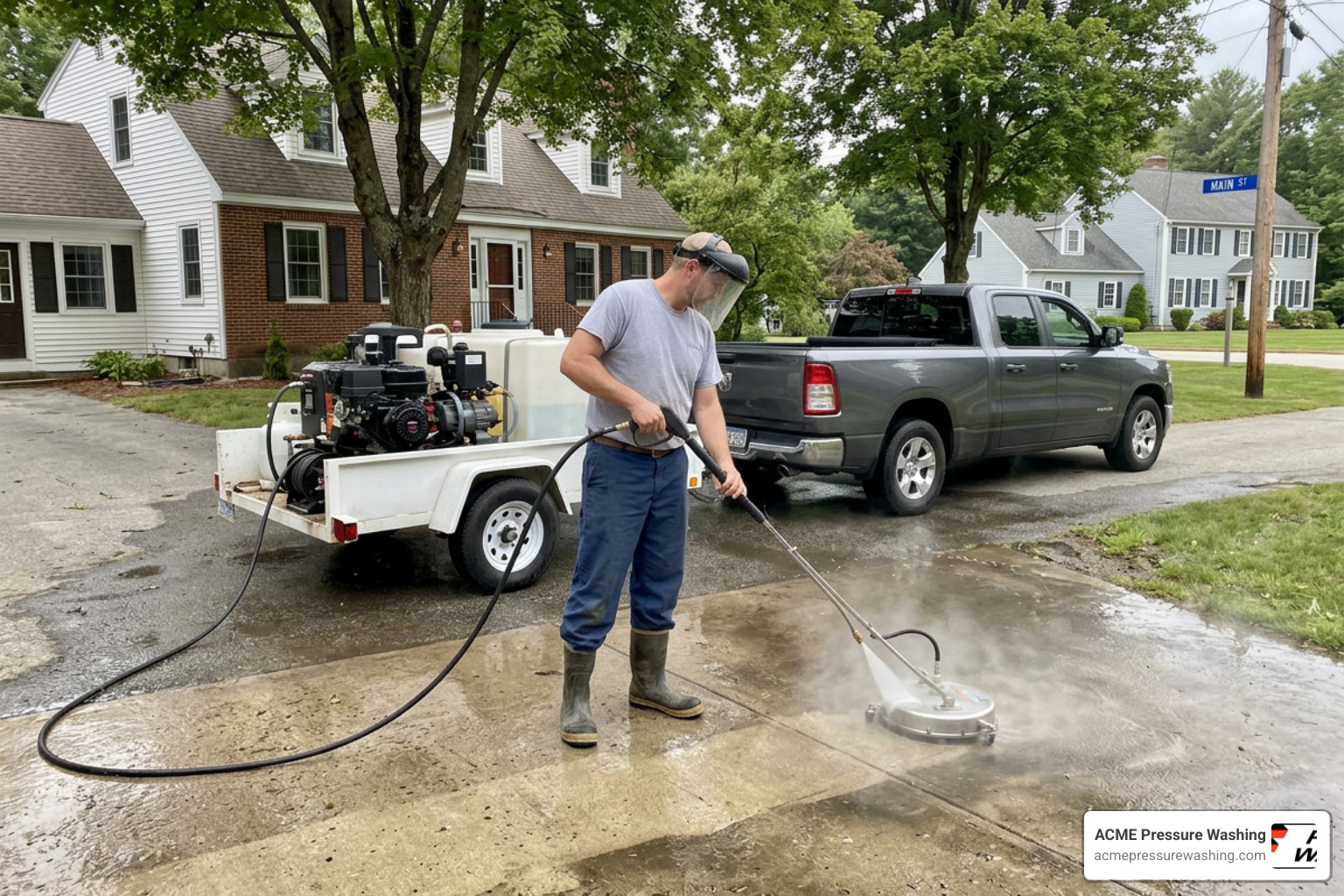
When choosing a method for concrete driveway stain removal, you generally have three primary approaches: chemical cleaners (such as enzymes), the poultice method, or professional hot-water extraction.
Choosing the right approach depends heavily on the age, depth, and type of the stain. For a comprehensive look at how these methods stack up specifically for petroleum spills, you can read more about concrete driveway oil stain removal methods and consult our guide on finding the best degreaser for stubborn oil stains.
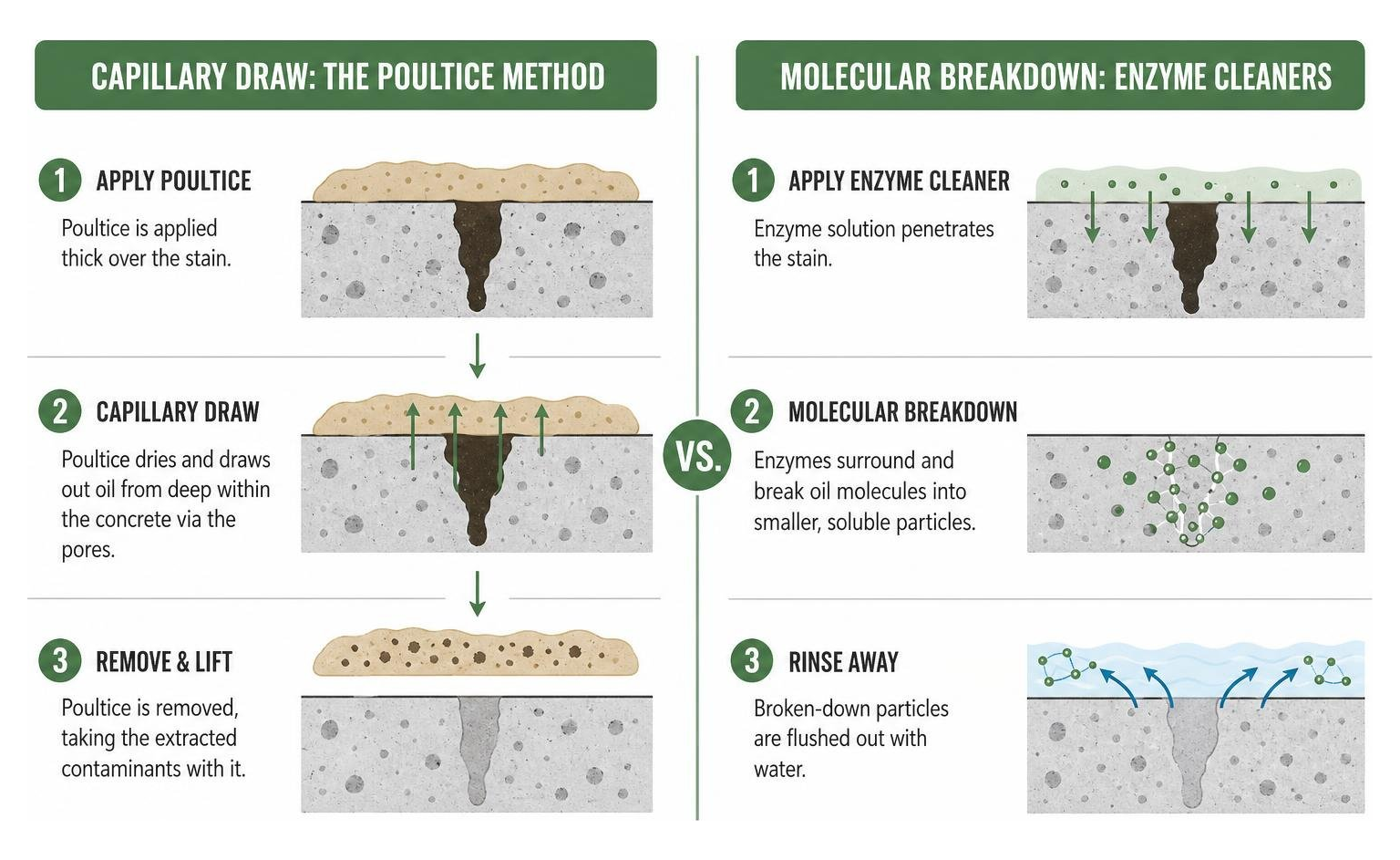
Below is a comparative breakdown of how these three methods perform across key metrics:
| Metric | Enzyme Cleaners | Poultice Method | Professional Hot-Water Extraction |
|---|---|---|---|
| Best Used For | Fresh to moderately old oil/grease stains | Deep-set, localized oil, paint, or rust stains | Large-scale cleaning, stubborn stains, and overall restoration |
| How It Works | Microorganisms digest hydrocarbon chains | Capillary action draws contaminants into an absorbent paste | High-heat thermal expansion emulsifies and flushes contaminants |
| Typical Timeline | 24 hours to several days (may require repeat applications) | 24 to 48 hours (drying time is critical) | Instant results (typically completed in a few hours) |
| Pros | Eco-friendly, easy to apply, no scrubbing required | Highly effective for drawing out deep, localized pigments | Safest for concrete integrity, cleans large areas uniformly, sanitizes |
| Cons | Ineffective on non-organic/non-petroleum stains | Labor-intensive, expensive for large areas, visually unsightly during process | Requires specialized professional equipment |
Enzyme Cleaners for Hydrocarbon Stains
Enzyme cleaners represent a major advancement in eco-friendly cleaning technology. Rather than relying on harsh acids or toxic solvents, these products contain active enzymes — specifically lipase (which targets fats and oils), protease (which breaks down proteins), and amylase (which targets starches).
When applied to an oil or grease stain, these enzymes act as catalysts to break down the complex, long-chain hydrocarbon molecules into simple water, carbon dioxide, and soluble organic byproducts. The bacteria in the solution then literally digest these harmless compounds.
For the best results, enzyme cleaners require a 24-hour timeline to allow the biological cultures to work. The concrete must remain damp during this period, as the enzymes require moisture to stay active. While highly effective for fresh, shallow oil spills, they struggle with old, deeply oxidized hydrocarbons or inorganic stains like rust and paint.
The Poultice Method for Deep-Set Pigments
The poultice method is a highly targeted, scientific approach designed to lift deep-set pigments out of concrete capillaries. It relies on the principle of capillary extraction.
To create a poultice, a chemical solvent or cleaner is mixed with an inert, highly absorbent carrier material — such as diatomaceous earth, kaolin clay, or even powdered talc — to form a thick paste with the consistency of peanut butter. For rust stains, an acid-based cleaner is used; for oil, a strong degreaser or solvent is applied. For a general reference of which solvents pair with specific stains, you can check How to Remove Stains from Concrete & Driveway | StainOut.
The paste is applied over the stain in a layer roughly 1/4 inch thick, extending about an inch beyond the stain’s edges. It is then covered with a sheet of 2-mil plastic wrap and taped down around the edges to prevent the solvent from evaporating too quickly.
As the solvent sits, it penetrates the concrete and dissolves the contaminant. Over the next 24 to 48 hours, as the moisture slowly escapes from under the plastic, the liquid is drawn back upward into the dry, absorbent powder of the poultice. Once completely dry, the powder is simply swept away, carrying the dissolved stain with it.
Why Professional Hot-Water Pressure Washing is the Safest Alternative to Destructive Grinding
When faced with incredibly stubborn, years-old stains, some property owners consider mechanical grinding. Grinding involves using a rotary machine with diamond-tipped abrasives to physically shave off the top layer of the concrete.
However, mechanical grinding carries massive risks. It permanently alters the surface texture of your driveway, stripping away the smooth, finished “cream” layer of the concrete and exposing the coarse aggregate beneath. This leaves a highly noticeable, permanently patchy, and rough area that is actually more susceptible to future staining because the newly exposed surface is highly porous.
Professional hot-water pressure washing is the safest, most effective alternative to this destructive method. By combining specialized, biodegradable chemical pre-treatments with water heated up to 140°F and delivered at a carefully calibrated pressure, we can safely emulsify and extract deep-set contaminants without altering the physical structure of your concrete. This preserves the structural integrity, uniform appearance, and longevity of your driveway.
Driveway Restoration Costs and Replacement Decisions in New Hampshire
As we look at property maintenance in July 2026, managing costs while preserving your property’s value is more important than ever. When dealing with a severely stained or weathered driveway, you must weigh the cost of surface restoration against the massive expense of a full concrete replacement.
Before making a decision, it is highly recommended to consult a comprehensive driveway cleaning cost guide to understand the market averages.
Our harsh New Hampshire climate plays a major role in this decision. The intense freeze-thaw cycles we experience in towns like Merrimack, NH, and Londonderry, NH, mean that any water trapped in concrete cracks or pores will expand when it freezes, rapidly accelerating structural damage.
When to Restore vs. Replace Concrete
How do you know when a driveway can be saved through professional stain removal and restoration, and when it is truly past its prime?
- Choose Restoration If: The damage is purely cosmetic (oil stains, rust, tannin discoloration, mold) and the concrete is structurally sound. Even if the stains are deep, professional hot-water extraction and sealing can restore the driveway to a like-new appearance at a fraction of the cost of replacement.
- Choose Replacement If: The concrete has deep, structural cracks that run entirely through the slab, or if you notice widespread “surface scaling” or spalling (where the top layer of concrete is actively flaking and crumbling away due to freeze-thaw damage). Once the structural bond of the cement paste has failed, no amount of cleaning can restore its integrity.
Average Costs for Professional Concrete Driveway Stain Removal
When budgeting for your driveway, it is helpful to look at general industry pricing. Please note that the pricing ranges below are average costs sourced from publicly available online industry data and do not represent the specific rates of ACME Pressure Washing.
- Professional Stain Removal & Restoration: Based on general online data, the average cost for professional concrete stain removal and deep cleaning ranges from $400 to $2,000, depending on the size of the driveway and the severity of the staining. To account for industry-wide variability (such as heavily neglected commercial lots or specialized chemical stripping), a realistic market range can span from $800 on the low end to $10,000 on the high end.
- Full Driveway Replacement: If the concrete is structurally compromised, replacement is required. Online data indicates that average driveway replacement costs range from $12,000 to $45,000. Depending on the square footage, decorative finishes, and excavation requirements, a wide industry range for replacement can run from $24,000 up to $225,000 for high-end commercial or expansive residential properties.
As you can see, investing in professional restoration early can save you tens of thousands of dollars compared to a premature replacement.
Frequently Asked Questions About Driveway Cleaning
What is the perfect PSI for cleaning concrete driveways?
For cleaning concrete driveways without causing damage, the industry standard is to use a pressure washer calibrated to roughly 3,000 PSI.
Using pressure higher than 3,500 PSI can permanently damage the concrete by etching the surface and stripping away the smooth cream coat, especially on concrete that is less than a year old. In towns like Amherst, NH, where properties feature beautiful, custom-poured concrete driveways, maintaining the correct pressure is vital to preserving the curb appeal and structural integrity of the surface. For a detailed breakdown of pressure settings, read our guide on the perfect PSI for concrete driveways.
How do you prevent future oil and rust stains?
The single most effective way to prevent future staining is to apply a high-quality, penetrating concrete sealer. Unlike topical sealers that sit on top of the surface and can wear away, penetrating sealers slip into the concrete capillaries and chemically react to form a water- and oil-repellent barrier.
You can perform a simple “water bead test” to check if your driveway is sealed: splash a cup of water onto the dry concrete. If the water beads up on the surface, the concrete is protected. If it immediately soaks in and darkens the concrete, it is time to reapply. In places like Londonderry, NH, we recommend reapplying a high-quality sealer every 1 to 3 years to protect against oil leaks, rust, and salt damage.
Can vinegar or bleach damage my driveway?
Yes, if used incorrectly. While vinegar is a popular DIY recommendation for light rust spots, it is highly acidic. Frequent or prolonged use of vinegar can dissolve the calcium carbonate bonds within the cement paste, weakening the concrete and leaving a rough, etched surface.
Bleach, on the other hand, will not structurally harm concrete, but using it at full strength is unnecessary and can cause uneven discoloration or strip the natural grey color of the concrete, leaving unsightly white splotches. In towns like Goffstown, NH, where driveways are highly visible, it is always best to use professionally formulated, pH-balanced concrete cleaners.
Conclusion
Restoring your driveway’s curb appeal doesn’t have to be a stressful, trial-and-error process. While DIY methods can handle very fresh, minor spills, deep-set oil, rust, paint, and environmental stains require specialized knowledge and commercial-grade equipment to fully resolve without damaging your concrete.
At ACME Pressure Washing, we bring over 38 years of experience using safe, customized, and eco-friendly techniques to protect and restore properties throughout Merrimack, NH, Londonderry, NH, Goffstown, NH, and the surrounding New Hampshire communities. Whether you need to clean a residential driveway, a commercial parking lot, or restore a weathered patio, our professional team is here to help.
Don’t let stubborn stains ruin your property’s first impression. Contact ACME Pressure Washing today at +1603-883-6900 or fill out our online quote form to get started. You can also schedule professional walkway and patio cleaning services to completely revitalize your outdoor living spaces!