




Your Patio Doesn’t Need a Pressure Washer to Look Great
Clean patio without jet wash is absolutely possible – and for many surfaces, it’s actually the smarter choice. Here’s a quick overview of how to do it:
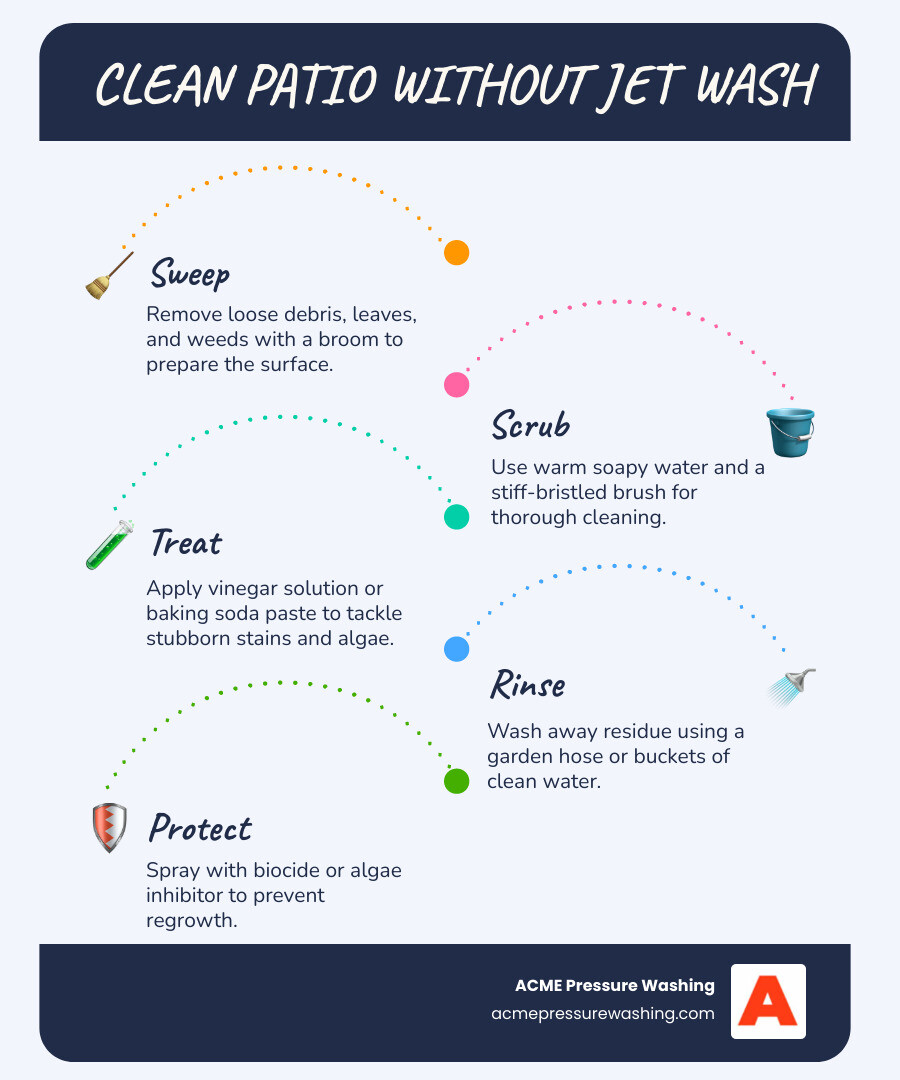
How to clean a patio without a jet wash:
- Sweep away loose debris, leaves, and weeds
- Scrub with warm soapy water and a stiff-bristled brush
- Treat stains with a vinegar solution or baking soda paste
- Rinse thoroughly with a garden hose or buckets of clean water
- Prevent regrowth with a spray-and-leave biocide or algae inhibitor
Patios take a beating. Rain, shade, and organic debris create the perfect conditions for moss, algae, and grime to build up – especially here in New England where seasons are harsh and moisture is constant.
Most homeowners reach straight for a pressure washer. It feels like the obvious fix.
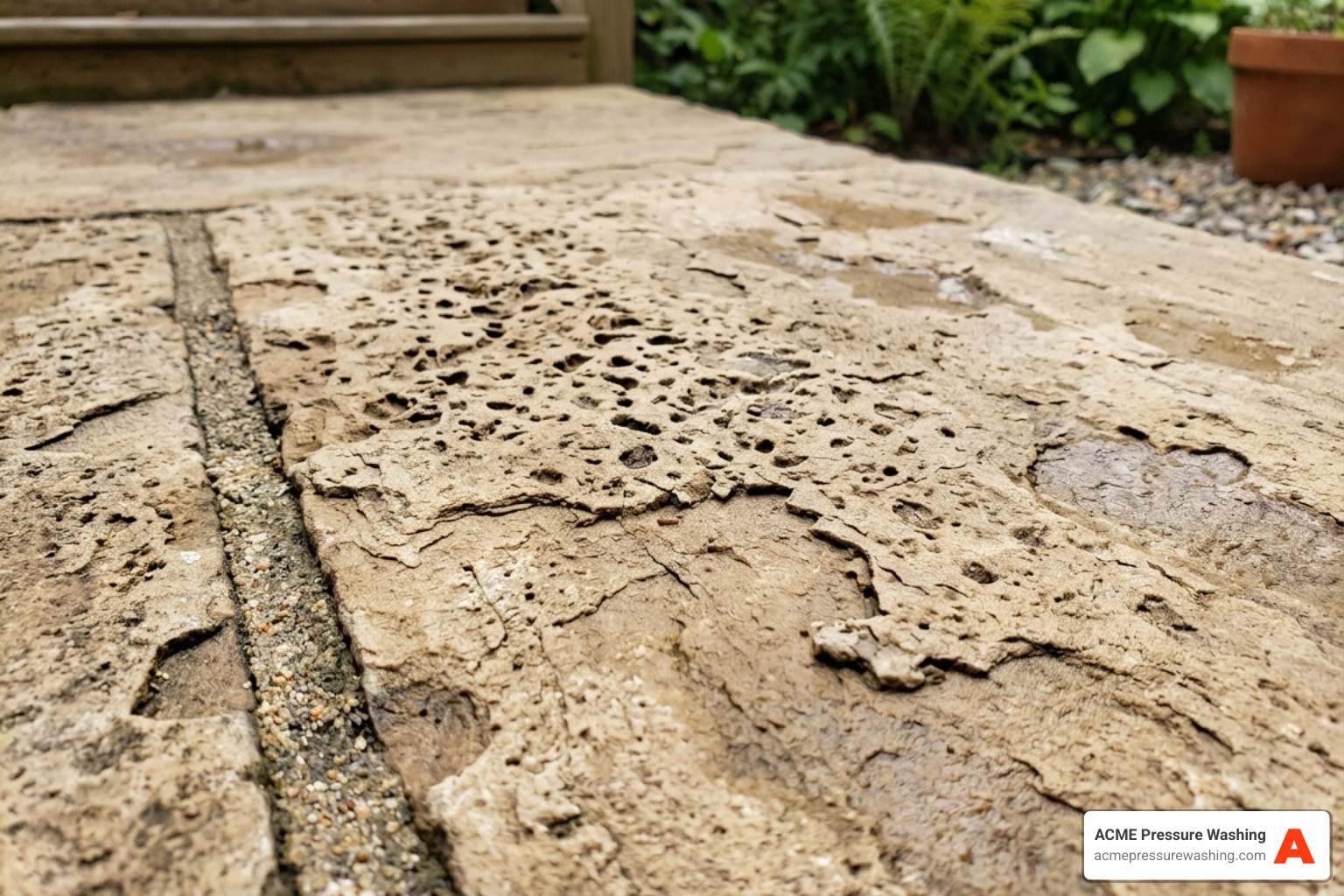
But here’s the thing: pressure washers can actually make the problem worse over time. They erode the joints between slabs, roughen surfaces so moisture clings more easily, and can crack or pit softer stones like sandstone or limestone.
And they use between 400 and 600 litres of water per hour.
The good news? A bucket, a stiff brush, and the right cleaning solution can restore most patios to a genuinely clean, safe, attractive surface – without any of those risks.
This guide walks you through exactly how to do it, surface by surface.
Why you should clean patio without jet wash
While the roar of a jet wash might make you feel like a weekend warrior, your patio slabs might be crying out in protest. In our 38 years of experience serving areas like Merrimack, Nashua, and Hollis, we’ve seen the “hidden” damage that high-pressure water can cause.
One of the primary concerns is surface pitting. High-pressure streams can strip away the top layer of concrete or natural stone, leaving the surface porous and rough. This actually creates a “velcro effect” for dirt and algae, allowing them to take root deeper and grow back faster than before. Furthermore, the force of the water often leads to joint erosion. It blasts away the sand or mortar between your pavers, which can cause the slabs to shift, wobble, or even crack.
Environmental impact is another major factor. A standard pressure washer can churn through 400 to 600 litres of water per hour. In contrast, a manual clean using a bucket and a garden hose uses a fraction of that. There’s also the issue of noise pollution; your neighbors in quiet communities like Mont Vernon or Amherst will certainly appreciate the silence of a manual scrub over the drone of a gas engine.
According to research on How to Clean a Patio Safely: Pressure Washing vs Chemical Cleaners, manual cleaning is often the lowest-risk method because it allows for total control. You can see exactly where you are scrubbing and adjust your pressure to avoid damaging delicate materials.
Essential tools and materials for manual cleaning
Before you start, you’ll need a small “arsenal” of basic household items. You likely already have most of these in your garage or under the kitchen sink.
- Stiff-bristled brush or broom: This is your most important tool. For concrete, a very stiff wire or plastic brush works well. For natural stone, stick to heavy-duty plastic to avoid scratching.
- Large bucket: For mixing your cleaning solutions.
- Dish soap: Simple liquid soap is surprisingly effective at breaking down surface oils and grime.
- White vinegar: A natural disinfectant and mild acid that works wonders on algae.
- Baking soda: Perfect for making a paste to lift stubborn organic stains or oil marks.
- Garden hose: For a gentle rinse that won’t disturb your jointing sand.
- Protective gear: Don’t forget your knees! A pair of knee pads will make the job much more comfortable.
For those looking into Restoring Walkways and Patios, having the right safety gear is non-negotiable. We recommend:
- Heavy-duty waterproof gloves
- Safety goggles (especially if using vinegar or bleach)
- Non-slip boots or shoes
- Knee pads or a foam kneeling mat
Step-by-step guide to clean patio without jet wash
Cleaning by hand requires a bit more “elbow grease,” but the results can be just as professional if you follow a logical process.
| Solution | Best For | Pros | Cons |
|---|---|---|---|
| Soapy Water | General dirt & grime | Cheap, safe for all surfaces | Doesn’t kill algae roots |
| White Vinegar | Algae, moss, limescale | Natural, kills biological growth | Can damage limestone/sandstone |
| Baking Soda | Oil stains, bird droppings | Non-toxic, great for spot cleaning | Requires scrubbing/dwell time |
| Commercial Biocide | Heavy moss/long-term prevention | Low effort (spray and leave) | More expensive; chemical-based |
1. Clear the Deck (Literally)
Start by removing all furniture, pots, and ornaments. You don’t want to clean around things, as this often leaves “ghost marks” or discolored patches. Sweep the entire area thoroughly to remove loose leaves, twigs, and surface dust.
2. The Soapy Scrub
Mix a healthy squirt of dish soap into a bucket of warm water. Pour the solution over a small section of the patio (about 3×3 feet). Let it sit for 10–15 minutes to soften the dirt. Use your stiff brush to scrub in multiple directions. If you’re working on a slope, always start at the highest point and work your way down.
3. Tackle the Stains
For areas with heavy algae or moss, a 50:50 mix of white vinegar and water is highly effective. If you encounter a stubborn grease mark from a summer BBQ, apply a baking soda paste. As noted in discussions on How to clean a patio without a pressure washer or hose, letting the solution “dwell” or soak into the stone is the secret to success.
4. The Final Rinse
Rinse the area with a garden hose on a low-pressure setting. Avoid using a “jet” nozzle setting, as this can still blast sand out of the joints.
Removing moss and algae from joints
The gaps between your pavers are the most vulnerable part of your patio. Moss loves the damp, shaded environment of these joints. To remove it safely, use a specialized weed puller or a long-handled joint brush.
Once the heavy moss is removed, you can pour a vinegar solution directly into the cracks to kill any remaining spores. Be careful to replace any jointing sand that gets displaced during the process. Keeping your joints well-filled is one of the best ways to prevent weeds from returning. For more on this, check out our guide on Walkway and Patio Cleaning.
Best practices to clean patio without jet wash on natural stone
Natural stone, such as Indian Sandstone or Limestone, requires a gentler touch. These stones are often held together by iron minerals; using harsh acids can cause “rusting” or orange staining within the stone itself.
Always use pH-neutral cleaners on natural stone. If you must use vinegar, test it on an inconspicuous corner first to ensure it doesn’t etch the surface. When scrubbing, work diagonally across the joints to avoid pulling out the pointing material. You can see examples of successfully restored stone in our Gallery Walkway and Patio Cleaning.
Material-specific precautions for different surfaces
Every patio material has its own “personality” and set of rules.
- Indian Sandstone: This is a beautiful but relatively soft stone. It is very susceptible to acid damage. Avoid undiluted vinegar or harsh bleach.
- Porcelain Tiles: These are incredibly durable and non-porous. You can usually be a bit more aggressive with cleaners here, but they can be very slippery when wet.
- Concrete Pavers: These are the workhorses of New Hampshire patios. They can handle a stiff scrub, but be wary of using too much bleach, which can fade the artificial pigments over time.
- Brick: Old bricks can be brittle. Avoid wire brushes which might scratch the “face” of the brick, leading to faster weathering.
As the head gardener at Gardeners’ World often suggests, the best approach is always to start with the mildest possible cleaner and only move to stronger chemicals if the dirt refuses to budge.
How to clean patio without jet wash using baking soda
Baking soda (sodium bicarbonate) is an alkaline “super-cleaner” for patios. It is particularly effective for oil spills and organic marks like bird droppings or tannin stains from fallen leaves.
- Paste Application: Mix baking soda with a small amount of water to create a thick paste (consistency of toothpaste).
- Dwell Time: Spread the paste over the stain and let it sit for at least 30 minutes. For oil, you can leave it for several hours to “draw” the oil out of the stone.
- Light Scrub: Use a small brush to work the paste into the pores of the stone.
- Rinse: Wash away with clean water.
This method is safe for almost all surfaces, including those in sensitive areas near your lawn or flower beds.
Frequently Asked Questions about manual patio cleaning
How long do the results of hand cleaning last?
While a manual clean takes more effort upfront, the results are often more sustainable than a jet wash. Because you haven’t “roughed up” the surface of the stone, algae has a harder time getting a foothold. Generally, a thorough hand clean in the spring will keep a patio looking great for 12-18 months, provided you perform basic maintenance like weekly sweeping. Using an algae inhibitor or a “spray-and-leave” biocide once or twice a year can extend these results even further.
Is bleach safe for all patio types?
Bleach is a powerful tool for killing mold and “black spot” lichen, but it comes with risks. It can discolor certain natural stones and is highly toxic to garden plants and pets. If you choose to use bleach, always dilute it (at least 1 part bleach to 5 parts water) and pre-wet any surrounding grass or plants to prevent them from absorbing the runoff. Always perform a small surface test first to ensure it doesn’t turn your beautiful stone a ghostly white.
How much does professional cleaning cost compared to DIY?
If your patio is exceptionally large or the stains are beyond the reach of household vinegar, professional help might be the way to go. Based on average internet data, professional patio cleaning costs can vary wildly depending on the size and condition of the area.
You might see prices ranging from £150 to as much as £1,200 for very large, complex jobs. On average, most homeowners in the UK and US find that professional services cost between £5 and £15 per square meter. Hiring a pro ensures the right chemicals are used for your specific stone type, saving you from potentially expensive DIY mistakes.
Conclusion
Cleaning your patio without a jet wash is more than just a way to save on equipment rental; it’s a commitment to the longevity and health of your outdoor living space. By using simple tools and a little patience, you can achieve a sparkling finish that preserves your stone’s natural beauty and protects the environment.
At ACME Pressure Washing, we have over 38 years of experience in the exterior cleaning industry. While we are experts in high-end equipment, our USP is our ability to use safe, customized, and eco-friendly techniques tailored to the specific needs of your property. Whether you are in Merrimack, Bedford, Londonderry, or any of our other service locations in New Hampshire, we understand the local climate and how it affects your home.
If your patio needs a professional touch that goes beyond the bucket and brush, we are here to help. Explore our services for Professional Walkway and Patio Cleaning and let us help you restore your home’s curb appeal safely and effectively.
