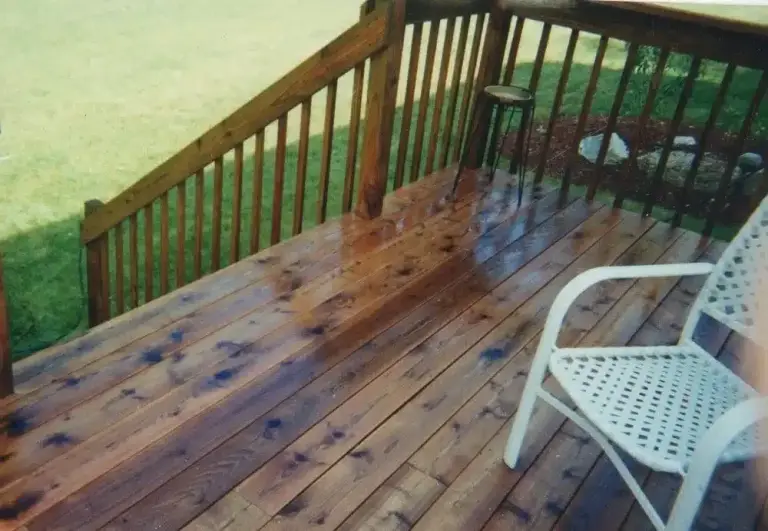
Deck the Floors with These Power Washing Tips
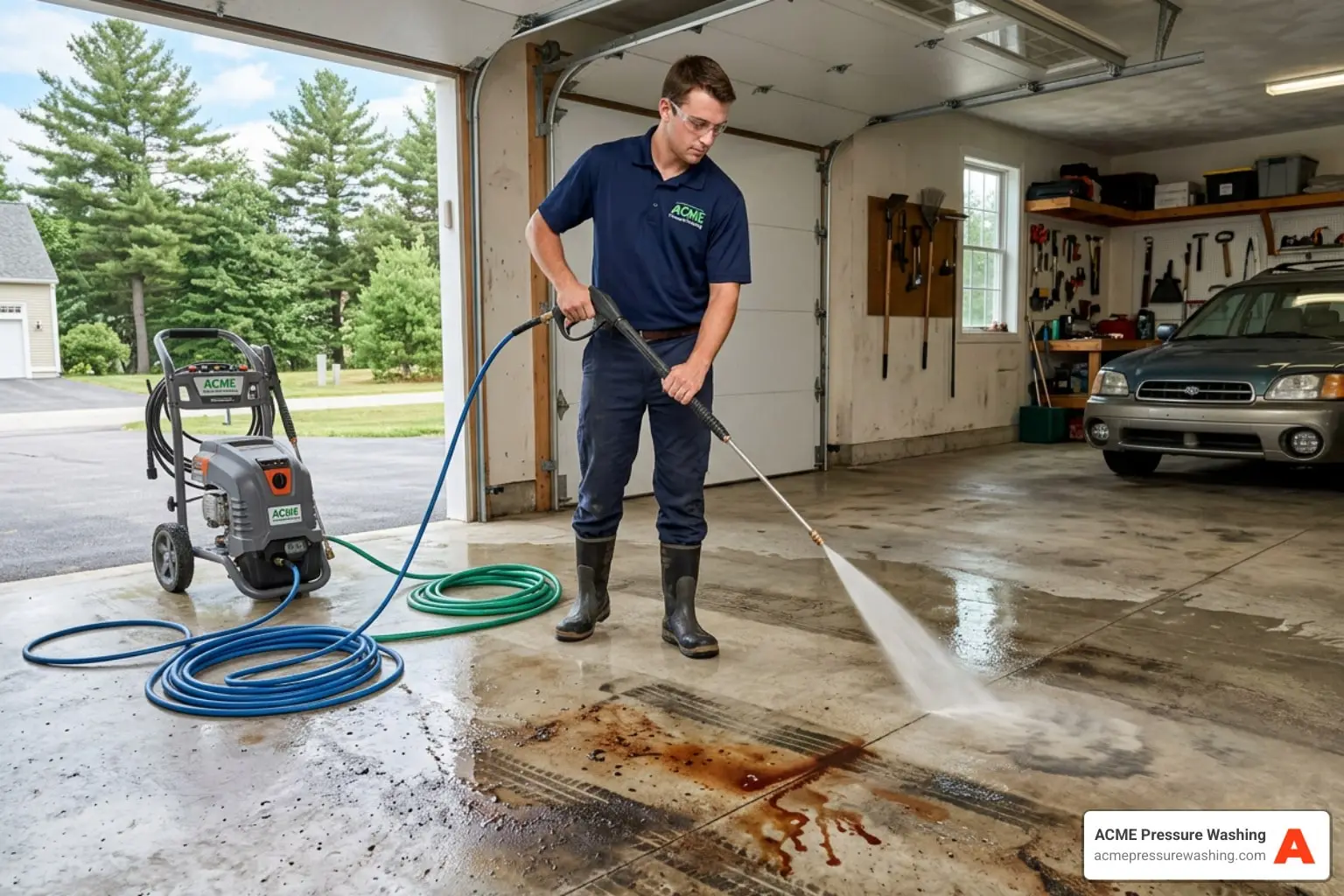
Why Your Garage Floor Deserves More Than a Garden Hose
Garage floor power washing is one of the most effective ways to remove years of oil, grease, tire marks, and road salt from concrete — restoring both the look and safety of your garage.
Quick Answer: How to Power Wash a Garage Floor
- Clear the space — Remove all vehicles, tools, and stored items
- Sweep the floor — Remove loose debris before applying water
- Pre-treat stains — Apply a degreaser and let it sit 10–15 minutes
- Wash with 2,000–3,000 PSI — Use a surface cleaner attachment for even coverage
- Rinse thoroughly — Push dirty water toward the garage door with a squeegee
- Let it dry completely — Before replacing items or applying sealant
Most homeowners don’t think much about their garage floor — until the stains won’t come out.
Oil drips, tire marks, brake dust, and road salt don’t just look bad. They soak deep into porous concrete, creating slip hazards and accelerating surface breakdown. In New Hampshire, where winter brings months of road salt and freeze-thaw cycles, that damage compounds fast.
A standard garden hose barely scratches the surface. Power washing, on the other hand, uses significantly less water while delivering the pressure and — when hot water is used — the heat needed to break down embedded contaminants at the source.
I’m Lionel Greenwood, owner of ACME Pressure Washing, and I’ve been cleaning garage floors and commercial concrete surfaces across New Hampshire and Southern New England for over 38 years — giving me a deep understanding of what it actually takes to get garage floor power washing results that last. In this guide, I’ll walk you through everything you need to know to get it done right.
Garage floor power washing terms to know:
Pressure vs. Power Washing: What Your Garage Floor Needs
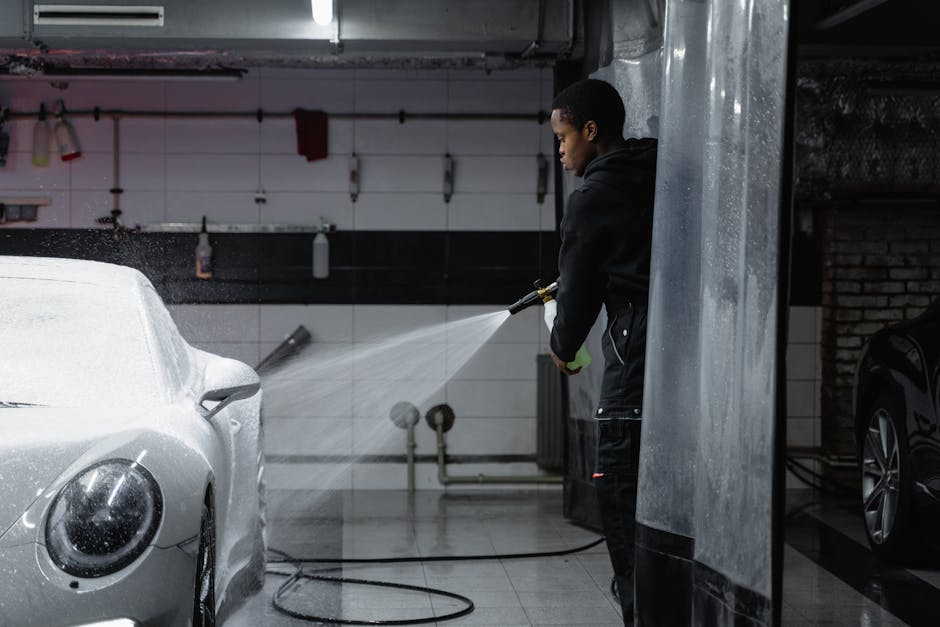
Before we dive into the step-by-step cleaning process, it is essential to understand the tools of the trade. Many people use the terms “pressure washing” and “power washing” interchangeably, but they are actually two different cleaning methods. Understanding this difference is critical when you are preparing for a garage floor power washing project.
- Pressure Washing: This method uses highly pressurized cold water to blast away dirt, mud, mold, and loose debris. It is highly effective for general outdoor cleaning, such as refreshing walkways or patios.
- Power Washing: This method uses the exact same high-pressure water, but with one massive advantage: the water is heated. A heavy-duty burner inside the machine heats the water to temperatures up to 220°F.
So, which one is better for a garage floor? While a cold-water pressure washer can handle basic dirt and mud, it struggles with the oil, transmission fluid, and greasy residues that vehicles leave behind. Concrete is highly porous, acting like a giant stone sponge that sucks these petroleum products deep into its pores.
Cold water only pushes against grease; hot water melts it. The heat from a true power washer emulsifies the oils, breaking their chemical bonds so they can be lifted and rinsed away. If you are dealing with a heavily stained garage floor in Bedford or Amherst, hot water power washing is the superior choice.
To clean a standard, bare concrete garage floor safely and effectively, you need a machine that can deliver approximately 3,000 PSI (pounds per square inch). This level of pressure is strong enough to force dirt out of the concrete’s pores without causing damage to the surface.
In addition to superior cleaning power, power washing is surprisingly eco-friendly. A standard pressure washer uses up to 80% less water than a traditional garden hose running for the same amount of time.
If you want to learn more about our hot-water concrete cleaning capabilities, you can read about our Power Washing services. We also recommend checking out local professional resources, such as Soft & Pressure Washing Services in Amherst New Hampshire or WaterBoys Pressure Washing: Pressure Washing In Bedford NH, to see how expert-grade equipment handles these tough surfaces.
High-Level Steps for Garage Floor Power Washing
Cleaning a garage floor is not as simple as pointing a high-pressure wand at the ground and pulling the trigger. It requires careful preparation, the right safety gear, and a systematic approach to prevent water damage to your home.
Because garages are semi-enclosed spaces, water runoff and ventilation are major concerns. If you use a gas-powered pressure washer, it must always remain outside the garage in a well-ventilated area to prevent carbon monoxide poisoning. For safety and efficiency, we recommend using a professional-grade setup or hiring a trained crew.
Here is a quick look at how a DIY attempt compares to a professional execution:
| Feature/Risk | DIY Approach | Professional Execution (ACME) |
|---|---|---|
| Water Temperature | Cold water (limited oil removal) | Hot water up to 220°F (melts grease) |
| Pressure Control | High risk of concrete etching/damage | Tailored PSI settings based on floor type |
| Runoff Management | Water often pools or enters drywall | Controlled extraction and squeegee drying |
| Equipment Quality | Consumer-grade wand (leaves streaks) | Industrial surface cleaners (streak-free) |
| Time Investment | 4 to 8 hours of backbreaking labor | 1 to 2 hours of highly efficient cleaning |
Preparing the Surface for Garage Floor Power Washing
Proper preparation is 90% of the job. Before any water starts spraying, you must prepare the space:
- Clear the Entire Garage: Remove all vehicles, lawnmowers, tools, cardboard boxes, and storage bins. Anything left on the floor will get wet, and moisture trapped under items can lead to mold, mildew, or concrete discoloration.
- Sweep Thoroughly: Use a stiff-bristle push broom to sweep out dry leaves, cobwebs, loose gravel, and dust. This step prevents loose dirt from turning into a thick mud slurry once you start washing.
- Protect the Walls and Outlets: Garage walls are often made of bare drywall or plaster, which will disintegrate if exposed to high-pressure water. Cover the bottom 2-3 feet of your walls with plastic sheeting secured with painter’s tape. Place tape over all electrical outlets and light switches.
- Ensure Safety First: Always wear heavy-duty, closed-toe shoes (steel-toed boots are best) and safety goggles. Never check the water pressure with your hand, and never point the spray wand at another person or pet.
Executing the Wash with Professional Precision
Once the preparation is complete, the actual washing process begins:
- Use a Surface Cleaner Attachment: Cleaning a large flat surface with a standard spray nozzle is a recipe for disaster. It takes forever and leaves uneven, zebra-like striping marks across the concrete. A professional surface cleaner attachment has rotating nozzles housed inside a circular dome, providing uniform pressure and a streak-free finish.
- Work from Back to Front: Start at the back wall of the garage and work your way toward the main door. This technique ensures that all dirty water and debris are pushed out of the garage rather than being trapped inside.
- Maintain Consistent Speed: Move the surface cleaner in a slow, overlapping, cross-hatching pattern (perpendicular passes) to ensure every square inch of the concrete receives equal cleaning.
- Manage the Water Runoff: Do not let dirty water pool in the corners of your garage. Use a heavy-duty floor squeegee or a wet vacuum to push the water out the door and down the driveway.
How to Remove Tough Oil, Grease, and Chemical Stains
A challenge in garage floor power washing is dealing with deep-set oil and grease stains. Because concrete is porous, spilled motor oil, transmission fluid, and brake dust sink deep into the surface. Over time, heat and air cause these oils to oxidize, turning them into dark, stubborn stains that standard washing cannot remove.
To lift these stains, you must use chemical chemistry to your advantage.
- Apply a Heavy-Duty Degreaser: Spray a concrete-safe, alkaline degreaser directly onto the dry oil stains.
- Allow Dwell Time: Let the chemical sit on the stain for 10 to 15 minutes for standard stains, or up to 20 to 30 minutes for heavy, older oil spots. The degreaser needs time to penetrate the concrete pores and emulsify the oil. Crucial tip: Do not let the cleaning solution dry on the concrete. Mist it lightly with water if it begins to dry out.
- Agitate: Use a stiff-bristle scrub brush to work the degreaser deep into the concrete pores before rinsing.
- Use Enzyme Cleaners for Deep Stains: For older, deeply embedded oil, enzyme-based cleaners work incredibly well. These cleaners contain active bacteria that literally eat the oil molecules over several hours, lifting them to the surface where they can be washed away.
If you are dealing with stubborn stains on your property in Derry, Londonderry, or Amherst, professional cleaning services are your best bet. Experienced teams use commercial-grade hot-water systems combined with industrial surfactants to pull these stains out without damaging the concrete.
For high-quality local options, consider looking into Pressure Washing Derry NH: Quality You Can Trust or Pressure Washing in Londonderry, NH | Power Washing Services to see how professional-grade stain treatments are executed.
Post-Wash Care: Sealing and Maintenance
Once your garage floor is sparkling clean, your job is not quite done. Power washing opens up the pores of the concrete, leaving it highly vulnerable to future stains, water absorption, and damage from road salts. To protect your hard work, you should apply a high-quality sealant.
There are two main types of concrete sealers:
- Penetrating Sealers: These sealers sink deep into the concrete pores and chemically react to form an invisible barrier. They do not change the appearance or texture of your floor, but they block water, oil, and road salt from soaking in. They typically last 2 to 5 years.
- Acrylic Sealers: These sealers form a protective, shiny film on top of the concrete. While they look great and provide excellent stain resistance, they can become slippery when wet and usually need to be reapplied every 1 to 2 years.
Before applying any sealer, the concrete must be 100% dry. Even if the surface looks dry, moisture can remain trapped deep inside the pores. We recommend waiting at least 24 to 48 hours after power washing before applying a sealer.
To keep your garage floor looking great between deep cleans, practice simple routine maintenance. Sweep out loose dirt weekly, soak up fresh oil spills immediately with absorbent materials like kitty litter, and perform a light rinse every few months.
If you want to coordinate your garage floor cleaning with other outdoor concrete surfaces, read our guide on Walkway and Patio Cleaning to keep your entire property in Merrimack or Derry looking pristine.
Why Professional Service Outperforms DIY
It can be tempting to rent a pressure washer from a local home improvement store and try to tackle your garage floor over the weekend. However, DIY garage cleaning often leads to disappointing results — or worse, permanent damage to your home.
Professional power washing companies bring specialized industrial equipment, heated water capabilities, and years of experience to the job. This ensures a level of clean and safety that consumer-grade rental equipment simply cannot match.
For a deeper look at the benefits of hiring a professional team, explore The Ultimate Guide to Local Power Washing Services.
The Risks of DIY Garage Floor Power Washing
Before you head out to rent a machine, consider the very real risks of a DIY project:
- Concrete Etching: A standard pressure washer nozzle can easily carve permanent grooves, lines, and marks into concrete if held too close or if the pressure is set too high. This damage is irreversible and requires costly resurfacing to fix.
- Water Intrusion and Mold: Without professional water management, high-pressure water can easily seep behind garage drywall, under sill plates, or into adjacent home living spaces, leading to hidden mold growth and structural rot.
- Chemical Burns and Safety Hazards: Commercial-grade degreasers are highly alkaline and can cause severe chemical burns to skin and eyes if handled incorrectly. High-pressure water streams can also lacerate skin instantly.
- Environmental Runoff Violations: Washing oil, grease, and heavy chemicals down your driveway and into local storm drains is a violation of EPA regulations in many New Hampshire municipalities. Professional crews use water reclamation and filtration systems to keep the job fully compliant with local laws.
Frequently Asked Questions About Garage Floor Cleaning
How often should a garage floor be power washed?
For most residential homes in New Hampshire, we recommend a professional garage floor power washing at least once a year, preferably in the spring.
During our harsh winters, cars track road salt, sand, and chemical de-icers into the garage. If left on the floor, these salts seep into the concrete and cause surface scaling, pitting, and cracking. A spring deep clean washes away all winter residues, protecting your concrete’s structural integrity.
Will power washing damage my epoxy or painted garage floor?
It can if you use the wrong techniques. Unsealed, bare concrete can handle up to 3,000 PSI, but coated floors require a much gentler touch:
- Epoxy Floors: Epoxy is highly durable and chemically resistant, but high pressure can lift the edges if there are any chips or bubbles. Keep the pressure between 1,200 and 2,000 PSI, use a wide spray pattern, and use pH-neutral cleaners to avoid dulling the shiny finish.
- Painted Floors: Paint does not bond to concrete as strongly as epoxy. High pressure will easily peel and blast paint off the floor. Keep the pressure low (under 1,000 to 1,500 PSI), or stick to soft-washing methods with mild detergents.
What is the average cost of professional garage floor cleaning?
When researching professional garage floor cleaning services, it helps to understand the typical market rates. Based on national internet data, the average cost for professional garage floor cleaning ranges widely depending on the size of the garage, the severity of the oil staining, and the preparation required.
According to general online industry averages, professional services for a standard garage typically range from $360 to $2,000 for heavily stained or larger spaces requiring advanced hot-water restoration and detailing.
Please note: These figures are average costs sourced from publicly available internet data to show industry variability and do not represent the actual pricing or rates of ACME Pressure Washing.
Conclusion
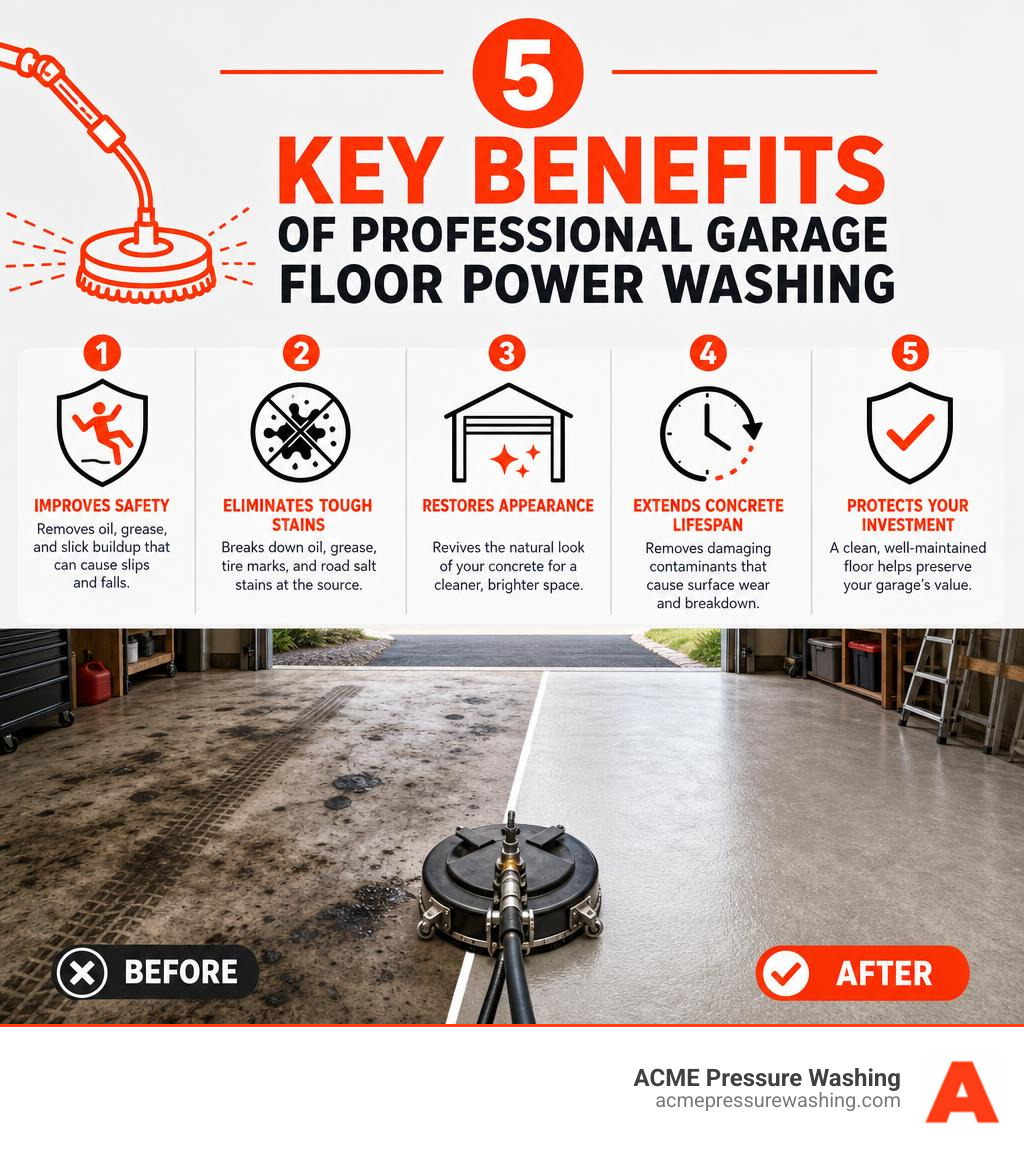
A clean garage floor does more than just make your home look good; it protects your concrete investment, improves home safety, and prevents tracking nasty grease and road salts into your clean house.
While DIY options exist, the risks of concrete etching, water damage, and environmental runoff make hiring a professional the smartest choice. At ACME Pressure Washing, we bring over 38 years of industry experience, specialized hot-water power washing equipment, and safe, eco-friendly techniques to every job we perform in Merrimack, NH, and the surrounding areas.
Let us handle the dirty work so you can enjoy a spotless, safe, and beautiful garage.
To get a free, no-obligation quote for your home, contact ACME Pressure Washing today at +1603-883-6900, or fill out our online Quote Request Form. You can also visit our main service page to learn more about our comprehensive Power Washing options.