Does Washing Powder Clean Block Paving? The Ultimate Guide
The Truth About Cleaning Your Patio with Washing Powder
Can you clean a patio with washing powder — quick answer:
We do not recommend treating washing powder as a patio-cleaning product. For a small, unsealed concrete test area, a very diluted biological washing powder solution may lift light surface grime, but it is not a professional stone cleaner and should not be used on limestone, marble, sealed surfaces, or large areas where runoff is difficult to control.
If you are considering it at all, keep the decision cautious:
- Sweep away loose debris first.
- Test only a hidden spot.
- Avoid strong mixtures or repeated applications.
- Do not let residue dry on the surface.
- Rinse thoroughly and keep runoff away from landscaping and drains.
Note: For moss, algae, large patios, commercial walkways, or premium stone surfaces, hiring a professional pressure washing company is the safer and more reliable choice.
If you’ve ever wondered whether cleaning your patio with washing powder actually works, you’re not alone. Across New Hampshire, property owners and facility managers sometimes consider laundry detergent instead of scheduling professional service. For very light surface grime on durable concrete, it can have a temporary effect.
But here’s what most “patio hack” articles skip over: washing powder has real limitations — and on the wrong surface or without proper rinsing, it can cause more harm than good. That’s especially true for properties in Bedford, Merrimack, and Hollis, where freeze-thaw cycles and damp, tree-shaded patios accelerate moss and algae buildup fast.
I’m Lionel Greenwood, owner of ACME Pressure Washing, and with over 38 years of hands-on exterior cleaning experience in New Hampshire, I’ve seen what happens when DIY detergent methods fall short of a proper clean — and when cleaning a patio with washing powder is just a temporary fix for a deeper problem. In this guide, I’ll give you the full picture so you can make the right call for your property.
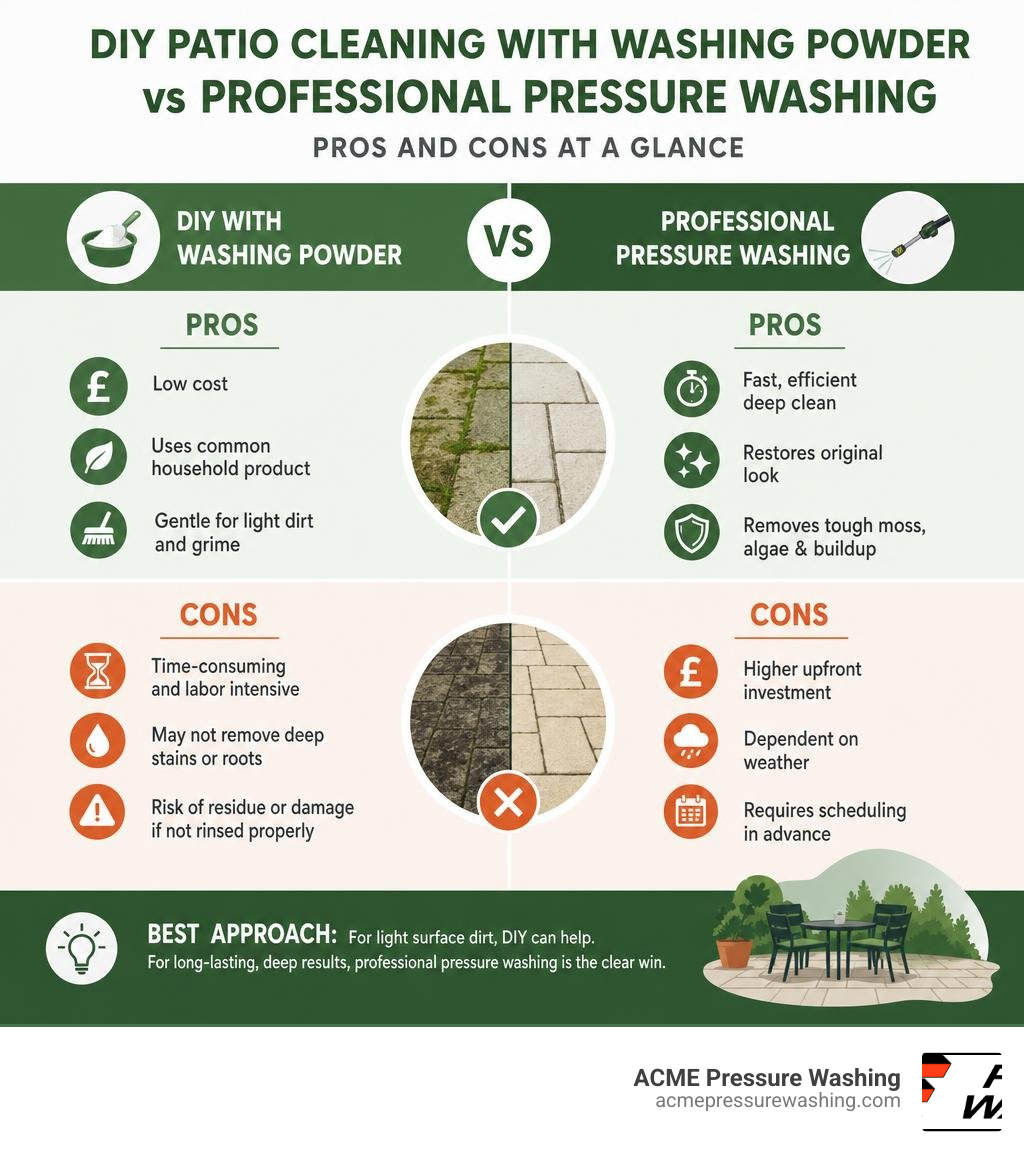
Is It Safe to Clean Patio with Washing Powder?
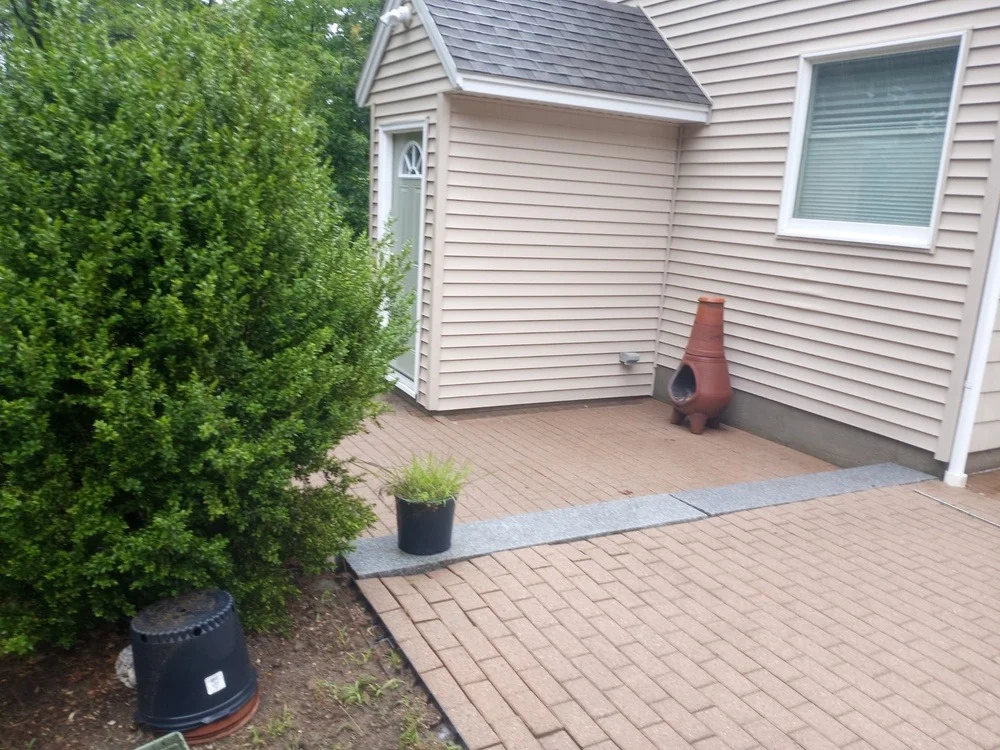
When it comes to maintaining outdoor hardscapes, safety should always be the priority. While the idea of using a laundry staple might seem like an easy win, it is important to understand that patios, walkways, pool areas, concrete, brick, pavers, and natural stone are not laundry surfaces.
Washing powders are designed for fabric, not exterior masonry. Although they may loosen some surface dirt, they are not a purpose-built solution for patio maintenance, and they do not replace proper exterior cleaning practices.
Using laundry detergent on outdoor surfaces may be tolerated by standard, robust concrete pavers and clay brick paving only in limited, heavily controlled situations. However, visible improvement does not mean the surface has been properly cleaned, sanitized, or protected from returning moss and algae.
For those researching affordable patio cleaning methods, this DIY approach can seem appealing, but it should be limited to very small, low-risk test areas. For larger patios, walkways, pool areas, sidewalks, and commercial concrete, professional pressure washing is the safer recommendation.
A Safer Way to Think About Patio Cleaning
Rather than treating washing powder as a patio-cleaning product, consider it a last-resort test for minor surface grime on durable, unsealed concrete only. If the patio has sealing, natural stone, heavy moss, black algae, joint sand, drainage concerns, or nearby landscaping, skip the detergent and get professional guidance.
If you want to understand the physical effort involved in non-powered cleaning, you can read more about how to deep clean your patio using elbow grease instead of electricity.
Material Compatibility and Surface Damage Risks
The biggest danger of using household laundry detergents on hardscapes is material incompatibility. Patios, walkways, pool areas, and sidewalks are made from a wide variety of materials, and what appears harmless on basic concrete can damage high-end natural stone.
Natural stones like limestone, travertine, and marble are highly sensitive to harsh cleaning choices. Washing powder can contribute to surface etching, discoloration, and loss of the stone’s natural luster.
Furthermore, repeated chemical washing can degrade the joint sand or polymeric sand used to lock pavers together. If residue is not completely flushed out, it can weaken the jointing compound, leading to loose pavers and accelerated weed growth. If your patio has been treated with a protective sealant, improper cleaning can strip away this protective layer, leaving your stone vulnerable to water intrusion and frost damage. To avoid these costly mistakes, we highly recommend reading our guide on how to clean and seal your patio for long-lasting beauty.
The Risks and Limitations of DIY Detergent Cleaning
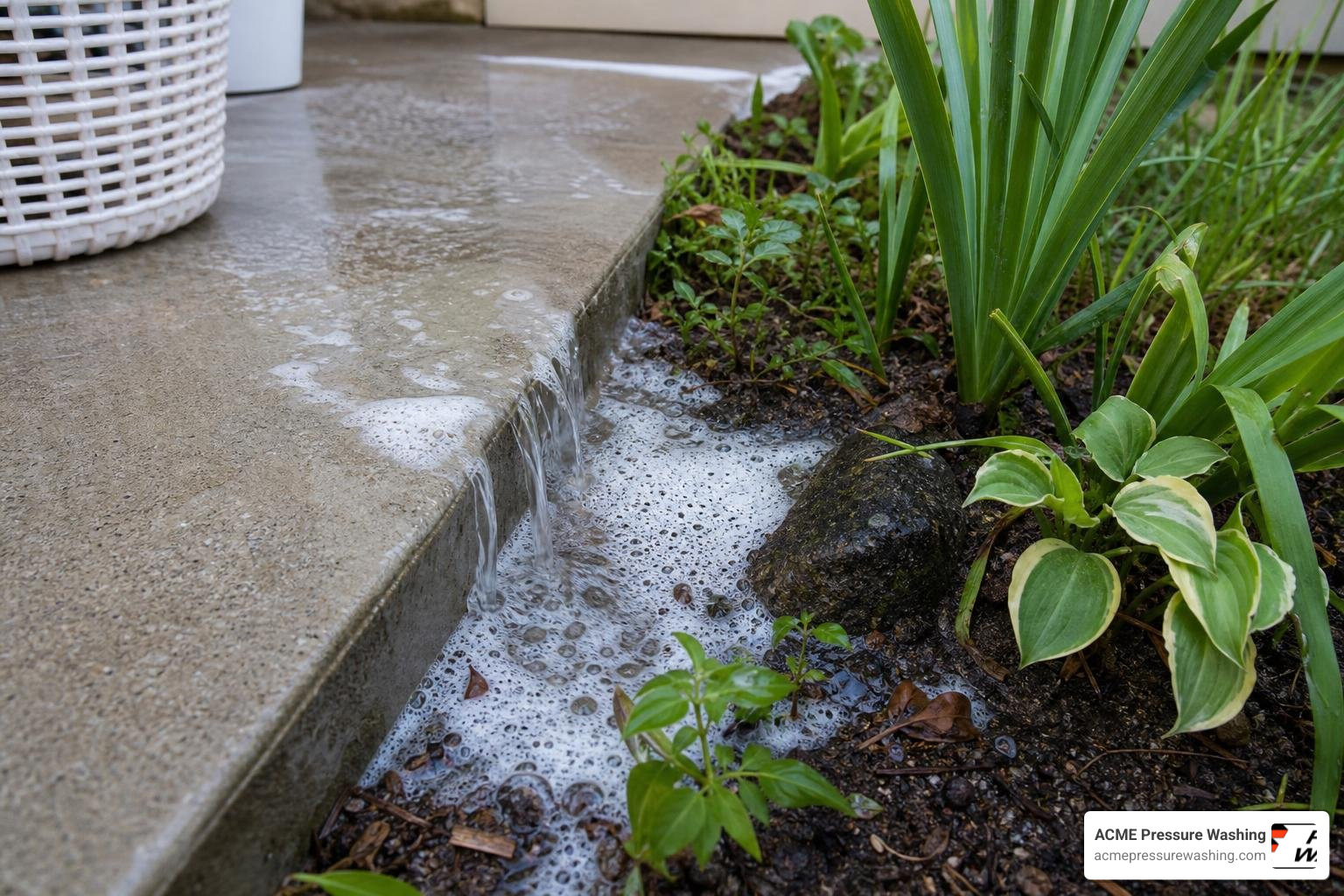
While the appeal of a quick, low-cost fix is understandable, DIY detergent cleaning carries ecological, safety, and surface-damage risks that many property owners overlook.
When you rinse washing powder off a patio in towns like Hollis or Bedford, NH, that chemical-laden water has to go somewhere. Unlike indoor wastewater, which flows into municipal sewer systems or septic tanks designed to treat household waste, outdoor runoff can drain directly into lawns, garden beds, parking areas, and local storm drains.
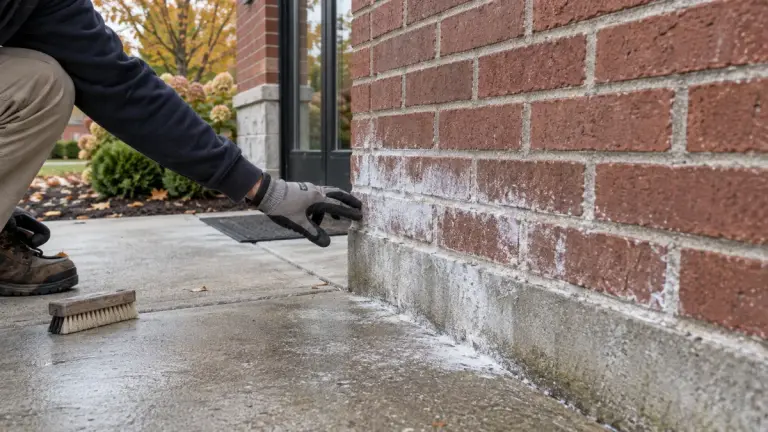
Washing powders contain sodium carbonate and sodium silicate, which can drastically alter soil pH. When this runoff seeps into landscaping, it can cause plant dehydration and nutrient deficiencies, often damaging sensitive border plants and yellowing grass. Furthermore, the chemical residue left behind on the patio surface can create a slippery film when wet, posing a serious slip-and-fall hazard for residents, visitors, employees, customers, and pets.
In Merrimack, NH, runoff control matters because synthetic surfactants and detergent residues can affect nearby soil and waterways. While some biological powders claim to be biodegradable, they are still not formulated to be discharged directly into the natural environment in large volumes.
Why Commercial Properties Avoid Trying to Clean Patio with Washing Powder
For commercial properties in Manchester, NH, using household detergents for exterior maintenance is not a practical approach.
- Commercial Liability: Slippery chemical residues left on Manchester walkways, sidewalks, pool areas, or entryways create avoidable liability risks.
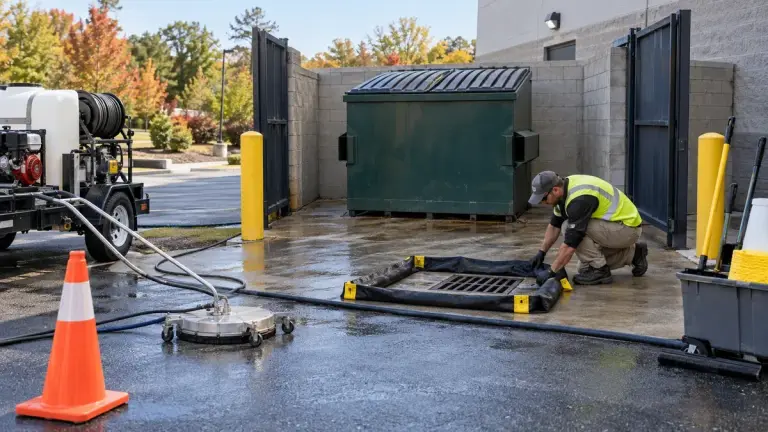
- Runoff Compliance: Commercial enterprises must account for environmental protection requirements. Discharging soapy runoff into storm drains can create compliance problems.
- Labor Inefficiency: Paying maintenance staff to scrub large concrete plazas with hand brushes and laundry soap is inefficient compared with professional hot-water power washing.
- Surface Degradation: Repeated use of improper chemicals can degrade commercial concrete surfaces, leading to premature spalling and cracking that requires expensive resurfacing.
Professional Pressure Washing vs. Laundry Detergent
When comparing DIY detergent scrubbing to professional service, the differences in efficiency, safety, and results are stark. At ACME Pressure Washing, we do not treat household washing powder as a patio-cleaning solution. Instead, we use controlled cleaning methods designed specifically for outdoor masonry and New Hampshire conditions.
Our professional walkway and patio cleaning service adjusts the cleaning approach based on the specific material of your patio, walkway, sidewalk, pool area, or concrete surface. While an untrained DIY attempt can disturb joint sand, leave residue, or damage surface texture, our trained technicians customize the process to preserve the structural integrity of your stone.
| Feature | DIY Washing Powder Method | Professional ACME Pressure Washing |
|---|---|---|
| Cleaning Approach | Household laundry detergent with residue risk | Professional exterior cleaning process |
| Application | Bucket, hand brush, garden hose | Handled by trained technicians |
| Labor Level | High; demands heavy manual scrubbing | Fully handled by ACME |
| Deep Cleansing | Surface-level only; spores may remain in stone pores | Designed to address mold and algae more thoroughly |
| Environmental Safety | Higher risk of lawn damage and chemical runoff | Controlled application and rinsing |
| Surface Protection | Can erode joint sand and strip sealers | Preserves masonry, jointing, and existing sealants |
The Cost-Effectiveness of Professional Exterior Cleaning in NH
It is easy to look at a box of washing powder and assume it is the most cost-effective option. However, when you factor in labor, physical strain, potential damage to landscaping, and the rapid return of organic growth, DIY methods often cost more in the long run.
Based on publicly available online data and general industry averages, DIY exterior cleaning costs can vary widely once supplies, time, and equipment access are considered. To account for wide industry variability, a broad planning range based on that online data would be approximately $300 to $750 or more. These figures are average costs sourced from publicly available internet data and are not the actual prices, rates, quotes, or guarantees of ACME Pressure Washing.
Investing in professional Merrimack property maintenance ensures outdoor surfaces are cleaned safely and stay clean much longer. Our process is designed to address the microscopic spores hidden within porous stone, helping prevent algae and moss from returning just weeks after the clean.
Frequently Asked Questions
Can washing powder damage natural stone patios in Bedford or Hollis?
Yes, washing powder can absolutely damage natural stone patios. Natural stones such as limestone, sandstone, and travertine are highly sensitive to the high-pH alkaline builders found in standard laundry detergents. Repeated exposure can cause chemical etching, surface pitting, and permanent fading of the stone’s natural pigments. Additionally, the detergent can break down the specialized sealants applied to protect these premium surfaces.
Is washing powder runoff safe for New Hampshire lawns and landscaping?
No, it is not safe. Washing powder contains high concentrations of sodium, surfactants, and chemical optical brighteners. When this soapy mixture drains into your lawn or flower beds, it alters the soil chemistry, strips moisture from plant roots, and blocks vital nutrient absorption. This often results in dead spots in your grass, wilted shrubs, and damaged ornamental plantings.
How often should a patio be professionally cleaned and sealed?
For optimal preservation and safety under New Hampshire’s harsh seasonal weather, we recommend having your patio professionally cleaned and sealed every 2 to 3 years. This frequency prevents the heavy buildup of slippery black algae and moss while ensuring your stone remains protected against winter freeze-thaw cycles. To learn more about maintaining your hardscapes, read our detailed guide on how to deep clean patio slabs without breaking a sweat.
Conclusion
While the classic “washing powder hack” might seem like an easy weekend project, the risks to your stone, your landscaping, and your joints far outweigh the temporary benefits. Your property’s walkways and patios represent a significant financial investment, and maintaining them requires professional care.
At ACME Pressure Washing, we bring over 38 years of local New Hampshire experience to every job. Our safe, customized, and eco-friendly cleaning techniques are designed specifically for New Hampshire’s unique climate. Whether you need your patio cleaned, your siding restored with our premium house pressure washing services, or your business upgraded with our commercial pressure washing and fleet and equipment pressure washing solutions, we are here to help.
Skip the manual scrubbing and protect your property. Contact ACME Pressure Washing today to experience the ACME difference.
- Call Now: +1603-883-6900
- Get a Free Estimate: Request a Quote Online
- Explore Our Services: Learn more about our professional walkway and patio cleaning services to see how we can revitalize your outdoor living space safely and effectively.