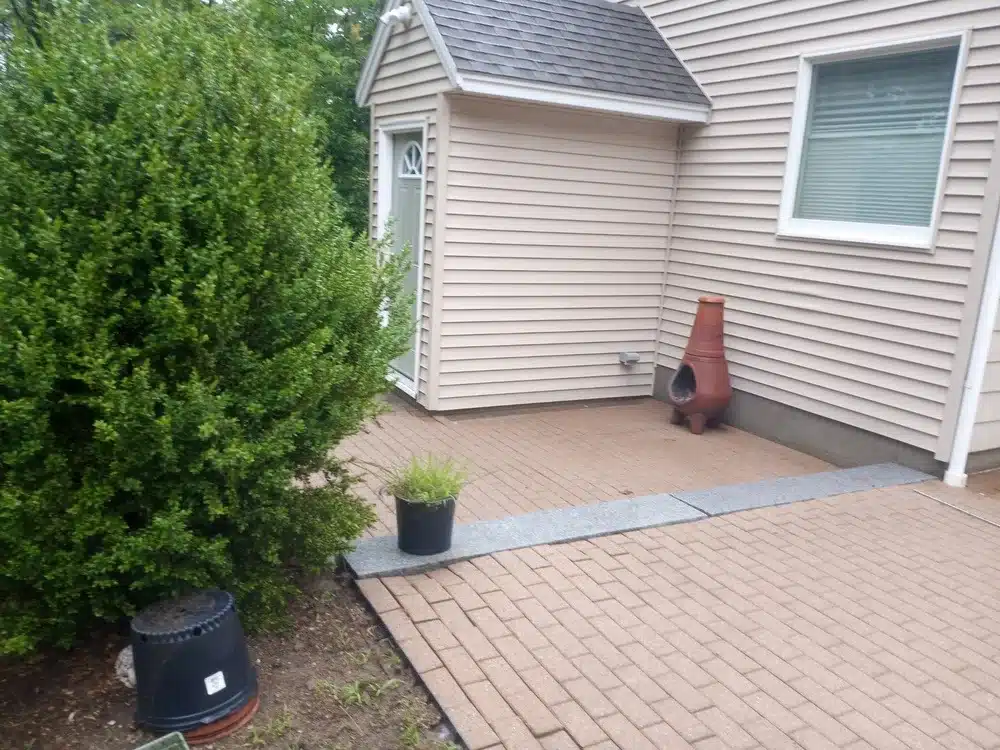



Your Patio Is Worth Protecting — Here’s What You Need to Know
Patio clean and seal is the single most effective way to restore your outdoor surface and keep it looking great for years to come.
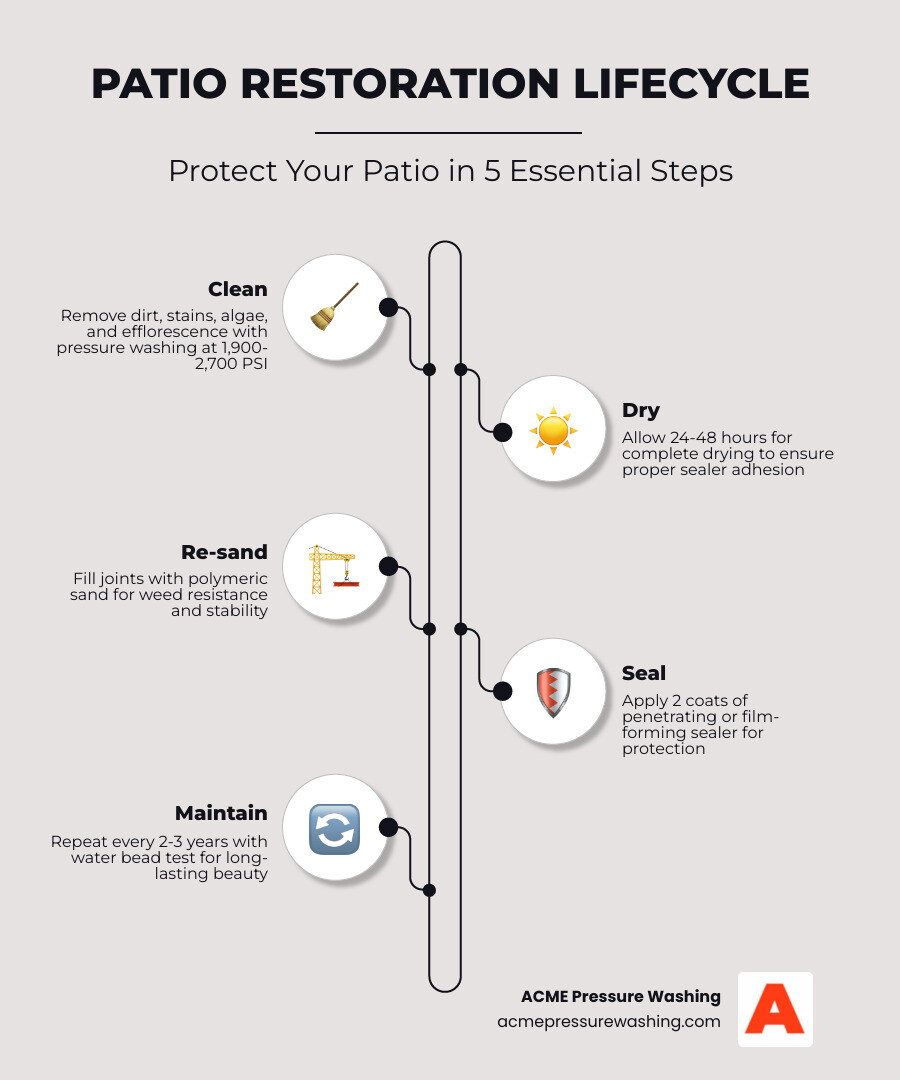
Quick answer — the basic process:
- Clear and sweep the patio surface
- Pre-treat stains (oil, rust, algae, efflorescence) with targeted cleaners
- Pressure wash at 1,900–2,700 PSI for a deep clean
- Allow 24–48 hours to dry completely
- Re-sand joints with polymeric sand if you have pavers
- Apply sealer in 2 coats, let cure fully before use
- Repeat every 2–3 years to maintain protection
Here’s the reality most homeowners in Merrimack, NH face: patios take a beating. Freeze-thaw cycles, pollen, mold, leaf stains, and foot traffic all add up. Over time, even a well-built patio starts to look worn, faded, and stained.
The good news? You don’t need to tear it out and start over.
A proper clean and seal restores color, blocks future stains, and prevents the kind of slow surface damage — crumbling edges, weed-filled joints, slippery algae — that shortens a patio’s life. Done right, it’s one of the highest-return maintenance tasks you can do for your outdoor space.
This guide walks you through the full process: what to clean with, how to pressure wash safely, which sealer to choose, and when to call in a professional.
The Essential Guide to a Professional Patio Clean and Seal
When we talk about a patio clean and seal, we aren’t just talking about a quick rinse with a garden hose. A professional-grade restoration is a structural necessity that protects your investment. Whether you have concrete pavers, brick, travertine, or stamped concrete, the porous nature of these materials means they act like a giant sponge for New Hampshire’s elements.
Without a sealer, water penetrates the surface. In towns like Amherst and Bedford, where winter temperatures fluctuate wildly, that trapped water freezes and expands, leading to cracks, spalling, and crumbling. Furthermore, organic matter like pollen and fallen leaves creates stubborn tannin stains that can become permanent if not addressed. According to Patio Sealing and Cleaning 101 | Haynes Materials, sealing should ideally be done within one year of installation and then maintained on a regular cycle to prevent this degradation.
Why Surface Preparation is Critical
You might be tempted to jump straight to the “fun” part—spraying on that shiny sealer. Don’t do it! Sealing a dirty patio is like painting over a mud puddle; you’re just trapping the mess forever.
Proper preparation is the foundation of Restoring Walkways and Patios. We focus on three main enemies during prep:
- Efflorescence: That white, powdery salt that migrates to the surface of pavers. If you seal over it, you’ll trap a permanent white haze under the coating.
- Biological Growth: Mold, mildew, and algae love our humid New England summers. If not killed at the root, they will continue to grow under the sealer, causing it to delaminate and peel.
- Contaminants: Oil from grills, rust from patio furniture, and old joint sand prevent the sealer from bonding to the actual stone or concrete.
Choosing the Right Patio Clean and Seal Products
Not all cleaners are created equal. Using the wrong chemical can etch your stone or kill your expensive landscaping. We recommend a “targeted” approach:
- Alkaline Cleaners: Great for general dirt and grime.
- Acid-Based Cleaners: Necessary for removing efflorescence and stubborn mineral deposits (must be used with extreme caution on certain stones).
- Degreasers: Essential for those “oops” moments near the BBQ grill.
- Algaecides: These don’t just wash away green slime; they kill the spores to prevent regrowth.
At ACME Pressure Washing, we prioritize eco-friendly, biodegradable options that are safe for your family and pets in Merrimack and the surrounding areas.
Step-by-Step Cleaning and Restoration Process
A successful patio clean and seal follows a strict order of operations. We start by clearing the deck—literally. All furniture, pots, and grills must be moved. Then, we perform a deep sweep to remove loose debris.
The real magic happens during the Walkway and Patio Cleaning phase. We apply the appropriate detergents and allow them to “dwell.” This dwell time lets the chemicals break the molecular bond between the stain and the patio surface.
Pressure Washing Techniques and Safety
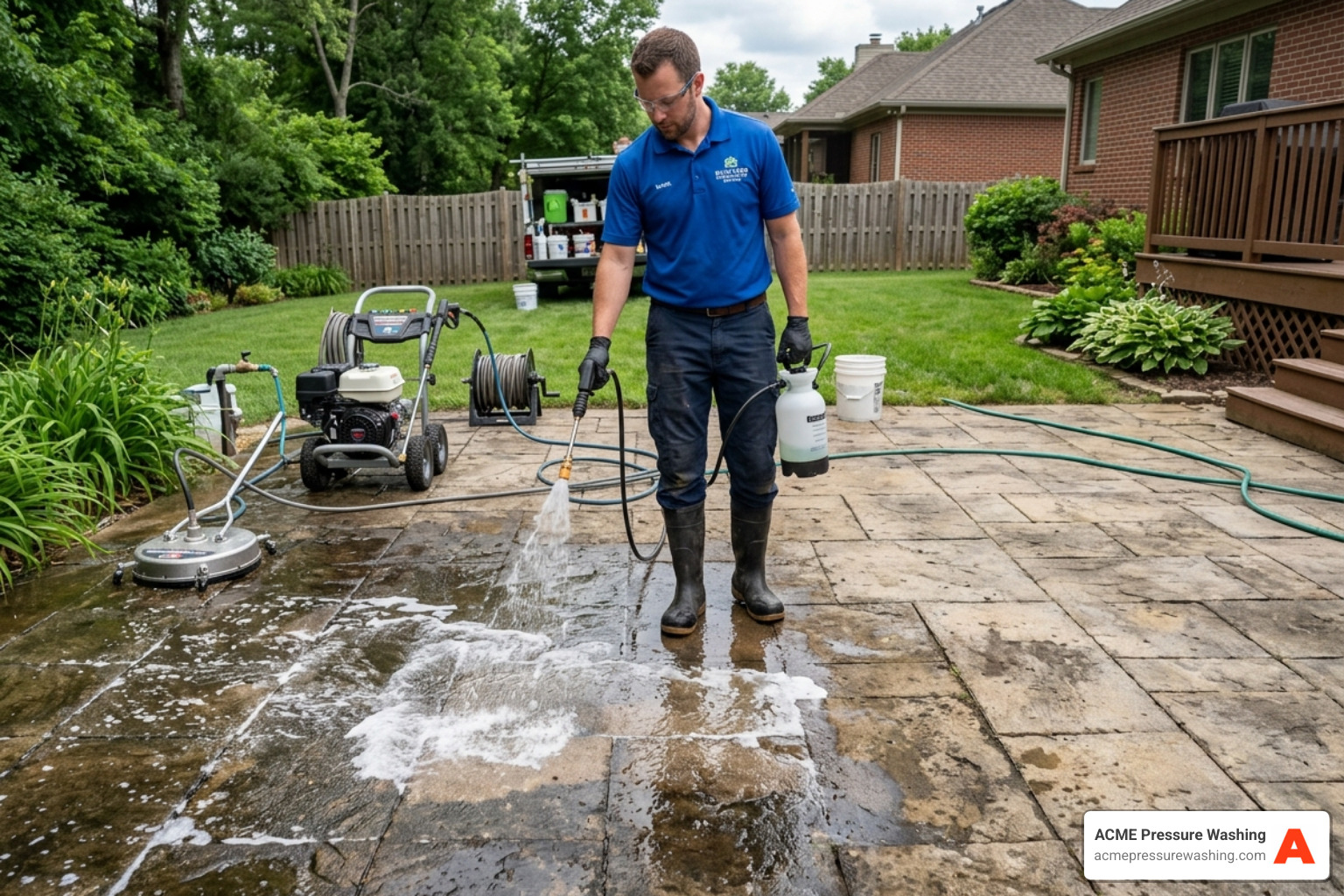
This is where many DIY projects go south. A pressure washer is a powerful tool, not a toy. For most patios, you want to stay within the 1,900 to 2,700 PSI range.
- The Danger of High Pressure: Cranking a machine up to 4,000 PSI can “etch” concrete, leaving permanent swirl marks or blowing the “cream” finish right off the top of your pavers.
- The Fan-Tip Nozzle: Never use a “0-degree” red tip; it acts like a laser and will scar the stone. Use a 25-degree or 40-degree fan tip for even distribution.
- Surface Cleaners: We use professional-grade circular surface cleaners. These tools have rotating bars that provide a consistent, streak-free clean that you simply can’t achieve with a wand alone.
Re-sanding Joints for Stability
If you have a paver patio, the cleaning process will inevitably wash out some of the sand in the joints. This is actually a good thing! It allows us to replace old, dirty sand with fresh polymeric sand.
Polymeric sand contains special additives that, when activated with water (a process called hydro-compaction), harden like mortar but remain flexible. This provides:
- Weed Resistance: It’s much harder for seeds to take root in hardened sand.
- Insect Prevention: Say goodbye to those annoying ant hills between your bricks.
- Structural Integrity: It “locks” the pavers together, preventing them from shifting or sinking over time.
Selecting and Applying the Perfect Sealer
Choosing a sealer is the most subjective part of the process. Do you want your patio to look like a shiny showroom floor, or do you prefer the raw, natural look of the stone?
| Feature | Film-Forming Sealer | Penetrating Sealer |
|---|---|---|
| Appearance | Glossy / “Wet Look” | Matte / Natural |
| Protection | Surface Barrier | Internal Pore Clogging |
| Breathability | Moderate | High |
| Longevity | 2-3 Years | 5-10 Years |
| Best For | Stamped Concrete, Dark Pavers | Natural Stone, Travertine |
Check out our Gallery Walkway and Patio Cleaning to see the visual difference between these finishes.
Film-Forming vs. Penetrating Sealers
- Film-Forming (Acrylics): These sit on top of the surface. They are fantastic for “popping” the color of faded pavers and giving that rich, deep look. However, they can be slippery if a non-slip additive isn’t used, and they require more frequent reapplication.
- Penetrating (Silane-Siloxane): These soak into the pores and work from the inside out. They don’t change the look of the patio at all, but they make the surface hydrophobic—meaning water beads up and rolls off. These are excellent for New Hampshire’s freeze-thaw cycles because they allow the stone to “breathe” moisture out from the ground.
Application and Curing Times
Timing is everything. You need a “weather window” of at least 48 hours of dry weather. If it rains shortly after application, the sealer can turn a milky white color—a nightmare to fix.
We typically use a high-volume, low-pressure pump sprayer for even coverage, followed by a “back-roll” with a nap roller to ensure the sealer is pushed into every nook and cranny. According to Patio Maintenance Tips, you should allow the first coat to dry for 4 to 6 hours before applying a second, and then stay off the patio entirely for 24 to 48 hours. A full cure can take up to 10 days, so hold off on dragging that heavy cast-iron fire pit back into place!
Long-Term Maintenance and Protection
Once your patio clean and seal is complete, you want that beauty to last. Sealing provides a sacrificial layer that takes the brunt of UV damage and chemical attacks.
Protecting Against Weather and Wear
In our region, the biggest threat is the winter. De-icing salts are incredibly corrosive to concrete. A high-quality sealer acts as a shield, preventing those salts from eating into the surface. In the summer, the sealer blocks UV rays that cause the pigments in your pavers to fade. Think of it as high-SPF sunscreen for your backyard.
When to Schedule Your Next Patio Clean and Seal
How do you know when it’s time to do it all again? We recommend a 2 to 3-year cycle for film-forming sealers and a bit longer for penetrating ones.
The “Bead Test”: Pour a cup of water onto your patio. If it beads up like a waxed car, you’re protected. If the water soaks in and turns the stone dark, your sealer has worn away, and it’s time to give us a call. Seasonal timing is also key; early spring (after the pollen drop) or early fall (before the leaves fall) are the best times for a refresh in New Hampshire.
DIY vs. Professional Services: Costs and Benefits
Many homeowners wonder if they should tackle this as a weekend project. While DIY is possible, the results often vary wildly.
Based on internet data, the average cost for professional patio cleaning and sealing ranges from $0.75 to $6.50 per square foot. For a standard 400-square-foot patio, you might see quotes ranging from $300 on the low end to over $2,600 for premium restoration and high-end coatings.
Benefits of Professional Restoration
While you can rent a pressure washer for $100, there are significant advantages to hiring a pro:
- Commercial Equipment: Our machines use hot water and high-flow rates that residential units can’t match.
- Specialized Detergents: We have access to professional-grade algaecides and efflorescence removers not found at big-box stores.
- Liability Insurance: If a DIYer etches their stone or kills their lawn, they’re on the hook. We are fully insured and certified.
- Time Savings: What takes a homeowner two or three weekends, we can often complete in two days of active work.
Frequently Asked Questions about Patio Care
How long should a patio dry before sealing?
Patios need to be bone-dry. We recommend 24 to 48 hours of dry weather after cleaning before applying sealer. Trapping moisture under a sealer is the #1 cause of “blushing” (white, hazy patches).
Can I seal over old sealer?
It depends. If the old sealer is the same base (water-based vs. solvent-based) and is still in good condition, you can often “refresh” it. However, if the old sealer is peeling or turning white, it must be chemically stripped before a new coat can be applied.
Will sealing make my patio slippery?
Film-forming sealers can be slick when wet. To solve this, we always recommend adding a slip-resistant additive (a fine, transparent grip) to the final coat, especially around pool decks or stairs.
Conclusion
Your patio is the heart of your outdoor living space. Investing in a professional patio clean and seal is the best way to ensure that heart keeps beating beautifully for decades.
At ACME Pressure Washing, we bring over 38 years of experience to every job. We understand the specific challenges of the New Hampshire climate, from the humidity of Nashua to the deep freezes of Milford and Mont Vernon. Our safe, customized, and eco-friendly techniques are designed to protect your home, your family, and the environment.
Don’t let another season of grime and weather take a toll on your stonework. Schedule your professional patio cleaning and sealing today and let us restore the vibrant, “like-new” look your home deserves.