




Your Patio Is Dirtier Than You Think — Here’s How to Fix It
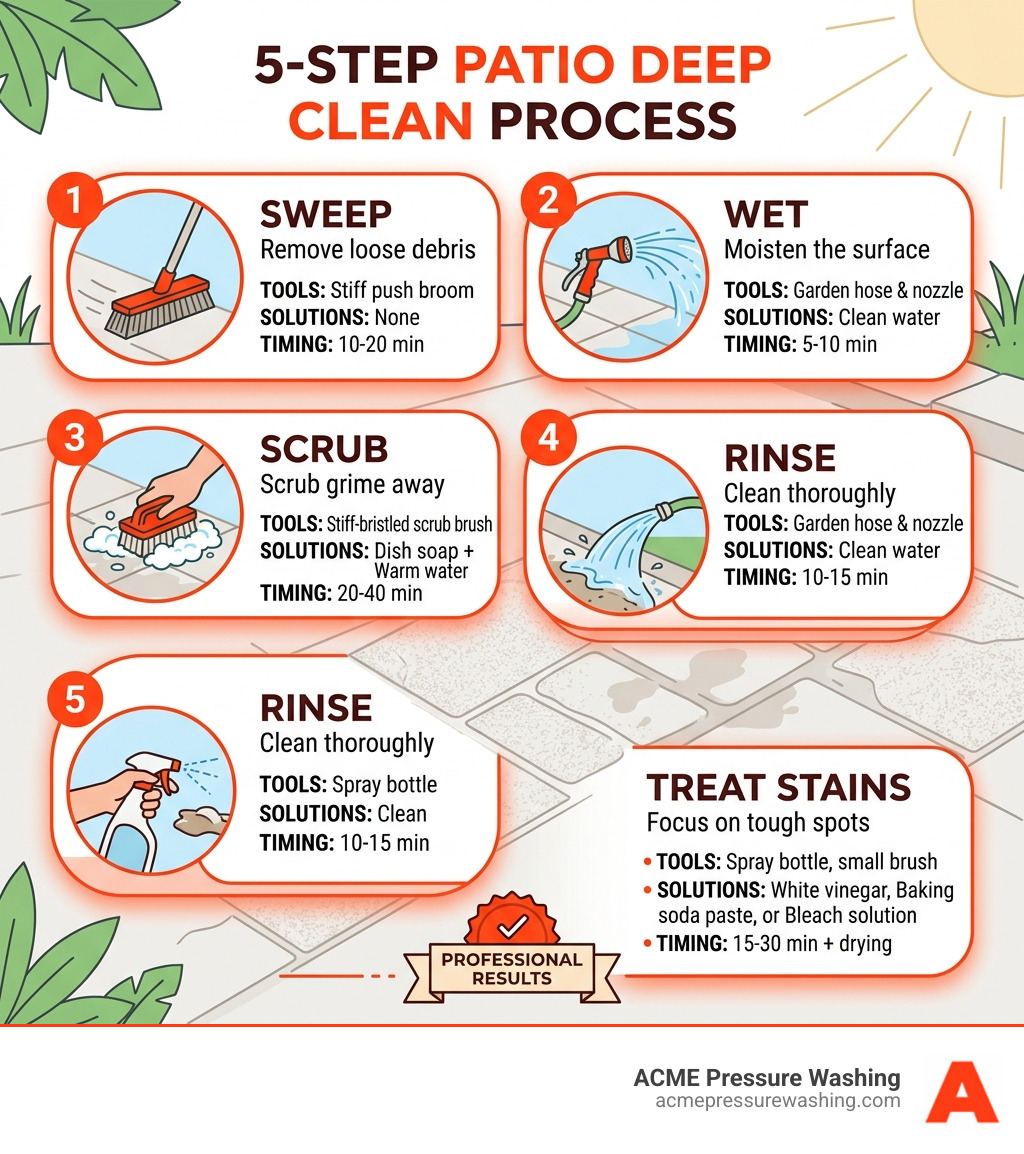
The best way to clean patios depends on your surface type, the tools you have, and how much grime you’re dealing with — but for most homeowners, this simple process works:
- Sweep away all loose debris with a stiff push broom
- Wet the surface with a garden hose
- Scrub with a dish soap and warm water solution using a stiff-bristled brush
- Rinse thoroughly from the back of the patio toward the edge
- Treat stains with white vinegar, baking soda, or a bleach solution as needed
For heavy buildup, mold, or large surfaces, pressure washing delivers faster and deeper results.
Your backyard patio takes a beating year-round. In a place like Merrimack, NH, that means winter salt and sand, spring pollen, summer cookout grease, and fall leaves sitting on the surface for weeks. Over time, dirt, mold, algae, and stains build up — and they don’t just look bad. Algae and organic growth make patio surfaces genuinely slippery and dangerous.
The good news? You don’t need to be a professional or own expensive equipment to get real results. Most patios respond well to simple household cleaners and a bit of elbow grease. And when the job is too big for a Saturday afternoon, knowing when to call in a pro saves you time and protects your surface from damage.
This guide covers everything — from the right tools and homemade solutions to pressure washer technique and material-specific care.
Essential Tools and Materials for Patio Restoration
Before we get our hands dirty, we need to gather the right gear. Trying to clean a patio with a kitchen sponge is a recipe for a sore back and a half-finished job. For those of us in Southern New Hampshire, from Amherst to Windham, having these items on hand ensures we can tackle the seasonal grime effectively.
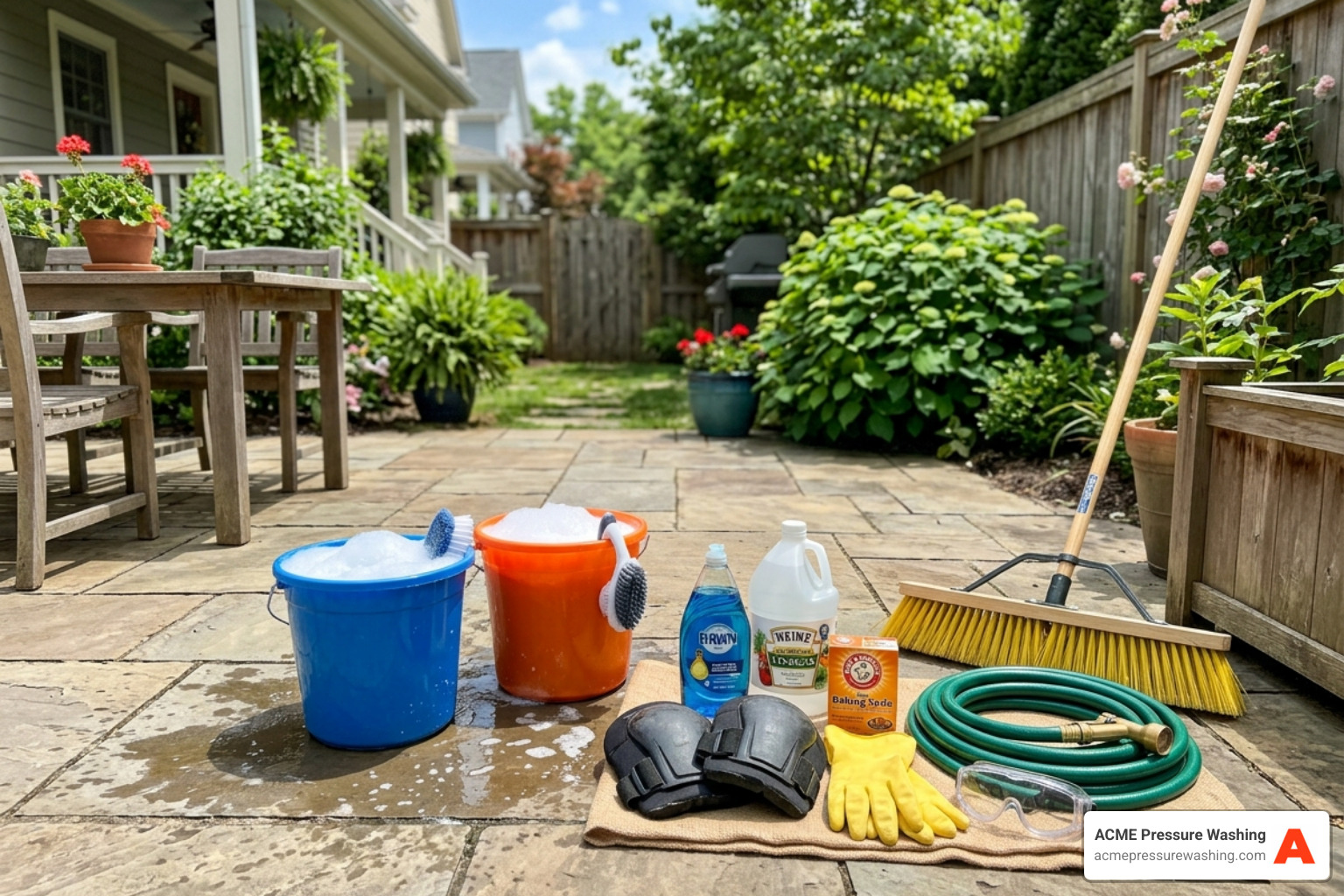
- Push Broom: A heavy-duty push broom is your first line of defense. You need to clear away the “loose stuff” before adding water, or you’ll just be moving mud around.
- Stiff-Bristled Brush: Look for a brush with synthetic or natural bristles. Pro tip: Avoid wire brushes on concrete or stone; they can leave tiny metal fragments that turn into rust stains later. A long-handled scrub brush is a lifesaver for your knees.
- Garden Hose: A standard hose with a high-pressure nozzle is usually enough for routine maintenance.
- Safety Gear: Don’t skip the safety goggles and rubber gloves, especially if you’re using vinegar or bleach solutions.
- Knee Pads: If you do end up doing any detail work on your hands and knees, you’ll thank us for this suggestion.
Must-Have Cleaning Agents:
- Dish Soap: Mild degreasers like Dawn are excellent for lifting light oils.
- White Vinegar: A natural acid that kills mold and cuts through mineral deposits.
- Baking Soda: Perfect for absorbing fresh grease or acting as a mild abrasive.
- Oxygen Bleach: A safer alternative to chlorine bleach for removing tough organic stains without killing your lawn.
The Best Way to Clean Patios Without a Pressure Washer
You don’t always need high-powered machinery to get a “like-new” finish. Manual scrubbing is often the best way to clean patios if you are worried about damaging delicate stone or if you just want a quiet Saturday morning project.
According to Lowes’ guide on cleaning concrete, a simple mixture of warm water and mild detergent can work wonders on most surfaces. We’ve seen hundreds of patios in Bedford and Nashua transformed using nothing more than a bucket and a brush. For more details on our professional approach to these surfaces, check out our Walkway and Patio Cleaning service page.
Step-by-Step Guide to the Best Way to Clean Patios Manually
- Debris Removal: Start by removing all furniture, planters, and toys. Sweep the entire area thoroughly. If there are weeds growing in the joints, pull them now or use a joint scraper.
- Surface Wetting: Lightly mist the patio with your hose. You want it damp, but not covered in puddles.
- Circular Scrubbing: Apply your cleaning solution (soap and water or a vinegar mix). Work in small sections, about 4×4 feet. Scrub in circular motions to ensure the bristles reach into the pores of the concrete or stone.
- Thorough Rinsing: This is the most important part. Rinse the dirty suds away before they have a chance to dry back onto the surface. Always spray from the house toward the yard.
- Drying Time: Let the patio dry completely (usually 24 hours) before moving furniture back. This prevents “shadow” stains from trapped moisture.
Eco-Friendly Homemade Cleaning Solutions
If you want to avoid harsh chemicals, your kitchen pantry is a goldmine. Many homeowners prefer cleaning their patio with vinegar and baking soda because it’s safe for pets and kids.
- The Vinegar Power Mix: Mix equal parts white vinegar and water. This is highly effective for removing salt residue left over from New Hampshire winters. Let it sit for 20 minutes before scrubbing.
- The Baking Soda Paste: For small, stubborn spots, mix baking soda with a little water to create a paste. Apply it to the stain, let it sit for 30 minutes, and then scrub with a wet brush.
Mastering the Pressure Washer for Deep Cleaning
When manual scrubbing isn’t cutting it, it’s time to bring out the big guns. Pressure washing is incredibly satisfying, but it requires a careful hand. If you use too much pressure, you can “etch” or permanently scar your concrete.
At ACME Pressure Washing, we recommend a PSI setting between 2,000 and 2,700 for standard concrete patios. Using a fan tip nozzle (usually the 25 or 40-degree tip) spreads the pressure out, making it much safer than a pinpoint “zero-degree” nozzle. For a truly even clean without “zebra stripes,” a surface cleaner attachment is the professional’s secret weapon. You can see the dramatic results of this technique in our guide on Restoring Walkways and Patios.
| Feature | Manual Scrubbing | Pressure Washing |
|---|---|---|
| Effort Level | High (Great workout!) | Low to Medium |
| Time Required | 2–4 Hours | 30–60 Minutes |
| Water Usage | Low | High |
| Deep Stain Removal | Moderate | Excellent |
| Risk of Surface Damage | Very Low | Moderate (if handled poorly) |
Safety Precautions for the Best Way to Clean Patios with Power
- Etching Prevention: Never hold the nozzle closer than 12 inches from the surface. If you see the concrete turning bright white and “fuzzy,” you’re too close!
- Joint Sand Protection: If you have a paver patio, be careful not to blast out the polymeric sand in the joints. Use a lower pressure and keep the wand at an angle.
- PPE: Always wear closed-toe shoes. A pressure washer can cut through skin and light sneakers instantly.
- Plant Shielding: Before you start, soak your surrounding grass and plants with fresh water. This dilutes any runoff cleaners and protects the roots.
Professional vs. DIY Cleaning Costs
Renting a pressure washer in the Manchester or Derry area typically costs between $75 and $150 per day, plus the cost of fuel and cleaning chemicals. However, if you’re looking for a professional finish without the risk of damaging your property, hiring a service is often more cost-effective in the long run.
Based on internet data, the average cost for professional patio cleaning ranges from $150 to $950. The wide range accounts for factors like square footage, the type of material (stone vs. concrete), and the severity of stains. For a large, heavily stained natural stone patio in Hollis, you might expect to be at the higher end of that range, whereas a small concrete pad in Auburn would be much lower.
Targeted Solutions for Tough Stains and Organic Growth
Sometimes general cleaning isn’t enough. Life happens—barbecues drip, cars leak, and the New Hampshire humidity invites mold. According to Better Homes & Gardens, specific stains require specific chemistry.
- Oil and Grease: If you just dropped a burger on the patio, cover the spot with cornstarch or baking soda immediately to soak up the grease. For old stains, a concentrated dish soap like Dawn or a commercial degreaser is necessary.
- Rust Stains: These often come from metal patio furniture or fertilizer. White vinegar is a surprisingly good rust remover. Pour it on, let it sit for an hour (but don’t let it dry!), and scrub.
- Fertilizer Stains: These can be tricky because they actually react with the concrete. A 50/50 vinegar and water mix is your best bet here, but act fast!
Eliminating Mold, Mildew, and Algae
In shady areas of your yard in places like Goffstown or Brookline, you might notice green or black patches. This organic growth is more than just an eyesore; it’s a slip hazard.
A solution of oxygen bleach (3/4 cup per gallon of water) is highly effective. Unlike chlorine bleach, it won’t kill your prized hostas if a little splashes off the patio. Let it sit for 10-15 minutes to kill the spores at the root before rinsing.
Cleaning Patio Furniture and Surrounding Areas
A clean patio looks odd if the furniture is covered in grime.
- Cushions: Most can be cleaned with a mixture of 1 teaspoon dish soap and 1 quart warm water. Rinse well and stand them on their side to dry faster.
- Metal Frames: Use a soft cloth and soapy water. A coat of automotive wax can help protect metal frames from rusting.
- Glass Surfaces: Standard glass cleaner or a vinegar-water mix works best.
Check out our Gallery Walkway and Patio Cleaning to see how a total space refresh looks when the furniture and surfaces are both pristine.
Material-Specific Care: Concrete, Stone, and Wood
Not all patios are created equal. The best way to clean patios made of wood is vastly different from how you’d treat stamped concrete.
- Concrete: As a porous material, concrete acts like a sponge. It’s durable enough for pressure washing but needs sealing to prevent future stains.
- Natural Stone (Flagstone/Slate): These are softer than concrete. Avoid acidic cleaners (like vinegar) on limestone or travertine, as they can etch the stone. Stick to pH-neutral soaps.
- Manufactured Pavers: These are generally easy to clean, but the focus should be on preserving the sand joints. High pressure is usually unnecessary and potentially damaging.
- Wood Patios/Decks: Always scrub with the grain of the wood. Using a pressure washer on wood requires extreme caution to avoid splintering the surface.
For more technical details on concrete porosity, the Concrete Network offers excellent insights into how these surfaces behave over time.
Long-Term Maintenance and Sealing Tips
Cleaning is only half the battle. If you want your patio to stay clean, you need a strategy.
- Weekly Sweeping: It sounds simple, but removing leaves and dirt before they get wet and “steep” like tea on your patio prevents most stains.
- Annual Inspection: Every spring, walk your patio. Look for cracks, shifting pavers, or areas where water is pooling.
- Sealing: This is the “magic” step. A high-quality concrete or stone sealer creates a barrier that prevents spills from soaking in. We typically recommend resealing every 2-3 years depending on foot traffic and weather exposure.
- Joint Sand: For paver patios, ensure your joints are filled with polymeric sand. This prevents weeds from taking root and keeps the pavers from shifting.
We go into deep detail on the preservation process in our article on Restoring Walkways and Patios.
Frequently Asked Questions about Patio Cleaning
Can you clean a patio without a hose or access to water?
Yes, though it’s more labor-intensive. You can use a “bucket and mop” method. Apply your cleaning solution with a stiff brush, scrub thoroughly, and use a mop with clean water to “rinse” the area. You’ll need to change your rinse water frequently to avoid just spreading the dirt around.
How often should I deep clean my patio slabs?
For most homes in the Merrimack Valley, a deep clean twice a year is ideal: once in the spring to remove winter salt and once in the fall to clear off organic debris before the snow hits.
Is vinegar safe for all types of patio stone?
No. Vinegar is acidic. While it’s great for concrete and brick, it can “eat” or etch natural stones like marble, limestone, and travertine. For those surfaces, stick to a pH-neutral stone cleaner or mild dish soap.
Conclusion
A clean patio is the heart of a New Hampshire summer. Whether you’re hosting a graduation party in Nashua or a quiet family BBQ in Milford, having a bright, slip-free surface makes all the difference.
While DIY methods are a great way to maintain your space, some jobs require a professional touch. At ACME Pressure Washing, we bring over 38 years of experience to every job. Based in Merrimack, NH, we use safe, customized, and eco-friendly techniques to ensure your patio looks brand new without the risk of surface damage.
Ready to reclaim your outdoor living space? Explore our Walkway and Patio Cleaning services and let us do the heavy lifting for you!
