




Your Roof Is Under Attack — Here’s What to Do About It
Roof cleaning is the process of safely removing algae, moss, lichen, mold, and mildew from your roof’s surface before they cause permanent damage.
Quick answer — what you need to know:
- What it is: Removing organic growth and staining from roof surfaces using low-pressure soft washing or chemical treatment
- Best method: Soft washing (low pressure + cleaning solution) — not pressure washing
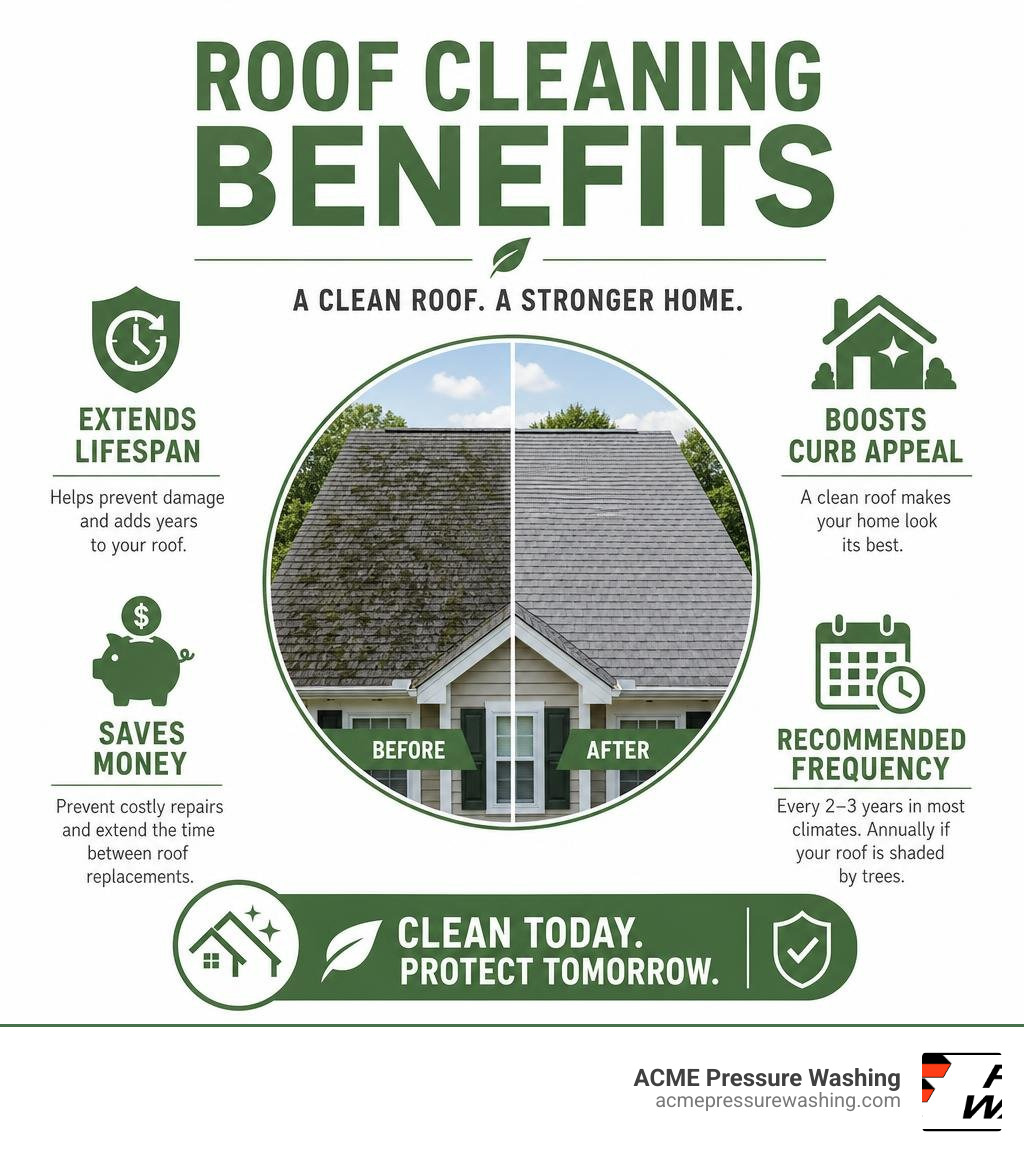
- How often: Every 2–3 years in humid climates like New Hampshire; annually if your roof is shaded by trees
- Average cost: Wide range based on roof size, pitch, and material (see cost section below)
- DIY? Not recommended — fall risk, chemical hazards, and voided warranties make professional service the safer choice
Here in Merrimack, Bedford, and Manchester, New Hampshire, our roofs face a tough combination of wet winters, humid summers, and heavy tree coverage. That’s a perfect recipe for dark streaks, green moss patches, and the kind of organic buildup that quietly shortens your roof’s life — often by years.
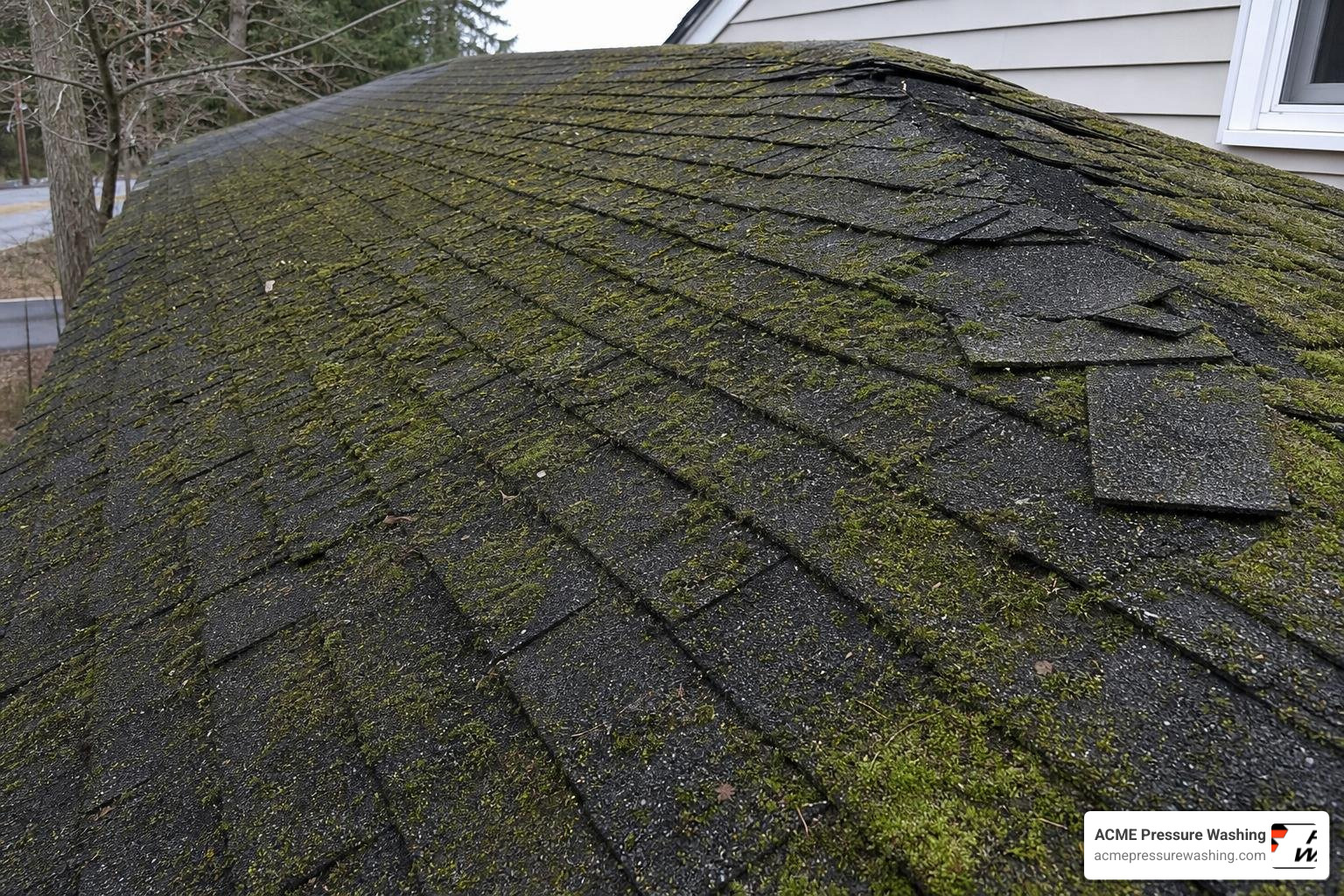
The problem isn’t just cosmetic. Algae and moss hold moisture against your shingles. Over time, that moisture leads to granule loss, rot, and premature aging. What looks like a dirty roof is often a roof that’s actively deteriorating.
Regular roof cleaning can add 5 to 10 years to your roof’s lifespan — making it one of the highest-return maintenance tasks a homeowner can do.
I’m Lionel Greenwood, owner of ACME Pressure Washing, and I’ve been handling roof cleaning and exterior restoration across New Hampshire since 1988. In nearly four decades, I’ve seen how the right cleaning method protects roofs — and how the wrong one destroys them.
Understanding the Science of Roof Damage
To understand why professional roof cleaning is so critical, we have to look at what is actually growing on your shingles. Those ugly black streaks on your roof aren’t just dirt or soot. In almost all cases, they are caused by a hardy type of blue-green algae called Gloeocapsa magma.
This algae thrives in wet, shaded environments, which is why you will almost always notice it first on the northern or heavily shaded sections of your roof. Gloeocapsa magma feeds on the calcium carbonate (limestone) fillers that manufacturers use to add weight and durability to modern asphalt shingles. As the algae consumes the limestone, it weakens the shingles, causing them to shed their protective granules. Without these granules, your shingles lose their UV protection, dry out, curl, and crack under the sun.
But algae is only the first wave. Once the algae establishes a foothold, it creates an organic base where moss and lichen can take root. Unlike algae, moss has a shallow root system (called rhizoids) that physically anchors itself into the shingle granules. Moss acts like a sponge, trapping rainwater and holding it directly against your roof deck. During our freezing New Hampshire winters, this trapped water freezes and expands, lifting the shingles and breaking their adhesive seals. This structural damage opens the door to wood rot, mold, and costly interior leaks.
Lichen is equally destructive. It is a symbiotic combination of algae and fungi that produces biological acids. These acids chemically dissolve the shingle materials, causing permanent pitting and structural decay.
To combat these organisms safely, we must use targeted chemical solutions rather than physical force. Understanding how these biological threats function helps us choose the right treatments to neutralize them at the root. For a deeper look into the chemistry of removing these growths, read our guide on stain and mildew removers.
Why Soft Washing is the Industry Standard for Roof Cleaning
When it comes to roof cleaning, there is a massive difference between pressure washing and soft washing. Traditional pressure washing relies on sheer mechanical force (often between 1,500 and 4,000 PSI) to blast away dirt. While this works wonders on concrete driveways, using a pressure washer on asphalt shingles, clay tiles, or cedar shakes is incredibly dangerous.
Blasting a shingle roof with high-pressure water strips away the protective mineral granules instantly, aging your roof by a decade in a matter of minutes. High pressure can also force water up and underneath the shingles, soaking the underlayment, rotting the plywood decking, and triggering mold growth inside your attic. Because of these severe risks, the Asphalt Roofing Manufacturers Association (ARMA) explicitly discourages the use of high-pressure mechanical devices for cleaning roofs.
Instead, the industry standard is a method called soft washing. Developed in the early 1990s, soft washing uses a low-pressure delivery system (typically under 100 PSI, which is comparable to the pressure of a garden hose) combined with specialized, eco-friendly cleaning solutions.
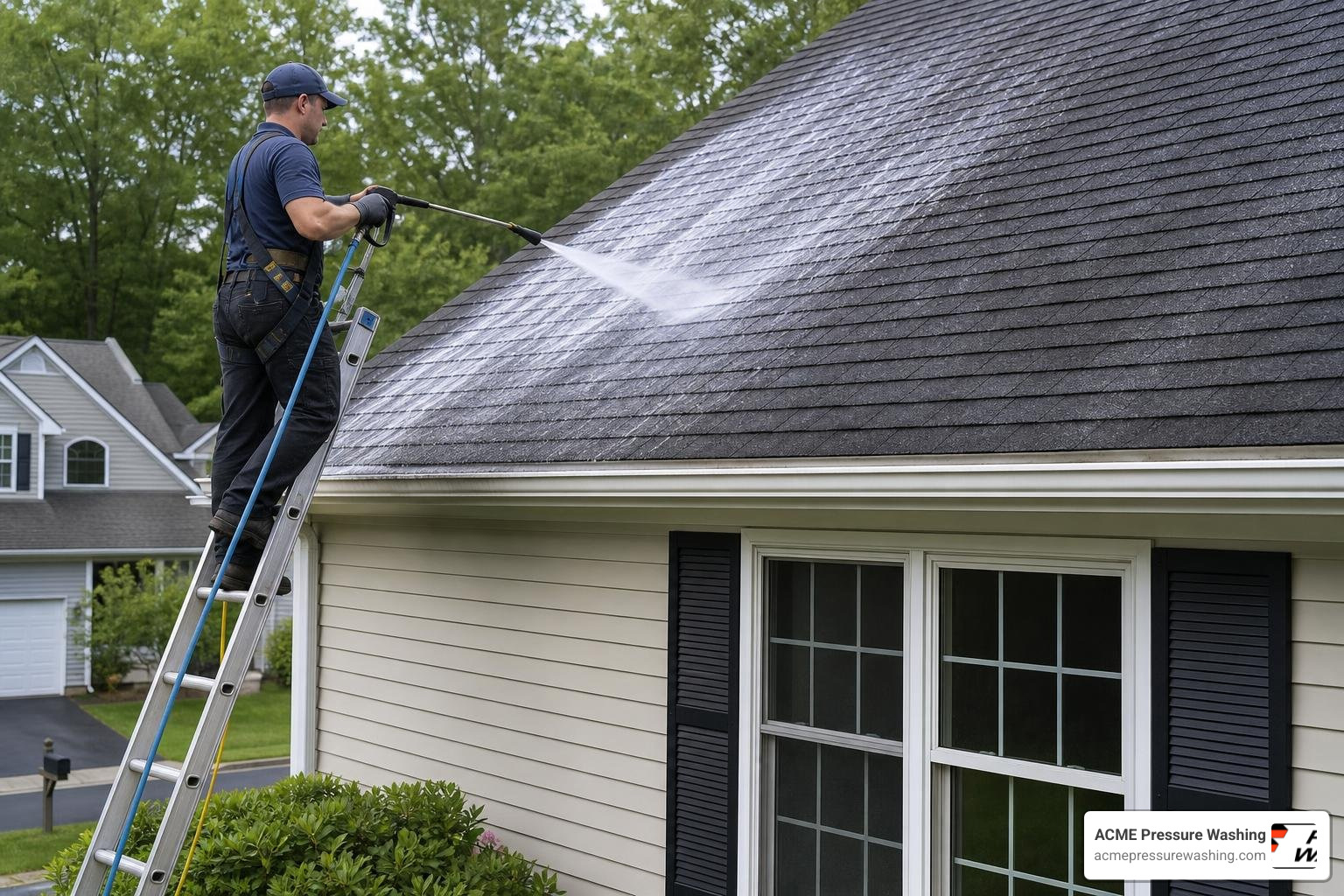
The primary active ingredient recommended by ARMA is a carefully balanced mixture of water, surfactant (which helps the solution cling to the pitched roof), and sodium hypochlorite. This solution is applied gently to the roof, where it goes to work dissolving the black algae, killing moss spores, and neutralizing lichen at the root level. Rather than forcefully ripping the organisms off the shingles, soft washing chemically breaks them down so they can be safely rinsed away without harming the roofing material.
For a detailed breakdown of why this method is superior, check out our article on why soft washing wins. If you are still wondering about the physical limits of shingles, you can read more about the severe risks in can you power wash shingles.
The High Risks of DIY Roof Cleaning Methods
With so many DIY tutorials online, it can be tempting to rent a pressure washer or buy a chemical spray from a home improvement store and climb up onto your roof. However, DIY roof cleaning is one of the most hazardous home maintenance projects you can attempt.
First and foremost are the physical safety hazards. Walking on a dry roof is challenging enough, but once you apply soapy, wet cleaning solutions to a pitched surface, the shingles become as slick as ice. A single slip can result in devastating, life-altering falls. Professional crews use specialized safety harnesses, anchor systems, and ladders designed specifically for steep pitches to mitigate these risks.
Beyond personal safety, DIY attempts carry a high risk of property damage. If you do not have professional-grade equipment, you may struggle to control the chemical application. Runoff from roof chemicals can drip onto your landscaping, instantly killing expensive ornamental shrubs, lawns, and flowers. Professional soft washers use detailed plant protection protocols, including pre-soaking the vegetation, applying neutralizing agents, and using continuous clean-water rinses to keep your landscaping safe.
Furthermore, improper cleaning methods can instantly void your roof’s manufacturer warranty. Most modern shingle manufacturers will not honor warranties if they find the roof was subjected to high-pressure washing or unapproved chemical treatments.
For those looking to understand the mechanics of moss removal safely, we have written an extensive guide on how to clean roof moss as well as tips on avoiding shingle damage. To learn more about the unique regional challenges of moss in our state, you can read about How to Remove Moss from Roof in New Hampshire and explore the chemical options in Moss Be Gone: A Guide to the Best Moss Killer for Roofs.
Because of the fall risks, potential for structural damage, and chemical hazards, we highly discourage DIY roof cleaning and strongly recommend hiring an experienced professional.
Average Cost of Professional Roof Cleaning in 2026
When planning for home maintenance, understanding the financial investment is key.
Please note: All prices mentioned below are average costs sourced from publicly available internet data and industry averages. They are not the actual prices or guarantees of ACME Pressure Washing, but rather a representation of typical market rates to help you budget.
In 2026, the cost of professional roof cleaning in New Hampshire varies widely based on several key factors:
- Roof Size and Square Footage: A larger surface area requires more cleaning solutions and labor time.
- Pitch and Complexity: Steeply pitched roofs, multiple gables, and complex architectural designs require advanced safety rigging, which increases labor costs.
- Roof Material: Different materials require different chemical ratios and care. For example, delicate slate or clay tiles require slower, more meticulous work than standard asphalt shingles.
- Severity of Growth: A roof with light cosmetic black streaks is faster and less expensive to clean than a roof covered in thick, heavy moss clumps that require manual brushing before chemical application.
Based on industry averages, homeowners can expect a wide price range for professional soft wash roof cleaning, typically ranging from $920 to $2,300 to account for these variables. This wide range ensures that complex, delicate, or heavily neglected roofs are priced accurately alongside simple, single-story homes.
| Roof Material | Average Cost Range (Based on Public Internet Data) | Cleaning Method | Key Considerations |
|---|---|---|---|
| Asphalt Shingles | $920 – $1,500 | Soft Washing Only | Protects delicate limestone-filled granules; preserves manufacturer warranties. |
| Metal Roofs | $950 – $1,800 | Soft Washing / Low Pressure | Removes oxidation, pollen, and soot safely without scratching protective coatings. |
| Clay / Concrete Tiles | $1,200 – $2,300 | Soft Washing / Meticulous Rinse | Requires specialized walking techniques to prevent cracking fragile tiles. |
| Slate / Wood Shake | $1,500 – $2,300+ | Non-Pressure Chemical Wash | Extremely delicate; requires high-end safety equipment and gentle chemical dwell times. |
Investing in professional maintenance is highly cost-effective when compared to the price of premature roof replacement, which easily runs into tens of thousands of dollars. To see examples of professionally cleaned roofs and learn more about our specialized processes, explore our professional roof pressure washing services.
For additional regional context on exterior care, you can also view resources like New Hampshire Roof Cleaning – Brian C. Jackson & Son LLC , Roof Coating and Sealing in Auburn, NH , Eco-Pro Power Clean & Contracting, LLC New Hampshire , Pressure Washing Goffstown – New Hampshire Roof Cleaning , Hollis, NH Roof Cleaning Services – Green Guys Powerwashing , and Londonderry, NH 03054 | Brian C. Jackson & Son LLC .
Frequently Asked Questions About Roof Maintenance
Keeping your roof in top shape can raise a lot of questions. Here are the most common things we hear from homeowners in Merrimack, Bedford, Manchester, and Nashua:
How often is professional roof cleaning required?
For most homes in southern New Hampshire, we recommend a professional soft wash cleaning every 2 to 3 years. However, this timeframe can vary depending on your property’s microclimate. If your home is surrounded by mature oak or pine trees, or if your roof has large north-facing sections that receive very little sunlight, you may require annual inspections or touch-ups to prevent moss from establishing a foothold. Preventative cleanings are much easier on your shingles (and your wallet) than waiting until the roof is completely covered in thick green moss.
Does roof cleaning damage shingles or void warranties?
When performed correctly using low-pressure soft washing, professional cleaning does not damage shingles or void warranties. In fact, major roofing manufacturers like GAF and Owens Corning actually recommend soft wash chemical cleanings as part of regular roof maintenance to prevent biological damage. It is high-pressure washing that damages shingles and voids warranties. By choosing a professional soft wash service, you keep your warranty fully intact while extending the active lifespan of your shingles.
Can I use standard pressure washing for my roof?
Absolutely not. Standard pressure washing (anything above 100 PSI) is incredibly destructive to residential shingle roofs. High-pressure water blasts the protective mineral granules right off the asphalt base, leaving your roof highly vulnerable to UV degradation and leaks. It can also break the water-resistant seals between shingles, forcing water into your home’s structure. Always insist on soft washing for your roof.
Conclusion
Your roof is one of the most critical structural components of your home, protecting your family and your belongings from the unpredictable New England weather. Keeping it clean is not just about curb appeal; it is about protecting your investment and avoiding the massive expense of a premature roof replacement.
At ACME Pressure Washing, we have spent over 38 years perfecting safe, customized, and eco-friendly exterior cleaning techniques in Merrimack, NH, and the surrounding areas. Our highly trained, fully insured team knows exactly how to treat asphalt shingles, metal roofs, and delicate tile roofs using manufacturer-approved soft wash techniques that deliver beautiful, long-lasting results without risking damage to your home.
Whether you need professional roof cleaning in Bedford, Manchester, or Nashua, we are here to help. In addition to our specialized roof care, we offer a complete suite of professional exterior cleaning services to keep your entire property looking pristine:
- Keep your siding clean and mold-free with our gentle house washing services.
- Protect your business’s physical assets with our tailored commercial pressure washing solutions.
- Keep your commercial vehicles in top shape with our professional fleet pressure washing programs.
Let us take the risk and the hassle out of your home maintenance. Contact our friendly team today to discuss your project or schedule a professional service.
Call us today at +1603-883-6900 or click below to request your free, no-obligation estimate!
