




Moss on Your Roof Is More Than an Eyesore
The best way to remove moss from roof shingles safely comes down to four key steps:
- Apply a moss-killing solution (zinc sulfate or diluted sodium hypochlorite) using low pressure
- Wait 15–30 minutes for the solution to penetrate and kill moss at the root
- Gently brush dead moss downward with a soft-bristle broom — never scrub hard or use a pressure washer
- Rinse lightly from ridge to eave with a garden hose at low pressure
For lasting results, follow up by installing zinc or copper strips along the roof ridge and trimming overhanging branches.
That green, fuzzy blanket creeping across your roof might look harmless — even charming to some. But moss is quietly doing serious damage underneath.
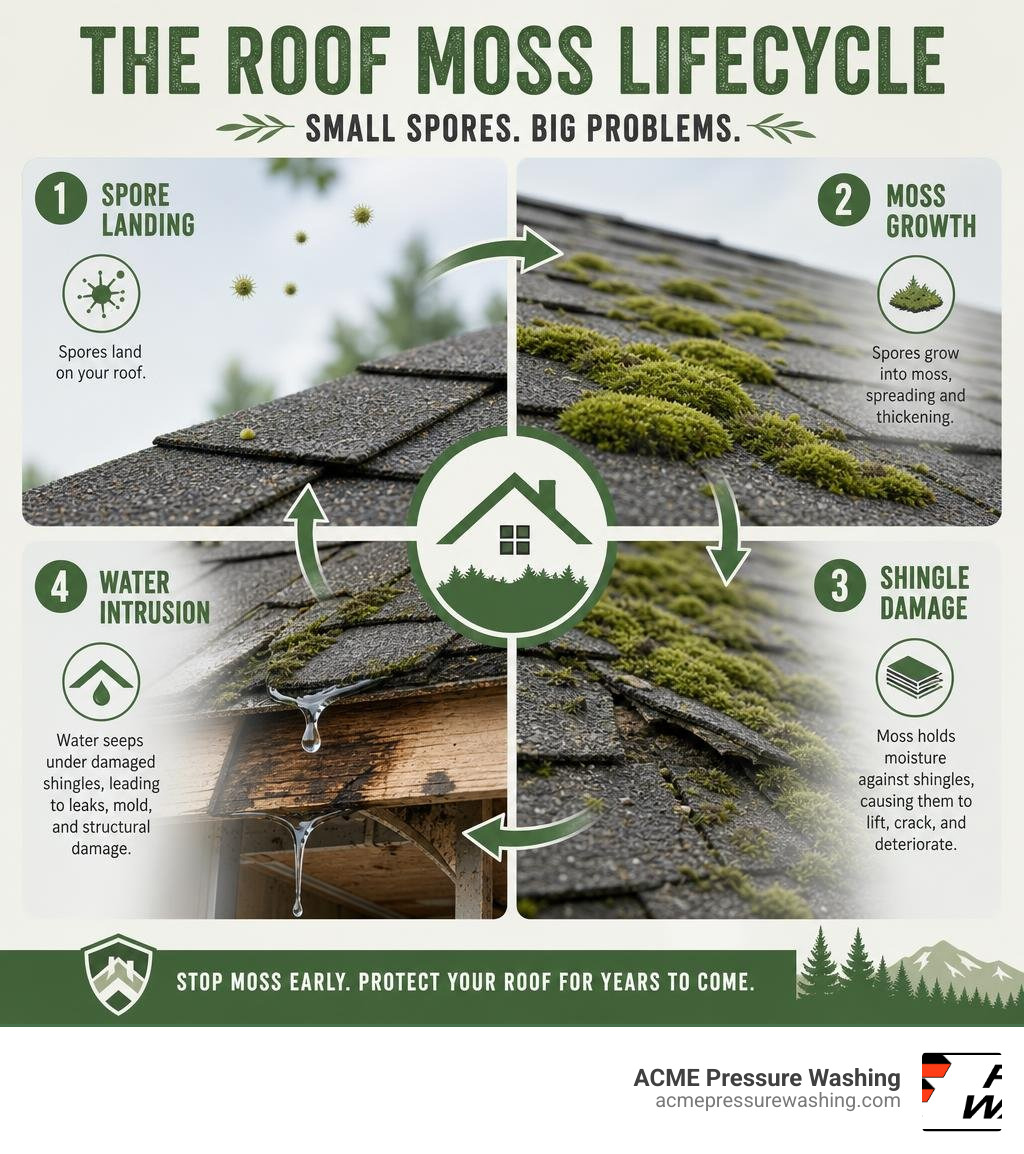
Moss holds 20 to 30 times its own weight in water. Pressed against your shingles day and night, that trapped moisture accelerates aging, promotes rot, and can work its way under shingle edges — creating the conditions for leaks, mold, and costly repairs.
Here in New Hampshire, homes in areas like Merrimack deal with this problem regularly. Damp winters, heavy tree canopy, and north-facing roof slopes create near-perfect conditions for moss to take hold and spread fast.
Left untreated, what starts as a thin green patch can shorten a roof’s remaining lifespan by years — sometimes forcing a full replacement that could have been avoided with early action.
I’m Lionel Greenwood, owner of ACME Pressure Washing, and with over 38 years of hands-on exterior cleaning experience across New Hampshire — including hundreds of roof moss treatments — I’ve seen what happens when moss is ignored and when it’s removed the wrong way. In this guide, I’ll walk you through the best way to remove moss from roof shingles safely, without causing more damage than the moss itself.
Best way to remove moss from roof further reading:
Understanding Roof Moss, Algae, and Lichen Damage
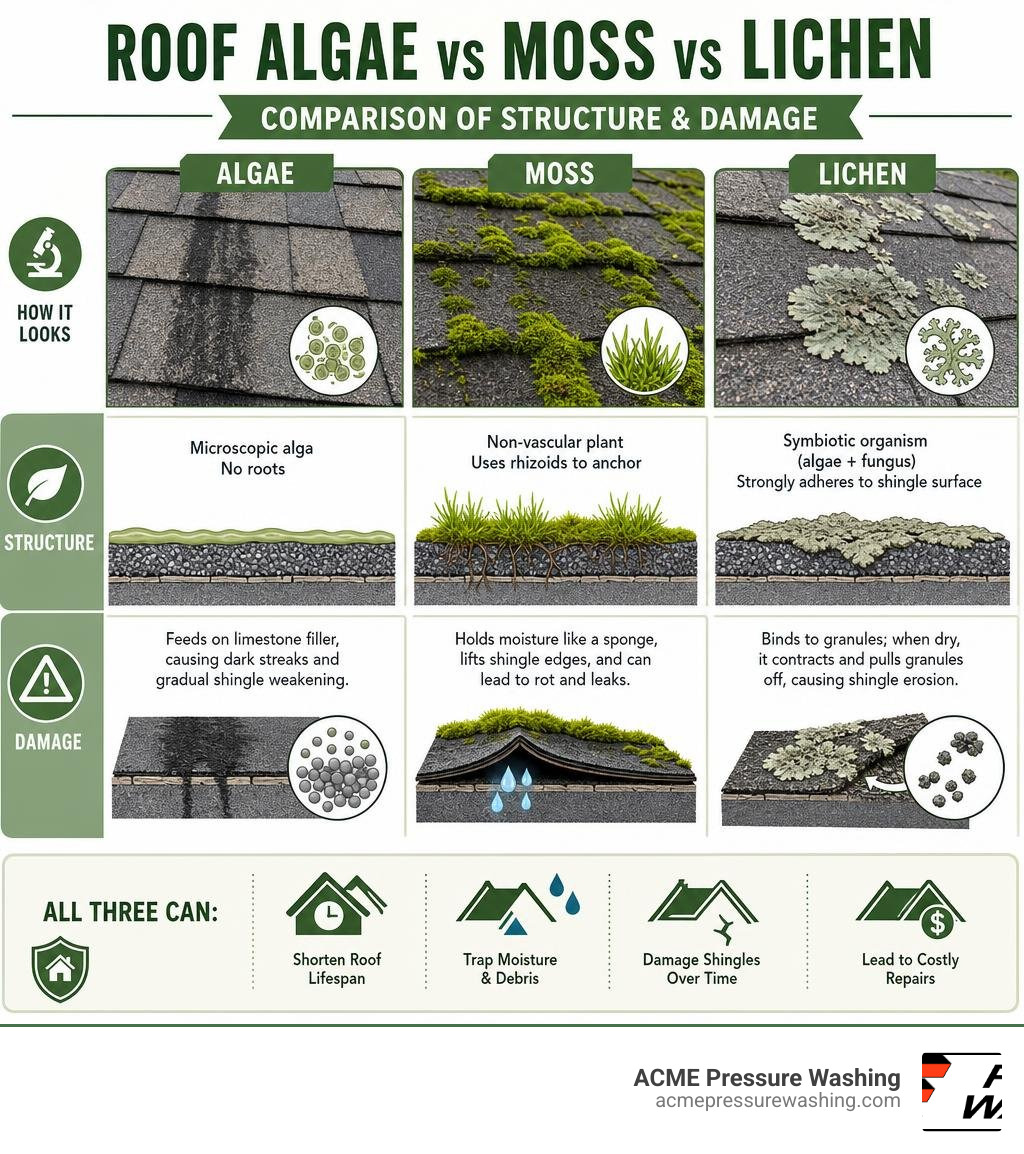
To protect your home, it helps to understand exactly what is growing on your shingles. Many homeowners in Amherst and Bedford look up and see dark stains or green patches and assume it is just “dirt.” In reality, New Hampshire roofs are often host to a trio of biological growths: moss, algae, and lichen. Each has its own characteristics, but all of them threaten the structural integrity of your roofing system.
According to the Asphalt Roofing Manufacturers Association guidelines, proper identification is the first step toward effective remediation.
- Roof Algae (Gloeocapsa Magma): This is the culprit behind those ugly black streaks on your roof. Often mistaken for mildew or soot, Gloeocapsa magma is an airborne alga that thrives in humid climates. It produces a dark pigment to protect itself from ultraviolet rays. While algae does not have roots, it feeds on the limestone filler used in modern asphalt shingles, gradually weakening them over time.
- Roof Moss: Unlike algae, moss is a non-vascular plant. It does not have traditional roots, but it utilizes tiny anchoring structures called rhizoids to grip your shingles. Moss absorbs moisture directly through its leaves, acting like a thick sponge. It thrives in cool, shaded, damp environments—which is why you will almost always see it first on north-facing roof slopes or under heavy tree cover.
- Lichen: This is a symbiotic organism made up of algae and fungi. Lichen appears as crusty, leaf-like patches that bond aggressively to the protective granules on asphalt shingles. When dry, lichen contracts, pulling the granules right off the shingle surface. Removing lichen physically without killing it first almost always results in permanent shingle damage.
The Threat of Organic Growth on New Hampshire Roofs
In our local service areas, including Bedford and Amherst, the climate accelerates these biological processes. Modern asphalt shingles are manufactured with heavy amounts of limestone filler to add weight and durability. Unfortunately, limestone is a premium food source for these organisms.
When moss takes root, its rhizoids physically pry apart the mineral granules that protect your shingles from UV damage. As the moss grows, it lifts the edges of the shingles. This lifting creates two major problems:
- Water Intrusion: Wind-driven rain is funneled underneath the shingles, rotting the wooden roof deck, rusting fasteners, and eventually causing interior ceiling leaks.
- Wind Blow-Off: Lifted shingles lose their wind resistance. During strong New Hampshire storms, entire sections of shingles can easily be stripped away.
Furthermore, dense, wet moss can add 5 to 10 pounds of extra weight per square foot to your roof structure. During our freezing New Hampshire winters, this trapped moisture undergoes a destructive freeze-thaw cycle. The water expands as it freezes, cracking shingles and widening existing gaps. If left unchecked, this biological growth will cut a roof’s lifespan in half.
The Best Way to Remove Moss from Roof Shingles Safely
When homeowners realize the danger moss poses, their first instinct is often to grab a ladder, a stiff brush, or use high-pressure water and go to war. This is a critical mistake. Physical force is the enemy of asphalt shingles.
At ACME Pressure Washing, we have spent nearly four decades refining our methods. The absolute best way to remove moss from roof surfaces is through a specialized process called soft washing.
To understand why gentle treatment is so vital, read our detailed guide on Roof Shingle Moss Cleaning: How to Avoid Damage.
Why Soft Washing is the Best Way to Remove Moss from Roof Surfaces
Soft washing is a cleaning method that uses low-pressure water application (similar in pressure to a garden hose, typically under 100 PSI) combined with specialized, biodegradable cleaning solutions. Instead of relying on mechanical force to blast moss away, soft washing relies on chemistry to kill the biological growth at its root.
Our soft wash process typically involves:
- Prep Work: We thoroughly saturate all nearby landscaping, grass, and plantings with clean water. We also cover sensitive vegetation with tarps to protect them from runoff.
- Applying the Solution: We apply an eco-friendly, biodegradable surfactant mixed with a professional-grade sodium hypochlorite or zinc-based solution. This formula is applied from the ridge cap down to ensure it does not spray up under the shingles.
- Dwell Time: The solution is allowed to dwell for 15 to 20 minutes. You can actually watch the moss change color from green to a dull yellow or brown, signaling that the cellular structure of the plant has been completely destroyed.
- Low-Pressure Rinse: We rinse the shingles gently from top to bottom. This washes away the bulk of the dead organic matter without disturbing the protective shingle granules.
- Natural Wash-Off: For heavily rooted moss, some dead material may remain. Rather than scrubbing it and damaging the shingle, we let the dead, brittle roots naturally wash away over the next few weeks with normal rainfall.
This method is highly recommended over high-pressure alternatives. You can learn more about why we use this technique by visiting our resource on Merrimack Roof Cleaning: Why Soft Washing Wins.
The Risks of DIY Roof Scraping and High-Pressure Washing
Attempting to scrape, wire-brush, or blast moss off your roof is incredibly risky—both for your home and your personal safety.
First, let’s talk about the shingles. Asphalt shingles are coated with hard mineral granules that protect the underlying asphalt from UV radiation and weathering. High-pressure washing or aggressive scrubbing with stiff brushes strips these granules away instantly. A single session of pressure washing can age a roof by 5 to 10 years, voiding your manufacturer’s warranty in the process. For more on these risks, read our guide: Can You Power Wash Shingles? Risks and Safer Alternatives.
Second, roof work is inherently dangerous. According to occupational safety data, falls from roofs account for a significant portion of residential construction and maintenance injuries. Walking on a wet, soapy, moss-covered roof is like walking on ice. Professional crews use specialized fall protection systems, including safety harnesses, anchor points, and non-slip footwear, to comply with strict OSHA standards. Without this equipment, a DIY attempt simply isn’t worth the risk.
Professional vs. DIY Roof Moss Removal Costs in New Hampshire
Before deciding whether to tackle this project yourself or hire a professional, it is wise to weigh the actual costs, risks, and outcomes.
| Factor | DIY Moss Removal | Professional Soft Wash (ACME) |
|---|---|---|
| Method | Manual brushing, vinegar, or harsh store chemicals | Low-pressure soft washing with eco-friendly solutions |
| Safety Risk | High (ladder falls, slippery roof, no safety harness) | Extremely Low (trained pros with OSHA-compliant harnesses) |
| Shingle Damage Risk | High (granule loss from scrubbing or pressure washing) | None (gentle chemical action, low-pressure rinse) |
| Root-Level Kill Rate | Moderate (often leaves microscopic spores behind) | 100% (kills all mold, algae, lichen, and moss roots) |
| Result Longevity | 1 to 2 years | 4 to 6 times longer than DIY or pressure washing |
| Average Cost | $150 – $400 (safety gear, chemicals, rental tools) | $600 – $3,500 (industry average based on roof size/pitch) |
Note: All prices mentioned in this article are average costs sourced from publicly available internet data and are not the actual prices of ACME Pressure Washing. For an accurate quote tailored to your home, please contact us directly.
To understand the exact steps involved in a professional clean, check out our guide on How to Clean Roof Moss the Right Way.
Evaluating the Best Way to Remove Moss from Roof Budgets
When researching roof cleaning costs online, you will find a very wide price range. According to industry averages and online data, professional roof moss removal and soft washing services typically range from $600 on the low end to $3,500 or more on the high end.
Why is there such a wide range? Several critical factors influence the final cost:
- Roof Size and Square Footage: Larger roofs require more materials and labor.
- Roof Pitch (Steepness): Extremely steep roofs require specialized safety rigging, harness anchors, and additional time to navigate safely, which increases the labor cost.
- Severity of Moss Growth: Light algae staining is much faster to treat than thick, heavy moss carpets that have been growing unchecked for a decade.
- Accessibility: Obstacles like delicate landscaping, tight property lines in cities like Nashua, or multiple stories can affect how easily our teams can access the roof surfaces.
While DIY might seem cheaper upfront, when you factor in the cost of a high-quality ladder, safety harness, and cleaning solutions—plus the very real risk of falling or ruining your shingles—investing in a professional service with 38+ years of experience is the most cost-effective decision for your home’s long-term value.
Long-Term Prevention: Keeping Moss Off Your Roof
Once your roof is clean, the goal is to keep it that way. You do not want to repeat this process every single year. Fortunately, there are several highly effective, preventative measures you can take to make your roof a hostile environment for moss, algae, and lichen.
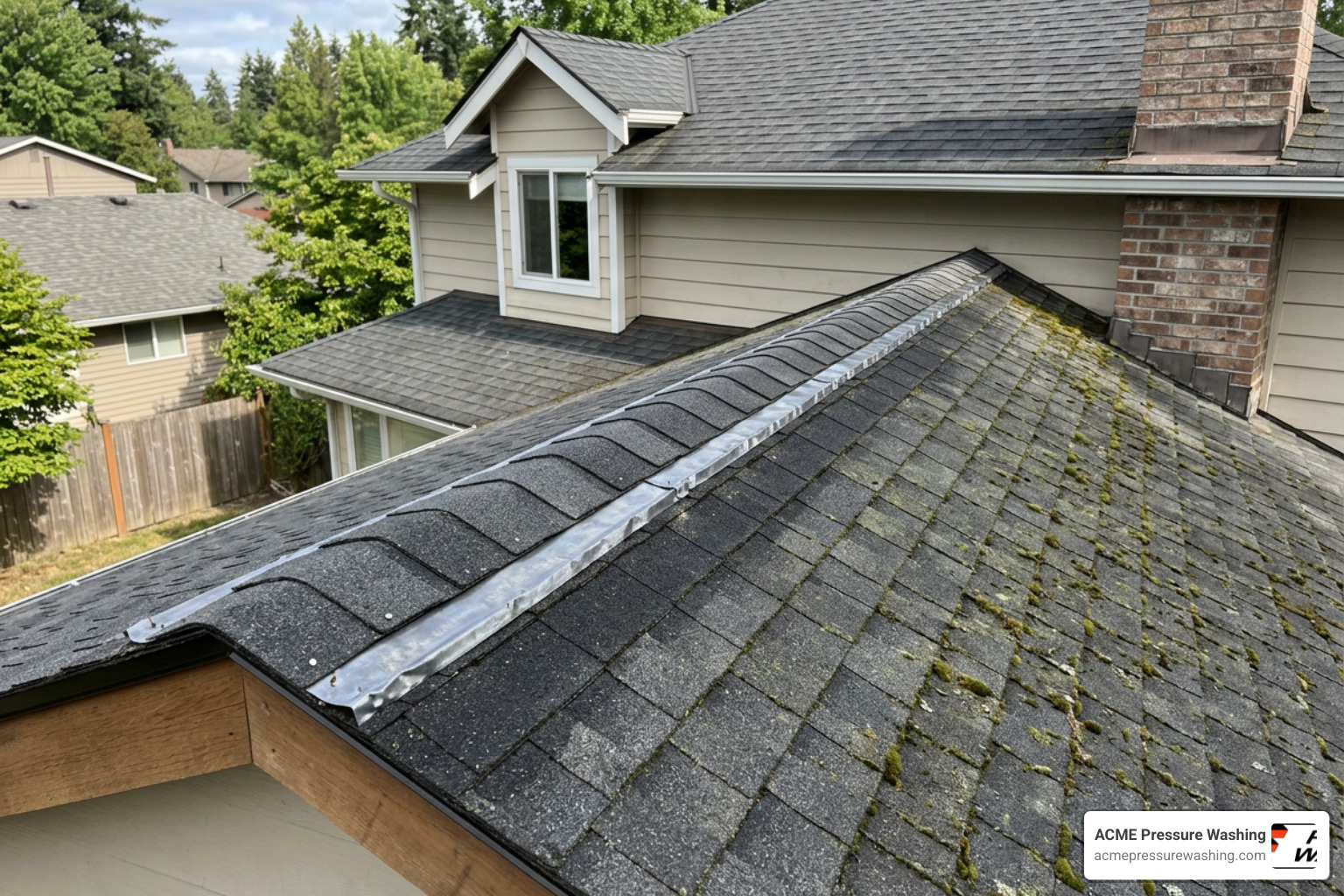
- Install Zinc or Copper Strips: This is one of the most reliable long-term prevention methods. Metal strips made of zinc or copper are installed just below the roof ridge cap. When it rains, water flows over the metal, releasing zinc or copper ions. These ions wash down the roof slope, acting as a natural, continuous herbicide that prevents moss and algae from taking hold. According to the This Old House roof cleaning guide, these strips can protect a roof for up to 20 years.
- Trim Overhanging Tree Branches: Moss thrives in shade and moisture. If your home in Bedford or Nashua is buried under a heavy canopy of trees, your roof will stay wet much longer after a rainstorm. Trim branches back so that they are at least 10 feet away from your roofline. This allows sunlight to dry the shingles quickly and reduces the amount of organic debris (like leaves and pine needles) that falls onto the roof.
- Keep Your Gutters Clean: Clogged gutters trap water along the roof’s edge, creating a highly humid microclimate that encourages rapid moss growth. Ensure your gutters are cleaned at least twice a year—in the spring and fall—to allow proper drainage.
- Improve Attic Ventilation: Poor attic ventilation traps heat and moisture under your roof deck. This can create a warm, humid environment that warms the shingles from below, accelerating biological growth on the outside. Ensure your ridge vents and soffits are clear and operating correctly.
Frequently Asked Questions About Roof Moss Removal
How often should a roof be treated for moss?
In shaded or damp areas of New Hampshire, we recommend having your roof professionally inspected once a year. If you do not have zinc strips installed, a preventative soft wash treatment every 2 to 3 years is ideal to catch microscopic spores before they turn into visible green clumps.
Will winter weather kill roof moss in New Hampshire?
No. While freezing temperatures will cause moss to go dormant, winter will not kill it. In fact, the moisture from melting snow provides moss with plenty of water. The freeze-thaw cycles of New Hampshire winters can actually make the moss more damaging, as the trapped water under the moss freezes, expands, and cracks the shingles.
Can moss growth void my roofing warranty?
Yes, absolutely. Most major asphalt shingle manufacturers consider unchecked moss, algae, and lichen growth to be a form of homeowner neglect. If water intrusion or shingle failure occurs as a result of moss lifting the shingles, the manufacturer may void your warranty. Regular, professional soft washing preserves your warranty and protects your investment.
Conclusion
Your roof is your home’s first line of defense against the elements. While a moss-covered roof might look rustic, it is a ticking time bomb for structural damage, rot, and expensive leaks.
At ACME Pressure Washing, we have spent over 38 years protecting homes and commercial properties throughout New Hampshire—including Merrimack, Amherst, Bedford, and Nashua. We specialize in safe, low-pressure soft washing techniques that eliminate moss at the root without harming your delicate shingles or your landscaping.
Beyond roofs, our experienced team is fully equipped to handle all your exterior cleaning needs. We provide high-quality house pressure washing to restore your siding, as well as commercial pressure washing for local businesses, and even heavy-duty fleet and equipment pressure washing to keep your commercial vehicles in top shape.
Don’t let moss cut your roof’s lifespan short. Contact the local experts who know how to clean it the right way.
Ready to restore your roof’s beauty and protect your home?
- Call us today: +1603-883-6900
- Get a free estimate online: ACME Pressure Washing Quote Form
- Learn more about our specialized services: ACME Pressure Washing Roof Services
