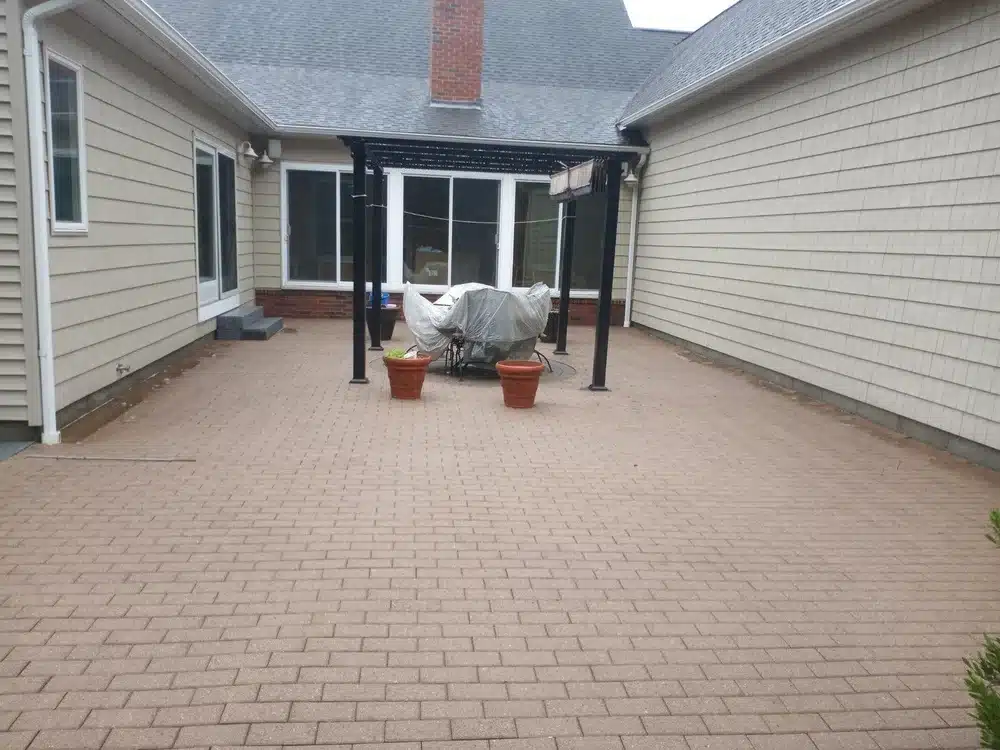



Your Patio Deserves Better Than a Standard Nozzle
The right power wash patio cleaner can cut your cleaning time in half — or more — while delivering streak-free results that a basic wand simply can’t match.
Here are the top options to consider for your hardscape:
| Type | Best For | PSI Range | Avg. Cost |
|---|---|---|---|
| Surface cleaner attachment (12-14″) | Small to medium patios, electric washers | 2,000-3,300 PSI | $30-$100 |
| Surface cleaner attachment (16-18″) | Large patios, gas washers | 3,300-4,500 PSI | $80-$200 |
| Chemical patio cleaner (no pressure washer) | Light stains, organic growth | N/A | $20-$60 |
| Combined approach (attachment + detergent) | Tough stains, oil, mildew, black spots | 2,000-4,500 PSI | Varies |
If you own a home in Merrimack, NH, you know how quickly a patio can go from clean to covered in grime, mold, and black spots — especially after a long winter. The problem is that grabbing a standard pressure washer nozzle and hoping for the best often leads to streaky results, missed spots, and a whole lot of wasted time.
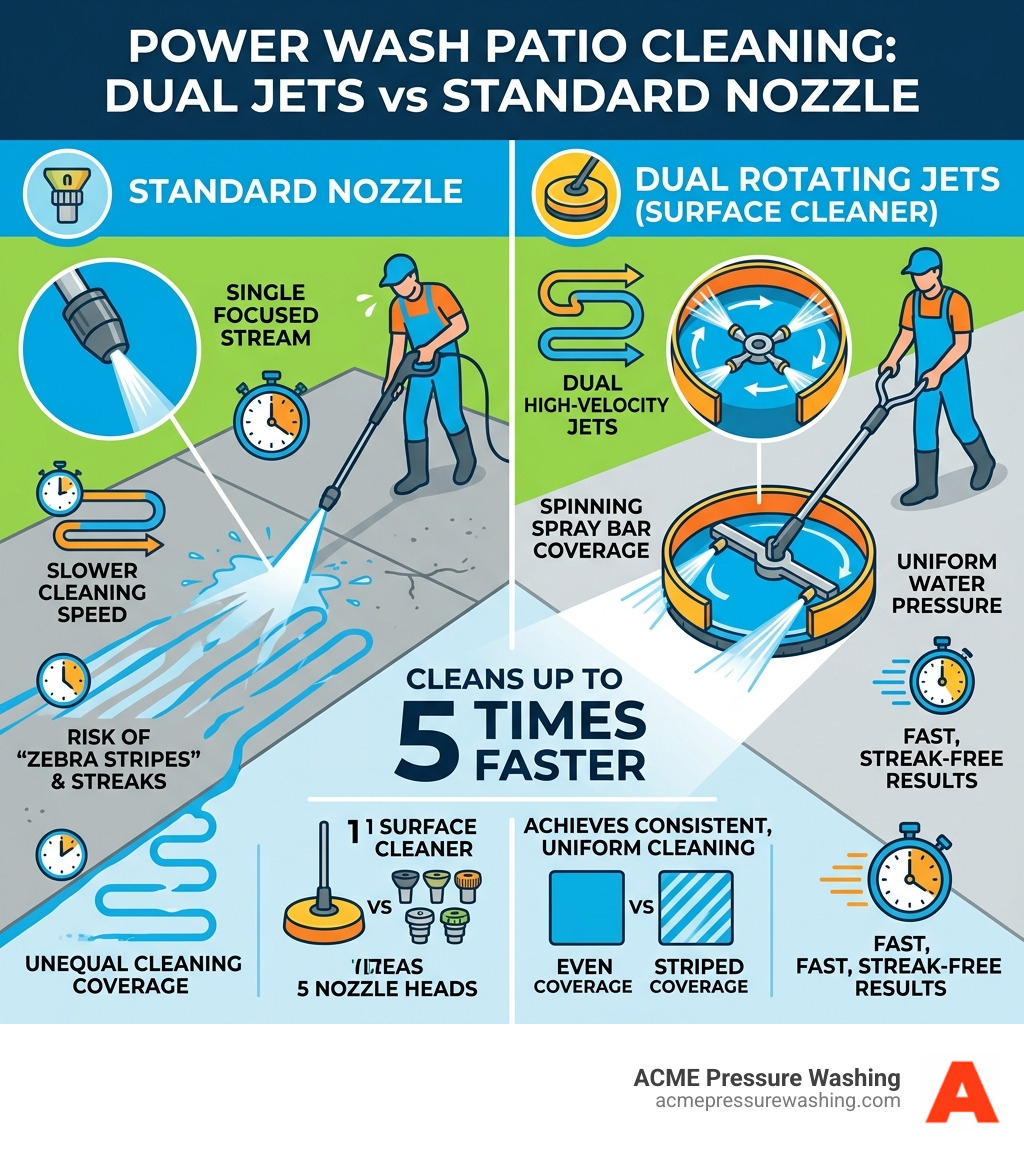
Surface cleaner attachments spin dual rotating jets under a protective skirt, covering a wide path with uniform pressure on every pass. Compared to a standard nozzle, independent tests and customer data show they can clean up to 5 times faster — that’s a meaningful difference when you’re looking at a large stone or concrete patio.
This guide breaks down the best power wash patio cleaner options for 2025, from heavy-duty gas-powered attachments to budget-friendly electric models and chemical cleaners that work without any pressure washer at all.
How a Power Wash Patio Cleaner Transforms Your Hardscape
When we talk about a power wash patio cleaner, we are usually referring to a circular “surface cleaner” attachment. If you’ve ever tried to clean a large driveway or patio with just the standard green or yellow spray tip, you know the “zebra stripe” struggle. You end up with visible lines where the water hit the stone more directly, and it takes forever to cover the area.
A surface cleaner solves this using dual rotating jets. Inside the housing, a spray bar spins at high speeds, powered by the water pressure itself. This creates a consistent, uniform cleaning path. According to industry data, using a 14-inch surface cleaner can achieve 500% faster cleaning than a standard nozzle, effectively reducing your total cleaning time by half.
Beyond speed, these tools offer a “splash-free skirt.” This thick brush or plastic rim around the edge contains the high-pressure spray, meaning you won’t end up covered in mud and dirty water. It also protects your flower beds and siding from messy overspray. For homeowners in Amherst or Bedford, NH, where professional landscaping is an investment, this containment is a huge plus.
Using a dedicated walkway and patio cleaning tool ensures that the pressure is applied at a fixed height. This prevents “etching”—those permanent swirl marks caused by holding a standard wand too close to the concrete. It’s the safest way to get a professional-grade finish on your own.
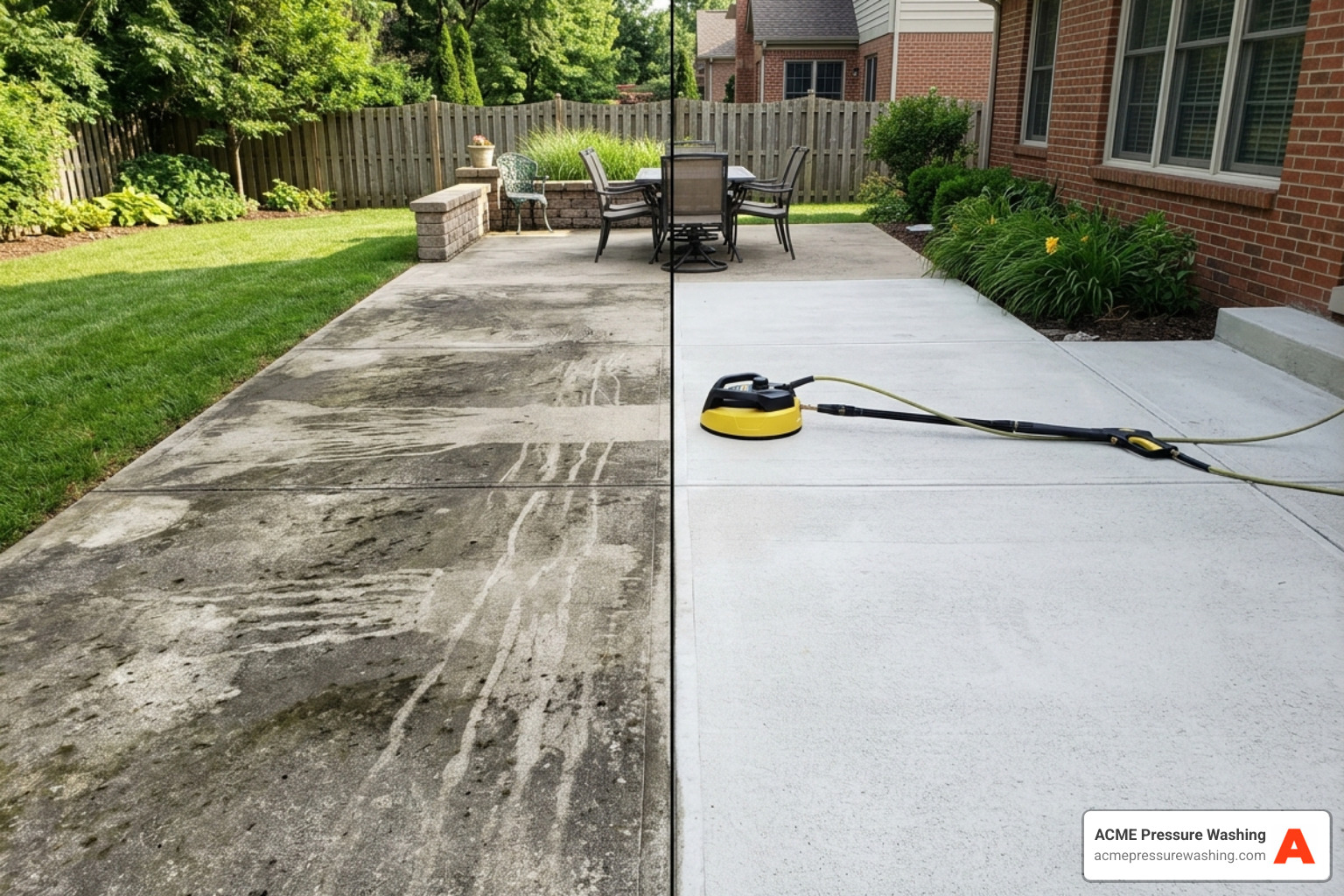
Essential Features and Top-Rated Attachments for 2025
Choosing the right power wash patio cleaner attachment depends largely on the machine you already own. You can’t put a 20-inch professional cleaner on a small electric unit and expect it to spin.
| Feature | Residential (Electric) | Heavy-Duty (Gas) |
|---|---|---|
| Typical Size | 10 – 14 inches | 15 – 24 inches |
| Max PSI | 2,000 – 3,000 PSI | 3,300 – 4,500 PSI |
| Material | High-impact Plastic | Stainless Steel |
| Connection | 1/4″ Quick-Connect | 1/4″ or 3/8″ Quick-Connect |
| Maneuverability | Glides on water | Caster wheels |
Best Heavy-Duty Power Wash Patio Cleaner for Gas Machines
For those in Londonderry or Derry with large expansive hardscapes, a gas-powered pressure washer is usually the tool of choice. To match that power, you need a heavy-duty attachment.
- Westinghouse 16.5-inch Surface Cleaner: This is a powerhouse rated for up to 4400 PSI. It features a stainless steel build that resists corrosion—essential for our humid New Hampshire summers. It holds a staggering 4.8/5 rating at major retailers like Lowe’s.
- DEWALT 18-inch Surface Cleaner: Designed for high-flow gas machines, this model uses a 1/4-inch quick-connect and is rated up to 3700 PSI. The extra width means fewer passes to finish the job.
- SurfaceMaxx PRO 14.5-inch: Rated for 4500 PSI, this is a “prosumer” favorite. It’s rugged enough for frequent use but sized perfectly for residential walkways.
Top Value Power Wash Patio Cleaner for Electric Models
If you’re doing a quick spring clean in Hollis or Brookline with a standard electric unit, you don’t need a $300 stainless steel rig.
- RYOBI 12-inch Surface Cleaner: This is one of the most popular attachments on the market. Rated for up to 2,300 PSI, it’s lightweight, plastic, and usually costs under $100 (often as low as $30-$50). It’s perfect for smaller patios and composite decks.
- LidoDola 14-inch Surface Cleaner: A top-rated choice on Amazon with a 4.4/5 star rating from thousands of users. It often comes with wheels, making it feel like you’re just pushing a vacuum across your patio.
- Harbor Freight 14-inch (3300 PSI): A great budget option that frequently goes on sale for around $49.99, offering a significant saving over name-brand alternatives.
Best Chemical Solutions and Maintenance Tips
Sometimes, water pressure alone isn’t enough to tackle the “New Hampshire special”—that stubborn green algae and those pesky black spots (lichens) that thrive in our shaded yards. Pairing your power wash patio cleaner with the right detergent can make the difference between a “clean” patio and one that looks brand new.
Top Chemical Picks
- Smartseal – Patio Cleaner Xtreme: This is a high-performance formula specifically designed to remove black spots and organic staining. It can cover up to 40 square meters and often works so well you barely need high pressure.
- Scotts Outdoor Cleaner Multi-Purpose Formula: This is a fantastic eco-friendly option. It contains no chlorine bleach or phosphates, making it safe to use around your lawn and expensive landscaping in towns like Windham or Milford. It uses a fast-foaming action that starts lifting dirt on contact.
Pro Timing and Maintenance
To see the best results, we recommend checking out our gallery of walkway and patio cleaning to see what’s possible with the right technique.
- Temperature Matters: The ideal window for cleaning is when outdoor temperatures are between 50°F and 80°F. If it’s too hot, your chemical cleaners will evaporate before they can work. If it’s too cold, you risk water freezing in the pores of your stone.
- Early Morning is Best: We suggest cleaning between 8:00 AM and 11:00 AM. This avoids the harsh midday sun and gives the patio all day to dry before the evening dew sets in.
- Post-Clean Care: After using your surface cleaner, always rinse the attachment thoroughly to remove silt and grit that can clog the rotating nozzles.
Frequently Asked Questions about Patio Cleaning
What PSI is safe for my patio?
This is the most common question we get in Merrimack.
- Concrete: Generally very durable. You can safely use 3,000 to 4,000 PSI, but always start with a surface cleaner to distribute that pressure evenly.
- Natural Stone/Pavers: Be careful. High pressure can wash away the polymeric sand in the joints. Stick to 2,000-2,500 PSI and keep the cleaner moving.
- Wood/Composite: These are softer. Never exceed 1,500-2,000 PSI, or you may splinter the wood or “fuzz” the composite material.
How much does a quality surface cleaner cost?
Based on average internet data, a typical residential surface cleaner costs around $80. However, the range is wide:
- Budget options: Can be found for as low as $30.
- Professional stainless steel models: Can reach upwards of $300 to $589. For most homeowners in the Nashua or Manchester area, a mid-range model between $70 and $120 provides the best balance of longevity and performance.
Can a power wash patio cleaner handle oil and rust?
A surface cleaner is great for general grime, but oil and rust usually require pre-treatment.
- Oil: Use a dedicated degreaser. Apply it, agitate with a stiff brush, let it dwell for 15 minutes, and then run your surface cleaner over it.
- Rust: Look for cleaners containing oxalic acid. Rust is a chemical bond, so “blasting” it with water rarely works without a chemical assist.
Conclusion
A clean patio is the heart of your outdoor living space, whether you’re hosting a BBQ in Goffstown or relaxing in Wilton. While a DIY power wash patio cleaner attachment is a fantastic investment for regular maintenance, some jobs require a professional touch to ensure the longevity of your hardscape.
At ACME Pressure Washing, we bring over 38 years of experience to every job. We understand the specific challenges of New Hampshire weather and use safe, customized, eco-friendly techniques to restore your surfaces without damage. From Merrimack to New Boston and everywhere in between, we pride ourselves on delivering results that make your home shine.
If your patio has seen better days and you’re ready for a total restoration, contact us for professional patio cleaning today. We’ll take the hard work off your hands so you can get back to enjoying your yard!