




Moss on Your Patio Is More Than an Eyesore — Here’s What to Do About It
Clean moss from patio surfaces the right way using one of these proven methods:
- White vinegar — Pour undiluted onto moss, wait 10–20 minutes, scrub with a stiff brush, and rinse
- Diluted bleach — Mix 5 tablespoons per gallon of water, soak for 15 minutes, rinse thoroughly
- Dish soap + vinegar — Scrub with soapy water first, then rinse with a 50/50 vinegar-water solution
- Pressure washing — Use 500–1,000 PSI with a wide fan nozzle at a 45-degree angle
- Professional cleaning — Best for large areas or stubborn, rugby growth
If you live in New England, you already know the feeling. You step outside after a wet spring or long winter, and your patio looks like the floor of a forest. Green, slippery, and kind of embarrassing.
Moss loves exactly the conditions Merrimack, NH delivers — cool temperatures, shade, moisture, and porous surfaces that hold water. Once it settles in, it spreads fast.
The bad news? Moss isn’t just ugly. It creates a genuine slip hazard and can slowly damage your patio surface by trapping moisture against brick, stone, or concrete. Left alone, it shortens the life of your hardscape.
The good news? It’s very fixable — and you have options ranging from a few household items to a professional cleaning that gets it done in one visit.
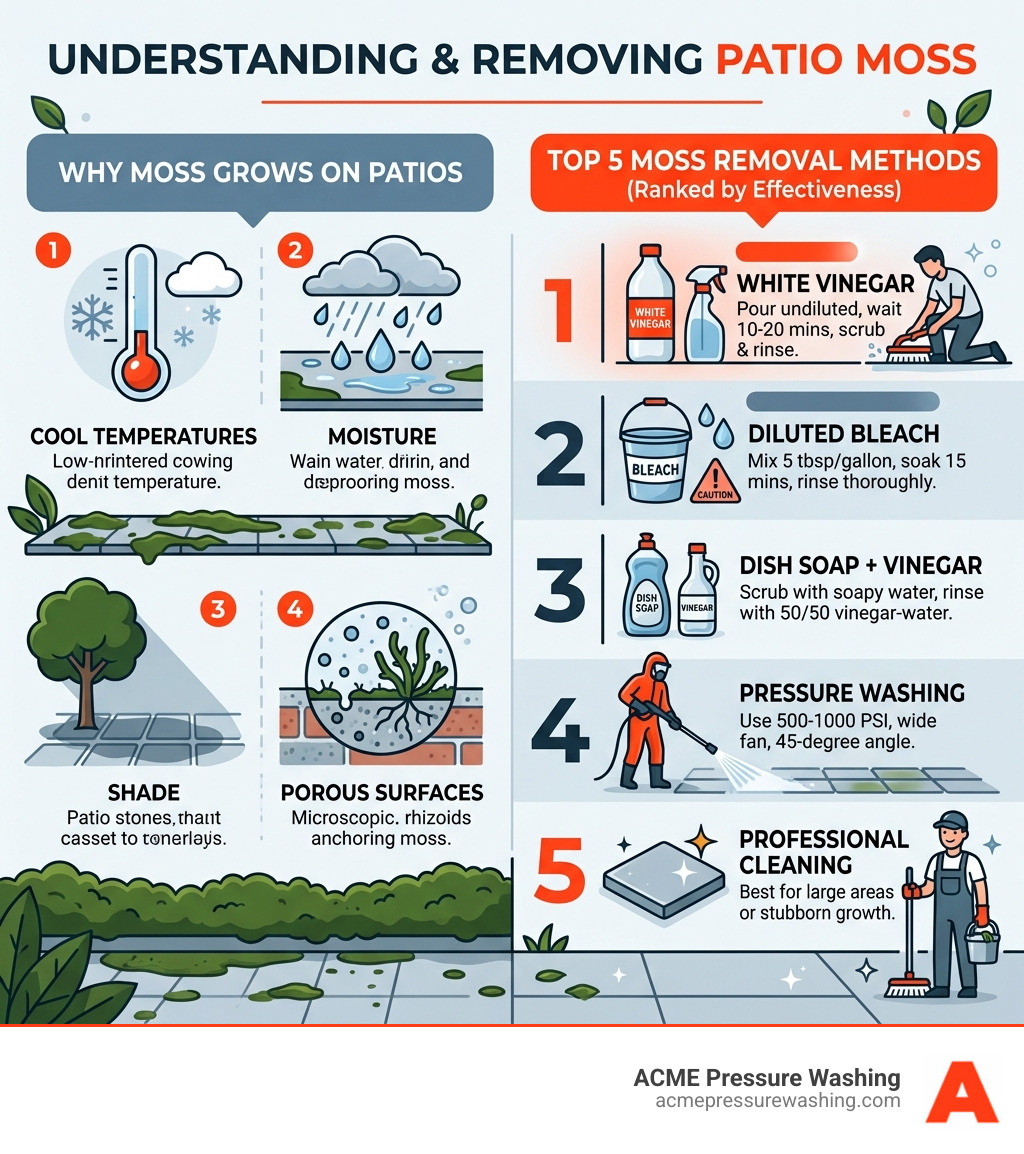
Why moss thrives on your outdoor surfaces
To effectively clean moss from patio areas, we first need to understand why it’s there. Moss is a bit of a homebody; once it finds a comfortable spot, it doesn’t want to leave. Unlike most plants, moss lacks a traditional root system. Instead, it uses tiny hair-like structures called rhizoids to anchor itself to porous surfaces.
In New Hampshire towns like Amherst, Bedford, and Londonderry, several factors create a “five-star hotel” environment for moss:
- Shade and Moisture: Moss is a shade-loving plant. If your patio is north-facing or tucked under a thick canopy of trees, it stays damp long after the sun comes out.
- Poor Drainage: If water puddles on your pavers or the ground doesn’t slope away from the house, you’re essentially providing a constant irrigation system for growth.
- Porous Materials: Brick and certain stones are like sponges. They retain water deep within their structure, providing the consistent hydration moss needs to thrive.
- Acidic Soil: Moss generally prefers a soil pH between 5.0 and 6.0. If the debris in your patio joints is acidic, you’re rolling out the green carpet for it.
When these conditions meet, moss growth becomes rapid. Because it holds moisture directly against the surface, it can lead to Restoring Walkways and Patios becoming a necessity rather than a luxury. Understanding these triggers is the first step in How To Clean The Moss Off Of A Brick Patio effectively.
Effective ways to clean moss from patio surfaces

When it’s time to take action, you have several paths. Whether you prefer a “elbow grease” DIY approach or a high-tech professional solution, the goal is the same: kill the moss and remove the remains so it doesn’t immediately return.
| Method | Effort Level | Effectiveness | Best For |
|---|---|---|---|
| Manual Scrubbing | High | Moderate | Small patches, delicate stone |
| White Vinegar | Medium | High | Eco-conscious homeowners |
| Bleach Solution | Medium | Very High | Stubborn infestations, concrete |
| Pressure Washing | Low (Pro) | Maximum | Large areas, deep cleaning |
Manual removal is often the best starting point. Because moss lacks deep roots, a stiff-bristle brush can lift large chunks of it relatively easily. We always recommend doing a “pre-sweep” to remove as much physical mass as possible before applying any liquids. This allows your cleaning solution to reach the base of the growth rather than just soaking the top layer. You can see examples of the results achievable through thorough cleaning in our Gallery Walkway and Patio Cleaning.
How to clean moss from patio without a pressure washer
If you aren’t ready to fire up a machine, your kitchen pantry might hold the answer. Many people want to clean moss from patio surfaces using items they already have on hand.
- White Vinegar: This is a favorite among gardening experts. The acetic acid in white vinegar breaks down the moss structure. For the best results, use it undiluted. Pour it directly onto the moss, let it sit for 10 to 20 minutes (or up to an hour for thick growth), scrub with a stiff brush, and rinse.
- Boiling Water: This is the ultimate “free” method. Pouring boiling water over moss literally cooks it. Once it wilts and loses its vibrant green color, it’s much easier to scrub away.
- Dish Soap: Mixing warm water with a generous amount of dish soap helps loosen the moss’s grip on the stone. Some homeowners find success by scrubbing with soapy water first, then following up with a vinegar rinse.
According to research, these methods are surprisingly fast. You can actually remove moss from patio in 15 minutes without a pressure washer if the growth isn’t too advanced.
Using household bleach to clean moss from patio
Bleach is a powerful ally, but it requires a careful hand. When you use bleach to clean moss from patio pavers, you aren’t just killing the visible plant; you’re also neutralizing the spores.
The Recipe: Mix 5 tablespoons of household bleach into one gallon of water. This dilution is generally safe for most hard surfaces while remaining lethal to moss.
The Process:
- Safety First: Wear rubber gloves and goggles. Bleach can irritate skin and eyes.
- Protect Plants: If your patio is bordered by prized flowers or grass, cover them with plastic or rinse them thoroughly with plain water before and after the treatment to dilute any runoff.
- Apply and Soak: Spray the solution evenly. You’ll know it’s working when the moss starts to turn yellow — usually within 15 minutes.
- Scrub and Rinse: Once the moss has yellowed, scrub it off and rinse the area multiple times. This prevents any white residue from forming on your bricks or concrete.
One of the biggest perks of the bleach method is its longevity. A proper treatment can remain effective against recurring growth for up to a year.
Safe pressure washing techniques for moss removal
While DIY liquids work, nothing beats the efficiency of professional-grade equipment for large-scale cleaning. However, there is a right way and a wrong way to do it. Blasting your patio with maximum pressure can actually damage the surface, strip away the finish of your pavers, or wash out the essential sand in the joints.
At ACME Pressure Washing, we utilize “Soft Washing” and low-pressure techniques. For most residential patios in towns like Merrimack or Nashua, we recommend:
- Lower PSI: Keep the pressure between 500 and 1,000 PSI. This is strong enough to strip moss but gentle enough to protect the integrity of the stone.
- Wide Fan Nozzles: Never use a “zero-degree” or “red” tip. It acts like a laser and can etch concrete. A 25 or 40-degree wide fan tip is much safer.
- The 45-Degree Angle: Don’t spray straight down into the joints. This can dislodge the base material under your patio. Instead, spray at a 45-degree angle to “sweep” the moss across the surface.
Professional Walkway and Patio Cleaning ensures that the job is done without the risk of “operator error” that often leads to etched bricks or ruined landscaping.
Long-term prevention and maintenance strategies
Once you’ve managed to clean moss from patio surfaces, the last thing you want is to see that green tint returning in a few weeks. Prevention is all about changing the environment.
- Let the Light In: Prune overhanging tree limbs and thin out dense shrubs. Increasing sunlight and air circulation is the most effective natural deterrent for moss.
- Improve Drainage: If you have standing water, consider regrading the soil around the patio or adding a gravel border to help moisture escape.
- Landscaping Sand: After cleaning, refill the joints between pavers with fresh sand. You can even find sand infused with zinc sulfate, which acts as a long-term moss inhibitor.
- Water-Repellent Sealers: Applying a high-quality sealer after a deep clean creates a barrier that prevents moisture from soaking into the stone. If the stone stays dry, the moss can’t grow.
- Regular Sweeping: It sounds simple, but a quick sweep once a week removes the organic debris (like leaves and dirt) that moss uses for food.
Frequently Asked Questions about patio moss
Can moss damage my patio?
Yes, absolutely. While it might look charming in a “secret garden” sort of way, moss is a silent destroyer. Because it holds moisture against the surface 24/7, it can cause brick and stone to crack during New Hampshire’s freeze-thaw cycles. It also creates a biofilm that makes the surface incredibly slippery, posing a major safety risk for your family and guests.
When is the best time of year to treat moss?
The optimal times are early spring and late fall. You want to catch moss during its peak growth periods but when the weather is mild. Temperatures between 50°F and 80°F are ideal. Avoid cleaning during extreme heat, as your cleaning solutions will evaporate too quickly, and never treat your patio when a freeze is expected within 24 hours.
How much does professional patio cleaning cost?
Based on internet data, the average cost for professional patio cleaning can vary significantly depending on the size of the area and the severity of the moss. Homeowners can expect a wide range, typically between $150 and $1,200. The higher end of that range usually accounts for very large patios, intricate stone work, or additional services like sealing and joint sanding.
Conclusion
Keeping your outdoor space beautiful shouldn’t be a constant battle against nature. Whether you choose to clean moss from patio areas yourself using vinegar and a scrub brush or decide to call in the experts, the key is consistency.
At ACME Pressure Washing, we’ve spent over 38 years perfecting the art of exterior cleaning. Serving Merrimack, NH, and surrounding communities like Hollis, Brookline, and Goffstown, we use safe, eco-friendly techniques that protect your investment while restoring its original luster. We don’t just blast away the green; we treat the surface to ensure it stays clean for the long haul.
Don’t let a slippery, mossy patio keep you from enjoying your backyard this season. Schedule your professional walkway and patio cleaning today and let us do the heavy lifting for you!
