How to Kill Black Mold at the Root Without Ruining Your Siding

Why Black Mold on Your Property’s Exterior Is a Bigger Problem Than It Looks
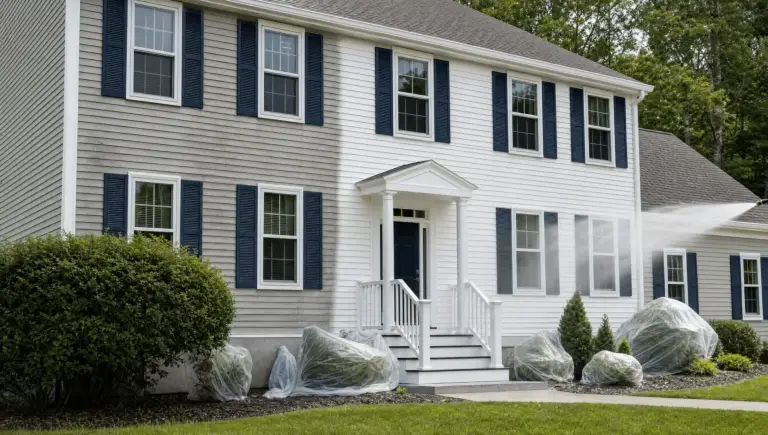
Soft washing black mold removal is the safest and most effective way to kill mold at the root – without damaging siding, shingles, fencing, concrete, or surrounding landscaping.
Quick answer: How professionals remove black mold from exterior surfaces with soft washing:
- Inspect affected areas – siding, roofing, gutters, soffits, fencing, decks, patios, walkways, and commercial surfaces
- Apply a low-pressure (40-100 PSI) sodium hypochlorite solution (1-6% concentration)
- Allow dwell time so the solution kills mold spores at the root level
- Rinse gently with low-pressure water to remove dead growth and chemical residue
- Protect plants and landscaping before and during application
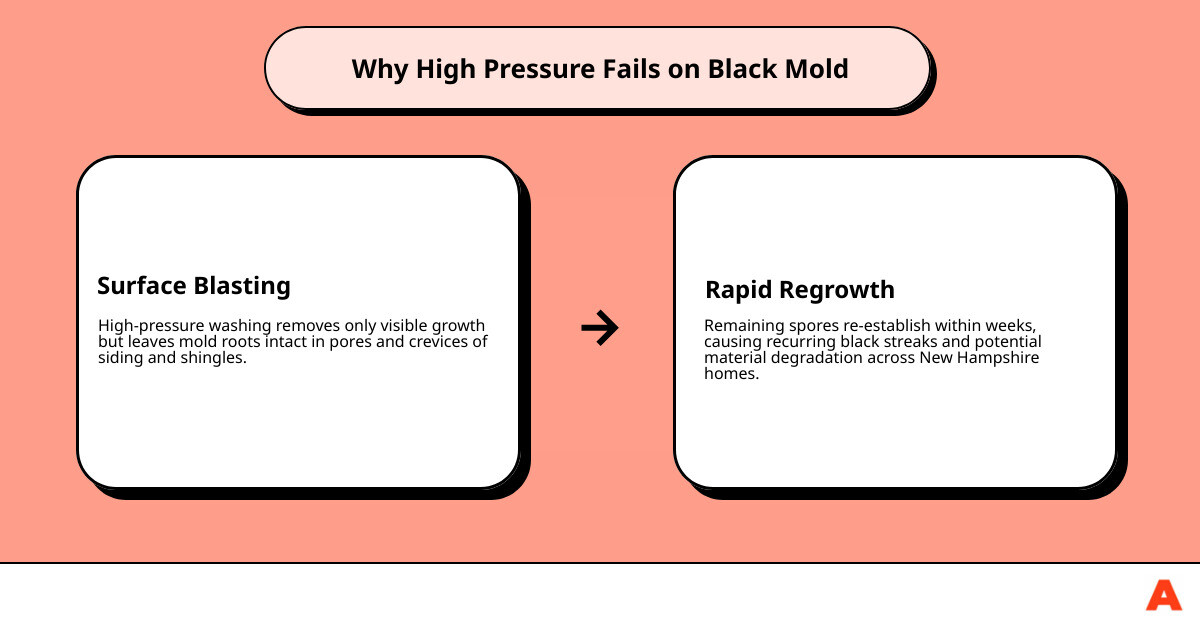
That dark streaking spreading across siding, roofing, concrete, or other exterior surfaces isn’t just dirt. It’s living biological growth – and blasting it with a pressure washer won’t kill it. It only removes what you can see on the surface, leaving the root system intact to grow right back.
Black mold and algae thrive in the damp, shaded conditions common across New Hampshire, especially on properties in towns like Merrimack, Bedford, Goffstown, and Hollis. Left untreated, these organisms don’t just look bad – they break down building materials, shorten roof lifespans, and can create real health risks around occupied buildings.
I’m Lionel Greenwood, owner of ACME Pressure Washing, and I’ve spent more than 38 years helping property owners and managers across New Hampshire solve exactly this problem with professional soft washing black mold removal. In this guide, I’ll explain why high-pressure washing makes things worse – and what actually works.
For expert service, request a free estimate through our Quote Form. We also provide professional house washing, commercial exterior cleaning, and fleet and equipment pressure washing throughout southern New Hampshire.
The Science of Black Mold on Exterior Surfaces (Why High Pressure Fails)
To understand why traditional high-pressure washing fails, we have to look at the biology of what is growing on exterior surfaces. The dark, unsightly streaks on New Hampshire roofs are often caused by a hardy type of cyanobacteria called Gloeocapsa magma. This bacteria feeds on the limestone filler used in modern asphalt shingles. As it grows, it creates a dark, protective pigment to shield itself from UV rays, resulting in those prominent black streaks.
True black mold, mildew, and algae are fungal and biological colonizers that thrive in moist, shaded environments. In areas like Bedford, Merrimack, Goffstown, and Hollis, where mature tree canopies and humid New England summers create the perfect microclimate, these organisms find a welcoming home on houses, commercial buildings, fences, decks, sidewalks, patios, pool areas, and fleet-related surfaces.
While mildew typically remains on the surface as a powdery white, gray, or yellowish layer, mold is far more insidious. Mold grows by sending out microscopic, root-like structures called filamentous hyphae. These hyphae penetrate deeply into porous building materials like wood clapboard, concrete, stucco, and even the tiny gaps in vinyl siding.
Leaving these organisms untreated on exterior surfaces poses two major threats:
- Structural Damage: Over time, mold and algae secrete acidic compounds that degrade building materials. On roofs, they can literally cut the lifespan of shingles in half by eating away the limestone and loosening the protective granules.
- Health Risks: As mold matures, it releases millions of airborne spores. When these spores gather around entryways, gutters, walkways, and loading areas, they can circulate around occupied spaces and trigger respiratory issues, asthma, and severe allergies.
Simply spraying these organisms with water does not solve the biological problem. To prevent their return, you must transition to a smarter methodology. For a deeper dive into why gentle methods always win, check out our guide: Don’t Be a High Pressure Mess and Switch to Low Pressure House Cleaning.
Why Traditional Blasting Fails for Soft Washing Black Mold Removal
A common mistake property owners make is turning to a 3,000 PSI pressure washer and blasting away at black mold.
While high pressure might temporarily strip away the visible dark patches, it behaves like mowing the top off a weed without pulling the root. The high-pressure stream merely shears off the surface growth. Because water alone does not kill the microscopic spores or the deep-set hyphae, the mold is left perfectly positioned to grow backoften thicker and faster than before, fueled by the moisture forced into the substrate.
Furthermore, traditional high-pressure washing poses a massive risk of physical damage to property:
- Vinyl Siding: High pressure can easily crack vinyl panels, strip away protective finishes, or force water behind the siding. This trapped moisture creates a hidden breeding ground for rot and interior mold.
- Asphalt Shingles: Blasting shingles with high pressure dislodges the protective ceramic granules, instantly aging the roof and voiding the manufacturer’s warranty.
- Wood, Stucco, and Concrete Surfaces: High-pressure streams can gouge wood clapboards, erode delicate stucco, and damage surface integrity on walkways, patios, and commercial flatwork.
To protect your property, you must avoid aggressive blasting. Learn more about protecting your siding by reading Don’t Blast Your Siding Away and Other Soft Washing Benefits.
The Soft Washing Solution: Gentle Pressure, Maximum Elimination
So, how do professionals eradicate black mold safely? The answer is soft washing.
Soft washing is a specialized cleaning methodology that swaps out mechanical brute force for chemical sanitization. Instead of blasting exterior surfaces with thousands of pounds of pressure, soft washing utilizes highly specialized, low-pressure pumps operating between 40 and 100 PSIessentially the same pressure as a standard garden hose.

This gentle pressure is used solely to apply a water-based biocidal solution to the surface and gently rinse it away. The chemical solution does all the heavy lifting, breaking down and neutralizing the organic matter on contact.
For properties in Goffstown, Merrimack, Bedford, and Hollis, this technique is the safest way to clean delicate siding, trim, roofing, fencing, decks, patios, walkways, and many commercial exterior surfaces. It is also the only roof cleaning method officially approved by the Asphalt Roofing Manufacturers Association (ARMA). If you want to see how this applies directly to New Hampshire properties, explore our specialized New Hampshire non-pressure roof cleaning resources.
How Soft Washing Black Mold Removal Works at the Molecular Level
The true magic of soft washing black mold removal happens at the molecular level. The primary active ingredient in professional soft washing solutions is sodium hypochlorite (NaOCl), typically applied at a carefully controlled dilution rate of 1% to 6% depending on the severity of the mold infestation.
Sodium hypochlorite acts as an oxidizing biocide. When it comes into contact with mold, mildew, or algae, it denatures the cellular proteins of the organism and destroys its chlorophyll. This reaction instantly neutralizes the living cells and kills the microscopic spores at their very root, preventing biological recolonization.
To ensure the solution works effectively, professionals mix it with surfactants. Surfactants serve two critical purposes:
- Surface Tension Reduction: They break the surface tension of the water, allowing the biocide to penetrate deep into the porous crevices where mold roots hide.
- Clinging Power: They create a thick, soapy lather that helps the solution cling to vertical siding and steep roof slopes. This ensures the biocide has adequate “dwell time” (typically 10 to 20 minutes) to completely sanitize the surface before being gently rinsed away.
For a closer look at how this process outperforms pressure washing on local properties, read Merrimack Roof Cleaning: Why Soft Washing Wins.
Safe Chemical Solutions and Surface Protection
A common concern among New Hampshire property owners is whether the chemicals used in soft washing are safe for people, pets, and landscaping. The short answer is yeswhen applied by trained professionals using proper safety protocols.
The specialized solutions we use are entirely biodegradable. Once they have neutralized the organic mold and algae, they break down naturally into simple salt and water, leaving no harmful chemical residues behind.
However, because these solutions are highly effective algaecides, they can temporarily stress or damage delicate garden plants and turf grass if applied carelessly. To prevent this, we practice strict plant protection protocols:
- Pre-Wetting: Before we apply any cleaning solution to siding, roofing, fencing, decks, patios, or commercial exteriors, we thoroughly saturate all surrounding plants, shrubs, and grass with fresh water. This fills the plants’ root systems and coats their leaves, preventing them from absorbing the cleaning solution.
- Rinsing and Dilution: During and after the soft wash process, we continuously rinse the landscaping to dilute any runoff to completely safe, non-toxic levels.
- Surface Compatibility: This gentle chemical approach is completely safe for delicate exterior materials, including limestone, wood clapboard, vinyl, fiber cement, and many masonry surfaces.
To make sure your next service goes smoothly, review our essential 10 Dos and Don’ts for House Soft Washing Service.
Protecting Your Landscaping and Siding Materials
In towns with mature landscaping like Hollis, Bedford, Merrimack, and Goffstown, protecting ornamental plants, flower beds, and shrubs is a top priority. Our team uses specialized tarps and plant covers where necessary, but our primary defense is constant hydration. By maintaining a wet barrier on all foliage, we help ensure that any surfactant runoff is heavily diluted and neutralized.
Furthermore, we carefully calibrate our soft wash mixtures to match the specific exterior material being cleaned:
- Vinyl Siding: We use a light surfactant blend to lift dirt and kill mold without causing oxidation or leaving soapy film.
- Wood Clapboard and Cedar Shingles: We apply a balanced biocide concentration that kills deep-set mold spores without stripping natural wood oils or damaging the wood fibers.
- Fiber Cement and Stucco: These highly porous materials require a slightly longer dwell time but benefit immensely from low-pressure application, which prevents water from penetrating the substrate.
- Concrete, Sidewalks, and Patios: We use surface-appropriate treatment methods to eliminate organic growth while preserving the material’s appearance and service life.
The Real Cost of Professional Soft Washing in New Hampshire
When considering professional exterior cleaning in 2026, it is helpful to understand how the industry structures its pricing.
Please note: All prices mentioned below are average industry costs sourced from publicly available online data. They do not reflect the actual rates of ACME Pressure Washing, but rather serve as a general guide to help you budget.
According to national industry averages and online data, a basic exterior home wash might average around $350. However, because New Hampshire homes vary wildly in size, height, architectural complexity, and mold severity, actual professional soft washing rates span a wide, realistic range. To account for this industry variability, you can expect average professional rates to range from $700 on the low end (about twice the national average for basic packages) up to $2,000 or more on the high end (at least five times the average cost) for larger, multi-story estates with heavy biological growth.
While soft washing may carry a higher initial price tag than a cheap high-pressure blast, it offers unparalleled long-term value. To see a detailed breakdown of how these costs compare over time, read our guide on The Real Cost to Power Wash Your House in 2026.
Comparison: Pressure Washing vs. Soft Washing
| Feature / Metric | Traditional Pressure Washing | Professional Soft Washing |
|---|---|---|
| Operating Pressure | 1,500 to 4,000 PSI | 40 to 100 PSI |
| Primary Cleaning Action | Mechanical force (blasting) | Chemical sanitization (killing) |
| Kills Mold Spores? | No (removes surface only) | Yes (kills down to the root) |
| Risk of Surface Damage | High (cracked siding, stripped wood) | Extremely Low |
| Average Clean Lifespan | 3 to 6 months | 12 to 18+ months |
| Warranty Protection | May void roofing warranties | Fully complies with ARMA guidelines |
Average Pricing and Long-Term Value
Investing in professional soft washing in Goffstown or Merrimack pays massive dividends in home maintenance savings. Because soft washing sanitizes the surface and kills the root systems of mold and algae, the results last up to 4 to 6 times longer than traditional pressure washing.
Additionally, keeping your roof and siding clean directly impacts your wallet:
- Extended Roof Lifespan: Removing Gloeocapsa magma prevents premature shingle decay, saving you tens of thousands of dollars in early roof replacements.
- Improved Energy Efficiency: Dark mold and algae streaks absorb solar heat, raising your attic temperature and forcing your air conditioning to work harder. A clean, light-reflective roof lowers cooling costs.
- Preserved Paint and Stain: Soft washing removes the organic acids that eat away at paint finishes, significantly extending the time between paint jobs.
Frequently Asked Questions About Soft Washing Black Mold Removal
How long do soft washing results last?
In our humid New England climate, a professional soft wash will typically keep your home’s exterior free of mold, mildew, and algae regrowth for 12 to 18 months. Because the process sanitizes the surface and kills the microscopic spores, the biological clock is completely reset, meaning you won’t see green or black stains creeping back after the first rainstorm. Homeowners in Bedford often find that an annual or bi-annual soft wash is all it takes to maintain pristine curb appeal year-round.
Can high-pressure washing void my roof warranty?
Yes, absolutely. The Asphalt Roofing Manufacturers Association (ARMA) explicitly warns against the use of high-pressure washing on asphalt shingles. High pressure strips away the protective mineral granules, which immediately compromises the shingle’s weatherproofing and voids your manufacturer’s warranty. Soft washing is the only industry-approved method for cleaning roofs safely. If you live in Hollis or the surrounding areas, always insist on a low-pressure chemical clean for your roof.
What is the best time of year to schedule soft washing in NH?
The ideal times to schedule soft washing in New Hampshire are Spring and Fall. During these seasons, moderate temperatures allow our biodegradable cleaning solutions to dwell on the siding and roof surfaces without drying out too quickly, maximizing their mold-killing effectiveness. Scheduling a service in the spring removes the winter’s damp accumulation, while a fall service prepares your home’s exterior to withstand the harsh, freezing winter months.
Conclusion: Trust New Hampshire’s Soft Washing Experts
When it comes to protecting your home from the destructive effects of black mold, you shouldn’t have to choose between a dirty house and damaged siding. Traditional high-pressure washing simply cannot solve a biological problem, and it risks causing thousands of dollars in physical damage to your property.
At ACME Pressure Washing, we have spent over 38 years perfecting safe, customized, and eco-friendly exterior cleaning techniques. Based proudly in Merrimack, NH, we serve homeowners and businesses across Bedford, Goffstown, Hollis, and the surrounding southern New Hampshire communities. Whether you need professional house washing, delicate roof cleaning, or commercial fleet and equipment pressure washing, our highly trained team has the experience and specialized equipment to get the job done right.
Don’t let black mold ruin your siding or cut your roof’s lifespan in half. Fill out our quick online Quote Form to request your free, no-obligation estimate. Let us restore your home’s beauty and protect your investment with the gentle, long-lasting power of professional soft washing!