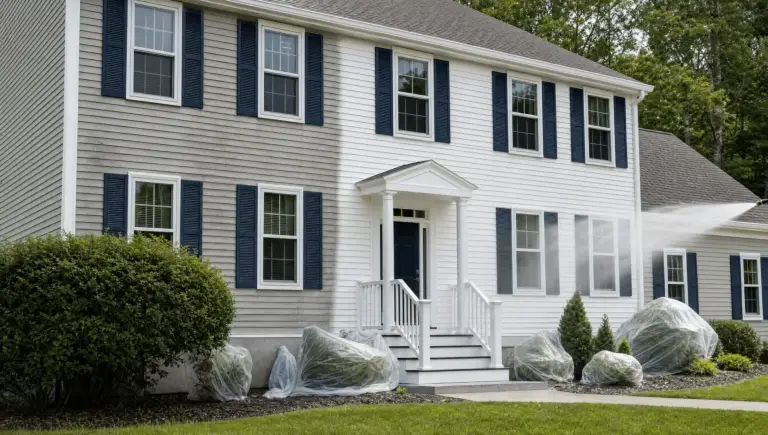
How to Pressure Wash and Stain a Deck in 5 Simple Steps

Why Pressure Washing and Staining a Deck Is the Key to a Long-Lasting Outdoor Space
Pressure washing and staining a deck is one of the best things you can do to protect your outdoor investment — and it’s easier than most homeowners think.
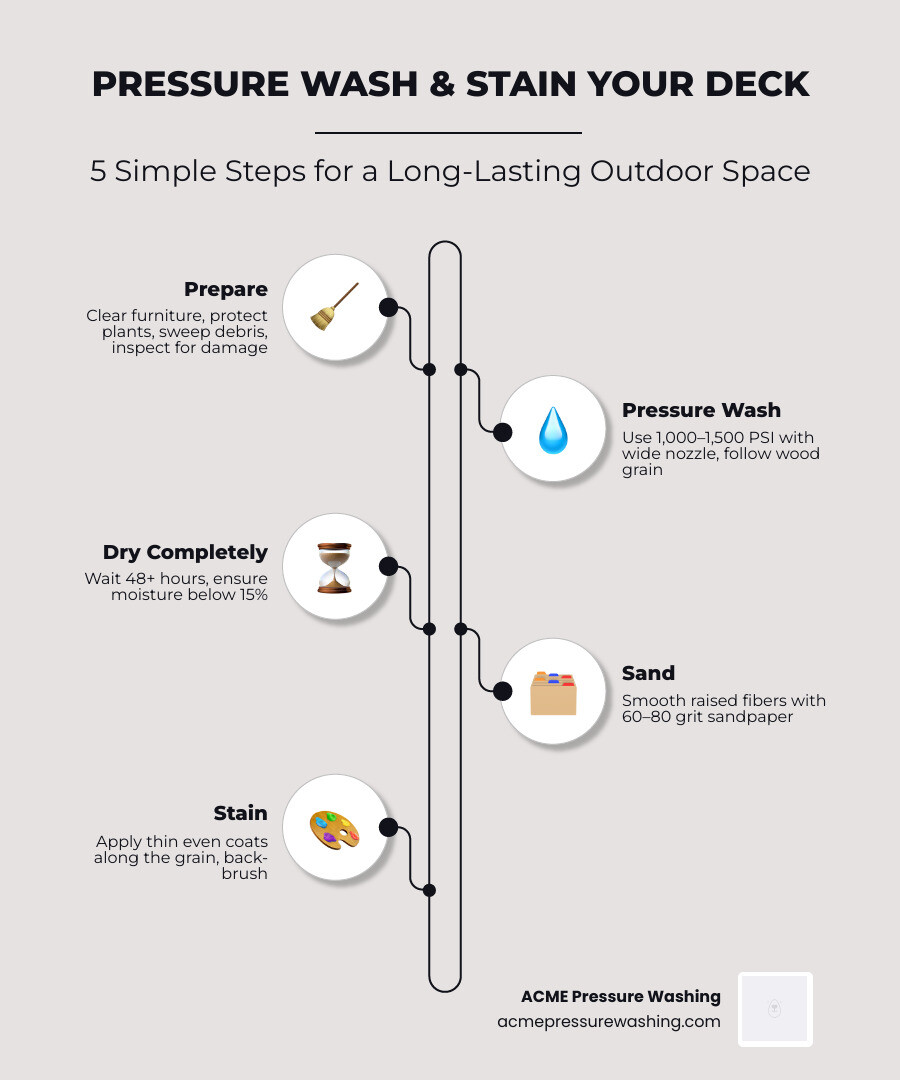
Here’s a quick overview of the 5-step process:
- Prepare — Clear furniture, protect plants, sweep debris, and inspect for damage
- Pressure wash — Use 1,000–1,500 PSI with a wide nozzle, moving along the wood grain
- Dry completely — Wait at least 48 hours and confirm moisture is below 15%
- Sand — Lightly smooth raised wood fibers with 60–80 grit sandpaper
- Stain — Apply thin, even coats in the direction of the grain
Your deck takes a beating year-round. In New England especially, harsh winters, humidity, and UV exposure leave wood looking gray, cracked, and covered in mold. Left untreated, that damage goes deeper than the surface.
The good news? A thorough pressure wash followed by a fresh coat of stain can completely transform a weathered deck — and add years to its life.
Skipping prep work is the most common mistake homeowners make. One DIYer shared that staining without cleaning first led to blotchy, peeling results within just a few months — requiring a full redo. Getting the process right the first time saves you time, money, and frustration.
This guide walks you through every step clearly and simply.
Preparation, Safety, and Equipment
Before we even touch a trigger on a pressure washer, we need to talk about the “boring” stuff that actually makes the project a success: preparation and safety. If you’ve ever tried to paint a room without moving the furniture, you know exactly why this matters.
Gear Up for Success
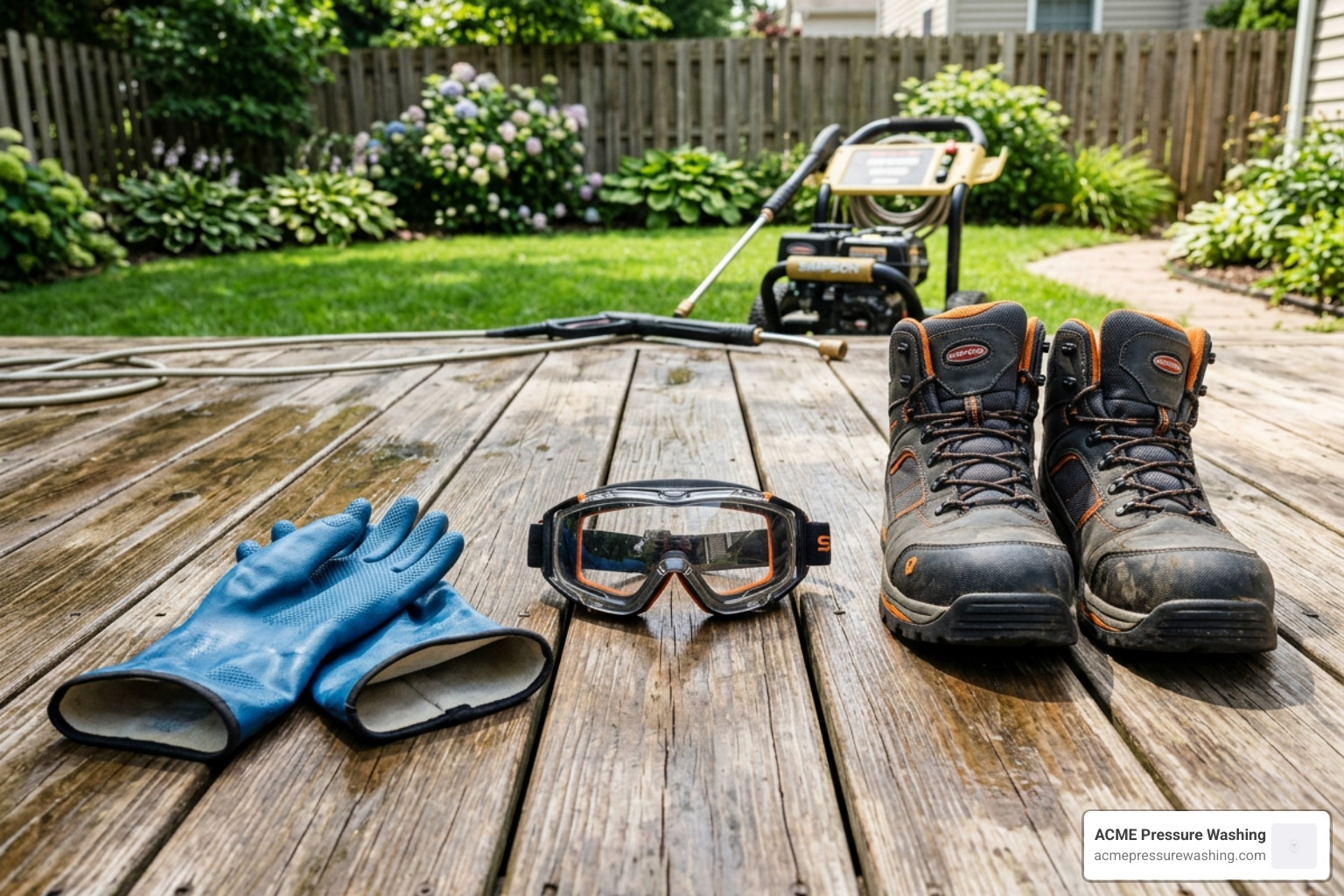
Safety isn’t just a suggestion; it’s a requirement when dealing with high-pressure water and chemical cleaners. We always recommend wearing:
- Safety goggles: To protect your eyes from flying debris and cleaning solutions.
- Non-slip footwear: Decks become incredibly slick once you add water and soap.
- Chemical-resistant gloves: Essential if you are using wood strippers or brighteners.
Clearing the Stage
Start by removing everything from the deck. This includes grills, planters, and that one chair with the broken leg you’ve been meaning to fix. Sweep away loose leaves, pine needles, and dirt. If you have delicate landscaping or flowers surrounding the deck, cover them with plastic sheeting or a tarp. Even eco-friendly detergents can stress out your prize-winning hydrangeas if they get a direct hit.
The Inspection Phase
According to Sherwin-Williams on how to prepare a deck for staining, you must inspect the wood for structural integrity. Check for loose fasteners, popped nails, or rotted boards. If a screw is sticking up, it’s not just a trip hazard—it’s something the pressure washer nozzle could catch. Tighten everything down before you begin.
If you’re located in Merrimack, NH, you know that our local humidity can lead to rapid moss and algae growth. Taking the time to clear the debris and inspect the wood ensures the cleaning agents can actually reach the surface they are meant to treat.
Mastering Pressure Washing and Staining a Deck Techniques
Now for the fun part: the washing. However, “fun” can quickly turn into “expensive” if you use too much power. A pressure washer is a tool, not a weapon, and wood is a relatively soft material.
Setting the Right Pressure
The most common mistake is using a PSI (pounds per square inch) that is too high. While some commercial machines can hit 4,000 PSI, that’s enough to carve your initials into the wood—permanently. For most residential decks, we recommend a range of 1,000 to 1,500 PSI.
Choosing Your Nozzle and Distance
Use a wide-angle fan tip, typically a 40-degree (white) or 25-degree (green) nozzle. Never use the “0-degree” red tip, which acts like a laser and will shred wood fibers instantly.
Keep the nozzle roughly 8 to 12 inches away from the surface. If you get too close, you risk “etching” the wood, leaving permanent wand marks. Always move the wand in long, overlapping strokes following the direction of the wood grain. This ensures that any slight variations in cleaning are hidden by the natural lines of the wood.
Detergents and Mold Removal
Water alone often isn’t enough to kill mold spores. We use eco-friendly detergents that break down the “gray” oxidized layer of the wood and kill mildew at the root. Apply the cleaner, let it sit for about 10-15 minutes (don’t let it dry!), and then rinse it off. This is a standard practice for deck cleaning in Bedford, NH to ensure the surface is truly sterile before the stain goes on.
| Wood Type | Recommended PSI | Nozzle Tip |
|---|---|---|
| Softwoods (Pine, Cedar) | 500 – 1,000 PSI | 40-degree (White) |
| Hardwoods (Oak, Teak) | 1,200 – 1,500 PSI | 25-degree (Green) |
| Composite Decking | 1,000 – 1,200 PSI | 40-degree (White) |
Note: Based on internet data, average costs for professional deck cleaning and preparation range from $450 to $1,800+ depending on size and condition.
Drying, Sanding, and Applying the Stain
You’ve finished the wash, and the deck looks great—but you aren’t done. In fact, the next 48 hours are the most critical part of pressure washing and staining a deck.
The Waiting Game
Wood is like a sponge. After a deep pressure wash, those pores are full of water. If you apply stain now, the oil or acrylic will have nowhere to go. It will sit on top of the water, fail to bond, and peel off within weeks.
You must wait at least 48 hours for the deck to dry. In shaded areas or during humid New Hampshire summers, it might take even longer. Ideally, you want the moisture content of the wood to be below 15%.
Why Sanding Matters
Pressure washing, even when done perfectly, often “raises” the wood grain, leaving the surface feeling slightly fuzzy or hairy. This is where sanding comes in. Using 60 to 80 grit sandpaper, lightly go over the floorboards. This smooths out those raised fibers and opens the wood’s “pores,” allowing the stain to penetrate deeper.
Choosing and Applying Your Stain
According to Lowe’s guide on cleaning, staining, and sealing, you should choose your stain based on the look and protection level you want.
- Transparent/Clear: Shows all wood grain but needs more frequent maintenance.
- Semi-Transparent: Adds color while still showing the grain; lasts 2-3 years.
- Solid: Looks like paint and offers the best UV protection; lasts up to 5 years.
When applying, use the back-brushing technique. Even if you use a roller or sprayer to get the stain on the wood, follow behind with a brush to push the liquid into the grain and the gaps between boards. This ensures an even, professional finish. For a deeper look at the results you can achieve, check out our Deck Pressure Washing Restoration gallery.
Frequently Asked Questions
What is the best PSI for pressure washing and staining a deck?
For most residential wood decks, the “sweet spot” is between 1,000 and 1,500 PSI. If you are working with very soft wood like cedar or older pressure-treated pine, you should drop down to 500-800 PSI. The goal is to lift the dirt and the dead gray fibers without “etching” or gouging the healthy wood underneath. Always use a wide-angle tip (40 degrees) to distribute the pressure evenly.
How do I avoid common mistakes when pressure washing and staining a deck?
The biggest mistakes involve distance and timing.
- Nozzle Distance: Keep the wand at least 8 inches away. Moving too close causes “zebra stripes” or splintering.
- Over-saturation: Don’t hover over one spot for too long. Keep the wand moving.
- Staining Damp Wood: This is the #1 cause of stain failure. If the wood isn’t dry, the stain won’t stick.
- Skipping Sanding: If you don’t sand, the finish will feel rough and won’t look as vibrant.
How long should I wait to stain after pressure washing?
The standard rule is 48 hours of dry weather. However, this depends heavily on your environment. If your deck is in a heavily shaded area in a town like Amherst or Londonderry, it may need 72 hours. If it rains during your drying window, the clock resets! Using a moisture meter is the only way to be 100% sure the wood is ready.
Conclusion
A beautiful deck is the heart of a New England summer. Whether you’re hosting a barbecue in Nashua or enjoying a quiet evening in Hollis, a well-maintained outdoor space makes all the difference. While pressure washing and staining a deck is a project many homeowners can tackle themselves, it requires patience, the right equipment, and a bit of “elbow grease.”
If the thought of spending your entire weekend hauling equipment and scrubbing wood grain doesn’t sound like your idea of a good time, we’re here to help. At ACME Pressure Washing, we have over 38 years of experience serving neighbors in Merrimack, NH and surrounding areas like Bedford, Derry, and Manchester. We use safe, customized, and eco-friendly techniques to ensure your deck looks brand new without the risk of damage.
Ready to bring your deck back to life? Learn more about our professional deck restoration services and let us handle the hard work so you can get back to enjoying your outdoor oasis!