The Complete Guide to On-Site Mobile Fleet Washing
Why a Mobile Truck Wash Service Is the Smarter Choice for Fleet Owners
A mobile truck wash service brings professional, on-site fleet cleaning directly to your location — no driving trucks to a facility, no wasted fuel, and no lost productivity.
Quick answer: What is a mobile truck wash service?
- A team arrives at your yard, depot, or job site with a fully self-contained unit
- The unit is fully equipped to manage the entire cleaning process on-site
- Technicians wash your vehicles on-site while your operation keeps running
- Wastewater is recovered and disposed of in compliance with EPA standards
- Services range from basic exterior washing to undercarriage cleaning, interior cab detailing, and trailer washouts
For fleet managers and business owners in towns like Merrimack, Manchester, and Bedford, keeping a commercial fleet clean is about more than appearances. Road salt, grease, diesel grime, and de-icing chemicals work on your trucks every single day — quietly accelerating corrosion and wear on frames, chassis, and wiring.
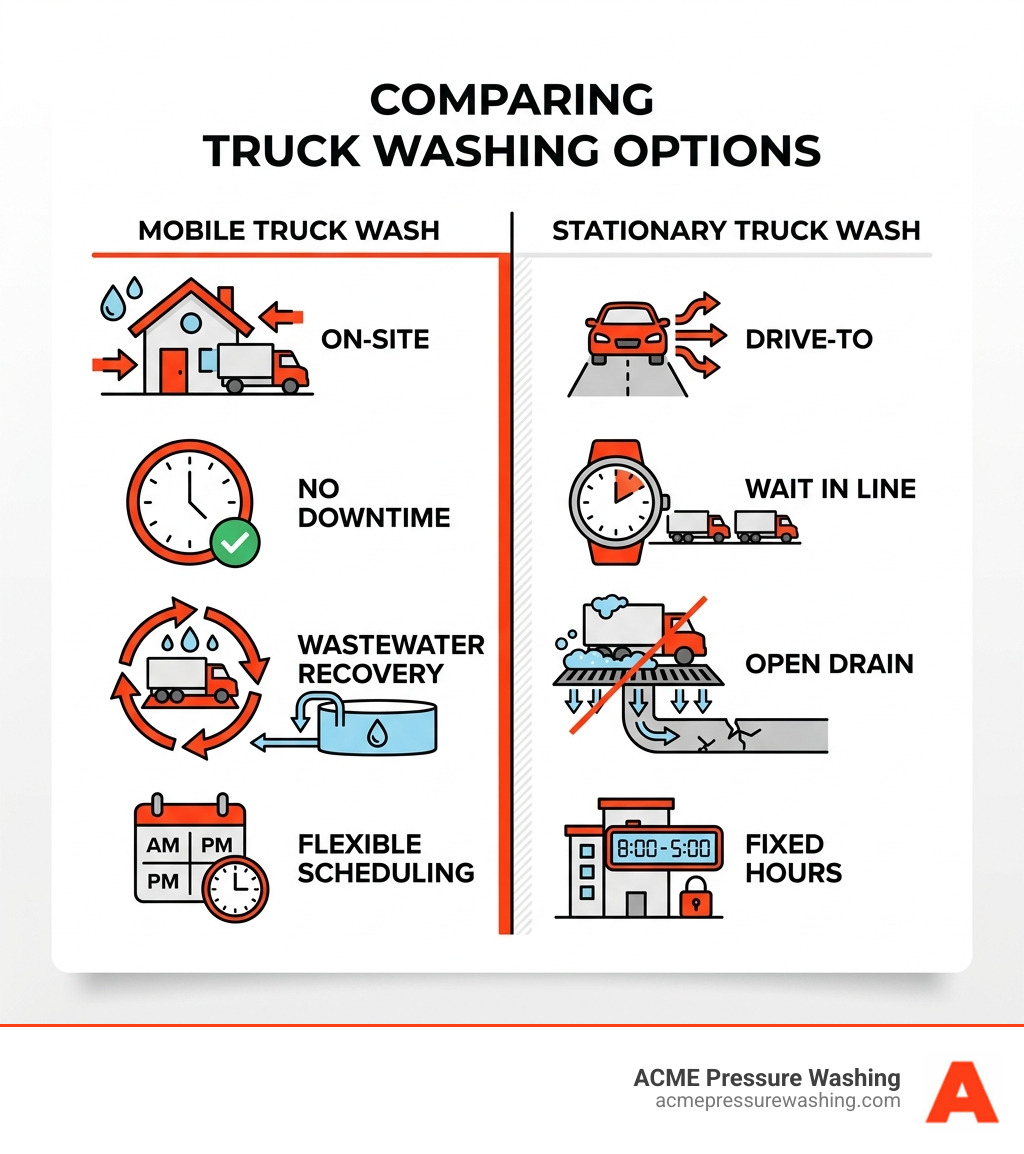
The problem? Traditional stationary truck washes require you to pull vehicles off the road, send drivers across town, and wait in line. That costs time and money.
Mobile fleet washing solves this. Instead of your trucks going to the wash, the wash comes to your trucks.
Industry veterans have been delivering this service across the country since the 1980s, and the model has proven itself: self-contained mobile units that require zero fixed infrastructure on your end, paired with environmental safeguards that protect local waterways.
Whether you run five delivery vans or a full tractor-trailer fleet in New Hampshire, this guide covers everything you need to know. For professional on-site service, contact ACME Pressure Washing at +1603-883-6900.
Understanding the Mobile Truck Wash Service and Its Advantages
When we talk about a mobile truck wash service, we are describing a logistical revolution for the transportation industry. In the past, fleet maintenance meant losing hours of “windshield time” as drivers navigated heavy rigs through traffic to find a stationary wash bay. Today, we bring the entire infrastructure to your doorstep in Nashua, Bedford, or Manchester.
The primary advantage is the elimination of downtime. When supply chains are stretched thin, every minute a truck sits in a wash line is a minute it isn’t generating revenue. By utilizing a mobile service, your fleet can be cleaned during “dwell time”—those periods when trucks are already parked for driver resets, loading, or overnight storage.
Furthermore, the cost savings extend beyond just time. Consider the fuel consumed idling in a line or driving 20 miles out of the way for a wash. When the service is on-site, those costs vanish. We also provide fleet and equipment pressure washing that is completely self-contained, meaning we don’t need to hook up to your water or power. Everything required to achieve a professional finish is housed right on our mobile units.
Specialized Mobile Truck Wash Service for Diverse Equipment
A professional mobile truck wash service isn’t just for standard semi-trucks. Our versatile mobile washing capabilities allow us to service a massive range of commercial assets. This includes:
- Tractor-Trailers and Box Trucks: The backbone of New Hampshire logistics.
- Public Transportation: RTD buses, school buses, and shuttle vans that require high-frequency cleaning for passenger safety and image.
- Waste Management Vehicles: Garbage trucks face some of the harshest conditions and require heavy-duty degreasing to prevent hydraulic failure and odor issues.
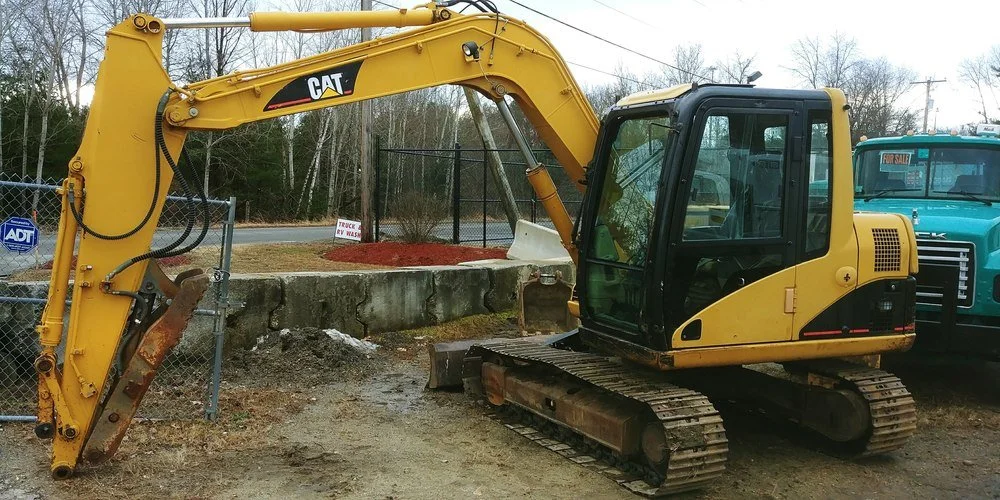
- Heavy Construction Gear: From excavators to concrete mixers, keeping equipment clean allows for better mechanical inspections and longer asset life.
You can see the results of these specialized cleanings in our gallery fleet truck pressure washing section, which showcases the transformation of industrial equipment from grime-covered to “off-the-lot” clean.
Maximizing Efficiency with a Scheduled Mobile Truck Wash Service
Consistency is the secret to fleet longevity. Many businesses make the mistake of washing only when the dirt becomes an eyesore. However, a customized wash program ensures that corrosive elements never have the chance to settle.
In New Hampshire, we typically recommend:
- Bi-Weekly Maintenance: Ideal for high-mileage long-haulers or trucks operating in coastal areas where salt air is a factor.
- Monthly Deep Cleans: A standard for local delivery fleets in Merrimack or Bedford to maintain a professional brand image.
- Weekly Service: Necessary for specialized industries like waste management or construction, where debris buildup is rapid.
Environmental Compliance and Wastewater Recovery Protocols
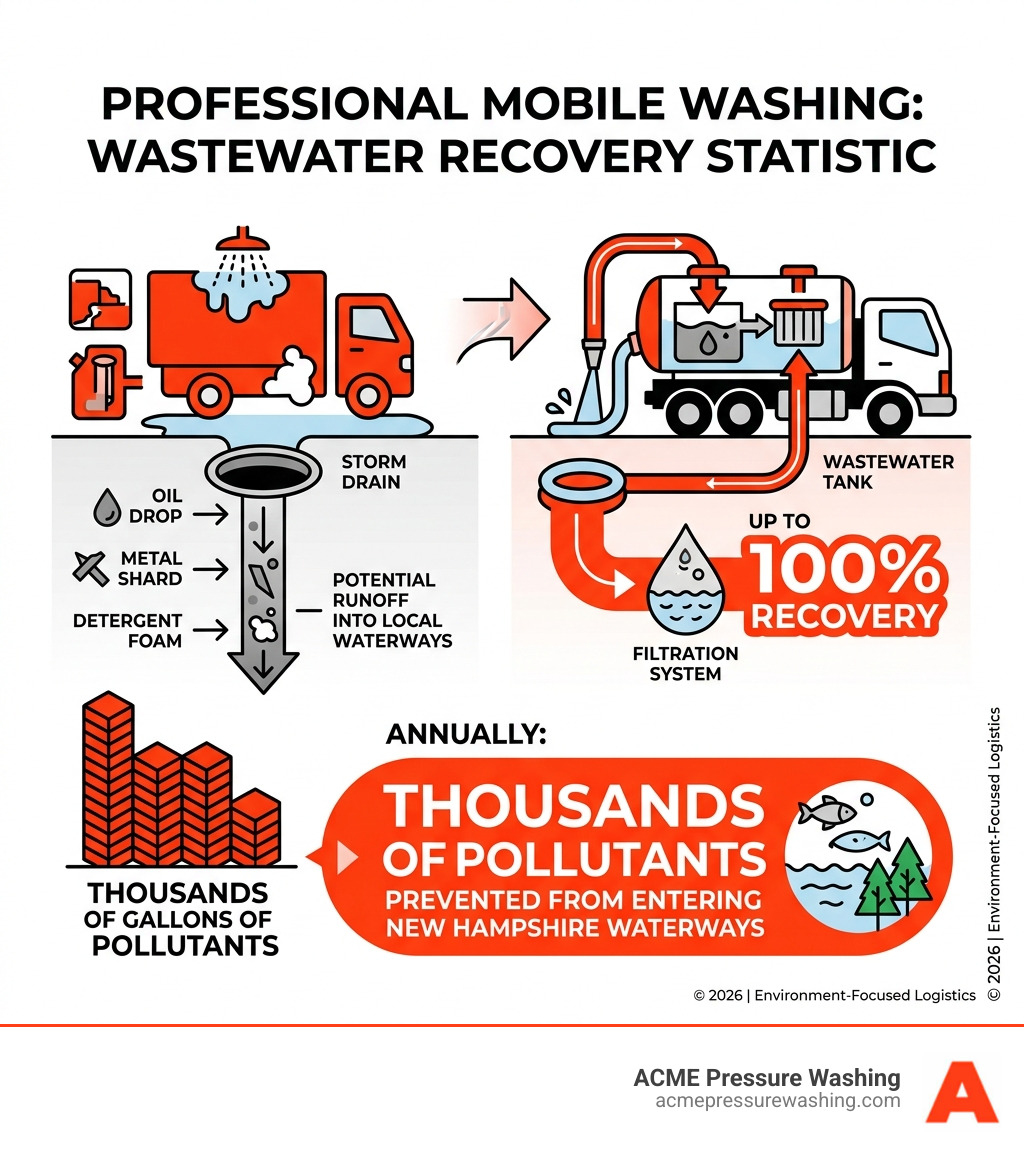
One of the biggest concerns for business owners is the legal landscape regarding wastewater. The EPA Clean Water Act is very clear: you cannot allow untreated wash water containing oils, heavy metals, and detergents to enter storm drains, which lead directly to our local rivers and lakes.
A professional mobile truck wash service takes this liability off your shoulders. We utilize advanced wastewater recovery systems that capture every drop of runoff. Our process includes:
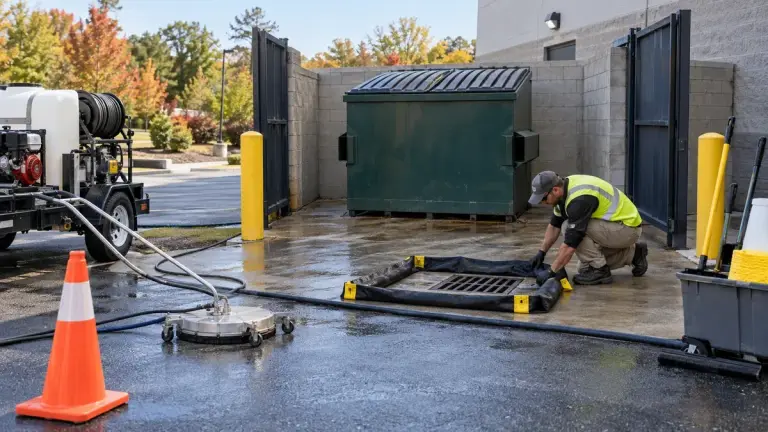
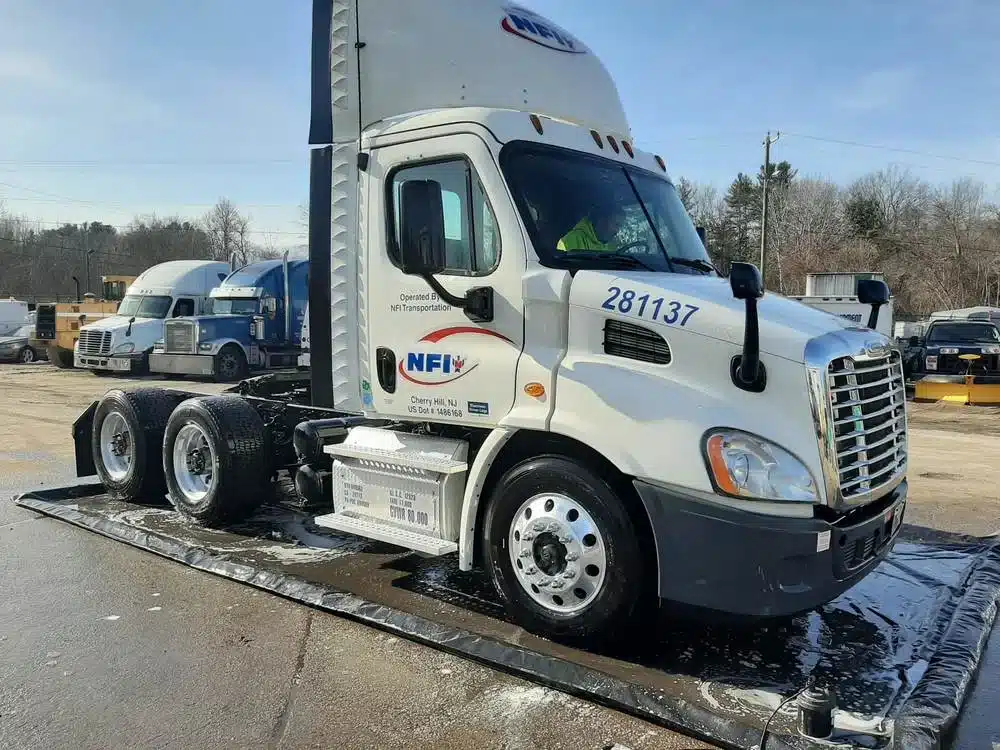
- Storm Drain Matting: We seal off any nearby drains before the first spray of water.
- Vacuum Recovery: High-powered vacuum systems (some reaching up to 700 feet) pull the water into a holding tank on our truck.
- Oil-Water Separators: The recovered water is processed to remove contaminants before being disposed of at an authorized treatment facility.
- Biodegradable Solutions: We utilize eco-friendly cleaning agents that break down grease without harming the environment, ensuring full compliance with Merrimack and federal regulatory standards.
Comprehensive Fleet Maintenance: Beyond the Exterior
While a shiny cab looks great, the real value of a mobile truck wash service lies in the technical cleaning that protects the “guts” of the vehicle. We understand that first impressions drive profits, but mechanical reliability keeps the business alive.
Our comprehensive services include:
- Aluminum Brightening: We utilize specialized brightening treatments to restore the luster of fuel tanks and wheels without etching the metal.
- Trailer Interior Washouts: Essential for food-grade transport or preventing cross-contamination in bulk trailers. This is a labor-intensive task that many stationary washes skip, but we consider it vital.
- Engine Degreasing: Removing layers of baked-on oil and road grime allows your mechanics to spot leaks early and prevents engine fires.
- Undercarriage Cleaning: This is the most critical area for preventing structural failure. We focus on the frame rails, suspension components, and brake lines where corrosive chemicals hide.
Protecting Your Investment from Corrosion and Wear
If you operate in Manchester, Bedford, or Nashua, you know that winter is the enemy of your fleet. New Hampshire road crews use aggressive liquid de-icers and rock salt that are incredibly effective at melting ice—and equally effective at eating through steel.
Regularly scheduled pressure washing is the only way to neutralize these chemicals. If salt is left to sit, it creates a chemical reaction that leads to “rust jack,” which can seize brake components and rot out frame cross-members. By implementing a regular wash schedule, you aren’t just paying for a “clean truck”—you are buying insurance for your capital investment.
Logistics and Scheduling for 24/7 Fleet Operations
The logistics industry never sleeps, and neither do we. A major benefit of a mobile truck wash service is the flexibility to work around your specific operational windows.
If your trucks are on the road all day, we can perform overnight cleanings in Nashua so your drivers arrive to a fresh, clean vehicle in the morning. If you operate a hub in Merrimack, we can schedule weekend services when the yard is at its fullest. This “set it and forget it” approach allows you to focus on dispatching and logistics while we handle the maintenance.
Frequently Asked Questions about Fleet Washing
How often should my semi-trucks be washed?
As a general rule, a monthly wash is the bare minimum to prevent permanent staining and corrosion. However, for fleets in New Hampshire during the winter, bi-weekly service is highly recommended to remove road salt. Waste management and construction vehicles often require weekly attention due to the high volume of grime they accumulate.
What are the average costs for a mobile truck wash service?
Based on industry data and internet averages, the cost for a professional mobile wash varies significantly depending on the size of the fleet and the depth of the service. On average, you might see prices ranging from $250 to $950 per vehicle for a comprehensive cleaning. Please note that these are average costs sourced from publicly available data and do not reflect the specific rates of ACME Pressure Washing. We recommend a wide range because a simple “basic wash and rinse” for a van is vastly different from a full degreasing and interior washout for a refrigerated tractor-trailer.
How is environmental safety ensured during on-site washing?
We use self-contained recovery tanks and specialized mats to ensure no water reaches the storm system. By using EPA-approved cleaning agents and advanced recovery systems, we ensure that your company remains compliant with all local and federal environmental laws, protecting you from potential fines.
Conclusion
At ACME Pressure Washing, we bring over 38 years of experience to every job site. Based in Merrimack, we have spent decades perfecting our safe, eco-friendly techniques to serve the businesses of Bedford, Manchester, Nashua, and beyond. We don’t just wash trucks; we help you protect your brand and your bottom line.
Whether you need a one-time deep clean or a recurring fleet and equipment pressure washing program, our team is ready to deliver.
Ready to revitalize your fleet’s image?