




Understanding the Dangers of Roof Moss and Algae
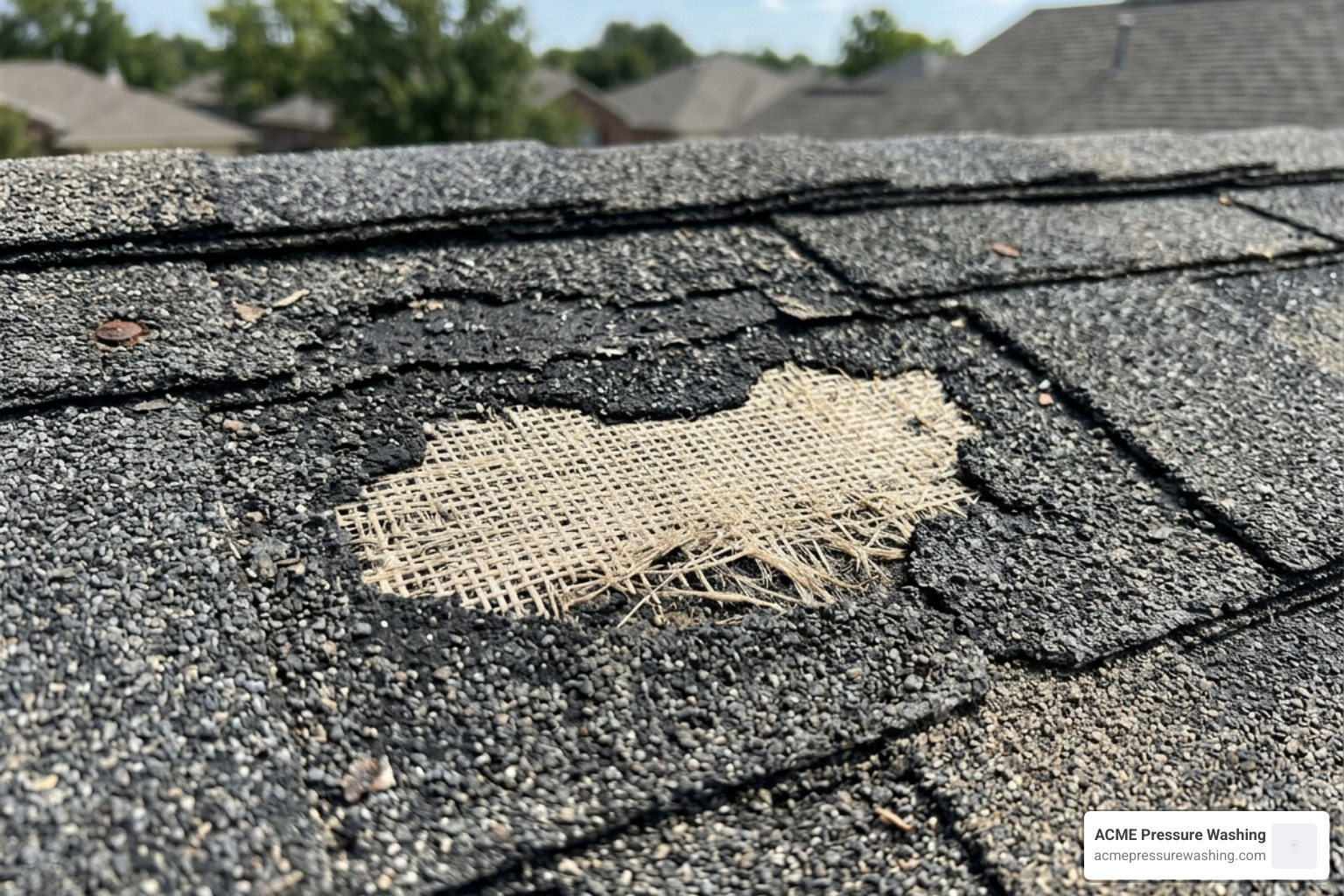
When we talk about roof cleaning moss removal, we aren’t just talking about a “haircut” for your shingles. To understand why moss is so dangerous, you have to look at its biology. Unlike grass, which has roots that go into soil, moss uses “rhizoids.” These are tiny, hair-like anchors that don’t just sit on top of your roof; they physically wrap around and dig into the protective granules of your asphalt shingles.
As these colonies grow, they act like a sponge. A mature moss colony can actually accumulate 5 to 10 pounds of water per square foot. This constant moisture is the enemy of your roof’s structural integrity. It leads to:
- Shingle Lifting: As the moss thickens, it pries up the edges of your shingles. This creates a “ramping” effect that allows wind-driven rain to flow underneath the shingle rather than over it.
- Wood Rot: Once moisture gets past the shingles, it hits the wooden decking (sheathing) underneath. This leads to rot that can compromise the safety of your entire home.
- Limestone Erosion: Many modern shingles contain crushed limestone as a filler. Certain types of growth, like algae, actually eat this limestone, thinning your shingles over time.
- Freeze-Thaw Damage: In our New Hampshire winters, the water trapped in moss clumps freezes and expands. This mechanical force can literally snap shingles or pop fasteners loose.
According to research on How to Remove Moss From Your Roof, ignoring these green patches can reduce a shingle’s life by 5 to 10 years if the coverage is heavy (over 30%).
Identifying Moss vs. Algae for Effective roof cleaning moss removal
Not every dark spot on your roof is moss, and knowing the difference is key to choosing the right treatment. At ACME Pressure Washing, we often see homeowners confuse these three common “invaders”:
- Roof Algae (Gloeocapsa Magma): This usually appears as black streaks or “soot” on your roof. It thrives on the north side of the house and eats the limestone in your shingles. It doesn’t have the “bulk” of moss, but it ruins curb appeal.
- Moss: This is the green, plush, carpet-like growth. It has height and volume. If you can grab a handful of it, it’s definitely moss.
- Lichen: This looks like crusty, leaf-like patches, often grey, white, or neon green. Lichen is particularly stubborn because it bonds more to the granules than moss does.
According to the National Roof Cleaning Authority, moss is classified as a Category 2 biological growth. It is structurally more risky than algae because of its ability to hold water and lift shingles. You’ll almost always find the worst cases on north-facing slopes or under heavy tree canopies where the roof stays damp longer.
Why High-Pressure Washing is Dangerous for Your Roof
We have been in the exterior cleaning business for over 38 years, and if there is one piece of advice we give more than any other, it is this: Keep high-pressure washers away from your shingles.
Standard pressure washers can blast water at 1,500 to 4,000 PSI. At those levels, the water acts like a saw. It will:
- Strip Granules: Those little rocks on your shingles protect the asphalt from UV rays. Blasting them off is like giving your roof a permanent sunburn; it will dry out and crack within years.
- Void Your Warranty: Most major shingle manufacturers and the Asphalt Roofing Manufacturers Association (ARMA) specifically state that high-pressure washing voids your warranty.
- Force Water Intrusion: High pressure can drive water upward under the shingle tabs, soaking your insulation and drywall before you even know there’s a leak.
For more details on why we avoid these risks, check out our page on Pressure Washing Roofs. We follow ARMA guidelines by using “soft wash” techniques that rely on chemistry, not brute force.
Professional Methods for roof cleaning moss removal
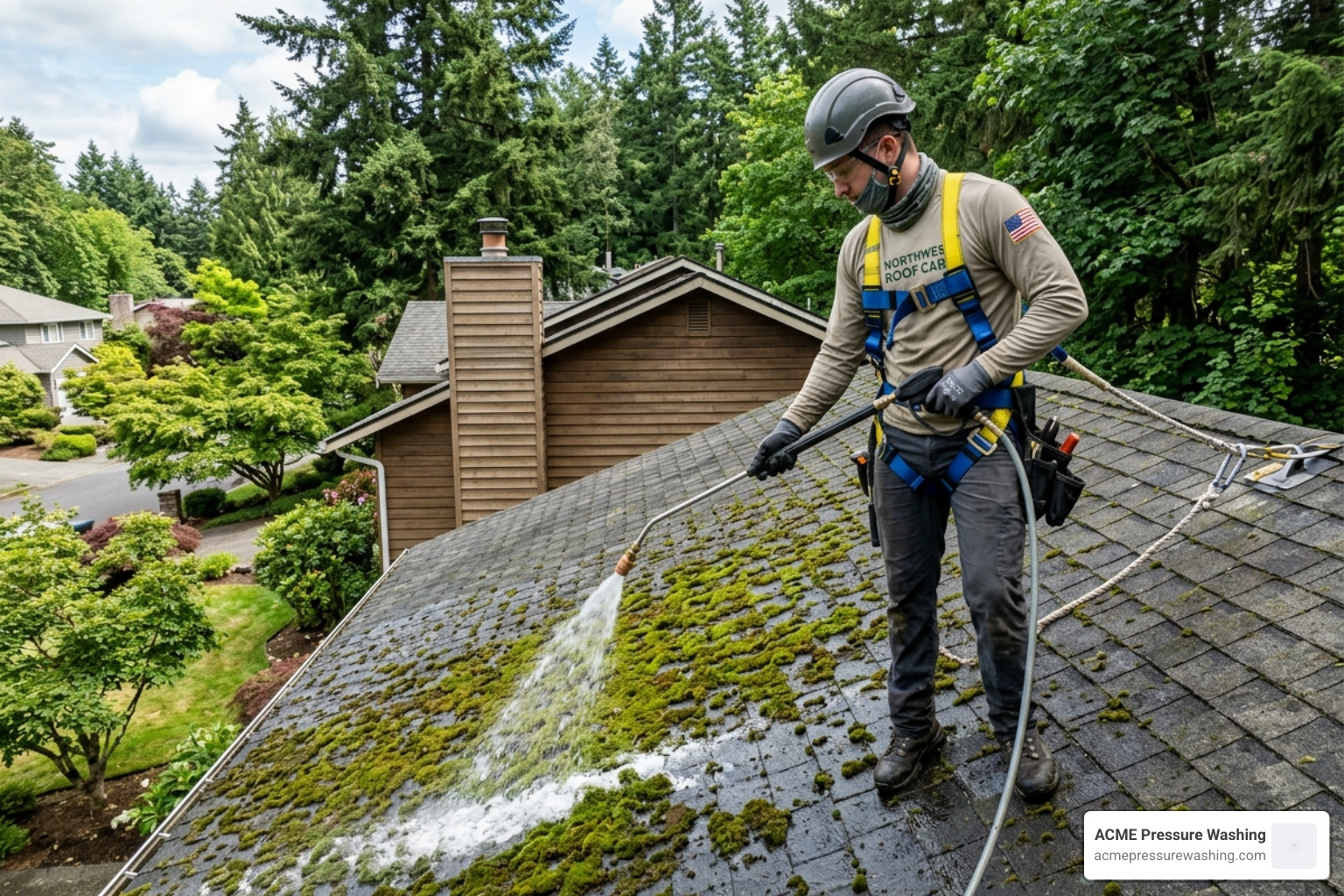
The professional standard for roof cleaning moss removal is a process called “soft washing.” Think of it like a “pest control” treatment for your roof rather than a “scrubbing” treatment. We use low-pressure pumps—similar to the pressure from a garden hose—to apply a specialized, biodegradable cleaning solution.
The primary ingredient is usually a diluted sodium hypochlorite (bleach) solution mixed with a surfactant (a “soap” that helps the cleaner stick to the steep slopes). This mixture kills the moss, algae, and lichen at the root level.
| Feature | High-Pressure Washing | Soft Washing (ACME Method) |
|---|---|---|
| Pressure Level | 1,500+ PSI | Under 800 PSI (Low Pressure) |
| Cleaning Agent | Water Force | Biodegradable Detergents |
| Root Kill | No (Roots stay in shingles) | Yes (Kills spores and rhizoids) |
| Shingle Safety | Dangerous (Granule Loss) | Safe (Manufacturer Recommended) |
| Longevity | Moss returns quickly | Keeps roof clean for 2-3+ years |
As noted in this guide on Professional Methods, the “dwell time” is the most important part. We let the solution sit for 15 to 20 minutes to ensure it penetrates the thick moss colonies. The moss will eventually turn white or brown, indicating it is dead. Over the following weeks, the rain will naturally wash the dead organic matter away without damaging the shingles.
DIY vs. Professional roof cleaning moss removal
Can you do this yourself? Technically, yes—but it’s one of the most dangerous DIY projects a homeowner can tackle. Here is why many residents in Merrimack, Nashua, and Manchester choose to call us instead:
- Safety First: Walking on a dry roof is hard enough. Walking on a wet, soapy, moss-covered roof is like walking on a giant banana peel. Professionals use OSHA-compliant fall protection, including safety harnesses and specialized roof anchors.
- Equipment: A garden sprayer usually doesn’t have the reach to hit the peak of a roof from a ladder. Professionals use dedicated soft-wash systems that can reach high peaks while the technician stays in a safer position.
- Plant Protection: The chemicals that kill moss can also harm your prize-winning hydrangeas. We use a strict “Plant Protection Protocol,” which involves pre-wetting all landscaping, using “curtains” to redirect runoff, and a final rinse of all vegetation to ensure your garden stays green while your roof gets clean.
You can see the results of our professional approach in our Roof Pressure Washing Gallery.
Average Costs for Professional Moss Removal
When budgeting for roof cleaning moss removal, it is important to remember that every roof is different. Based on average internet data, professional roof cleaning typically ranges from $300 to $2,500.
Why such a wide range? Several factors affect the final quote:
- Roof Pitch: Steep roofs require more safety equipment and more time to navigate.
- Moss Density: If you have “pillows” of moss covering 50% of the roof, it requires more chemical and more labor than a roof with just a few spots.
- Square Footage: A 1,500 sq. ft. ranch is a different animal than a 4,000 sq. ft. colonial.
- Access: Can we get our equipment close to the house, or are we hauling hoses through a dense forest?
At ACME Pressure Washing, we provide customized quotes to ensure you aren’t overpaying for services you don’t need. You can find more info about our pressure washing services to see how we price our work fairly for the New Hampshire market.
Long-Term Prevention and Maintenance Strategies
Once your roof is clean, the goal is to keep it that way. You don’t want to be cleaning moss every single year. Here are the most effective ways to prevent regrowth:
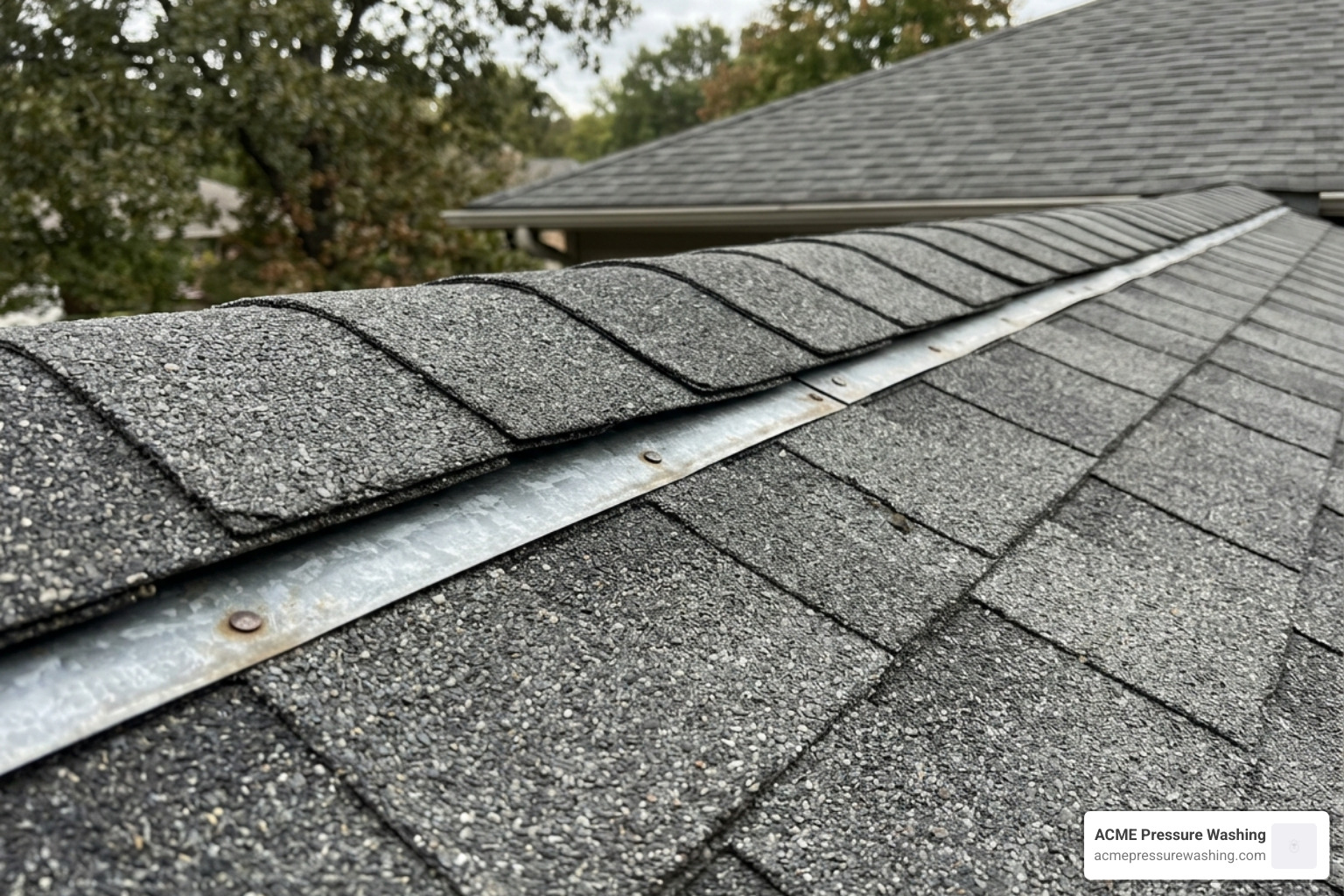
- Zinc or Copper Strips: This is a classic “set it and forget it” method. We install 6-inch strips of zinc or copper just below the roof ridge. When it rains, water hits the metal and carries tiny metallic ions down the roof. These ions are toxic to moss and algae, creating an “inhibition zone” that can extend 10 to 15 feet down the roof.
- Tree Trimming: 75% of homes with chronic moss problems have significant tree canopy coverage. Trimming branches so they are at least 10 feet away from the roof allows more sunlight to reach the shingles and helps them dry faster after a storm.
- Gutter Cleaning: Clogged gutters trap moisture at the roof’s edge, creating a “nursery” for moss. Keeping them clear ensures water moves off the roof as quickly as possible.
- Annual Inspections: A quick look once a year can catch a small moss colony before it becomes a major structural threat.
As Lowe’s guide on moss removal suggests, these preventative measures can extend the time between professional cleanings by several years.
Environmental Considerations for Moss Treatments
We care about our New Hampshire waterways just as much as you do. While chemicals like zinc sulfate and sodium hypochlorite are effective, they must be handled responsibly.
Zinc, for instance, is highly effective at stopping moss, but it can be toxic to aquatic life if large amounts of concentrated runoff enter storm drains or local streams. This is why professional runoff management is so important. We ensure that our cleaning solutions are properly diluted and that runoff is neutralized or contained according to local regulations.
If you are looking for the most “eco-friendly” DIY option, some homeowners use oxygen bleach (sodium percarbonate). While it is safer for plants, it is often less effective on heavy moss colonies and may require more physical scrubbing—which, as we’ve discussed, can damage your shingles. For a deeper look at safe methods, see the 2026 Safe Cleaning Methods report.
Frequently Asked Questions about Roof Moss
What is the best chemical to kill roof moss?
The industry standard used by professionals (and recommended by ARMA) is a sodium hypochlorite solution. It is fast-acting and kills the moss spores completely. For those who want a dry application, zinc sulfate is a common alternative, though it works much slower—often taking months for the moss to die and fall off. Regardless of the chemical, using a “surfactant” (soap) is vital to keep the cleaner from just sliding off the roof.
When is the best time of year to remove moss?
In New Hampshire, the best time is typically late spring through early autumn. You want dry weather so the cleaning solution can “dwell” on the moss without being immediately washed away by rain. Summer is particularly good because the heat makes the moss brittle and easier to kill. Avoid winter; moss goes dormant in the cold, and cleaning solutions don’t work effectively in freezing temperatures.
Will moss growth void my roof warranty?
It very well might. Many manufacturers consider moss growth a “maintenance issue.” If moss is left untreated and causes the shingles to deteriorate or the roof to leak, the manufacturer may deny a warranty claim because the homeowner failed to maintain the roof. Conversely, using a high-pressure washer to remove that moss will definitely void your warranty. Professional soft washing is the only “warranty-safe” way to clean.
Conclusion
Your roof is one of the most expensive components of your home. Letting moss take root is like letting a slow-motion wrecking ball swing at your investment. By choosing roof cleaning moss removal that focuses on “soft wash” technology, you protect your shingles, keep your warranty intact, and boost your home’s curb appeal.
At ACME Pressure Washing, we bring over 38 years of experience to every job. We aren’t just guys with a hose; we are exterior cleaning experts who understand the specific climate challenges of Merrimack, Nashua, Bedford, and the surrounding New Hampshire communities. We use customized, eco-friendly techniques to ensure your home is treated with the care it deserves.
Don’t let the green fuzz win. If you’re ready to restore your roof to its original glory, Contact ACME Pressure Washing today for a free estimate!
