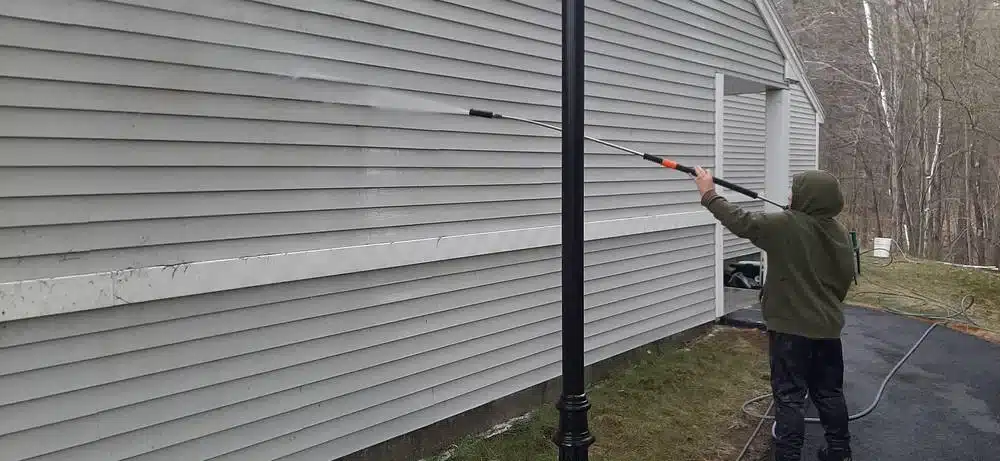



Why Vinyl Siding Power Washing Is the Fastest Way to Restore Your Home’s Curb Appeal
Vinyl siding power washing is the process of using a pressure washer — typically set between 1,500 and 3,000 PSI — along with a cleaning solution to remove dirt, mold, algae, and grime from the exterior of your home.
Here’s a quick-reference summary:
| What You Need to Know | Quick Answer |
|---|---|
| Safe PSI range for vinyl | 1,500–3,000 PSI |
| Best nozzle | White 40° (beginner) or Green 25° (experienced) |
| Apply solution | Bottom to top |
| Rinse direction | Top to bottom |
| Solution dwell time | 5–10 minutes |
| Best time of year | Spring or autumn |
| How often | Once a year (every 6–12 months in wet/shaded areas) |
Over time, vinyl siding collects more than just dust. Mold, algae, and stubborn grime build up — especially in damp climates like Merrimack, NH — and no amount of rainfall is going to wash it off.
The good news? You don’t need to scrub it by hand. A properly set up pressure washer, the right nozzle, and a simple cleaning solution can transform a dingy exterior in a single afternoon.
But done wrong, power washing can crack siding, force water behind panels, or strip paint from nearby trim. That’s why the how matters just as much as the what.
Below, we’ll walk through four practical ways to solve the most common vinyl siding power washing problems — from choosing the right PSI to protecting your plants and getting the timing right.
1. Master the Technical Specs for Vinyl Siding Power Washing
One of the biggest mistakes we see homeowners make is assuming that “more power equals a cleaner house.” In reality, using the wrong pressure can lead to cracked panels or water being forced into your wall cavities. Understanding the technical limits of your siding is the first step to a successful clean.
Vinyl is resilient, but it isn’t invincible. While it can technically withstand 2,500 to 3,000 PSI from a gas-powered unit, we often recommend starting much lower—around 1,300 to 1,600 PSI—especially if you are new to the equipment. If the siding begins to move or rattle excessively, you’re using too much force.
For homes in our service areas like Bedford, NH or Amherst, NH, you might have a mix of materials. It is vital to adjust your settings accordingly:
| Material | Recommended PSI Range | Nozzle Type |
|---|---|---|
| Vinyl Siding | 2,500–3,000 PSI | 25° or 40° |
| Brick & Stone | 2,500–3,000 PSI | 25° |
| Painted Wood Trim | 1,200–1,500 PSI | 40° |
| Stucco / Aluminum | 1,200–1,500 PSI | 40° |
| Soft-Grain Wood | 1,000–1,200 PSI | 40° |
For more detailed technical insights, you can explore this guide on How to Pressure Wash Vinyl Siding. At ACME Pressure Washing, we utilize professional-grade Power Washing equipment that allows for precise control, ensuring we never exceed the safety limits of your home’s exterior.
Choosing the Right Nozzle for Vinyl Siding Power Washing
The nozzle is what dictates the “fan” of the water. Most modern washers use a standardized color-coded system. For vinyl siding power washing, the choice of tip is the difference between a clean home and a punctured one.
- White (40-degree): This is the safest bet for beginners. It provides a wide, gentle spray that covers more surface area with less concentrated force.
- Green (25-degree): Best for experienced users. It offers a narrower, more powerful blast to lift stubborn mud or bird droppings.
- Black (65-degree/Soap): This is a low-pressure nozzle specifically designed to pull detergent from your reservoir and apply it to the siding.
- Flare Tips: These are excellent for vinyl because they allow you to get closer to the surface without the risk of the “jet” effect punching through the material.
Pro Tip: Never use the Red (0-degree) or Yellow (15-degree) tips on vinyl. These are meant for concrete or stripping paint and will almost certainly damage your siding.
Essential Equipment Beyond the Washer
To do the job like a pro in Nashua or Hudson, you’ll need more than just the machine. Safety and reach are paramount.
- Extension Wands & Telescoping Poles: These allow you to reach second-story siding while keeping your feet firmly on the ground. We strongly advise against using a pressure washer while standing on a ladder; the kickback can easily cause a loss of balance.
- Support Belts: If you’re using a long telescoping wand, a support belt helps distribute the weight and reduces arm fatigue.
- Stiff Bristle Brushes: Sometimes, “no-scrub” formulas need a little help. A brush on a long pole is perfect for agitated thick algae growth before the final rinse.
- Microfiber Cloths: Great for hand-wiping sensitive areas like light fixtures or delicate window trim.
If this sounds like a lot of gear to store in your garage, our Pressure Washing Services come fully equipped with industrial-grade tools to handle any residential layout.
2. Use the Right Chemistry: Solutions for Every Stain
Water alone rarely gets the job done. To truly eliminate organic growth, you need a cleaning solution that breaks the bond between the grime and the vinyl.
There are several professional concentrates available, such as Zep House & Siding Pressure Wash, which can make up to 20 gallons of cleaner—enough to cover 5,000 square feet. However, many homeowners prefer simpler or more eco-friendly options.
- The Vinegar Mix: A solution of 70% water and 30% white vinegar is a fantastic, non-toxic way to kill light mold and mildew without endangering your flower beds.
- The “Pro” Blend: Many experts use a mix of 80% water, 20% outdoor bleach (sodium hypochlorite), and a splash of laundry detergent. The detergent acts as a “surfactant,” helping the bleach stick to the vertical siding rather than just running off.
- Simple Green: This is a popular biodegradable choice that is generally safe for use around pets and lawns.
Regardless of what you choose, dwell time is the secret ingredient. You should let the solution sit on the siding for 5 to 10 minutes. This gives the chemicals time to eat through the dirt. Just make sure it doesn’t dry on the surface, as this can cause permanent streaking! For a visual walkthrough on mixing and applying, check out How to Clean Vinyl Siding – This Old House.
Our team at ACME specializes in House Pressure Washing, using customized mixes that are tough on stains but gentle on the environment.
Handling Tough Stains and Algae
New Hampshire weather can be harsh, leading to specific types of staining:
- Algae and Mildew: Usually found on the north side of the house where there is less sun. These require a bleach-based or oxygen-bleach (OxiClean) solution to kill the spores.
- Zebra Stripes: These are the dark vertical lines often found on gutters. They are caused by carbon runoff from the roof. They often require a specialized gutter cleaner and a bit of “elbow grease” with a soft brush.
- Oxidation: If your siding looks “chalky” when you rub it, that’s oxidation. High pressure won’t fix this; in fact, it can make it look worse. A specialized restoration cleaner is usually required.
- Carbon Deposits: Common on homes near busy roads in Manchester or Derry. These oily stains respond best to limonene-based degreasers.
You can see examples of how we handle these specific challenges in our Gallery House Pressure Washing.
Eco-Friendly and Homemade Cleaning Mixes
If you are worried about your prize-winning hostas or the local watershed, eco-friendly options are the way to go. Biodegradable detergents like Simple Green or OxiClean provide excellent results without the harsh fumes of chlorine.
Using a dish soap like Dawn in your mix isn’t just for cleaning; it creates suds that serve as a “visual cue.” If you see suds, you know that area is still wet and covered with cleaner. Once the suds disappear, it’s time to rinse!
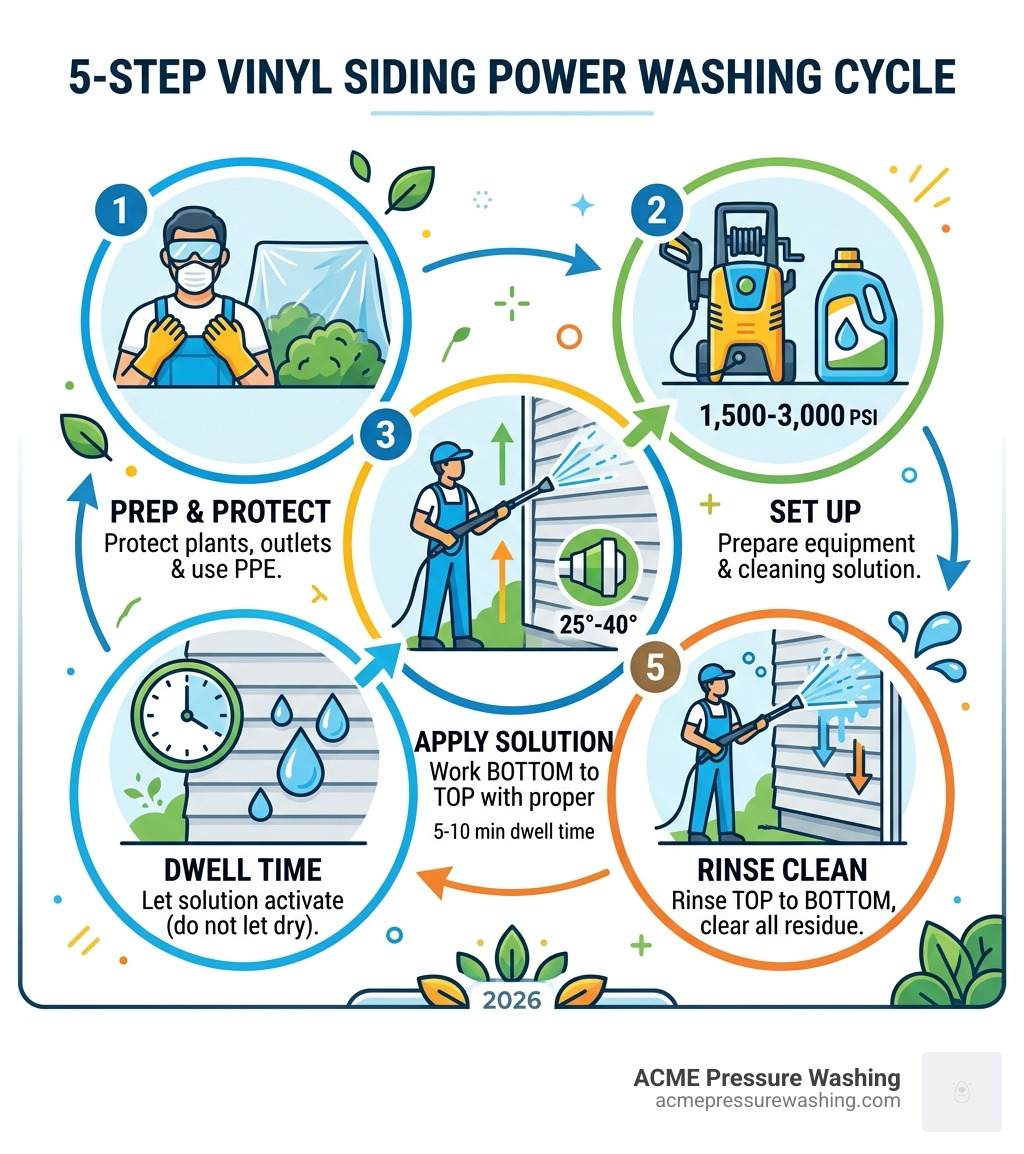
3. Follow a Professional Step-by-Step Process

The order in which you wash matters. If you start at the top, the dirty water and soap will run down over the dry, dirty siding below, creating permanent “runway” streaks that are nearly impossible to remove.
The Golden Rule: Apply Soap Bottom-to-Top, Rinse Top-to-Bottom.
- Preparation: Ensure all windows are latched and outdoor electronics are covered.
- Pre-Wet: Spray down your plants and the siding with plain water first. This prevents the siding from soaking up the soap too quickly.
- Soap Application: Use your black soap nozzle. Start at the bottom of the wall and work your way up in steady, overlapping horizontal strokes.
- Dwell: Let it sit for 5–10 minutes. Do not let it dry! If it starts to dry, mist it with a little water.
- Rinse: Switch to your white or green nozzle. Start at the very top of the house—near the soffits—and work your way down. This flushes all the loosened grime and soap off the house.
For residents in the southern part of the state, our House Pressure Washing Nashua NH service follows this exact protocol to ensure a streak-free finish every time.
Common Mistakes to Avoid
- Spraying Upward: Never point your wand upward into the laps of the siding. This forces water behind the vinyl, where it can soak into the wood sheathing and cause rot or mold inside your walls. Always maintain a 45-degree downward angle.
- Using a Ladder: As mentioned, the force of the water can push you backward. Use extension wands instead.
- Lead Paint Precautions: If your home was built before 1978 and has painted trim, do not power wash it without testing for lead. High pressure can atomize lead dust into the air and soil.
- Drying Detergent: Working in direct, hot sunlight will cause your soap to dry in seconds. Work in the shade or on a cloudy day.
Preventing Damage to Mixed Materials
Many modern homes use a mix of vinyl, Hardie Plank (cement board), and wood. Hardie Plank is much more sensitive to pressure than vinyl and can “de-laminate” if hit too hard. Similarly, if you have aluminum cladding on your windows or “zebra stripes” on your gutters, you need to be careful not to strip the factory finish.
Our technicians are trained to identify these materials and adjust the PSI on the fly. We provide specialized House Pressure Washing Manchester NH services that cater to the diverse architectural styles found in the Queen City.
4. Timing and Preparation: Protecting Your Investment
Preparation is 90% of the job. Before you even pull the starter cord on your pressure washer, you need to “prep the site.”
- Saturate and Cover: Plants are thirsty. If you soak them with fresh water before you start, they are less likely to absorb any runoff cleaning solution. For extra sensitive plants, cover them with a light tarp, but remove it as soon as you’re done to prevent overheating.
- Tape Off Electrics: Use waterproof painter’s tape and plastic to cover outlets, doorbells, and exterior lights.
- Close Everything: Check every window and door. A single cracked window can lead to a flooded living room.
- Clear the Deck: Move patio furniture, grills, and toys well away from the “splash zone.”
If you’re located in the Gate City, our House Power Washing Nashua NH team handles all this heavy lifting for you, ensuring your property is protected.
The Best Time of Year for Vinyl Siding Power Washing
In New Hampshire, timing is everything. You don’t want to wash your house when it’s freezing (for obvious reasons), but you also want to avoid the peak heat of July.
- Spring: This is the most popular time. It removes the salt and grime left over from winter and gets the home ready for “curb appeal” season.
- Autumn: A great time to remove the pollen and dust from summer before the damp winter sets in.
- The “Cloudy Day” Advantage: The best weather for vinyl siding power washing is a cool, overcast day. This prevents your cleaning solutions from drying too quickly, giving you more time to rinse thoroughly.
For most homes in Merrimack or Londonderry, an annual cleaning is sufficient. However, if your home is heavily shaded or near a body of water, you may need a touch-up every 6 months to keep algae at bay.
Post-Wash Care and Maintenance
Once the siding is dry, take a walk around. This is the perfect time to inspect for:
- Cracks or chips that might have been hidden by dirt.
- Loose panels that need to be snapped back into place.
- Gaps in caulking around windows and doors.
If you are looking for professional help, keep in mind that the average costs for professional services range from $150 to $950+ based on internet data. The price varies depending on the square footage and the level of staining.
Frequently Asked Questions about Vinyl Siding Power Washing
What is the safest PSI for vinyl siding?
For most DIYers, staying between 1,300 and 1,600 PSI is the safest range. Professionals may go up to 3,000 PSI, but they use specific nozzles and distances to ensure the force doesn’t damage the material.
Can I use bleach to clean my siding?
Yes, but it must be diluted. A common ratio is 1 part bleach to 4 parts water. Always pre-wet your plants and rinse the siding thoroughly. Never mix bleach with ammonia-based cleaners, as this creates toxic gas.
How do I prevent water from getting behind the vinyl?
The key is the angle. Always spray downward or straight on. Never spray upward into the seams or the “laps” of the siding. Also, be careful around “J-channel” trim (the trim around windows and doors), as this is a common entry point for water.
Conclusion
Vinyl siding power washing doesn’t have to be a stressful chore. By mastering the PSI settings, choosing the right cleaning chemistry, and following a disciplined bottom-to-top process, you can keep your home looking brand new for decades.
At ACME Pressure Washing, we’ve spent over 38 years perfecting our craft. Based in Merrimack, NH, we serve the entire region—from the historic homes of Amherst to the bustling neighborhoods of Manchester. We use safe, customized, and eco-friendly techniques to ensure your home is cleaned without compromise.
Ready to see the difference professional experience makes? Visit our House Pressure Washing page to learn more or to request a quote for your home today. Let us help you protect your biggest investment with the care it deserves!