




What to Expect from Power Washing Your Fence: Results at a Glance
Power wash fence before and after results can be dramatic — a weathered, gray-green fence can look like freshly milled cedar after a single cleaning session.
Here’s a quick summary of what you can expect:
| Factor | Details |
|---|---|
| Visual change | Gray, algae-covered wood transforms to bright, natural cedar tones |
| Best PSI for wood | 500–1,200 PSI (lower for older or softer wood) |
| Dry time before staining | 24–48 hours minimum |
| How often to wash | Once a year for wood fences |
| Re-stain frequency | Every 2–3 years |
| DIY vs. pro | DIY is doable; pros reduce risk of damage and deliver even results |
A lot of homeowners in Merrimack, NH are surprised by how much grime their fence is hiding. One moment you’re looking at dull, blotchy boards — the next, you’re seeing rich grain and warm color you forgot was there.
But getting those results safely takes the right pressure, the right technique, and the right timing. Done wrong, power washing can gouge wood fibers, raise the grain, and make staining harder — not easier.
This guide walks you through everything: what the transformation actually looks like, how to do it without causing damage, and whether hiring a professional is worth it for your situation.
The Visual Impact of a Power Wash Fence Before and After
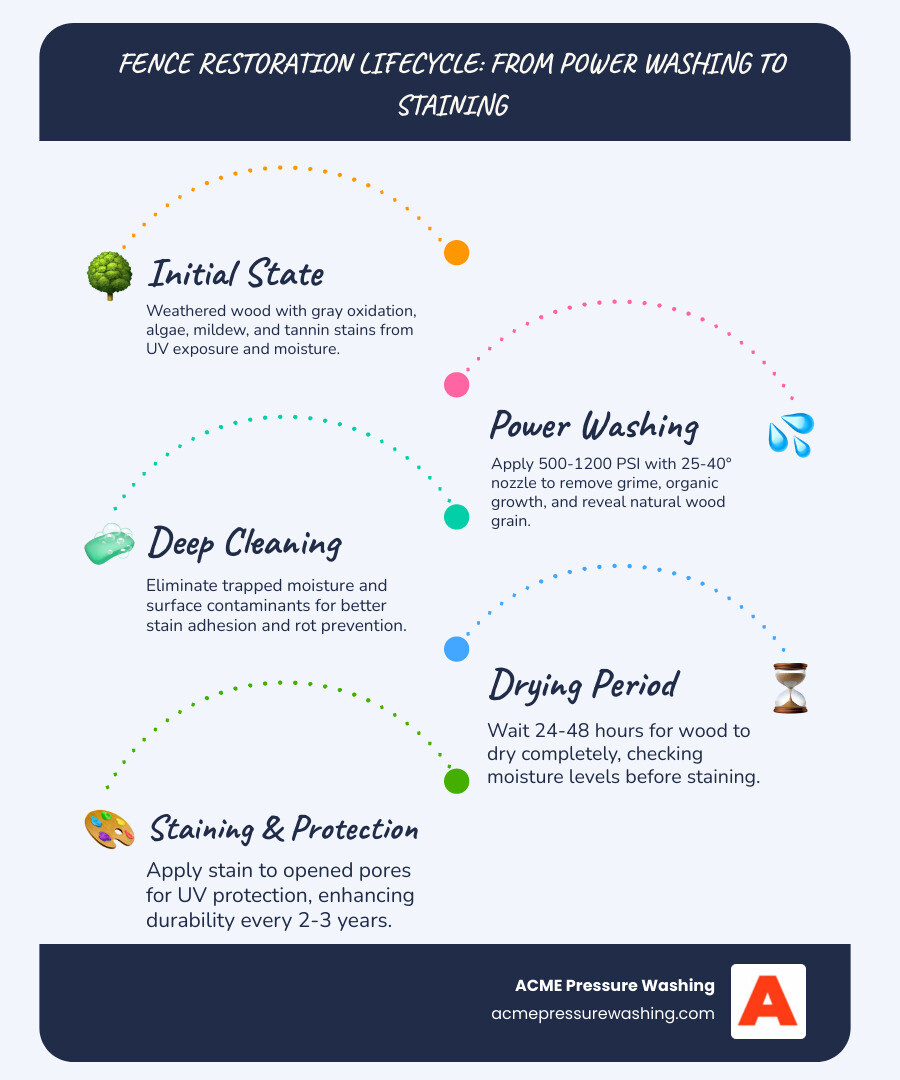
If your backyard sanctuary in Bedford or Nashua is starting to look a bit “haunted house” thanks to a gray, dingy fence, you aren’t alone. Over time, wood fences undergo a process called gray oxidation. This isn’t just dirt; it’s a layer of dead wood fibers caused by UV exposure. When you look at power wash fence before and after photos, the most striking change is the removal of this “camouflage” to reveal the healthy, vibrant wood underneath.
Organic growth is the other major culprit. In the damp New Hampshire climate, algae, mold, and mildew thrive in the shade of your fence panels. These organisms don’t just look bad; they trap moisture against the wood, which can lead to premature rot. A professional Fence Pressure Washing session blasts away these invaders, along with stubborn tannin stains and pollen.
The result is a total surface rejuvenation. Weathered gray boards transform into warm amber, honey-gold, or deep mahogany tones. It’s often described as “erasing a decade of wear in a single afternoon.” Beyond the “wow” factor, this process strips away the contaminants that prevent sealants from working, making it a vital step for any homeowner looking to boost their curb appeal. For more inspiration, you can check out these satisfying power washing before and after transformations to see the potential hiding in your own yard.

Master the Technique: PSI, Nozzles, and Safety
To achieve those “sublime” results without turning your fence into a splintery mess, you must master the mechanics of the machine. Wood is a relatively soft material, and high pressure is its natural enemy.
The Magic Numbers: PSI and Nozzles
For most wood fences—whether they are cedar, pine, or pressure-treated lumber—we recommend a pressure range of 500–1,200 PSI. If you go much higher, you risk “furring” the wood (raising the fibers) or, worse, gouging deep scars into the panels.
The nozzle you choose is just as important as the pressure setting. Never use a 0-degree (red) tip; it’s essentially a water laser that will cut right through wood. Instead, use:
- 25-degree (Green) nozzle: Good for general cleaning and removing stubborn algae.
- 40-degree (White) nozzle: The safest choice for rinsing and delicate or older wood.
Proper Technique
When we perform Fence Pressure Washing Manchester NH, we always follow the wood grain. Keep the wand at a consistent distance—usually 12–18 inches from the surface. Use long, overlapping strokes to ensure an even clean without “stop marks” or streaks.
If the fence is particularly delicate, we often utilize soft washing. This technique relies on a special blend of eco-friendly detergents to kill organic growth at the root, allowing us to use much lower pressure to rinse the grime away safely.
Why You Should Power Wash Fence Before and After Staining
You might be tempted to just slap a new coat of stain over a dirty fence, but that’s a recipe for a peeling disaster. Think of it like trying to glue something to a dusty, greasy surface; it simply won’t stick.
Power washing is essential because it:
- Opens the Pores: Wood fibers naturally “close up” as they weather. Washing opens these pores so the stain can penetrate deeply rather than just sitting on the surface.
- Ensures Adhesion: Removing dirt, oils, and dead fibers ensures the stain bonds to healthy wood.
- Prevents Peeling: Staining over algae or mold means the stain will eventually flake off as the organic matter underneath dies and detaches.
- Resets the “Clock”: By removing UV-bleached fibers, you ensure the color you choose looks exactly like the swatch intended, rather than being muddied by gray undertones.
Understanding DIY Power Washing: Risks and Professional Considerations
While renting a machine from a big-box store in Londonderry or Derry might seem like a fun weekend project, there are significant risks to consider.
Safety First: Pressure washers are powerful tools. Always wear eye protection and sturdy boots. Be mindful of nearby electrical outlets and always clear the area of pets and children.
Plant Protection: The detergents used in power washing can be tough on New Hampshire landscapes. We always recommend soaking nearby plants with fresh water before and after the job to dilute any runoff, or covering delicate greenery entirely.
The Damage Risk: The most common DIY mistake is “wandering” too close to the wood or staying in one spot too long. This causes splintering and gouging that can only be fixed by heavy sanding—or board replacement. Pressure-treated wood requires extra care, as aggressive washing can strip away the chemicals that protect it from rot and insects.
Evaluating the Investment: Costs and Professional Value
When deciding between a DIY weekend and hiring a professional team, it helps to look at the numbers. While a rental might seem cheaper upfront, the “hidden costs” of time, potential repairs, and equipment can add up.
Based on internet data, here is how the investment usually breaks down:
| Expense Category | DIY Rental Approach | ACME Professional Service |
|---|---|---|
| Equipment Cost | $75–$150 (Daily rental + fuel) | Included |
| Cleaning Solutions | $30–$60 (Detergents/Brighteners) | Included (Eco-friendly) |
| Time Investment | 6–12 hours (including pickup/return) | 1–3 hours (Zero effort for you) |
| Risk of Damage | High (Gouging, splintering) | Minimal (38+ years experience) |
| Average Total Cost | $150–$300 + Your Time | $200–$1,500* |
*Note: Professional costs are average ranges based on internet data. The high end typically reflects very large properties or complex restorations involving multiple stages. Actual prices vary based on fence length, height, and condition.
Hiring a professional for Power Washing provides more than just a clean fence; it provides peace of mind. Professionals carry insurance and bring specialized equipment that most rentals can’t match. Most importantly, the results of a professional wash often last longer because the wood is treated correctly from the start, ensuring your stain or sealant stays vibrant for years.
Frequently Asked Questions
Is power washing necessary for new fences?
Yes, but for different reasons than an old fence. New lumber often has “mill glaze,” a shiny surface created by the heat of the saws during manufacturing. This glaze can prevent stains from soaking in. Additionally, if you have a new pressure-treated fence, it may need to weather for a few months to allow the internal moisture and chemicals to stabilize before it can be cleaned and stained.
How long should I wait to stain after power washing?
Patience is key here. You should wait at least 24 to 48 hours for the wood to dry completely. In humid New Hampshire weather, or if the fence is in a heavily shaded area, it may even take 3 to 5 days. If the wood is still damp, the stain will “push” the water out, leading to an uneven, blotchy finish that will eventually peel.
Can power washing damage my wooden fence?
Absolutely. High pressure can chew through wood fibers, leaving permanent scars. This is why we emphasize using the correct PSI and nozzle choice. If your fence is old and brittle, “soft washing” is a much safer alternative that uses chemistry rather than brute force to achieve a deep clean.
Conclusion
A fence is more than just a boundary; it’s a frame for your home and a major part of your property value. Seeing a power wash fence before and after transformation is one of the most satisfying home improvement projects you can undertake.
At ACME Pressure Washing, we’ve spent over 38 years perfecting the art of wood restoration. From our home base in Merrimack, NH, we serve neighbors in Amherst, Auburn, Bedford, and throughout the region with safe, customized, and eco-friendly techniques. Whether you’re prepping for a fresh coat of stain or just want to see that beautiful cedar grain again, we’re here to help.
Ready to see the “sublime” side of your fence? Contact us today for a professional Fence Pressure Washing consultation and let us do the heavy lifting for you.
