Merrimack Exterior Cleaning: From Patios to Fences
Oil Stain Driveway Removal: What Merrimack Homeowners Need to Know
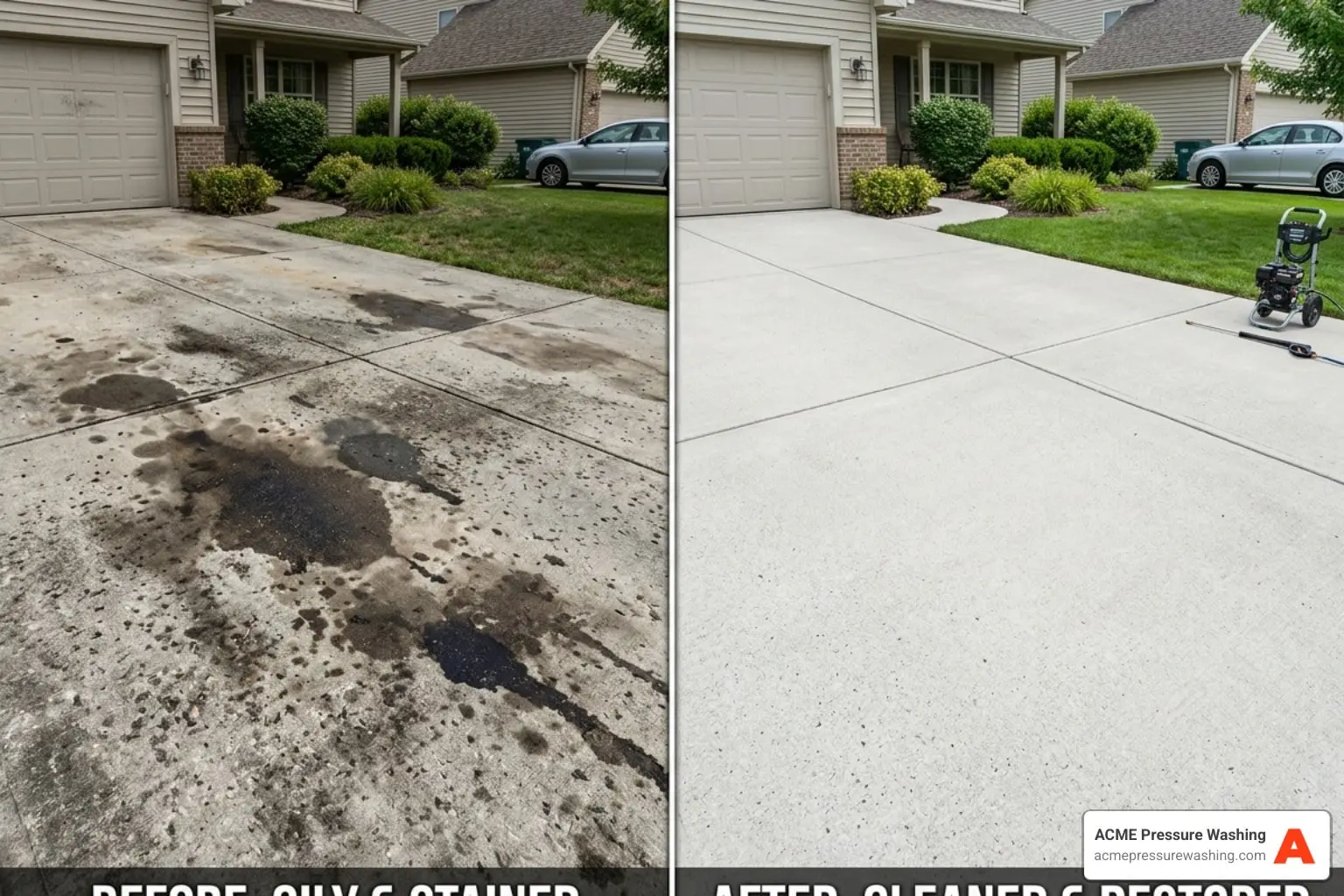
Oil stain driveway removal is something most homeowners need to deal with at some point — and the faster you act, the better your results will be.
Here’s a quick overview of the most effective methods:
- Fresh stains – Cover with clay-based cat litter or baking soda, let sit 30 minutes to overnight, sweep up, then scrub with dish soap and rinse
- Set-in stains – Use a commercial degreaser like Oil Eater or Pour-N-Restore, or apply a poultice paste and let it draw out the oil over 24-48 hours
- Stubborn or large stains – Call a professional pressure washing service with commercial-grade equipment
Your driveway is one of the first things people notice about your home. A dark, oily patch near your garage door doesn’t exactly say “well maintained.” But beyond looks, there’s a bigger problem.
Oil doesn’t just sit on top of your driveway — it sinks in.
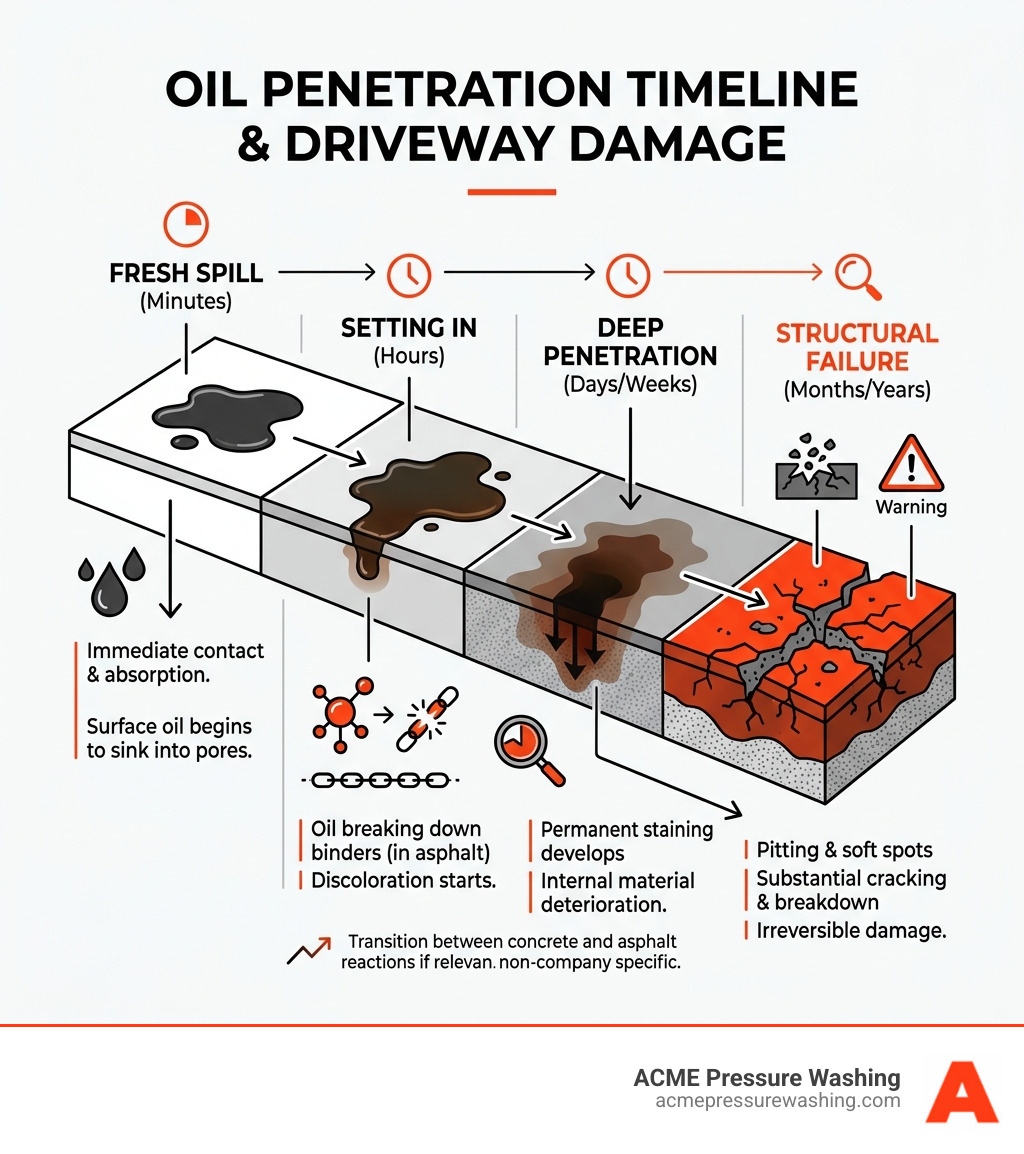
Concrete is porous, meaning oil travels down into it quickly. Asphalt is even more vulnerable — motor oil begins breaking down the asphalt binder within hours of contact. Left untreated for just 24-48 hours, permanent discoloration sets in. Wait weeks or months, and you’re looking at pitting, soft spots, and eventually cracking.
The good news? Most oil stains — even older ones — can be removed with the right approach.
Understanding the Impact of Oil on Concrete and Asphalt
To understand why oil stain driveway removal is so critical, we have to look at the chemistry of your driveway. Whether you live in Nashua, Manchester, or right here in Merrimack, your driveway is likely made of either concrete or asphalt. Both materials react poorly to petroleum products, but for different reasons.
The Vulnerability of Asphalt
Asphalt is essentially a mixture of rocks and sand held together by a “binder” — a sticky, petroleum-based glue. Because motor oil is also a petroleum product, it acts as a solvent. When oil sits on asphalt, it begins to dissolve that binder. This process happens surprisingly fast. Within hours, the oil starts penetrating the surface. Within weeks, the asphalt softens, leading to “pitting” where small rocks begin to pop out. If left for 6 to 12 months, this degradation leads to deep cracks and potholes.
The Porosity of Concrete
Concrete might feel like a solid rock, but it is actually highly porous, much like a very hard sponge. It is full of microscopic channels that allow liquids to wick deep below the surface. When oil drips onto concrete, gravity and capillary action pull it down. This is why a surface-level scrub often isn’t enough; the oil is literally hiding inside the slab. Over time, this can lead to structural weakening and unsightly, permanent dark patches.
For those dealing with connected surfaces, you can find More info about walkway and patio cleaning to see how these different masonry types require specific care. For a deeper dive into the nuances of various surfaces, check out this guide on How to Remove Oil Stains from Your Driveway.
Effective Methods for Oil Stain Driveway Removal
When we talk about oil stain driveway removal, we categorize the job into two phases: absorption and deep cleaning. You can’t effectively clean a stain if there is still standing oil on the surface.
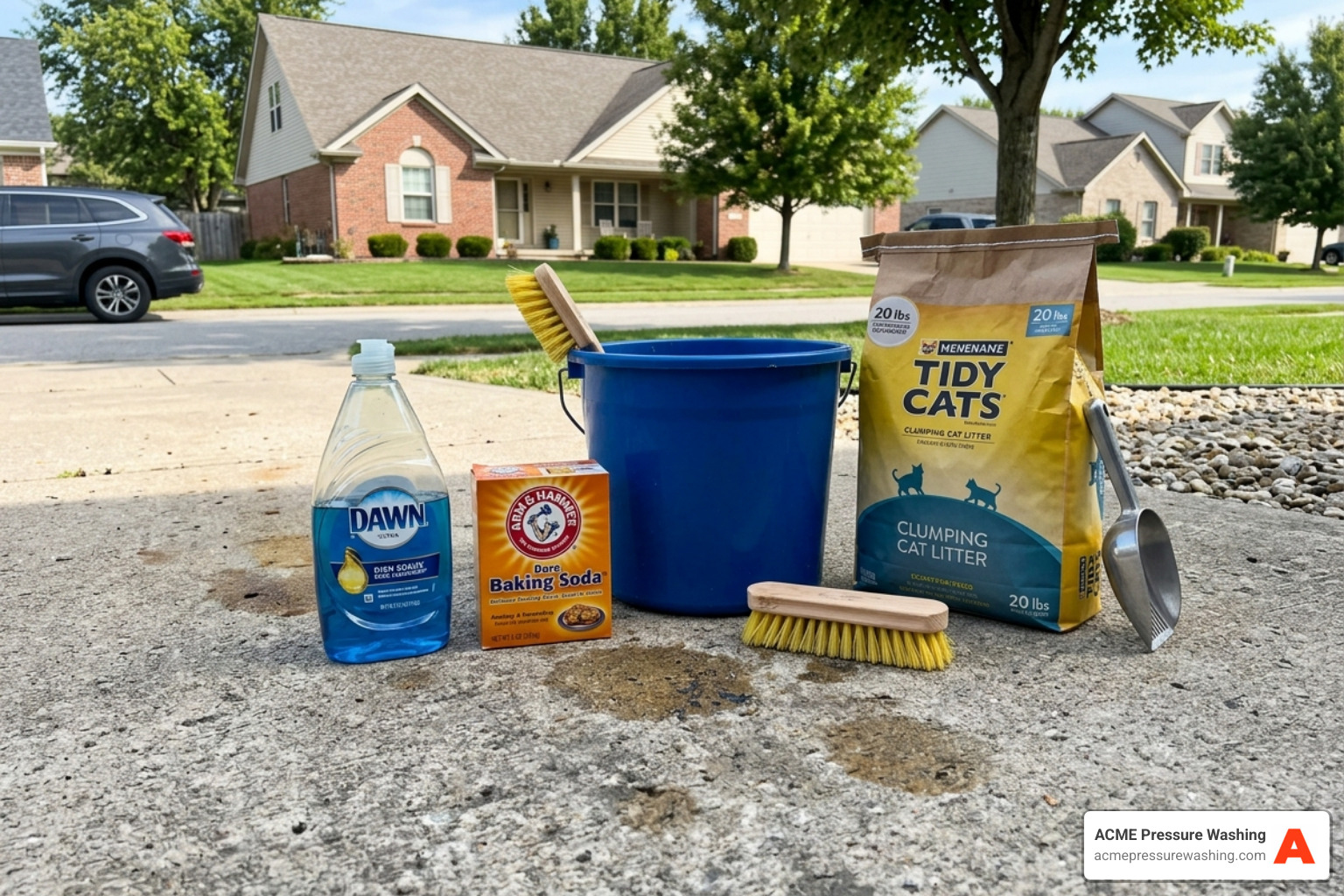
The Power of Absorbents
For a fresh spill, your first goal is to stop the oil from soaking in further. Clay-based kitty litter is a classic choice because it is designed to pull moisture out of its environment. However, don’t just sprinkle it and walk away. For the best results, grind the litter into the stain with your boots (some folks even joke about doing a little “clean-up dance” on the spot) to ensure the clay particles make maximum contact with the oil.
Surfactants and Micelles
Once the excess oil is gone, you’re left with the residue. This is where dish soap comes in. High-quality dish soaps contain surfactants. These molecules have a “water-loving” head and an “oil-loving” tail. They surround oil droplets to form “micelles,” which encapsulate the oil so it can be lifted away and rinsed off with water.
| Method | Best For | Pros | Cons |
|---|---|---|---|
| Clay-Based Litter | Fresh spills | Cheap, readily available | Messy, only for surface oil |
| Baking Soda | Light/Small stains | Non-toxic, mild abrasive | Requires heavy scrubbing |
| Dish Soap | Residue removal | Breaks down grease well | Needs hot water for best results |
| Commercial Degreasers | Deep/Old stains | Formulated for motor oil | Can be harsh on skin/plants |
| Poultice Paste | Embedded stains | Pulls oil from deep pores | Takes 24+ hours to work |
Removing Fresh Oil Stains from Driveway Surfaces
If you catch the leak immediately, you have a high chance of 100% removal.
- Blot, don’t rub: Use paper towels to soak up as much standing liquid as possible. Rubbing can push the oil deeper into the pores.
- Apply baking soda: Sprinkle it liberally over the area. Let it sit for at least 30 minutes to pull up the remaining surface tension.
- Scrub with hot water: Mix a concentrated solution of dish soap and very hot water. Use a stiff-bristled nylon brush (avoid wire brushes on asphalt!) and scrub in circular motions.
For homeowners in Amherst or Hollis looking to refresh their entire outdoor space after a spill, Restoring walkways and patios is a great next step to ensure the rest of your stone and concrete looks as good as your cleaned driveway.
Tackling Old and Set-In Oil Stain Driveway Removal
Old stains are a different beast. These have had time to “set” and travel deep into the substrate. The most effective DIY method for these is the poultice method.
A poultice is a paste made by mixing an absorbent (like baking soda, flour, or powdered laundry detergent) with a solvent (like a commercial degreaser or even a bit of water).
- The Process: Smear the paste over the stain about half an inch thick.
- The Dwell Time: Cover the paste with plastic wrap and tape down the edges. This prevents the solvent from evaporating too quickly, forcing it to work down into the concrete.
- The Extraction: After 24 hours, remove the plastic and let the paste dry completely. As it dries, it “wicks” the dissolved oil up out of the driveway and into the powder. Sweep it up, and the stain should be significantly lighter.
For more specialized tips on asphalt-specific set-in stains, How to Get Oil Stains off of a Driveway offers additional perspectives on handling those softer surfaces.
Step-by-Step Guide to Cleaning Different Driveway Materials
We’ve been serving the Merrimack Valley for over 38 years, and if there is one thing we’ve learned, it’s that treat-all solutions don’t exist. Concrete and asphalt require different “personalities” of cleaning.
Cleaning Concrete Driveways
Concrete can handle more “tough love.”
- Cleaners: You can use alkaline degreasers or even a diluted muriatic acid solution for extreme cases (though we recommend leaving acids to the pros).
- Pressure Settings: When using a pressure washer, concrete can typically handle between 2,500 and 3,000 PSI.
- Technique: Use a 25-degree fan tip and keep the nozzle about 12 inches from the surface. Always move in consistent, sweeping motions to avoid “etching” or leaving permanent wand marks in the stone.
Cleaning Asphalt Driveways
Asphalt requires a gentler touch.
- Cleaners: Avoid harsh solvents or petroleum-based cleaners, as these will melt the binder. Stick to pH-neutral soaps or “green” biodegradable degreasers.
- Pressure Settings: Lower the pressure! We rarely exceed 1,500 to 2,000 PSI on asphalt. High pressure can strip the top layer of aggregate, leaving the driveway looking “bony” or rough.
- Temperature: Use warm water rather than scalding hot water, which can soften the asphalt further.
Regardless of the surface, safety is paramount. Always wear gloves and eye protection when working with degreasers. If you are interested in the broader benefits of professional cleaning, you can find More info about power washing on our specialized service pages.
Professional Solutions and Prevention Strategies
Sometimes, DIY methods just aren’t enough. If you have a massive spill from a blown head gasket or a stain that has been baking in the New Hampshire sun for three summers, professional intervention is the way to go.
Why Go Pro?
Professional teams use commercial-grade equipment that most homeowners can’t access. This includes hot-water pressure washers (steam cleaners) that can reach temperatures over 200 degrees Fahrenheit. This heat thins the oil, making it much easier to extract from deep within the pores. We also use specialized surface cleaners that provide a uniform clean without the “striping” often seen with DIY wand work.
Prevention is the Best Cure
Once your driveway is clean, you want to keep it that way.
- Sealcoating: For asphalt, a fresh sealcoat every 2 to 3 years creates a non-porous barrier that prevents oil from penetrating the binder.
- Concrete Sealer: Applying a high-quality silane/siloxane sealer every 5 years will make concrete hydrophobic, causing oil to bead up on the surface rather than soaking in.
- Drip Pans: If you have an older vehicle known for “marking its territory,” a simple drip pan or a piece of cardboard in the garage can save you hours of cleaning.
Average Costs for Professional Cleaning
Based on internet data, professional oil stain removal typically ranges from $0.20 to $0.45 per square foot. For a standard 600-square-foot driveway, you might expect to pay anywhere from $120 to $350. However, for severe, deep-set restoration or very large properties, total project costs can range from $100 to $1,500 depending on the severity and the equipment required.
If you’re ready to restore your home’s curb appeal, our Professional pressure washing services are tailored to the specific climate and architectural needs of the Merrimack region.
Frequently Asked Questions about Driveway Cleaning
Does Coca-Cola or gasoline work for oil stains?
We get this question a lot in Manchester and Londonderry! The short answer: No.
- Coca-Cola: While the phosphoric acid in cola can technically eat through some grime, it’s mostly sugar. You’ll likely end up with a sticky mess that attracts ants and bees without actually removing the deep-set oil.
- Gasoline: This is a major safety hazard. Using gasoline to clean oil is incredibly flammable and creates toxic runoff. Furthermore, it leaves a persistent, pungent odor that can linger in your concrete for months. It also destroys asphalt binders instantly.
Can oil stains cause permanent damage?
Yes. On asphalt, the damage is structural. Motor oil begins “eating” the binder immediately. If you don’t address a spill within 24 to 48 hours, you will likely have a permanent “shadow” or discoloration. Within 6 months of heavy saturation, the asphalt will likely begin to crumble, leading to structural failure.
When should I call a professional for severe stains?
You should call us if:
- The stain covers an area larger than a dinner plate.
- The oil has been sitting for more than a month.
- You’ve tried household cleaners and the dark patch remains.
- You are worried about damaging your asphalt with high pressure.
- You want to ensure the wastewater is handled in an eco-friendly manner.
Conclusion
At ACME Pressure Washing, we’ve spent over 38 years perfecting the art of exterior cleaning. From the historic homes of Amherst to the busy commercial lots of Nashua, we understand that every driveway tells a story — and we’re here to make sure that story isn’t about an old oil leak.
We use safe, customized, and eco-friendly techniques to ensure your property is protected while we achieve the deepest possible clean. Whether you need help with oil stain driveway removal, house washing, or fleet cleaning, our experience in the Merrimack, NH area is unmatched.
Don’t let a stubborn stain ruin your home’s first impression. Contact us for professional pressure washing services today and let our family-owned team bring your driveway back to life!