Pressure Washing Fence Prices: What Should You Actually Pay?

What You Should Actually Pay for Pressure Washing Fence Prices in 2026
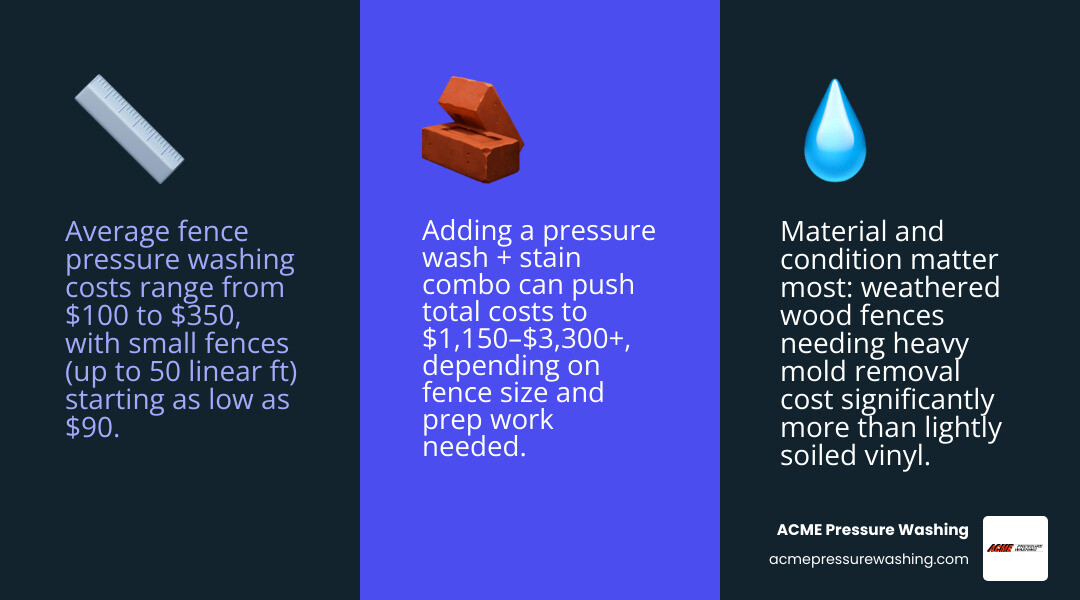
Pressure washing fence prices vary more than most homeowners expect. Based on publicly available internet data, average costs typically fall between $100 and $350 for a standard residential fence — but the full range runs much wider, from as low as $90 on the low end to $500 or more depending on size, material, condition, and location.
Here is a quick snapshot to answer the most common cost questions:
| Fence Size | Estimated Cost Range (Industry Average) |
|---|---|
| Small (up to 50 linear ft) | $90 – $200 |
| Medium (50-150 linear ft) | $200 – $400 |
| Large (150+ linear ft) | $400 – $700+ |
| Per square foot | $0.30 – $0.80 |
| Power washing (heated water) | $0.35 – $0.80+ per sq ft |
| Pressure wash + stain combined | $1,150 – $3,300+ |
Note: All prices above are average costs sourced from publicly available internet data. They do not represent ACME Pressure Washing’s actual rates.
These numbers shift significantly based on your fence material, whether both sides need cleaning, local labor rates, and the condition of the surface. a weathered wood fence in Merrimack, NH that needs heavy mold removal and stain prep will cost more than a lightly soiled vinyl fence in a dry climate.
I’m Lionel Greenwood, owner of ACME Pressure Washing, and over my 38 years of hands-on experience serving New Hampshire homeowners, I’ve seen how widely pressure washing fence prices can swing based on factors most people don’t think to ask about. In this guide, I’ll walk you through everything that actually drives the cost — so you can compare quotes with confidence and make the right call for your property.
Must-know pressure washing fence prices terms:
- fence pressure washing
- how long to wait to stain fence after pressure washing
- power wash fence before and after
Understanding Average Pressure Washing Fence Prices
To truly understand what you should pay, we have to look past simple flat-rate estimates. While general online data lists a national average of $225 for a basic wash, professional-grade exterior cleaning is rarely “one-size-fits-all.” Real-world professional pricing for comprehensive commercial-grade fence restoration services generally spans a wide range from $450 to $1,125 or more depending on the project’s scale, the accessibility of the site, and the severity of organic growth.
Disclaimer: Please note that all prices mentioned in this guide are average costs sourced from publicly available internet data. They are provided solely for industry context and do not reflect the actual pricing or guaranteed rates of ACME Pressure Washing.
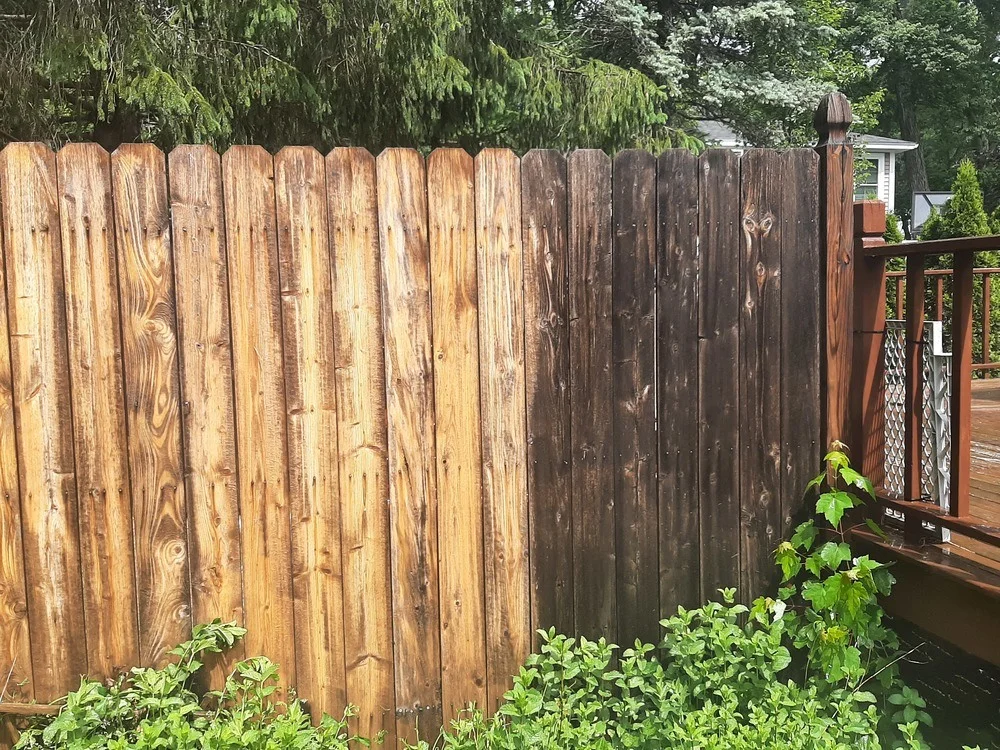
When evaluating quotes in New Hampshire communities like Bedford, Manchester, Nashua, and Merrimack, you will find that reputable contractors rarely quote blind. Instead, they look at the total surface area, the height of the panels, and the specific cleaning agents required. For a quick baseline estimate based on your specific dimensions, tools like this Fence pressure washing cost calculator can help you visualize how your fence’s measurements translate into raw square footage.
Investing in professional fence pressure washing does more than just boost your curb appeal; it preserves the structural integrity of your boundary lines, preventing wood rot and structural failure.
How Size and Surface Area Dictate Pressure Washing Fence Prices
The most common mistake property owners make when estimating pressure washing fence prices is confusing linear feet with total square feet. If you have a 100-foot-long fence, that is 100 linear feet. However, if that fence is 6 feet tall, you actually have 600 square feet of surface area on just one side.
If you need both sides cleaned—which is standard for shared boundary lines or corner lots—your total surface area doubles to 1,200 square feet. Because professional exterior cleaning is priced by the physical square footage of the surface being washed, double-sided cleaning will roughly double the labor time and material usage.
Height also plays a major role. Standard residential privacy fences are usually 6 feet tall, but many commercial properties and larger estates in Bedford, Manchester, and Nashua utilize 8-foot privacy panels. Taller fences require specialized spray angles, longer reach equipment, and more physical labor to clean systematically from top to bottom. If you are a resident looking for localized details, checking out our dedicated service page for fence pressure washing bedford nh can provide excellent context on how local layout styles impact overall project scope.
Regional Labor Rates and Pressure Washing Fence Prices in New Hampshire
Local labor rates are another primary driver of exterior cleaning costs. Because New Hampshire has a higher cost of living compared to the national average, local labor rates for skilled exterior cleaning technicians typically range from $50 to $150 per hour.
Furthermore, our unique New England climate directly influences how often and how fences must be cleaned. Our harsh, snowy winters followed by warm, humid summers create the perfect breeding ground for organic growth. Mold, mildew, moss, and green algae thrive in damp, shaded areas, meaning fences in heavily wooded parts of Merrimack, Bedford, and Manchester require more robust, heavy-duty cleaning solutions than those in dry, sun-baked regions.
If you want to see how regional climate factors dictate cleaning needs in our largest city, our guide to fence pressure washing manchester nh outlines the exact environmental challenges local properties face.
How Fence Materials, PSI Settings, and Power Washing Impact Costs
The durability and composition of your fence material dictate the exact techniques, machinery, and pressure settings required to clean it safely. Using the wrong approach can easily ruin a costly installation.
In the exterior cleaning industry, we balance two primary metrics:
- PSI (Pounds per Square Inch): The brute force of the water stream.
- GPM (Gallons per Minute): The volume of water flow, which actually carries the dirt away and determines how fast a job can be completed.
For delicate surfaces, we rely on “soft washing”—a technique that combines high GPM water flow with specialized, eco-friendly cleaning solutions at very low pressure (usually under 500 PSI). For harder, non-porous surfaces, a traditional high-pressure wash is appropriate.
Additionally, it is important to understand the difference between standard pressure washing and power washing. While pressure washing uses cold or room-temperature water, power washing utilizes heavily heated water. Heated water is incredibly effective for melting away grease, heavy oil, and deep-seated mold spores, but it requires specialized commercial rigs and must be used with extreme caution to avoid warping delicate materials.
Here is how standard industry costs compare per square foot based on the method used:
| Cleaning Method | PSI Range | Average Cost Per Sq. Ft. (Internet Data) | Best Used For |
|---|---|---|---|
| Cold Water Pressure Wash | 500 – 2,000 PSI | $0.30 – $0.40 | Standard vinyl, hardwoods, brick, concrete |
| Heated Power Wash | 1,500 – 3,000+ PSI | $0.35 – $0.45 | Heavy mold, deep grease, metal, commercial concrete |
| Soft Wash (Low Pressure) | < 500 PSI | $0.30 – $0.50 | Softwoods (cedar/pine), delicate vinyl, composite |
Wood Fences: Softwood vs. Hardwood Cleaning
Wood is the most common fencing material, but it is also the most sensitive to pressure. Softwoods like pressure-treated pine or cedar are highly susceptible to damage. If an operator uses a setting higher than 500 to 600 PSI on softwood, the water will gouge the wood, splinter the grain, and permanently ruin the panels. Because softwoods require a slow, meticulous soft-washing approach with gentle chemical pre-treatments, they can actually cost slightly more in labor than hardwoods.
Hardwoods like ipe or mahogany are much denser and can safely handle higher pressures of 1,200 to 1,500 PSI. According to the comprehensive pricing guide How Much Does It Cost to Pressure Wash a Fence?, professional wood cleaning requires a perfect balance of chemistry and physical rinsing to open up the wood’s pores without destroying the fibers.
Once a wood fence is thoroughly washed, it must dry completely before any protective coating is applied. To learn more about the critical timeline between washing and sealing, you can read our detailed guide on dont rush the brush exactly how long to let your fence dry before staining.
Vinyl, Composite, and Metal Fences
Non-wood materials present their own unique cleaning requirements:
- Vinyl Fences: Vinyl is incredibly popular because it is low-maintenance, but it is highly prone to green algae buildup and a chalky white residue known as “oxidation” caused by sun exposure. Cleaning vinyl requires a specialized mild bleach solution to kill the algae spores and break down the oxidation, followed by a medium-pressure rinse (around 2,000 PSI) from a safe distance of at least three feet to avoid cracking the vinyl panels.
- Composite Fences: Composite materials are a blend of wood fibers and plastic. They are highly susceptible to deep-seated mold that feeds on the organic wood fibers. Cleaning composite requires specialized, deep-penetrating detergents and a moderate pressure setting of around 1,500 PSI.
- Metal Fences (Aluminum, Steel, Wrought Iron): Metal fences can withstand much higher pressures, ranging from 1,800 PSI for aluminum to 2,300 PSI for wrought iron. The primary risk here is chipping old paint or stripping protective powder coatings, meaning a skilled hand is required.
For property owners in Nashua and Merrimack looking for expert local care for these delicate materials, we recommend visiting our specialized page on fence pressure washing nashua nh to see how we safely handle non-wood substrates.
Additional Cost Factors: Staining, Sealing, and Site Prep
If you are planning a complete fence restoration, pressure washing is only the first step. Applying a high-quality stain or sealant immediately after the wood dries is essential to protect the freshly opened pores from moisture, UV rays, and rot.
When bundling these services, the price increases due to the cost of premium stains, sealants, and the intensive labor required for application. Based on online data, while a standard combined wash-and-stain job has an average cost of $2,225, full-scale professional wood restoration, hand-brushed staining, and premium sealing projects for large residential estates can range from $4,450 to $11,125 or more.
Other factors that will influence your final quote include:
- Application Method: Spraying stain is faster and cheaper (averaging around $0.75 per square foot), but hand-brushing delivers a deeper, more uniform finish and is often required near delicate landscaping to prevent overspray (averaging around $1.30 per square foot).
- Landscaping and Obstacles: If your fence is lined with prized flower beds, bushes, or delicate gardens, technicians must spend extra time covering and protecting your plants, or hand-brushing the entire section to avoid chemical runoff and overspray damage.
- Site Accessibility: Fences on steep slopes, those with limited physical access, or properties with locked gates and tight property lines require more labor hours to navigate.
- Surface Prep: If your fence has old, peeling paint, heavy graffiti, or stubborn old sealants, it will require specialized chemical stripping agents and extra scraping before the wash can even begin.
If you are located in the Merrimack Valley, you can read more about how we handle these preparation steps locally on our dedicated fence pressure washing merrimack nh service page.
Professional vs. DIY Fence Cleaning
It is always tempting to head to the local home improvement store, rent a pressure washer for $40 to $100 a day, and try to tackle your fence over the weekend. However, DIY fence cleaning often ends up costing more in the long run.
The learning curve for operating a pressure washer is steep. Without professional training, it is incredibly easy to permanently damage your property. Common DIY mistakes include:
- Wood gouging and splintering from using too high a PSI or holding the spray wand too close.
- Cracking vinyl panels by using the wrong spray angle.
- Damaging delicate landscaping and killing lawns with harsh, unbuffered chemical runoff.
- Violating local EPA guidelines and municipal wastewater runoff regulations, which can result in heavy environmental fines for improper chemical discharge into storm drains.
Furthermore, consumer-grade rental equipment lacks the GPM volume of professional machinery, turning a 2-hour professional job into a grueling multi-day project.
Our professional team uses commercial-grade, high-volume rigs, custom-blended eco-friendly cleaning solutions, and decades of experience to deliver flawless results safely and efficiently.
How often should a New Hampshire fence be pressure washed?
In New Hampshire, we recommend having your wood fence professionally washed and inspected every 12 to 24 months to prevent mold, mildew, and moss from taking root in the wood fibers. Vinyl and composite fences can typically go 18 to 24 months between cleanings. Regular maintenance cycles keep organic growth at bay, making each subsequent wash faster and more affordable while extending the overall lifespan of your fence by decades. This is especially true for damp, shaded properties in Merrimack, Bedford, and Manchester where tree canopy cover accelerates rot.
Does pressure washing damage wood or vinyl fences?
Yes, pressure washing can absolutely ruin wood or vinyl fences if performed by an inexperienced operator using incorrect settings. High pressure can shred softwood fibers, leave permanent “wand marks” on cedar, and crack aged vinyl panels. This is why we utilize a specialized “soft washing” system for delicate surfaces. By relying on highly effective, eco-friendly detergents to break down dirt and algae, we can rinse the surface clean using low-pressure settings that are completely safe for your fence.
Do professional exterior cleaning companies use their own water?
While professional exterior cleaning companies carry water tanks on our custom rigs to maintain consistent GPM flow rates and protect our pumps, we typically connect to the homeowner’s outdoor spigot to ensure a continuous water supply for large projects. If a property in Bedford, Manchester, or Nashua has low well-water pressure or restricted water access, our onboard tanks allow us to complete the project smoothly without putting undue stress on your home’s plumbing system.
Conclusion
When comparing pressure washing fence prices, the old adage always holds true: you get what you pay for. While cheap, uncertified operators might offer tempting low-ball rates, they often lack the licensing, commercial general liability insurance, and technical expertise required to clean your property safely.
At ACME Pressure Washing, we bring over 38 years of local experience to every project. We use safe, customized, eco-friendly techniques designed specifically for the unique New Hampshire climate. Beyond fences, we specialize in high-end commercial and residential cleaning services to protect and beautify your entire property, including:
- house pressure washing
- deck pressure washing and restoration
- walkway and patio cleaning
- commercial pressure washing
- fleet and equipment pressure washing
Ready to restore your fence to its original beauty? Contact our expert team today!
- Get a Free Quote online: Contact ACME Pressure Washing