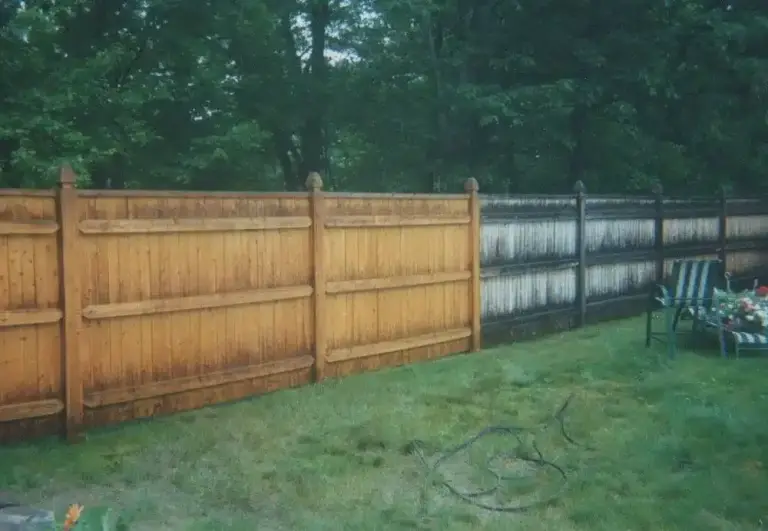
Don’t Rush the Brush: Exactly How Long to Let Your Fence Dry Before Staining

Why Rushing to Stain After Pressure Washing Can Ruin Your Fence
Knowing how long to wait to stain a fence after pressure washing could be the difference between a finish that lasts for years and one that peels, bubbles, or turns blotchy within a season.
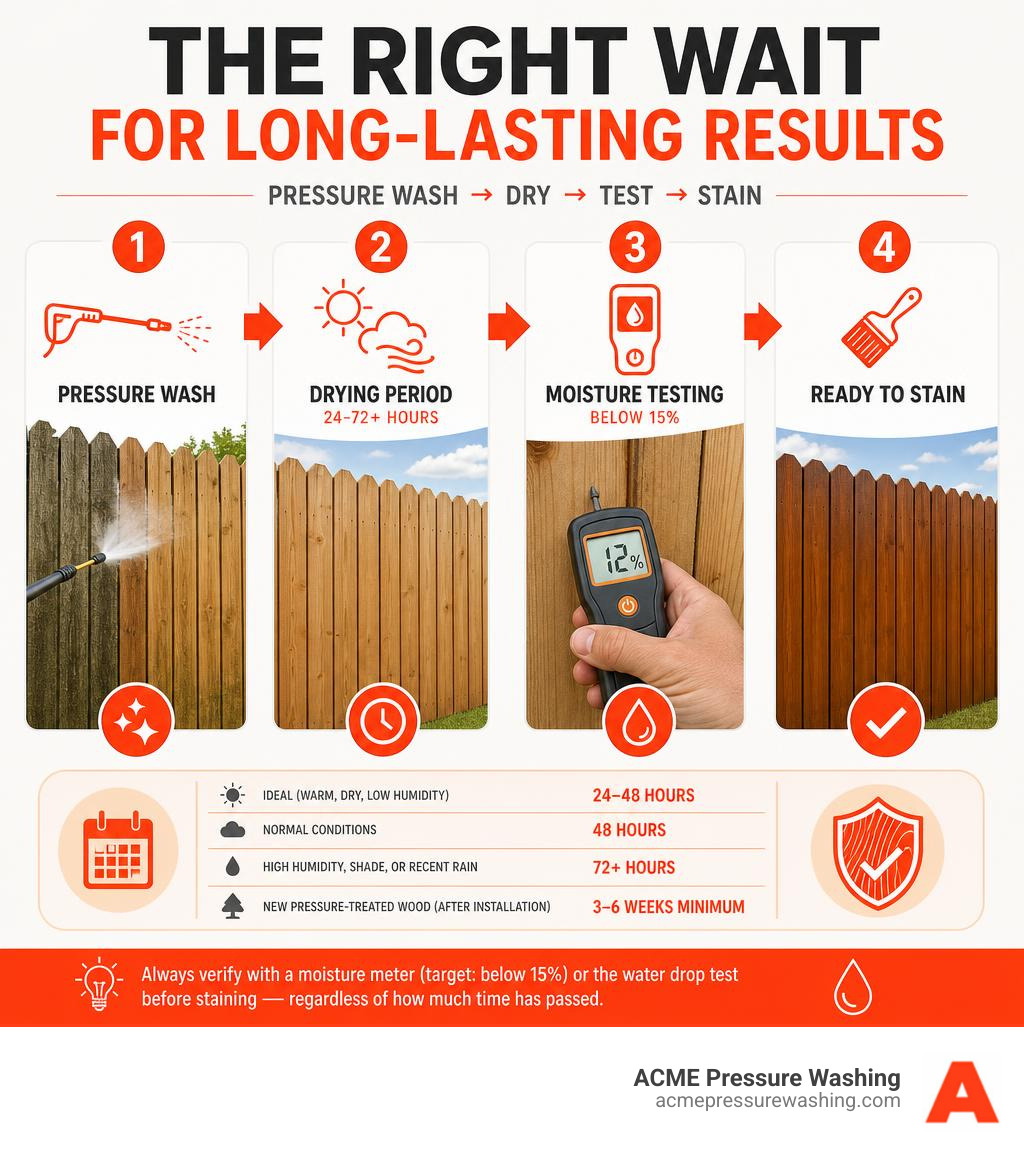
Quick Answer: How Long to Wait Before Staining
| Condition | Minimum Wait Time |
|---|---|
| Ideal (warm, dry, low humidity) | 24-48 hours |
| Normal conditions | 48 hours |
| High humidity, shade, or recent rain | 72+ hours |
| New pressure-treated wood (after installation) | 3-6 weeks minimum |
Always verify with a moisture meter (target: below 15%) or the water drop test before staining — regardless of how much time has passed.
When a fence has just been pressure washed, the surface may look clean and ready for stain. But what appears dry on the outside is not always dry inside the wood. Wood holds moisture deep in its fibers long after the surface looks dry. Stain applied over damp wood can’t penetrate properly — it sits on top, traps moisture underneath, and eventually peels, cracks, or grows mildew.
This is a mistake we see regularly on commercial, HOA, and residential properties across Merrimack, Nashua, Bedford, and Manchester, NH — especially in spring and fall when New Hampshire’s humidity and cool temperatures slow drying times significantly.
I’m Lionel Greenwood, owner of ACME Pressure Washing, and with over 38 years of hands-on fence restoration experience across New Hampshire, I’ve seen exactly what happens when properties don’t allow enough drying time. Below, I’ll walk you through the right drying windows so your stain job actually holds. Keep reading for a full breakdown of every factor that affects how long to wait to stain a fence after pressure washing, from wood type to weather conditions.
Related content about how long to wait to stain fence after pressure washing:
How Long to Wait to Stain Fence After Pressure Washing: The Safe Answer
As a general rule of thumb, you should wait at least 48 hours after pressure washing a fence before applying any stain. In many cases, waiting 72 hours is much safer, particularly in high-humidity climates or shaded areas. According to industry standards, you must wait 24 to 48 hours before staining wood surfaces to ensure the stain penetrates and adheres effectively. However, rushing this process is the number one cause of premature stain failure.
How long to wait to stain fence after pressure washing in normal conditions
Under normal conditions—defined as sunny days with temperatures between 60°F and 80°F, low humidity, and a light breeze—a solid 48-hour window is usually sufficient for standard vertical fence boards. Because vertical boards allow water to run off naturally, they dry slightly faster than horizontal deck boards.
During these 48 hours, the deep water saturation from the pressure washer evaporates out of the wood cells. This re-opens the pores of the wood, allowing the stain to draw deep into the grain. For professional fence cleaning and preparation, learn more on our page about fence pressure washing.
How long to wait to stain fence after pressure washing after rain, shade, or humidity
If your property in Bedford, NH, or Manchester, NH, features heavy tree canopy, or if the weather turns humid, the drying timeline must be extended to at least 72 hours. High humidity slows down the rate of evaporation, keeping the internal wood fibers saturated.
North-facing fence lines or sections shielded by thick landscaping or buildings receive very little direct sunlight. Without sun exposure and proper airflow, these damp pockets can hold water for days. If it rains at any point during your waiting window, the clock resets, and you must wait another 48 to 72 hours from the time the rain stops before applying stain.
What Happens If You Stain Too Soon?
Applying stain to a fence that hasn’t fully dried is a recipe for an expensive, time-consuming failure. When you apply stain over damp wood, several issues occur:
- Poor Penetration: Oil-based stains repel water. If the wood pores are already filled with water, the stain cannot sink into the wood.
- Peeling and Bubbling: As the sun heats the wood, the trapped moisture tries to escape. It pushes upward against the stain film, causing the finish to bubble, crack, and peel off in sheets.
- Mold and Mildew Growth: Trapping water beneath a layer of stain creates a dark, damp environment where mold, moss, and mildew thrive, rotting your wood from the inside out.
- Uneven, Blotchy Finish: The stain will dry at different rates across wet and dry patches of wood, leaving your fence looking patchy and discolored.
The Factors That Change Fence Drying Time After Pressure Washing
No two fences dry at the exact same rate. Several key environmental and physical factors dictate exactly how long your wood needs to breathe before it is ready for a protective coating.
Wood Type: Cedar, Pine, Pressure-Treated, New, and Older Fences
Different wood species and ages react uniquely to water saturation:
- Cedar: Naturally rot-resistant and highly porous, cedar absorbs water quickly but also releases it relatively fast. However, because it is so absorbent, it requires a full, uninterrupted 48-hour dry time in Merrimack, NH, to prevent the cellular structure from holding onto deep moisture.
- Pine: Standard softwood pine is highly porous and behaves similarly to cedar, drying out within 48 hours under clear skies.
- New Pressure-Treated Wood: If you have a newly installed pressure-treated pine fence, the rules change completely. Pressure-treated lumber is chemically infused with liquid preservatives under high pressure. This process leaves the wood wet right from the lumber yard. You must allow new pressure-treated wood to air dry for at least 3 to 6 weeks minimum after installation before staining, with longer timelines possible in damp, shaded New Hampshire conditions. Moisture testing is more reliable than relying on the calendar alone. For more on pressure-treated wood drying guidance, see this helpful resource from Home Improvement Way.
- Older, Weathered Fences: Older wood is highly dry and porous. It acts like a dry sponge, absorbing significant water during pressure washing. Because it drinks in so much water, an older fence often requires a full 72 hours to dry out completely.
Pressure Washing Technique and Water Saturation
The pressure and volume of water used during the cleaning process directly impact the required drying time. Uncontrolled high-pressure washing at close range can force water deep into the core of the wood fibers, raise the grain, and severely over-saturate the material.
At ACME Pressure Washing, we employ professional soft washing techniques using low pressure, typically under 500 to 1,000 PSI. This thoroughly cleans away organic growth, dirt, and gray wood fibers without forcing water deep into the wood’s core. Safe, professional cleaning drastically reduces drying times. If you want to dive deeper into proper washing techniques, read our guide on How to Master Fence Pressure Washing in 30 Days.
How to Tell the Fence Is Dry Enough Before Staining
You cannot rely on a simple visual check to determine if wood is ready for stain. Wood that looks bone-dry on the surface can still hold a high concentration of water deep within its core. The following checks are best handled by a professional team before stain is applied.
Moisture Meter Test: The Most Reliable Method
The most reliable way to test if your fence is dry enough to stain is by using a digital wood moisture meter. A trained technician should check multiple fence sections instead of relying on one surface reading.
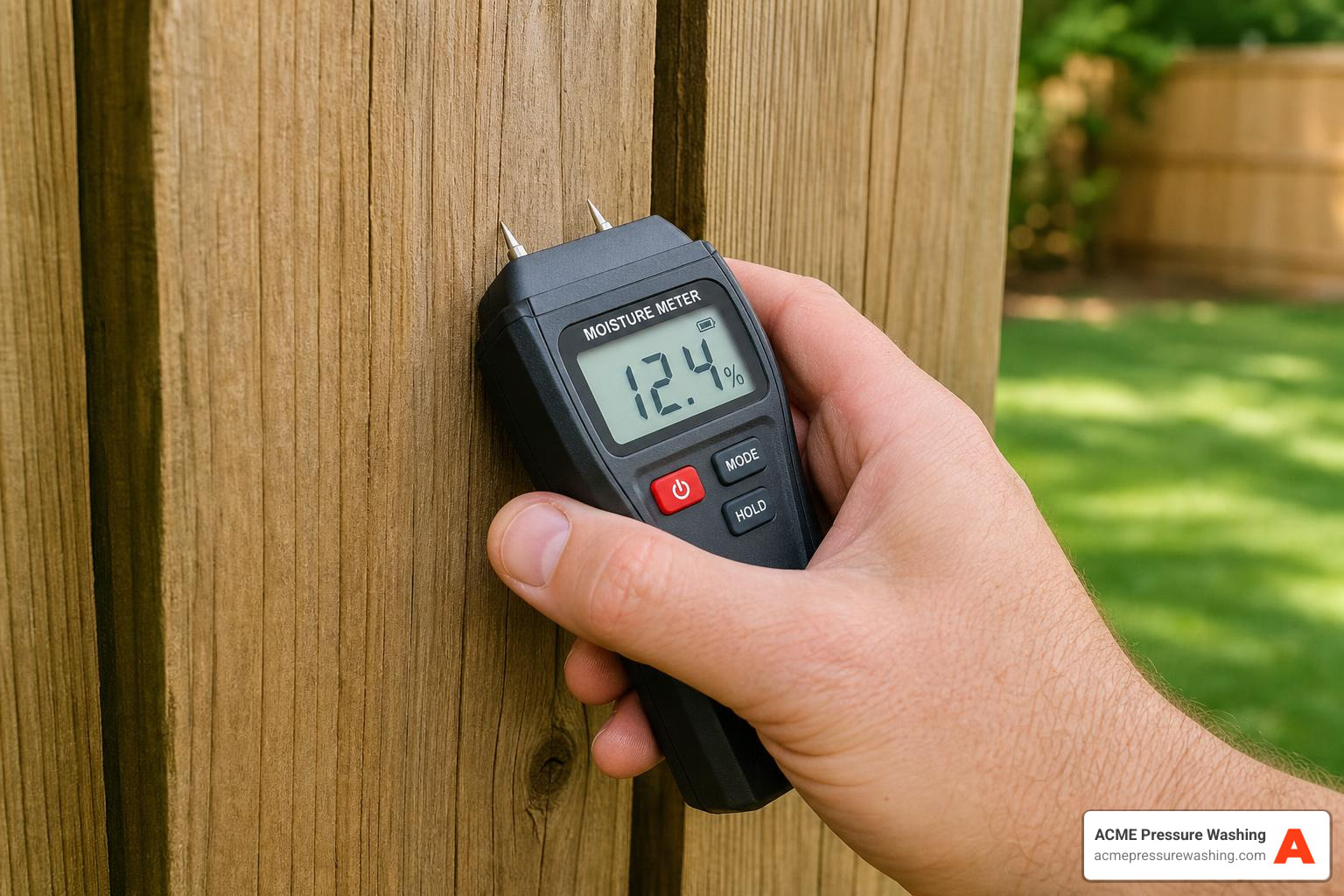
Key areas to test include:
- Sunny fence sections.
- Shaded fence sections.
- The bottom of vertical pickets, where water can linger.
- Structural posts and horizontal rails.
- Any area near landscaping, buildings, or poor airflow.
The target reading is below 15% moisture content. Ideally, the fence should read between 12% and 15% before applying any stain. If any reading is above 15%, wait another 24 hours and test again.
Water Drop Test: Quick Field Check
The water drop test can be used as a quick field screening method, but it should not replace a moisture meter on commercial, HOA, or large residential fence projects.
A few drops of clean water are applied to several areas of the fence. If the wood absorbs the droplets quickly, typically within 1 to 2 minutes, the pores are open and ready to accept stain. If the water beads up, sits on the surface, or takes a long time to soak in, the wood may still be damp internally or may have a barrier such as old sealant or mill glaze.
Should You Clean or Prep Again Before Staining?
Yes, a quick inspection and light prep are highly recommended after your fence has dried and before stain is applied. During the 48 to 72 hours of drying time, wind can blow dust, dirt, and pollen onto the fresh wood fibers.
A professional crew should inspect the fence line and remove surface debris with the appropriate brush, cloth, or prep method. If the pressure washing raised the wood grain, light sanding with 80-grit sandpaper may be needed to smooth out the surface. This helps create an even finish and prevents stain from pooling in rough areas. If you are also scheduling deck cleaning, you can review our guide on How to Pressure Wash and Stain a Deck in 5 Simple Steps.
Products, Techniques, and Timing That Help Stain Adhere Well
Achieving a beautiful, long-lasting fence finish requires combining proper drying times with the right products and application methods.
Best Time of Year to Stain After Pressure Washing
In New Hampshire, our seasonal weather windows are tight. The best times of year to stain a fence are late spring (late May to June) and early fall (September to October). During these windows, temperatures remain moderate, and the humidity is generally lower.
Avoid staining in the dead of summer when temperatures exceed 90°F. Direct, hot sunlight dries the stain too quickly on the surface before it has a chance to penetrate the wood fibers, leading to premature flaking. Likewise, avoid late autumn when overnight temperatures drop below 50°F, which prevents the stain from curing properly.
Stain Types and Application Methods
- Stain Selection: We strongly recommend using high-quality, penetrating oil-based semi-transparent stains. Unlike water-based acrylic stains that sit on top of the wood like a thin layer of paint, oil-based stains sink deep into the wood grain, conditioning the wood and providing superior UV and moisture protection from within.
- Application Technique: Whether using a sprayer, roller, or brush, always finish the application with a technique called back-brushing. After spraying or rolling a section of the fence, immediately run a wide stain brush over the wet stain. This forces the product deep into the pores, pops air bubbles, and ensures a perfectly even, streak-free coat. Always work from the top of the fence down to catch any runs or drips.
Why Professional Fence Prep Is Safer Than Guesswork
The preparation work is where fence staining projects usually succeed or fail. For commercial properties, HOAs, and large residential estates in New Hampshire, ensuring a uniform finish across hundreds of feet of fencing is incredibly difficult without professional equipment and moisture testing.
Hiring a professional team like ACME Pressure Washing eliminates the guesswork. We verify moisture levels across the entire structure using commercial-grade testing equipment, use eco-friendly cleaning solutions that protect your landscaping, and employ safe, customized low-pressure soft washing techniques that clean the wood without over-saturating it. This keeps your drying times to a minimum and supports optimal stain adhesion.
Frequently Asked Questions About Fence Drying Time After Pressure Washing
Can You Stain a Fence 24 Hours After Pressure Washing?
Only in extremely rare circumstances. If the weather is exceptionally hot, dry, and windy, and the fence is made of older, highly weathered wood in direct sunlight, it might dry in 24 hours. However, without verifying the moisture content with a moisture meter (confirming it is below 15%), staining at 24 hours is highly risky and usually leads to peeling.
How Long Is Too Long to Wait After Pressure Washing Before Staining?
You should aim to stain your fence within one to two weeks after pressure washing. If you wait longer than two weeks, New Hampshire’s outdoor elements will begin to re-contaminate the wood. Pollen, dirt, bird droppings, and mold spores will settle back into the open wood pores, and UV rays from the sun will begin to gray the wood fibers again. If you wait more than a month, you will likely need to perform a light wash again before you can stain.
Does a Fence Need to Be Bone Dry Before Staining?
Yes, for almost all traditional oil-based and water-based exterior stains, the wood must be dry (below 15% moisture content) both on the surface and deep inside the boards. While there are a few specialized “wet-wood” stains on the market designed for damp wood, they generally do not last as long or perform as well as a premium penetrating stain applied to a fully dried, clean wood surface.
Fence Staining Cost Expectations
When planning a fence restoration project, it is helpful to understand the average costs involved. Based on general online data and industry averages, the cost to professionally wash and stain a wood fence typically averages around $1,000. However, depending on the linear footage, the height of the fence, the complexity of the layout, and the level of wood restoration required, project costs can range from $2,000 on the low end to $5,000+ on the high end.
Please note: all prices mentioned are average costs sourced from publicly available internet data and are not the actual prices of ACME Pressure Washing. To get an accurate, customized quote for your specific property, please contact us directly.
Conclusion
To get a beautiful, protective finish that lasts for years, remember the golden rule of fence restoration: never rush the drying process. Always wait a minimum of 48 hours under ideal conditions, and up to 72 hours or more if you are dealing with high humidity, shade, or recent rain in New Hampshire. Before you apply a single drop of stain, verify that the moisture content is below 15% using a moisture meter or a quick water drop test.
At ACME Pressure Washing, we bring over 38 years of experience using safe, customized, eco-friendly exterior cleaning techniques to property managers, HOAs, businesses, and residential clients throughout Merrimack, Nashua, Bedford, Manchester, and the surrounding New Hampshire communities. Let us handle the hard, dirty work of prepping your fence safely so your staining project is set up for long-term success.
Ready to get started? Use our convenient online Quote Form to request your free estimate.
Explore our professional cleaning services: