
Why a Clean Front Yard Fence Makes a Bigger Difference Than You Think
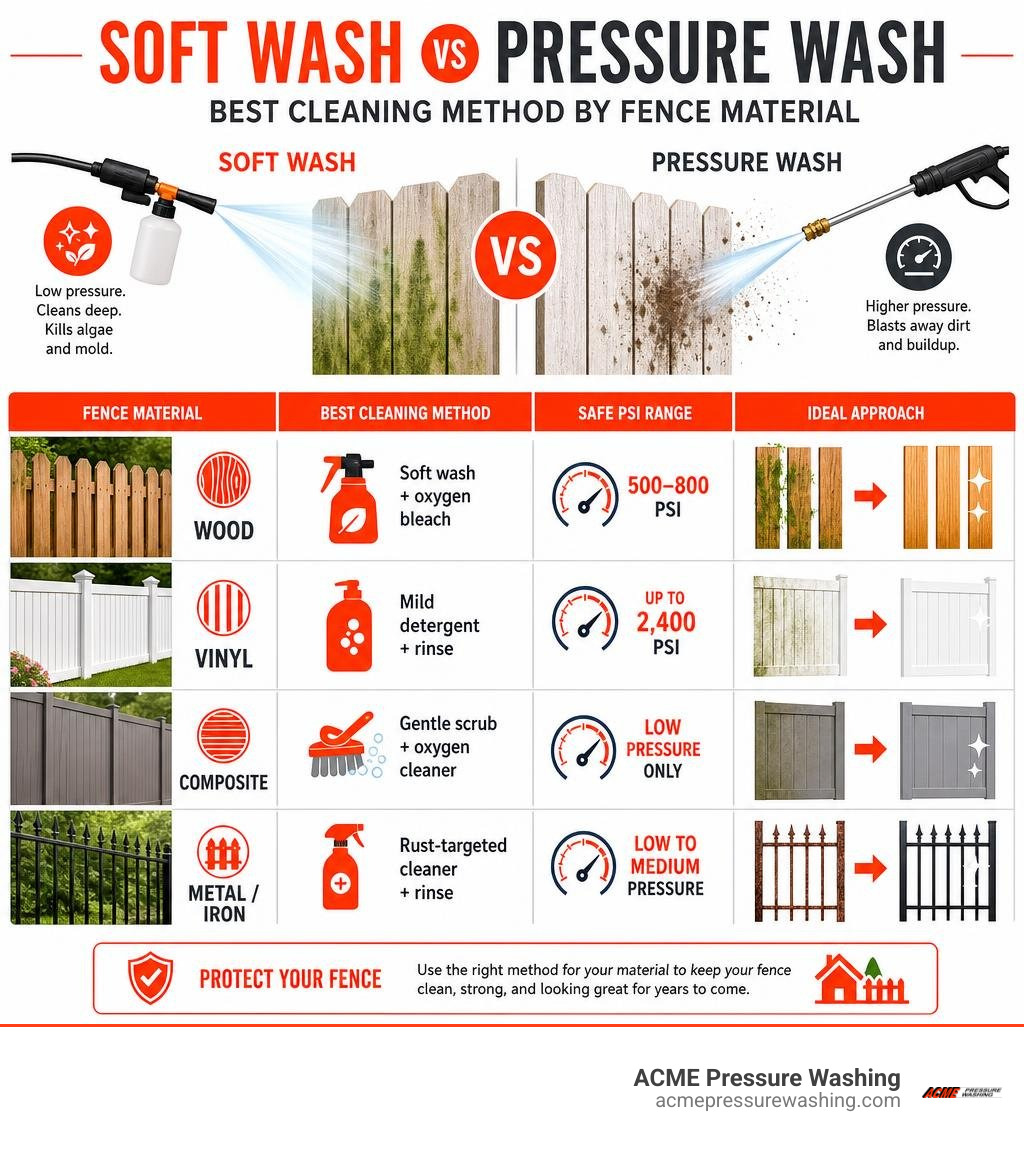
A front yard fence clean done right can transform a weathered, stained barrier into a sharp, welcoming boundary that lifts your entire property’s curb appeal. Here’s a quick look at the best cleaning approach by fence material:
| Fence Material | Best Cleaning Method | Safe PSI Range |
|---|---|---|
| Wood | Soft wash + oxygen bleach | 500–800 PSI |
| Vinyl | Mild detergent + rinse | Up to 2,400 PSI |
| Composite | Gentle scrub + oxygen cleaner | Low pressure only |
| Metal/Iron | Rust-targeted cleaner + rinse | Low-to-medium pressure |
New Hampshire weather is relentless. Humidity, freeze-thaw cycles, pollen season, and shade from mature trees create the perfect conditions for algae, mold, mildew, and lichen to take hold on fence surfaces — often faster than homeowners expect. Left untreated, that organic buildup doesn’t just look bad. It traps moisture against the wood or vinyl, accelerating rot, surface degradation, and costly repairs.
The good news? Most fences don’t need replacing. They need proper cleaning.
The key distinction most homeowners miss: raw water pressure alone doesn’t kill organic growth. Chemical treatment and dwell time do the heavy lifting — pressure just rinses it away.
I’m Lionel Greenwood, owner of ACME Pressure Washing, and over 38 years of restoring fences across New Hampshire — including countless front yard fence clean projects in Merrimack, Nashua, Bedford, and Amherst — I’ve seen what the right method does versus what the wrong one destroys. In the sections below, I’ll walk you through exactly how to match your cleaner to your fence material, when soft washing beats pressure washing, and how to protect your investment long after the cleaning is done.
Front yard fence clean terms explained:
Keep Your Front Yard Fence Clean: Wood, Vinyl, Composite, and Metal Solutions
Every fencing material presents unique chemical and structural characteristics. Understanding how your fence reacts to moisture, sunlight, and cleaning solutions is the foundation of an effective front yard fence clean. When we evaluate a property boundary, we assess material porosity, structural integrity, and the specific contaminants attacking the surface.
To dive deeper into practical execution techniques, check out this comprehensive Fence Cleaning Guide: Step-by-Step Tips for a Like-New Finish.
| Cleaning Solution | Best For | Pros | Cons | Safe for Nearby Plants? |
|---|---|---|---|---|
| Oxygen Bleach (Sodium Percarbonate) | Wood, Composite | Environmentally safe, lifts organic growth without stripping wood oils | Requires 10–15 min dwell time | Yes (non-toxic to foliage) |
| Vinyl-Safe Soft Wash Detergent | Vinyl, PVC | Breaks down sticky pollen and heavy grime rapidly | Needs thorough water rinse | Yes, when pre-rinsed |
| Diluted Vinegar Solution | Very Light Dust | Household availability, completely natural | Ineffective against heavy biological spores, acidic to finishes | Moderate |
| Sodium Hypochlorite (Chlorine Bleach) | Severe Mildew | Kills deep biological growth instantly | High risk of foliage burn and wood fiber bleaching | No (requires heavy landscape soaking) |
When selecting a cleaning approach, matching the chemistry to the substrate is non-negotiable:
- Natural Wood (Cedar, Pine, Redwood): Softwoods are vulnerable to physical erosion. Chlorine bleach can strip natural cedar oils and leave wood looking washed out or gray. We recommend oxygen-based exterior cleaners that release active oxygen bubbles, lifting dirt and algae spores out of the wood grain without harming the cellular structure. Learn more in this guide on Fence Cleaning: How to Clean a Wooden Fence the Right Way.
- Vinyl (PVC): Vinyl fencing does not absorb water, but its static charge attracts pollen, dirt, and airborne contaminants. While vinyl withstands higher water pressure than wood (up to 2,400 PSI), high pressure can shatter aged, brittle panels. Soft washing with a dedicated surfactant detergent breaks the surface bond of sticky grime safely.
- Composite Materials: Composite decking and fencing combine wood fibers with synthetic resins. Abrasive brushes or high pressure can permanently mark the composite surface or expose underlying wood fibers to moisture absorption. Mild oxygen cleaners paired with soft-bristled agitation are ideal.
- Metal, Steel, and Wrought Iron: Metal fences suffer primarily from oxidation and rust blooms caused by continuous sprinkler contact or road salt drift in Southern New Hampshire winters. Cleaning requires rust-converting agents or mild detergents applied with low-pressure flushing to protect protective powder coatings. Local material suppliers emphasize maintaining surface coatings to block moisture penetration.
Why Keeping a Front Yard Fence Clean Boosts Curb Appeal in Amherst and Bedford
Your front yard fence is one of the first features neighbors, visitors, and prospective buyers notice. In historic communities like Amherst and upscale neighborhoods throughout Bedford, property aesthetics directly impact neighborhood character and real estate values. A dingy, green-streaked front fence projects neglect, whereas a bright, freshly restored perimeter framing your lawn elevates the entire architectural landscape.
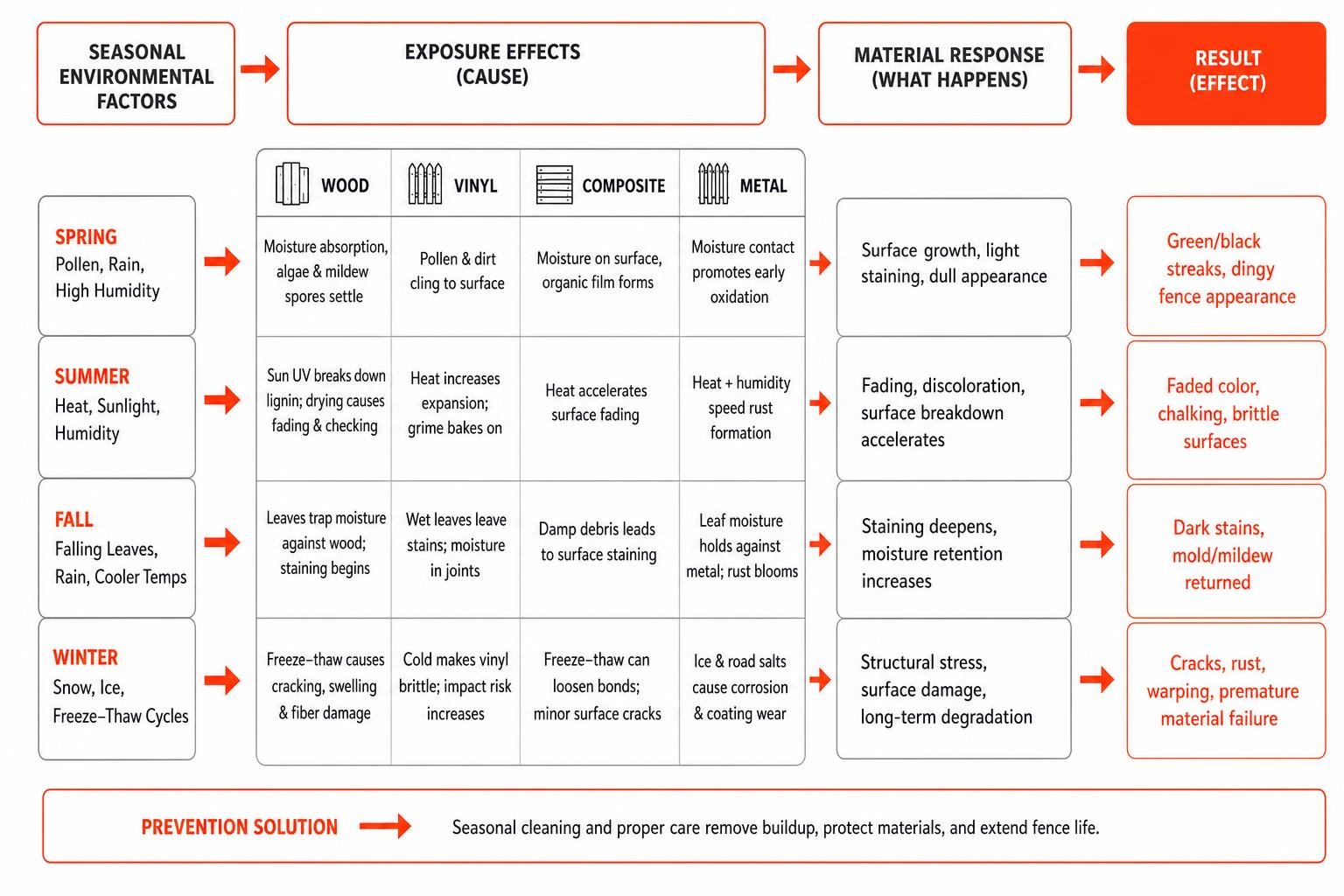
Our New Hampshire climate brings distinct environmental stresses each season. Springtime pollen coats vertical surfaces in yellow dust, summer humidity fosters dense green algae growth in shaded spots, and autumn leaves accumulate along horizontal rails, trapping dampness. Winter brings freezing temperatures, snow pileups, and freeze-thaw cycles that push trapped moisture deep into minute surface fractures.
If you are looking for localized expertise, explore our specialized services for fence pressure washing amherst nh and fence pressure washing bedford nh. For property owners planning new installations or structural overhauls, consulting professional fence installers ensures your boundary investment starts on solid footing.
Comparing Exterior Cleaners for Mold, Mildew, and Organic Stains
Removing biological contaminants requires understanding the biological organisms inhabiting your fence. Green spots are typically algae, which thrive in direct sunlight paired with moisture. Black or dark brown spots are usually mold or mildew, which prefer dark, damp, shaded zones. Lichen appears as crusty, grey-green spots that anchor deeply into porous wood fibers.
Using raw water pressure alone might blast away visible surface growth, but it leaves microscopic roots intact inside the surface pores. Within weeks of warm rainfall, the spores reactivate, and the dark streaking returns.
- Oxygen Bleach (Sodium Percarbonate): Dissolved in warm water, sodium percarbonate breaks down into hydrogen peroxide and sodium carbonate. It works through oxidation, breaking organic cellular walls while remaining completely non-toxic to surrounding grass, gardens, and shrubbery. It is our preferred active agent for wooden privacy fences and decorative picket borders.
- Vinyl-Safe Surfactant Cleaners: These proprietary chemical mixes lower water’s surface tension, allowing liquid solutions to penetrate tight corners, shadow lines, and panel interlocking seams where mold spores shelter.
- Chlorine Bleach (Sodium Hypochlorite): While chlorine bleach kills spores rapidly, it carries significant environmental drawbacks. Bleach runoff can alter soil pH, kill flowerbeds, and burn lawn turf. Furthermore, high concentrations of chlorine bleach can chemically break down wood lignin, causing fibers to turn fuzzy and break apart prematurely.
While property owners can review basic manual scrubbing techniques in this guide on How To Clean A Dirty Wood Fence Without A Pressure Washer (It’s So Simple) – AOL, professional soft washing is strongly recommended to guarantee deep spore eradication without damaging delicate surfaces.
Safe Soft Washing vs. High-Pressure Washing Techniques
The debate between high-pressure blasting and soft washing comes down to surface safety versus destructive force. Standard consumer pressure washers sold at home centers can produce pressures between 2,000 and 4,000 PSI (pounds per square inch). While that power works well on solid poured concrete driveways, applying it directly to wooden or vinyl fences frequently causes irreversible damage.

A standard garden hose delivers water at roughly 40 to 60 PSI, which is safe for light rinsing but lacks cleaning power for embedded grime. Professional soft washing bridges this gap: it utilizes specialized low-pressure pumps operating between 100 and 500 PSI to deliver custom-formulated cleaning solutions. The active detergents do the heavy lifting of killing spores and breaking surface bonds, followed by a wide-fan, low-pressure rinse that clears away residue without gouging or stripping the surface.
For most front yard fence clean projects in New Hampshire, professional fence pressure washing is safer than relying on pressure alone. Wood pickets can splinter, fur, or develop wand marks when exposed to aggressive pressure. Vinyl panels can tolerate higher limits in some cases, but even vinyl should be inspected for age, brittleness, loose caps, and weakened seams before any rinse is applied.
Professional Front Yard Fence Clean vs. DIY Soft Washing in Nashua
DIY cleaning should stay limited to light rinsing and basic surface care. When mold, algae, lichen, pollen buildup, or deep shadow-line staining is present, a professional soft wash is the safer approach. ACME Pressure Washing uses controlled application methods, professional detergents, and low-pressure rinsing to clean fence surfaces without forcing water into vulnerable joints or damaging wood fibers.
On vinyl fencing, pressure limits can reach up to 2,400 PSI only when the material is sound, properly supported, and rinsed with the correct fan pattern. On wood fencing, the safe range is much lower, typically around 500 to 800 PSI, and chemical dwell time matters more than force. For local service, see our page for fence pressure washing nashua nh. If you are comparing project variables, our guide to pressure washing fence prices what should you actually pay explains what can influence a fence cleaning estimate. For direct scheduling help outside the conclusion, call ACME Pressure Washing at +1603-883-6900.
Surface Preparation, Plant Protection, and Moisture Control
Before cleaning begins, the site should be prepared to protect landscaping, nearby structures, and the fence material itself. A professional fence cleaning process typically includes:
- Inspecting boards, rails, posts, gates, hinges, and caps for loose or weakened areas.
- Pre-wetting nearby grass, shrubs, garden beds, and planting areas before detergent application.
- Using landscape protection where appropriate while still allowing safe airflow and drainage.
- Adjusting sprinkler heads so overspray does not continue soaking the fence after cleaning.
- Removing leaf piles, grass clippings, and soil buildup from the base of fence pickets.
- Controlling detergent dwell time so organic stains are treated without overexposing the surface.
- Rinsing from appropriate angles to prevent water from being driven behind panels or into joints.
These preparation steps are especially important in shaded fence lines in Amherst, Bedford, Merrimack, and Nashua, where moisture tends to linger and organic growth returns quickly if the underlying conditions are not addressed.
Post-Cleaning Preservation: Drying Times, Staining, and Maintenance
Achieving a spotless front yard fence clean is only the first half of complete exterior maintenance. Once dirt, mold, and algae are removed, the open pores of wood fences are exposed and ready for protective coatings.
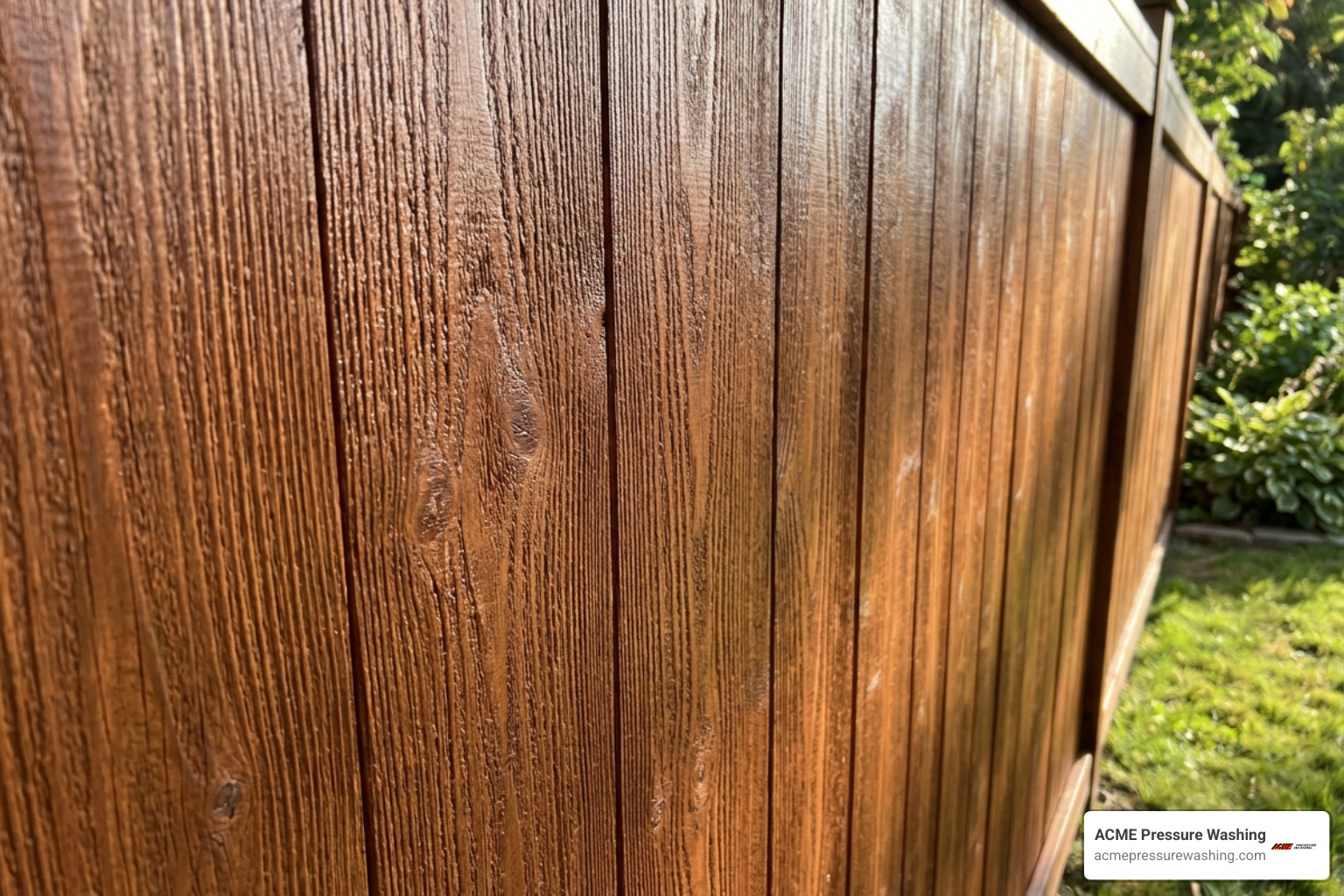
Applying stain, paint, or water sealant too quickly after washing is one of the most common mistakes property owners make. Trapping residual moisture inside the wood cells causes new stains to bubble, flake, or peel within months.
- The 24 to 48-Hour Rule: Under ideal summer conditions (warm sun, mild humidity, dry breeze), a wooden fence requires a minimum of 24 to 48 hours of uninterrupted drying time before applying stains or sealers.
- Cool or Humid Conditions: In damp weather or shaded zones shaded by dense tree cover in towns like Bedford or Amherst, wood drying times can extend from 3 to 7 days.
- Moisture Meter Verification: Professional contractors use digital pin moisture meters to test wood internal moisture content. The moisture level must drop below 12% to 15% before oil- or water-based stains can properly bond with wood fibers.
- The Water Droplet Test: If you do not have a moisture meter, sprinkle a few water droplets onto the clean wood surface. If the wood immediately absorbs the water droplets, it is dry and ready for staining. If the water beads up on top, the surface still holds moisture or an old sealant layer, requiring additional drying time.
Read our complete breakdown on drying timelines in our detailed article dont rush the brush exactly how long to let your fence dry before staining. For additional expert tips on pre-stain surface prep, review How to Clean a Fence Before Staining – Squeaky Clean Fencing and regional maintenance recommendations.
To extend the lifespan of your cleaned fence:
- Re-apply an oil-based stain every 3 to 5 years, or clear water sealers every 1 to 2 years.
- Trim back overhanging branches and bushes to eliminate shaded, damp microclimates.
- Keep grass clippings and leaf piles away from the base of fence pickets to stop ground rot.
Frequently Asked Questions About Front Yard Fence Cleaning
How often should I clean my front yard fence in New Hampshire?
For most properties across New Hampshire, we recommend scheduling a professional fence clean once a year—ideally in late spring after tree pollen season concludes, or in early autumn before winter freeze-thaw cycles arrive. Fences situated in heavily shaded areas, under dense pine canopies, or directly exposed to continuous lawn sprinkler overspray in towns like Nashua or Merrimack benefit from bi-annual soft washing every six months to prevent mold spores from rooting deeply.
Can high pressure damage wooden or vinyl fence panels?
Yes, high pressure can severely damage both wood and vinyl fencing. Water pressure exceeding 1,200 PSI on wood pickets splinters delicate cedar fibers, leaves permanent gouges, raises the wood grain, and forces moisture deep into internal board cells. On vinyl fencing, high pressure can crack or puncture aged, sun-brittle PVC panels and tear open corner seams. Using soft-wash chemical applications combined with wide fan tip rinsing under 500 to 800 PSI eliminates dirt safely without surface damage.
How long should a fence dry after cleaning before staining or sealing?
A cleaned wood fence should dry for at least 24 to 48 hours under sunny, dry weather conditions before applying paint, stain, or water-repellent sealant. In cooler, humid, or heavily shaded areas across New Hampshire, drying times may extend up to 3 to 5 days. Coating wood while moisture remains trapped inside wood pores prevents stain absorption, causing premature peeling, dark staining, and finish failure.
Protect Your Property Investment with Professional Fence Cleaning Services
Maintaining a clean front yard fence protects your home’s boundary investment, shields your materials from rot and weathering, and restores curb appeal instantly. Rather than spending your weekend dealing with high-pressure washer rentals, harsh chemicals, and potential surface gouging, trust the proven soft-wash experts at ACME Pressure Washing.
With over 38 years of experience serving Merrimack, Amherst, Bedford, and Nashua, our family-owned business uses custom eco-friendly solutions tailored to your specific exterior cleaning needs. For local fence care near our home base, explore our fence pressure washing merrimack nh service page.
In addition to fence restoration, explore our professional services for residential and commercial structures, including house washing, commercial pressure washing, and fleet washing. We deliver results that protect your property and enhance curb appeal for years to come.
Ready to transform your front yard perimeter fence?
- Get a Fast Online Estimate: Visit our easy online quote request page to schedule your professional fence consultation.
What You Should Actually Pay for Pressure Washing Fence Prices in 2026
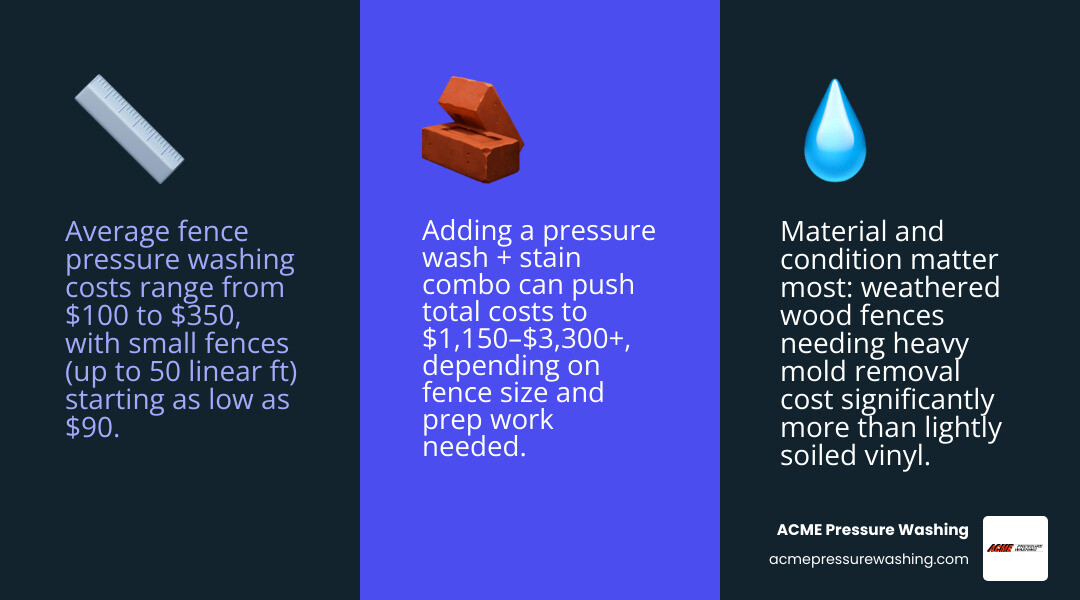
Pressure washing fence prices vary more than most homeowners expect. Based on publicly available internet data, average costs typically fall between $100 and $350 for a standard residential fence — but the full range runs much wider, from as low as $90 on the low end to $500 or more depending on size, material, condition, and location.
Here is a quick snapshot to answer the most common cost questions:
| Fence Size | Estimated Cost Range (Industry Average) |
|---|---|
| Small (up to 50 linear ft) | $90 – $200 |
| Medium (50-150 linear ft) | $200 – $400 |
| Large (150+ linear ft) | $400 – $700+ |
| Per square foot | $0.30 – $0.80 |
| Power washing (heated water) | $0.35 – $0.80+ per sq ft |
| Pressure wash + stain combined | $1,150 – $3,300+ |
Note: All prices above are average costs sourced from publicly available internet data. They do not represent ACME Pressure Washing’s actual rates.
These numbers shift significantly based on your fence material, whether both sides need cleaning, local labor rates, and the condition of the surface. a weathered wood fence in Merrimack, NH that needs heavy mold removal and stain prep will cost more than a lightly soiled vinyl fence in a dry climate.
I’m Lionel Greenwood, owner of ACME Pressure Washing, and over my 38 years of hands-on experience serving New Hampshire homeowners, I’ve seen how widely pressure washing fence prices can swing based on factors most people don’t think to ask about. In this guide, I’ll walk you through everything that actually drives the cost — so you can compare quotes with confidence and make the right call for your property.
Must-know pressure washing fence prices terms:
- fence pressure washing
- how long to wait to stain fence after pressure washing
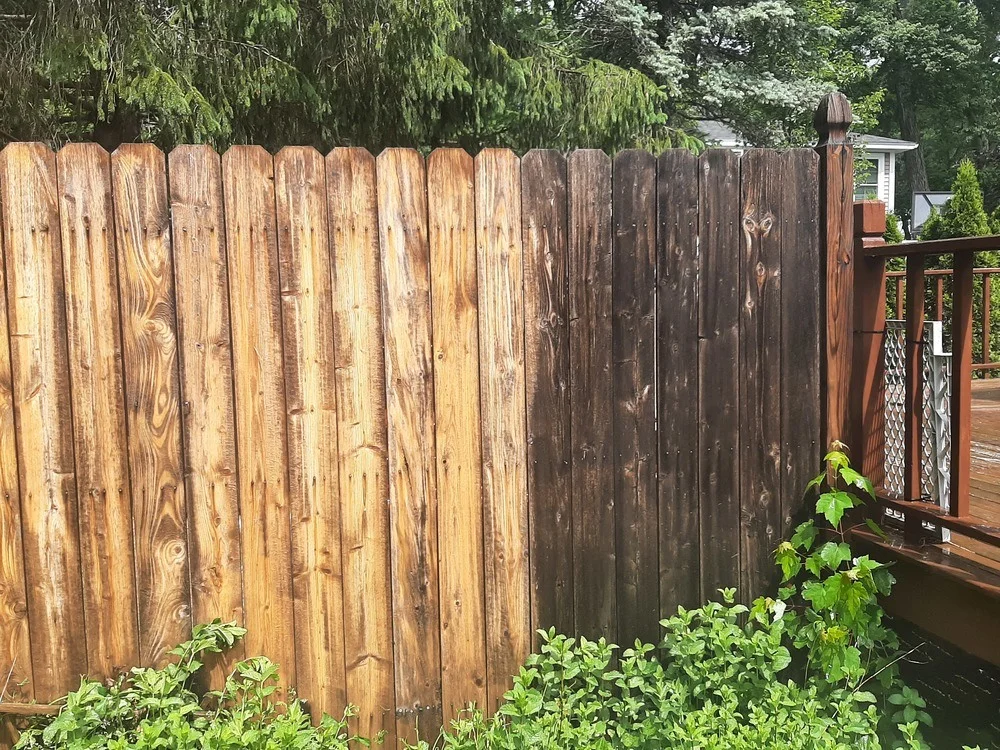
- power wash fence before and after
Understanding Average Pressure Washing Fence Prices
To truly understand what you should pay, we have to look past simple flat-rate estimates. While general online data lists a national average of $225 for a basic wash, professional-grade exterior cleaning is rarely “one-size-fits-all.” Real-world professional pricing for comprehensive commercial-grade fence restoration services generally spans a wide range from $450 to $1,125 or more depending on the project’s scale, the accessibility of the site, and the severity of organic growth.
Disclaimer: Please note that all prices mentioned in this guide are average costs sourced from publicly available internet data. They are provided solely for industry context and do not reflect the actual pricing or guaranteed rates of ACME Pressure Washing.
When evaluating quotes in New Hampshire communities like Bedford, Manchester, Nashua, and Merrimack, you will find that reputable contractors rarely quote blind. Instead, they look at the total surface area, the height of the panels, and the specific cleaning agents required. For a quick baseline estimate based on your specific dimensions, tools like this Fence pressure washing cost calculator can help you visualize how your fence’s measurements translate into raw square footage.
Investing in professional fence pressure washing does more than just boost your curb appeal; it preserves the structural integrity of your boundary lines, preventing wood rot and structural failure.
How Size and Surface Area Dictate Pressure Washing Fence Prices
The most common mistake property owners make when estimating pressure washing fence prices is confusing linear feet with total square feet. If you have a 100-foot-long fence, that is 100 linear feet. However, if that fence is 6 feet tall, you actually have 600 square feet of surface area on just one side.
If you need both sides cleaned—which is standard for shared boundary lines or corner lots—your total surface area doubles to 1,200 square feet. Because professional exterior cleaning is priced by the physical square footage of the surface being washed, double-sided cleaning will roughly double the labor time and material usage.
Height also plays a major role. Standard residential privacy fences are usually 6 feet tall, but many commercial properties and larger estates in Bedford, Manchester, and Nashua utilize 8-foot privacy panels. Taller fences require specialized spray angles, longer reach equipment, and more physical labor to clean systematically from top to bottom. If you are a resident looking for localized details, checking out our dedicated service page for fence pressure washing bedford nh can provide excellent context on how local layout styles impact overall project scope.
Regional Labor Rates and Pressure Washing Fence Prices in New Hampshire
Local labor rates are another primary driver of exterior cleaning costs. Because New Hampshire has a higher cost of living compared to the national average, local labor rates for skilled exterior cleaning technicians typically range from $50 to $150 per hour.
Furthermore, our unique New England climate directly influences how often and how fences must be cleaned. Our harsh, snowy winters followed by warm, humid summers create the perfect breeding ground for organic growth. Mold, mildew, moss, and green algae thrive in damp, shaded areas, meaning fences in heavily wooded parts of Merrimack, Bedford, and Manchester require more robust, heavy-duty cleaning solutions than those in dry, sun-baked regions.
If you want to see how regional climate factors dictate cleaning needs in our largest city, our guide to fence pressure washing manchester nh outlines the exact environmental challenges local properties face.
How Fence Materials, PSI Settings, and Power Washing Impact Costs
The durability and composition of your fence material dictate the exact techniques, machinery, and pressure settings required to clean it safely. Using the wrong approach can easily ruin a costly installation.
In the exterior cleaning industry, we balance two primary metrics:
- PSI (Pounds per Square Inch): The brute force of the water stream.
- GPM (Gallons per Minute): The volume of water flow, which actually carries the dirt away and determines how fast a job can be completed.
For delicate surfaces, we rely on “soft washing”—a technique that combines high GPM water flow with specialized, eco-friendly cleaning solutions at very low pressure (usually under 500 PSI). For harder, non-porous surfaces, a traditional high-pressure wash is appropriate.
Additionally, it is important to understand the difference between standard pressure washing and power washing. While pressure washing uses cold or room-temperature water, power washing utilizes heavily heated water. Heated water is incredibly effective for melting away grease, heavy oil, and deep-seated mold spores, but it requires specialized commercial rigs and must be used with extreme caution to avoid warping delicate materials.
Here is how standard industry costs compare per square foot based on the method used:
| Cleaning Method | PSI Range | Average Cost Per Sq. Ft. (Internet Data) | Best Used For |
|---|---|---|---|
| Cold Water Pressure Wash | 500 – 2,000 PSI | $0.30 – $0.40 | Standard vinyl, hardwoods, brick, concrete |
| Heated Power Wash | 1,500 – 3,000+ PSI | $0.35 – $0.45 | Heavy mold, deep grease, metal, commercial concrete |
| Soft Wash (Low Pressure) | < 500 PSI | $0.30 – $0.50 | Softwoods (cedar/pine), delicate vinyl, composite |
Wood Fences: Softwood vs. Hardwood Cleaning
Wood is the most common fencing material, but it is also the most sensitive to pressure. Softwoods like pressure-treated pine or cedar are highly susceptible to damage. If an operator uses a setting higher than 500 to 600 PSI on softwood, the water will gouge the wood, splinter the grain, and permanently ruin the panels. Because softwoods require a slow, meticulous soft-washing approach with gentle chemical pre-treatments, they can actually cost slightly more in labor than hardwoods.
Hardwoods like ipe or mahogany are much denser and can safely handle higher pressures of 1,200 to 1,500 PSI. According to the comprehensive pricing guide How Much Does It Cost to Pressure Wash a Fence?, professional wood cleaning requires a perfect balance of chemistry and physical rinsing to open up the wood’s pores without destroying the fibers.
Once a wood fence is thoroughly washed, it must dry completely before any protective coating is applied. To learn more about the critical timeline between washing and sealing, you can read our detailed guide on dont rush the brush exactly how long to let your fence dry before staining.
Vinyl, Composite, and Metal Fences
Non-wood materials present their own unique cleaning requirements:
- Vinyl Fences: Vinyl is incredibly popular because it is low-maintenance, but it is highly prone to green algae buildup and a chalky white residue known as “oxidation” caused by sun exposure. Cleaning vinyl requires a specialized mild bleach solution to kill the algae spores and break down the oxidation, followed by a medium-pressure rinse (around 2,000 PSI) from a safe distance of at least three feet to avoid cracking the vinyl panels.
- Composite Fences: Composite materials are a blend of wood fibers and plastic. They are highly susceptible to deep-seated mold that feeds on the organic wood fibers. Cleaning composite requires specialized, deep-penetrating detergents and a moderate pressure setting of around 1,500 PSI.
- Metal Fences (Aluminum, Steel, Wrought Iron): Metal fences can withstand much higher pressures, ranging from 1,800 PSI for aluminum to 2,300 PSI for wrought iron. The primary risk here is chipping old paint or stripping protective powder coatings, meaning a skilled hand is required.
For property owners in Nashua and Merrimack looking for expert local care for these delicate materials, we recommend visiting our specialized page on fence pressure washing nashua nh to see how we safely handle non-wood substrates.
Additional Cost Factors: Staining, Sealing, and Site Prep
If you are planning a complete fence restoration, pressure washing is only the first step. Applying a high-quality stain or sealant immediately after the wood dries is essential to protect the freshly opened pores from moisture, UV rays, and rot.
When bundling these services, the price increases due to the cost of premium stains, sealants, and the intensive labor required for application. Based on online data, while a standard combined wash-and-stain job has an average cost of $2,225, full-scale professional wood restoration, hand-brushed staining, and premium sealing projects for large residential estates can range from $4,450 to $11,125 or more.
Other factors that will influence your final quote include:
- Application Method: Spraying stain is faster and cheaper (averaging around $0.75 per square foot), but hand-brushing delivers a deeper, more uniform finish and is often required near delicate landscaping to prevent overspray (averaging around $1.30 per square foot).
- Landscaping and Obstacles: If your fence is lined with prized flower beds, bushes, or delicate gardens, technicians must spend extra time covering and protecting your plants, or hand-brushing the entire section to avoid chemical runoff and overspray damage.
- Site Accessibility: Fences on steep slopes, those with limited physical access, or properties with locked gates and tight property lines require more labor hours to navigate.
- Surface Prep: If your fence has old, peeling paint, heavy graffiti, or stubborn old sealants, it will require specialized chemical stripping agents and extra scraping before the wash can even begin.
If you are located in the Merrimack Valley, you can read more about how we handle these preparation steps locally on our dedicated fence pressure washing merrimack nh service page.
Professional vs. DIY Fence Cleaning
It is always tempting to head to the local home improvement store, rent a pressure washer for $40 to $100 a day, and try to tackle your fence over the weekend. However, DIY fence cleaning often ends up costing more in the long run.
The learning curve for operating a pressure washer is steep. Without professional training, it is incredibly easy to permanently damage your property. Common DIY mistakes include:
- Wood gouging and splintering from using too high a PSI or holding the spray wand too close.
- Cracking vinyl panels by using the wrong spray angle.
- Damaging delicate landscaping and killing lawns with harsh, unbuffered chemical runoff.
- Violating local EPA guidelines and municipal wastewater runoff regulations, which can result in heavy environmental fines for improper chemical discharge into storm drains.
Furthermore, consumer-grade rental equipment lacks the GPM volume of professional machinery, turning a 2-hour professional job into a grueling multi-day project.
Our professional team uses commercial-grade, high-volume rigs, custom-blended eco-friendly cleaning solutions, and decades of experience to deliver flawless results safely and efficiently.
How often should a New Hampshire fence be pressure washed?
In New Hampshire, we recommend having your wood fence professionally washed and inspected every 12 to 24 months to prevent mold, mildew, and moss from taking root in the wood fibers. Vinyl and composite fences can typically go 18 to 24 months between cleanings. Regular maintenance cycles keep organic growth at bay, making each subsequent wash faster and more affordable while extending the overall lifespan of your fence by decades. This is especially true for damp, shaded properties in Merrimack, Bedford, and Manchester where tree canopy cover accelerates rot.
Does pressure washing damage wood or vinyl fences?
Yes, pressure washing can absolutely ruin wood or vinyl fences if performed by an inexperienced operator using incorrect settings. High pressure can shred softwood fibers, leave permanent “wand marks” on cedar, and crack aged vinyl panels. This is why we utilize a specialized “soft washing” system for delicate surfaces. By relying on highly effective, eco-friendly detergents to break down dirt and algae, we can rinse the surface clean using low-pressure settings that are completely safe for your fence.
Do professional exterior cleaning companies use their own water?
While professional exterior cleaning companies carry water tanks on our custom rigs to maintain consistent GPM flow rates and protect our pumps, we typically connect to the homeowner’s outdoor spigot to ensure a continuous water supply for large projects. If a property in Bedford, Manchester, or Nashua has low well-water pressure or restricted water access, our onboard tanks allow us to complete the project smoothly without putting undue stress on your home’s plumbing system.
Conclusion
When comparing pressure washing fence prices, the old adage always holds true: you get what you pay for. While cheap, uncertified operators might offer tempting low-ball rates, they often lack the licensing, commercial general liability insurance, and technical expertise required to clean your property safely.
At ACME Pressure Washing, we bring over 38 years of local experience to every project. We use safe, customized, eco-friendly techniques designed specifically for the unique New Hampshire climate. Beyond fences, we specialize in high-end commercial and residential cleaning services to protect and beautify your entire property, including:
- house pressure washing
- deck pressure washing and restoration
- walkway and patio cleaning
- commercial pressure washing
- fleet and equipment pressure washing
Ready to restore your fence to its original beauty? Contact our expert team today!
- Get a Free Quote online: Contact ACME Pressure Washing
Why Rushing to Stain After Pressure Washing Can Ruin Your Fence
Knowing how long to wait to stain a fence after pressure washing could be the difference between a finish that lasts for years and one that peels, bubbles, or turns blotchy within a season.
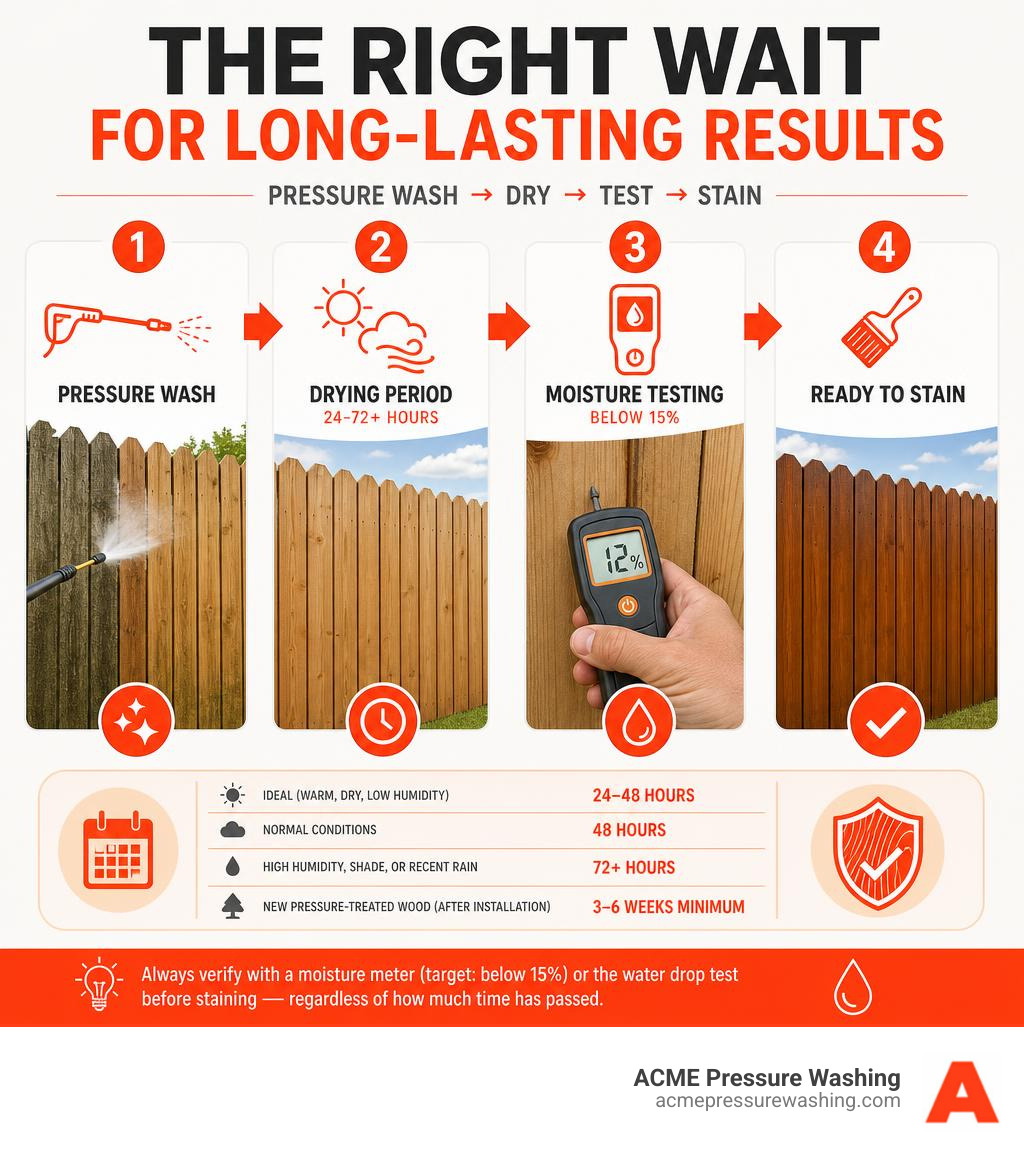
Quick Answer: How Long to Wait Before Staining
| Condition | Minimum Wait Time |
|---|---|
| Ideal (warm, dry, low humidity) | 24-48 hours |
| Normal conditions | 48 hours |
| High humidity, shade, or recent rain | 72+ hours |
| New pressure-treated wood (after installation) | 3-6 weeks minimum |
Always verify with a moisture meter (target: below 15%) or the water drop test before staining — regardless of how much time has passed.
When a fence has just been pressure washed, the surface may look clean and ready for stain. But what appears dry on the outside is not always dry inside the wood. Wood holds moisture deep in its fibers long after the surface looks dry. Stain applied over damp wood can’t penetrate properly — it sits on top, traps moisture underneath, and eventually peels, cracks, or grows mildew.
This is a mistake we see regularly on commercial, HOA, and residential properties across Merrimack, Nashua, Bedford, and Manchester, NH — especially in spring and fall when New Hampshire’s humidity and cool temperatures slow drying times significantly.
I’m Lionel Greenwood, owner of ACME Pressure Washing, and with over 38 years of hands-on fence restoration experience across New Hampshire, I’ve seen exactly what happens when properties don’t allow enough drying time. Below, I’ll walk you through the right drying windows so your stain job actually holds. Keep reading for a full breakdown of every factor that affects how long to wait to stain a fence after pressure washing, from wood type to weather conditions.
Related content about how long to wait to stain fence after pressure washing:
How Long to Wait to Stain Fence After Pressure Washing: The Safe Answer
As a general rule of thumb, you should wait at least 48 hours after pressure washing a fence before applying any stain. In many cases, waiting 72 hours is much safer, particularly in high-humidity climates or shaded areas. According to industry standards, you must wait 24 to 48 hours before staining wood surfaces to ensure the stain penetrates and adheres effectively. However, rushing this process is the number one cause of premature stain failure.
How long to wait to stain fence after pressure washing in normal conditions
Under normal conditions—defined as sunny days with temperatures between 60°F and 80°F, low humidity, and a light breeze—a solid 48-hour window is usually sufficient for standard vertical fence boards. Because vertical boards allow water to run off naturally, they dry slightly faster than horizontal deck boards.
During these 48 hours, the deep water saturation from the pressure washer evaporates out of the wood cells. This re-opens the pores of the wood, allowing the stain to draw deep into the grain. For professional fence cleaning and preparation, learn more on our page about fence pressure washing.
How long to wait to stain fence after pressure washing after rain, shade, or humidity
If your property in Bedford, NH, or Manchester, NH, features heavy tree canopy, or if the weather turns humid, the drying timeline must be extended to at least 72 hours. High humidity slows down the rate of evaporation, keeping the internal wood fibers saturated.
North-facing fence lines or sections shielded by thick landscaping or buildings receive very little direct sunlight. Without sun exposure and proper airflow, these damp pockets can hold water for days. If it rains at any point during your waiting window, the clock resets, and you must wait another 48 to 72 hours from the time the rain stops before applying stain.
What Happens If You Stain Too Soon?
Applying stain to a fence that hasn’t fully dried is a recipe for an expensive, time-consuming failure. When you apply stain over damp wood, several issues occur:
- Poor Penetration: Oil-based stains repel water. If the wood pores are already filled with water, the stain cannot sink into the wood.
- Peeling and Bubbling: As the sun heats the wood, the trapped moisture tries to escape. It pushes upward against the stain film, causing the finish to bubble, crack, and peel off in sheets.
- Mold and Mildew Growth: Trapping water beneath a layer of stain creates a dark, damp environment where mold, moss, and mildew thrive, rotting your wood from the inside out.
- Uneven, Blotchy Finish: The stain will dry at different rates across wet and dry patches of wood, leaving your fence looking patchy and discolored.
The Factors That Change Fence Drying Time After Pressure Washing
No two fences dry at the exact same rate. Several key environmental and physical factors dictate exactly how long your wood needs to breathe before it is ready for a protective coating.
Wood Type: Cedar, Pine, Pressure-Treated, New, and Older Fences
Different wood species and ages react uniquely to water saturation:
- Cedar: Naturally rot-resistant and highly porous, cedar absorbs water quickly but also releases it relatively fast. However, because it is so absorbent, it requires a full, uninterrupted 48-hour dry time in Merrimack, NH, to prevent the cellular structure from holding onto deep moisture.
- Pine: Standard softwood pine is highly porous and behaves similarly to cedar, drying out within 48 hours under clear skies.
- New Pressure-Treated Wood: If you have a newly installed pressure-treated pine fence, the rules change completely. Pressure-treated lumber is chemically infused with liquid preservatives under high pressure. This process leaves the wood wet right from the lumber yard. You must allow new pressure-treated wood to air dry for at least 3 to 6 weeks minimum after installation before staining, with longer timelines possible in damp, shaded New Hampshire conditions. Moisture testing is more reliable than relying on the calendar alone. For more on pressure-treated wood drying guidance, see this helpful resource from Home Improvement Way.
- Older, Weathered Fences: Older wood is highly dry and porous. It acts like a dry sponge, absorbing significant water during pressure washing. Because it drinks in so much water, an older fence often requires a full 72 hours to dry out completely.
Pressure Washing Technique and Water Saturation
The pressure and volume of water used during the cleaning process directly impact the required drying time. Uncontrolled high-pressure washing at close range can force water deep into the core of the wood fibers, raise the grain, and severely over-saturate the material.
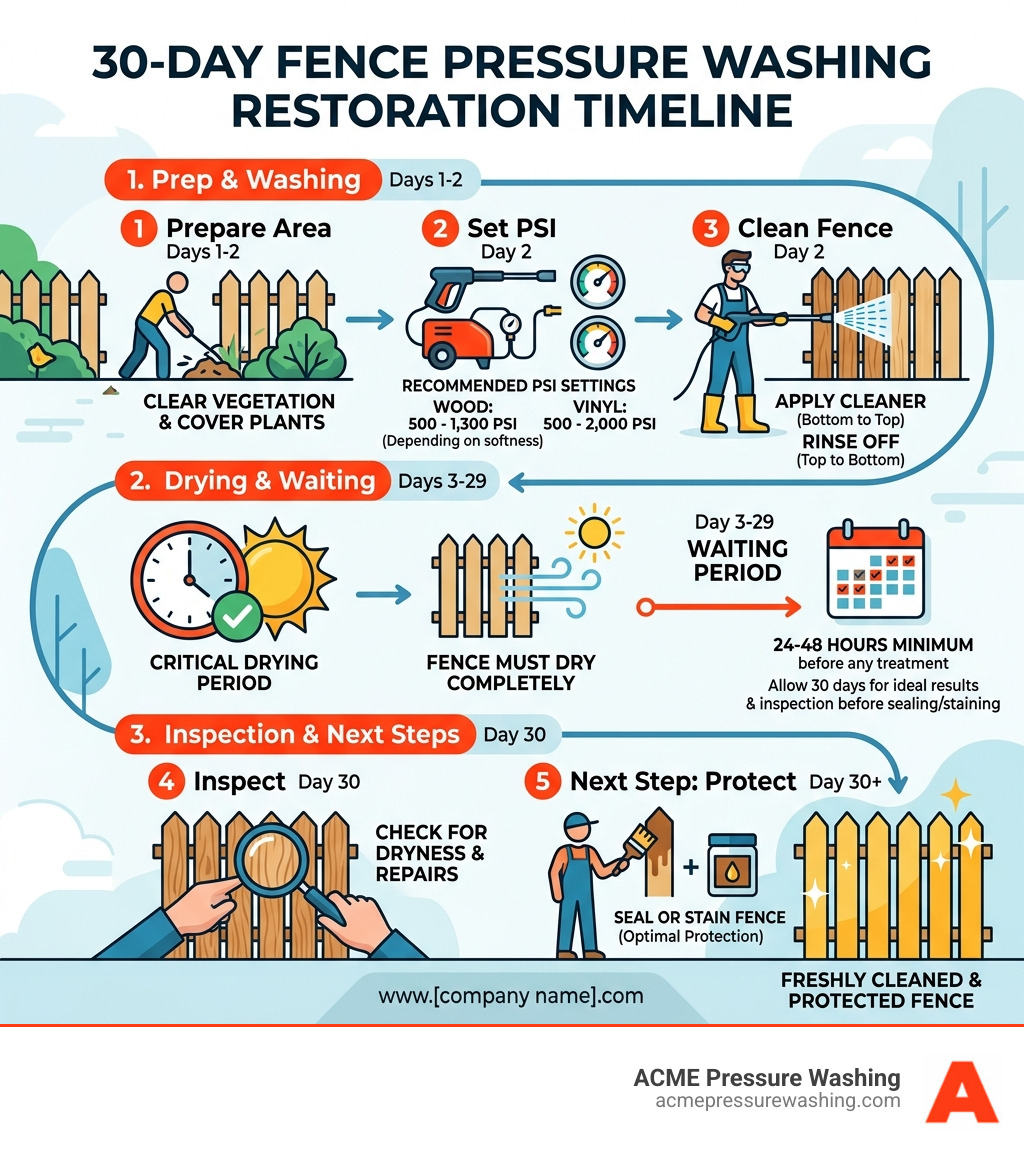
At ACME Pressure Washing, we employ professional soft washing techniques using low pressure, typically under 500 to 1,000 PSI. This thoroughly cleans away organic growth, dirt, and gray wood fibers without forcing water deep into the wood’s core. Safe, professional cleaning drastically reduces drying times. If you want to dive deeper into proper washing techniques, read our guide on How to Master Fence Pressure Washing in 30 Days.
How to Tell the Fence Is Dry Enough Before Staining
You cannot rely on a simple visual check to determine if wood is ready for stain. Wood that looks bone-dry on the surface can still hold a high concentration of water deep within its core. The following checks are best handled by a professional team before stain is applied.
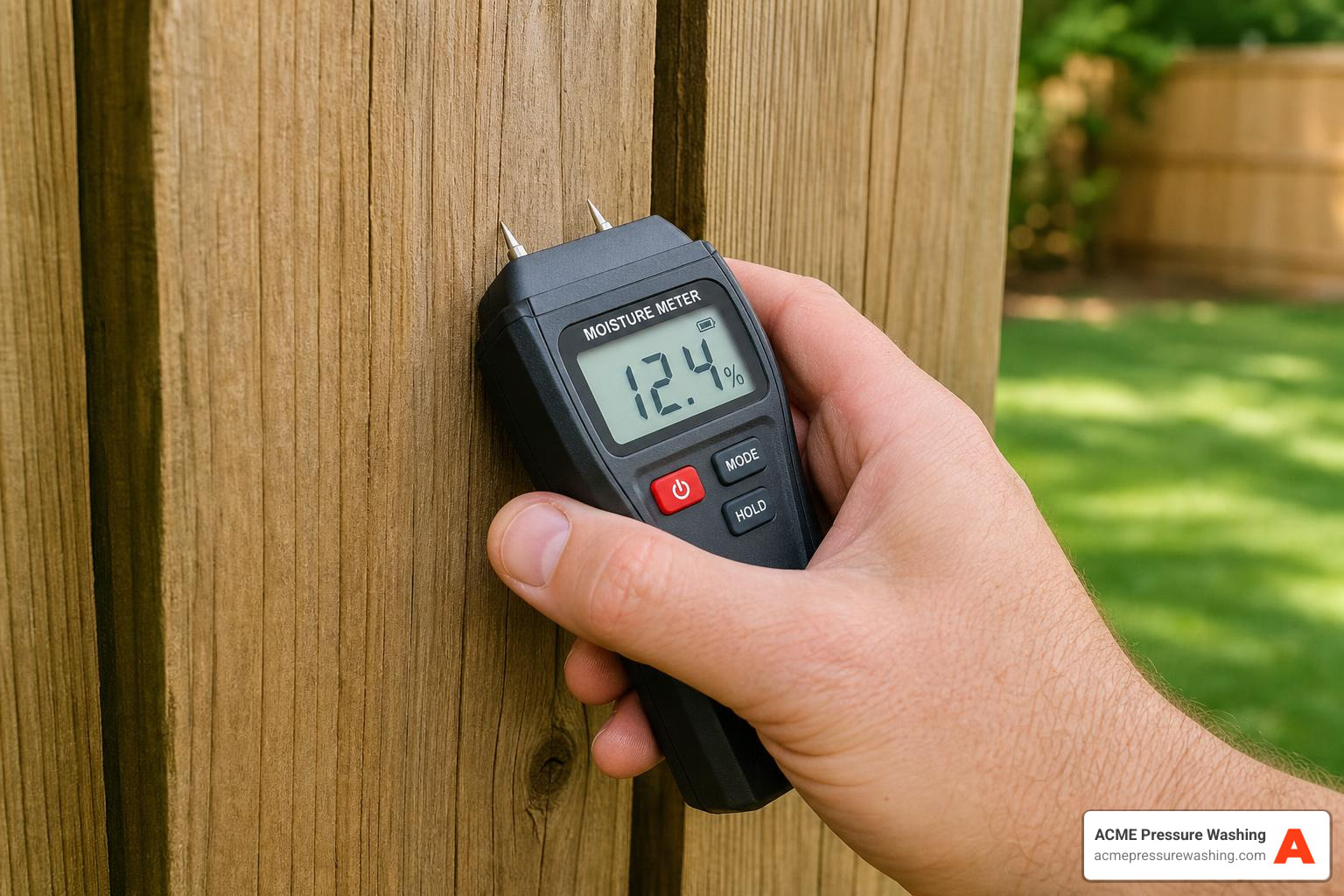
Moisture Meter Test: The Most Reliable Method
The most reliable way to test if your fence is dry enough to stain is by using a digital wood moisture meter. A trained technician should check multiple fence sections instead of relying on one surface reading.
Key areas to test include:
- Sunny fence sections.
- Shaded fence sections.
- The bottom of vertical pickets, where water can linger.
- Structural posts and horizontal rails.
- Any area near landscaping, buildings, or poor airflow.
The target reading is below 15% moisture content. Ideally, the fence should read between 12% and 15% before applying any stain. If any reading is above 15%, wait another 24 hours and test again.
Water Drop Test: Quick Field Check
The water drop test can be used as a quick field screening method, but it should not replace a moisture meter on commercial, HOA, or large residential fence projects.
A few drops of clean water are applied to several areas of the fence. If the wood absorbs the droplets quickly, typically within 1 to 2 minutes, the pores are open and ready to accept stain. If the water beads up, sits on the surface, or takes a long time to soak in, the wood may still be damp internally or may have a barrier such as old sealant or mill glaze.
Should You Clean or Prep Again Before Staining?
Yes, a quick inspection and light prep are highly recommended after your fence has dried and before stain is applied. During the 48 to 72 hours of drying time, wind can blow dust, dirt, and pollen onto the fresh wood fibers.
A professional crew should inspect the fence line and remove surface debris with the appropriate brush, cloth, or prep method. If the pressure washing raised the wood grain, light sanding with 80-grit sandpaper may be needed to smooth out the surface. This helps create an even finish and prevents stain from pooling in rough areas. If you are also scheduling deck cleaning, you can review our guide on How to Pressure Wash and Stain a Deck in 5 Simple Steps.
Products, Techniques, and Timing That Help Stain Adhere Well
Achieving a beautiful, long-lasting fence finish requires combining proper drying times with the right products and application methods.
Best Time of Year to Stain After Pressure Washing
In New Hampshire, our seasonal weather windows are tight. The best times of year to stain a fence are late spring (late May to June) and early fall (September to October). During these windows, temperatures remain moderate, and the humidity is generally lower.
Avoid staining in the dead of summer when temperatures exceed 90°F. Direct, hot sunlight dries the stain too quickly on the surface before it has a chance to penetrate the wood fibers, leading to premature flaking. Likewise, avoid late autumn when overnight temperatures drop below 50°F, which prevents the stain from curing properly.
Stain Types and Application Methods
- Stain Selection: We strongly recommend using high-quality, penetrating oil-based semi-transparent stains. Unlike water-based acrylic stains that sit on top of the wood like a thin layer of paint, oil-based stains sink deep into the wood grain, conditioning the wood and providing superior UV and moisture protection from within.
- Application Technique: Whether using a sprayer, roller, or brush, always finish the application with a technique called back-brushing. After spraying or rolling a section of the fence, immediately run a wide stain brush over the wet stain. This forces the product deep into the pores, pops air bubbles, and ensures a perfectly even, streak-free coat. Always work from the top of the fence down to catch any runs or drips.
Why Professional Fence Prep Is Safer Than Guesswork
The preparation work is where fence staining projects usually succeed or fail. For commercial properties, HOAs, and large residential estates in New Hampshire, ensuring a uniform finish across hundreds of feet of fencing is incredibly difficult without professional equipment and moisture testing.
Hiring a professional team like ACME Pressure Washing eliminates the guesswork. We verify moisture levels across the entire structure using commercial-grade testing equipment, use eco-friendly cleaning solutions that protect your landscaping, and employ safe, customized low-pressure soft washing techniques that clean the wood without over-saturating it. This keeps your drying times to a minimum and supports optimal stain adhesion.
Frequently Asked Questions About Fence Drying Time After Pressure Washing
Can You Stain a Fence 24 Hours After Pressure Washing?
Only in extremely rare circumstances. If the weather is exceptionally hot, dry, and windy, and the fence is made of older, highly weathered wood in direct sunlight, it might dry in 24 hours. However, without verifying the moisture content with a moisture meter (confirming it is below 15%), staining at 24 hours is highly risky and usually leads to peeling.
How Long Is Too Long to Wait After Pressure Washing Before Staining?
You should aim to stain your fence within one to two weeks after pressure washing. If you wait longer than two weeks, New Hampshire’s outdoor elements will begin to re-contaminate the wood. Pollen, dirt, bird droppings, and mold spores will settle back into the open wood pores, and UV rays from the sun will begin to gray the wood fibers again. If you wait more than a month, you will likely need to perform a light wash again before you can stain.
Does a Fence Need to Be Bone Dry Before Staining?
Yes, for almost all traditional oil-based and water-based exterior stains, the wood must be dry (below 15% moisture content) both on the surface and deep inside the boards. While there are a few specialized “wet-wood” stains on the market designed for damp wood, they generally do not last as long or perform as well as a premium penetrating stain applied to a fully dried, clean wood surface.
Fence Staining Cost Expectations
When planning a fence restoration project, it is helpful to understand the average costs involved. Based on general online data and industry averages, the cost to professionally wash and stain a wood fence typically averages around $1,000. However, depending on the linear footage, the height of the fence, the complexity of the layout, and the level of wood restoration required, project costs can range from $2,000 on the low end to $5,000+ on the high end.
Please note: all prices mentioned are average costs sourced from publicly available internet data and are not the actual prices of ACME Pressure Washing. To get an accurate, customized quote for your specific property, please contact us directly.
Conclusion
To get a beautiful, protective finish that lasts for years, remember the golden rule of fence restoration: never rush the drying process. Always wait a minimum of 48 hours under ideal conditions, and up to 72 hours or more if you are dealing with high humidity, shade, or recent rain in New Hampshire. Before you apply a single drop of stain, verify that the moisture content is below 15% using a moisture meter or a quick water drop test.
At ACME Pressure Washing, we bring over 38 years of experience using safe, customized, eco-friendly exterior cleaning techniques to property managers, HOAs, businesses, and residential clients throughout Merrimack, Nashua, Bedford, Manchester, and the surrounding New Hampshire communities. Let us handle the hard, dirty work of prepping your fence safely so your staining project is set up for long-term success.
Ready to get started? Use our convenient online Quote Form to request your free estimate.
Explore our professional cleaning services:
- Schedule professional fence pressure washing
- House soft washing and power washing services
- Commercial pressure washing for businesses and HOAs
- Fleet and heavy equipment pressure washing
Your Fence Is Costing You Curb Appeal (Here’s How to Fix It)
Fence pressure washing is the fastest way to strip years of dirt, mold, and grime from your fence and restore it to like-new condition.
Here’s a quick overview of what you need to know:
| Topic | Quick Answer |
|---|---|
| Average professional cost | $100-$350 (national average ~$225, based on internet data) |
| DIY cost | $40-$90/day equipment rental + detergents |
| Recommended PSI (wood) | 500-1,300 PSI depending on softwood vs. hardwood |
| Recommended PSI (vinyl) | 500-2,000 PSI |
| Best cleaning direction | Bottom to top when applying, top to bottom when rinsing |
| Wait time before staining | 24-48 hours minimum after washing |
| How often to wash | At least once a year |
Your fence takes a beating every season. Rain, shade, and New Hampshire winters create the perfect conditions for mold, mildew, algae, and grime to build up fast.
The result? A fence that looks years older than it is.
The good news: regular pressure washing can extend a wood fence’s lifespan by up to 10 years and can even boost your property value by 5-10%. That’s a big return for a few hours of work.
Whether you’re a DIYer or thinking about hiring a pro, this guide walks you through everything — costs, PSI settings, step-by-step technique, and the mistakes that can turn a simple cleaning job into an expensive repair.
Understanding the Costs of Fence Pressure Washing
When you’re looking at fence pressure washing, the first question is usually: “What is this going to cost me?” Whether you decide to tackle this as a weekend warrior project or hire a professional team, the investment is worth the massive jump in curb appeal.
DIY Costs: The Weekend Investment
If you’re going the DIY route, your costs are primarily tied to equipment and time. Based on internet data, renting a medium-duty gas pressure washer (up to 2,800 PSI) typically costs around $90 per day. If you have a smaller vinyl fence and only need an electric unit (1,400 PSI), you might find rentals as low as $40 per day.
However, the machine isn’t the only expense. You’ll need to budget for:
- Detergents and Solutions: $20 to $80 per gallon for eco-friendly or material-specific cleaners.
- Accessories: Scrub brushes, tarps to protect your prize-winning hydrangeas, and safety gear.
- Time: A 500-square-foot fence with modest grime typically takes two to three hours to wash, not including setup and cleanup.
Professional Service Pricing
For many homeowners in our service area, from Amherst to Windham, hiring a professional is the preferred choice to ensure the job is done safely. Based on internet data, the national average for professional fence pressure washing is approximately $225, but prices can range from $100 to as high as $1,050 for very large or complex properties.
Professionals often charge by the square foot (typically $0.10 to $0.50) or by the linear foot. For a standard 150-linear-foot perimeter fence, you might see quotes between $315 and $405. If you’re looking for professional fence cleaning in Bedford, NH, these rates often reflect the local labor market and the specific challenges of our New England climate.
| Service Type | Average Low | National Average | Average High (Internet Data) |
|---|---|---|---|
| Professional Washing | $100 | $225 | $1,050+ |
| DIY Rental (Daily) | $40 | $65 | $150 |
| Post-Wash Sealing | $200 | $400 | $1,200+ |
The material of your fence also impacts the labor. Softwoods require more delicate handling and lower pressure, which can actually increase the time spent on the job compared to durable vinyl or metal.
Essential Equipment and PSI Settings for Different Materials
Using the wrong pressure on a fence is like using a sledgehammer to hang a picture frame—it’s overkill and it’s going to break something. To master fence pressure washing, you must match your PSI (pounds per square inch) to the material you’re cleaning.
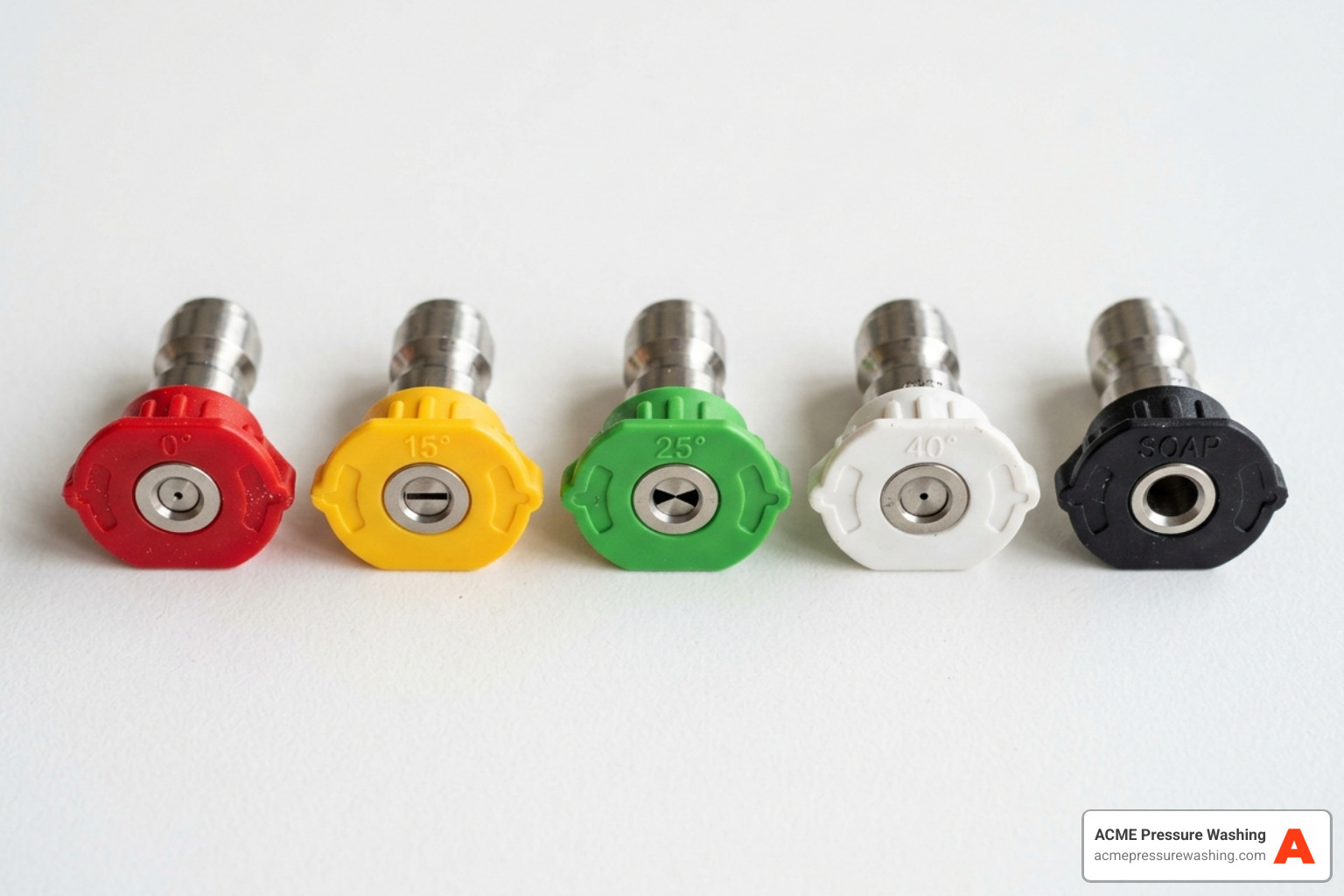
The PSI Cheat Sheet
Different materials have different “breaking points.” Here is how we break down the settings for the most common fence types:
- Softwood (Cedar, Pine): 500 to 800 PSI. Cedar is particularly soft, and going over 1,200 PSI can cause permanent splintering or “furring” of the wood.
- Hardwood (Oak, Teak): 1,200 to 1,500 PSI. These can handle a bit more “oomph” to get the grime out of the tight grain.
- Vinyl: 500 to 2,000 PSI. Vinyl is nonporous, so dirt usually sits on the surface. Start low and only increase if the stains are stubborn.
- Metal (Steel/Wrought Iron): 2,000 to 3,000 PSI. Metal is tough, but be careful not to strip off protective powder coatings or paint.
- Composite: Generally, manufacturers recommend against high-pressure washing as it can void warranties. Stick to very low pressure or a soft wash approach.
Choosing Your Nozzle
The nozzle tip determines the “fan” of the water. We recommend a 25-degree (green) or 40-degree (white) tip for most fences. Never use a 0-degree (red) tip on a fence. It acts like a laser beam and will cut right through wood or crack vinyl in seconds. For more on equipment, you can check out this guide on how to choose the right PSI for your material.
Safety First
Don’t forget your PPE (Personal Protective Equipment). At a minimum, you need:
- Safety goggles (water and debris fly back fast!)
- Sturdy work boots (never pressure wash in flip-flops!)
- Hearing protection for gas-powered units
- Gloves to protect against cleaning chemicals
Step-by-Step Guide to Safe Fence Pressure Washing
Ready to get started? Follow this systematic approach to ensure you don’t miss a spot or damage your property.
Step 1: Preparation and Protection
Before you even turn on the water, clear the area. Move patio furniture, toys, and decorations away from the fence. We always recommend covering nearby plants and delicate landscaping with plastic sheeting or tarps. If you’re using detergents, pre-wet your grass and plants so they don’t absorb the runoff.
Step 2: Detergent Application
Apply your cleaning solution from the bottom to the top. Why? If you start at the top, the detergent can run down and create “clean streaks” on the dry, dirty surface below that are nearly impossible to even out later. Let the solution dwell for 5 to 10 minutes, but don’t let it dry on the surface. For those in more humid areas, expert fence washing in Londonderry, NH often requires specialized mold-killing solutions to handle our local spores.
Step 3: The Washing Technique
When it’s time to wash, work in sections—usually one or two fence panels at a time. Keep the nozzle about 12 to 18 inches away from the surface. Always move the wand in the direction of the wood grain. This prevents the wood fibers from lifting and splintering.
Step 4: Rinsing
Rinse from the top to the bottom. This flushes all the loosened dirt and soap residue down the fence and away. Make sure you rinse thoroughly; any leftover detergent can leave white filmy spots once the fence dries. For a deep dive into the process, Angi provides detailed washing instructions that complement our professional methods.
Step 5: Drying Time
This is the hardest part: waiting. A fence needs to dry completely before you apply any stain or sealer. In the New Hampshire climate, this usually takes 24 to 48 hours, but it can take longer if the weather is damp or the fence is in a heavily shaded area.
Common Mistakes to Avoid During Fence Pressure Washing
Even with the best intentions, things can go wrong. We’ve seen it all in our 38 years of experience. Avoiding these common pitfalls will save you a lot of heartache.
1. The “More is Better” PSI Myth
Thinking that higher pressure equals a cleaner fence is the fastest way to ruin your wood. Excessive PSI can gouge the wood, leaving permanent “wand marks” that look like squiggly lines. Once the wood is gouged, the only fix is heavy sanding or replacing the boards.
2. Getting Too Close
Keep your distance! Moving the nozzle too close to the fence concentrates the force into a tiny area. Stay at least 12 inches away. If the dirt isn’t coming off, use a better detergent or a soft-bristle brush rather than moving the wand closer.
3. Using Harsh Bleach
While bleach is great for killing mold, “raw” laundry bleach can be very harsh on wood fibers, breaking down the lignin that holds the wood together. It can also turn your cedar fence an unnatural ghostly white. We prefer oxygen-based cleaners or specialized wood brighteners.
4. Ignoring the Wind and Neighbors
Always check the wind direction before you start. You don’t want your cleaning solution blowing back into your face—or onto your neighbor’s freshly washed car. Also, check what’s behind the fence. If there are gaps, you might be accidentally pressure washing your neighbor’s patio furniture!
5. Skipping the Sealant
Fence pressure washing opens up the pores of the wood. If you don’t seal or stain it after it dries, the wood is actually more vulnerable to rot and UV damage than it was before you cleaned it. Think of it like exfoliating your skin; you need to moisturize afterward! For residents seeking professional fence washing in Merrimack, NH, we always emphasize the importance of this final protective step.
Frequently Asked Questions about Fence Pressure Washing
How long should I wait to stain after fence pressure washing?
Patience is a virtue here. You should wait at least 24 to 48 hours for the wood to dry completely. If the wood is still damp, the stain won’t be able to soak in, and it will eventually peel or flake off. In our local climate, if it rains shortly after you wash, “reset” your clock. A good trick is to drip a little water on the wood; if it soaks in immediately, it’s dry. If it beads up, you need to wait longer.
Is power washing better than pressure washing for mold?
Technically, “power washing” uses heated water, while “pressure washing” uses cold water. Heated water is significantly more effective at killing mold and mildew spores on a cellular level. However, for most residential wood fences, standard pressure washing combined with a high-quality detergent is sufficient. If you have heavy, black mold buildup, the heat of power washing can provide a deeper clean. You can learn more about the technical differences on our power washing vs pressure washing page.
Can I damage my vinyl fence with too much pressure during fence pressure washing?
Absolutely. While vinyl is durable, it isn’t invincible. High pressure can crack older, sun-brittle vinyl or strip away the outer finish, leading to “oxidation” (that chalky white powder that rubs off on your clothes). Stay under the 2,000 PSI limit and use a wide fan tip. If you’re worried about your siding or fence, we offer specialized vinyl fence cleaning in Nashua, NH using safe, low-pressure “soft wash” techniques.
Conclusion
Mastering fence pressure washing doesn’t have to be a daunting task. By understanding your equipment, respecting the material of your fence, and following a systematic cleaning process, you can transform your property’s appearance in a single weekend. A clean fence isn’t just about looks—it’s about protecting one of your home’s most important investments.
At ACME Pressure Washing, we’ve spent over 38 years perfecting the art of exterior cleaning. Based right here in Merrimack, NH, we pride ourselves on using safe, customized, and eco-friendly techniques that get professional results without risking damage to your home or the environment. We serve neighbors all across the region, including Amherst, Bedford, Hollis, and beyond.
Don’t let a dirty fence drag down your home’s value. Whether you need a quick refresh or a deep restoration, our team is ready to help. Schedule your professional fence pressure washing today and see the difference that nearly four decades of experience can make!
Oil Stain Driveway Removal: What Merrimack Homeowners Need to Know
Oil stain driveway removal is something most homeowners need to deal with at some point — and the faster you act, the better your results will be.
Here’s a quick overview of the most effective methods:
- Fresh stains – Cover with clay-based cat litter or baking soda, let sit 30 minutes to overnight, sweep up, then scrub with dish soap and rinse
- Set-in stains – Use a commercial degreaser like Oil Eater or Pour-N-Restore, or apply a poultice paste and let it draw out the oil over 24-48 hours
- Stubborn or large stains – Call a professional pressure washing service with commercial-grade equipment
Your driveway is one of the first things people notice about your home. A dark, oily patch near your garage door doesn’t exactly say “well maintained.” But beyond looks, there’s a bigger problem.
Oil doesn’t just sit on top of your driveway — it sinks in.
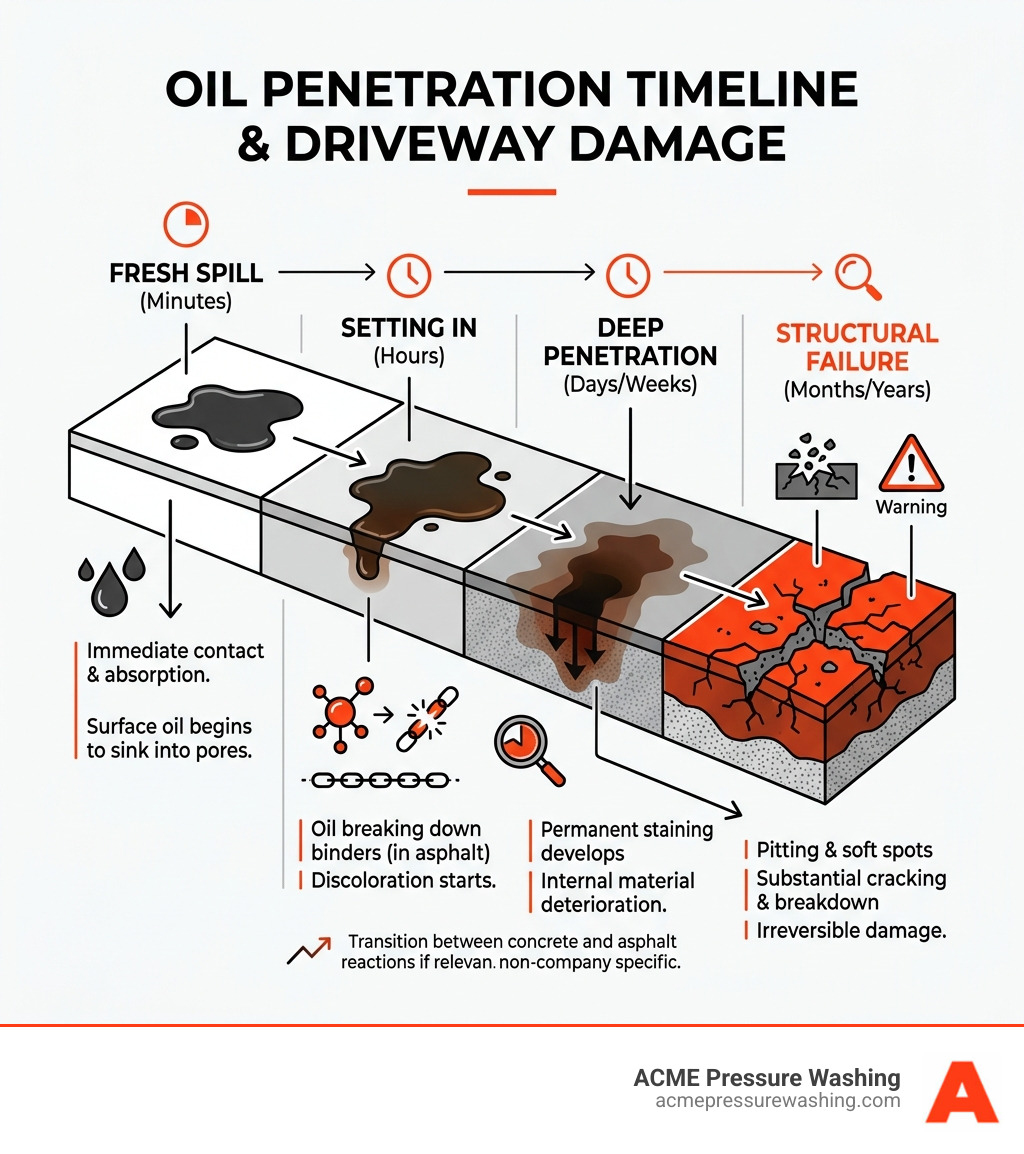
Concrete is porous, meaning oil travels down into it quickly. Asphalt is even more vulnerable — motor oil begins breaking down the asphalt binder within hours of contact. Left untreated for just 24-48 hours, permanent discoloration sets in. Wait weeks or months, and you’re looking at pitting, soft spots, and eventually cracking.
The good news? Most oil stains — even older ones — can be removed with the right approach.
Understanding the Impact of Oil on Concrete and Asphalt
To understand why oil stain driveway removal is so critical, we have to look at the chemistry of your driveway. Whether you live in Nashua, Manchester, or right here in Merrimack, your driveway is likely made of either concrete or asphalt. Both materials react poorly to petroleum products, but for different reasons.
The Vulnerability of Asphalt
Asphalt is essentially a mixture of rocks and sand held together by a “binder” — a sticky, petroleum-based glue. Because motor oil is also a petroleum product, it acts as a solvent. When oil sits on asphalt, it begins to dissolve that binder. This process happens surprisingly fast. Within hours, the oil starts penetrating the surface. Within weeks, the asphalt softens, leading to “pitting” where small rocks begin to pop out. If left for 6 to 12 months, this degradation leads to deep cracks and potholes.
The Porosity of Concrete
Concrete might feel like a solid rock, but it is actually highly porous, much like a very hard sponge. It is full of microscopic channels that allow liquids to wick deep below the surface. When oil drips onto concrete, gravity and capillary action pull it down. This is why a surface-level scrub often isn’t enough; the oil is literally hiding inside the slab. Over time, this can lead to structural weakening and unsightly, permanent dark patches.
For those dealing with connected surfaces, you can find More info about walkway and patio cleaning to see how these different masonry types require specific care. For a deeper dive into the nuances of various surfaces, check out this guide on How to Remove Oil Stains from Your Driveway.
Effective Methods for Oil Stain Driveway Removal
When we talk about oil stain driveway removal, we categorize the job into two phases: absorption and deep cleaning. You can’t effectively clean a stain if there is still standing oil on the surface.
The Power of Absorbents
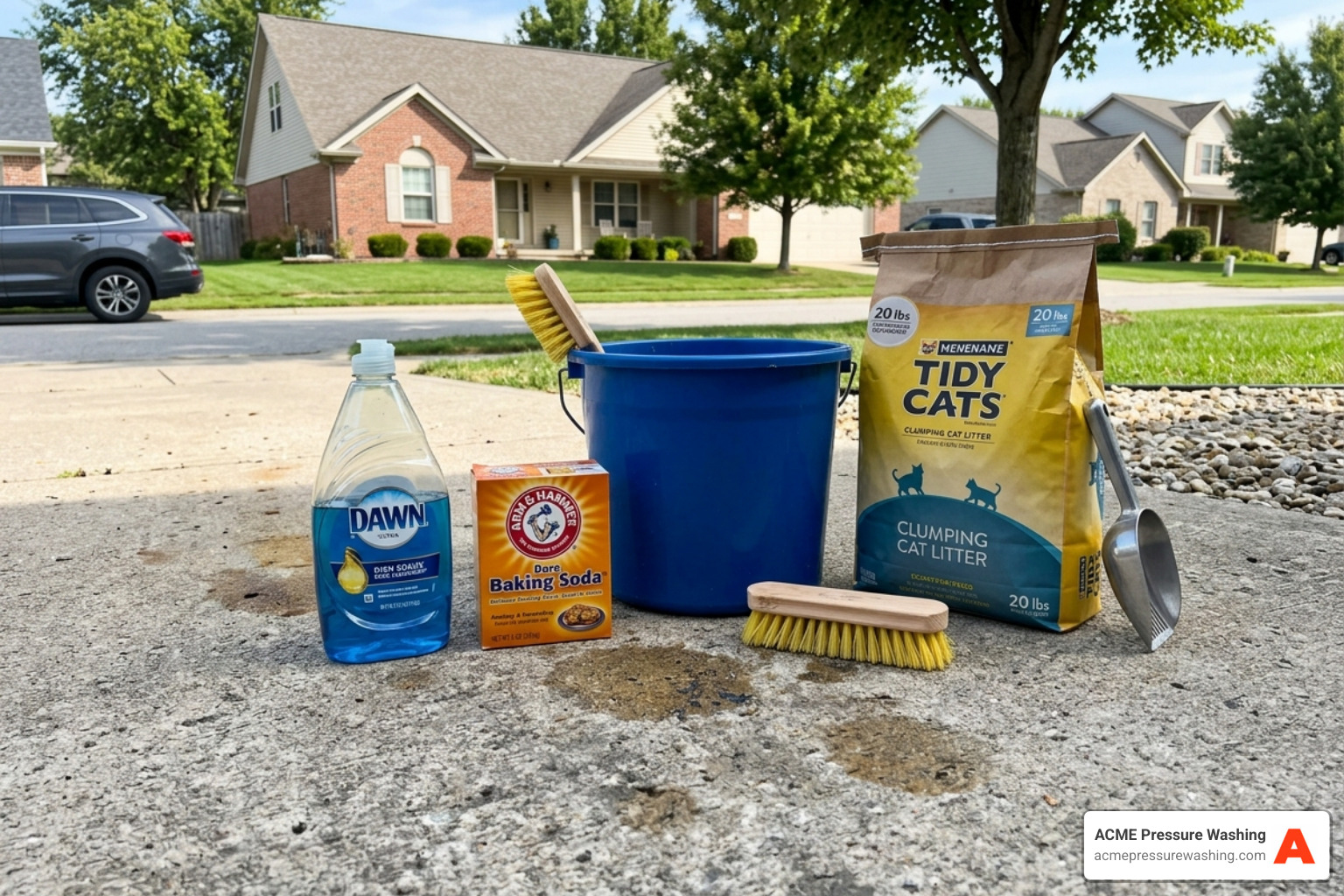
For a fresh spill, your first goal is to stop the oil from soaking in further. Clay-based kitty litter is a classic choice because it is designed to pull moisture out of its environment. However, don’t just sprinkle it and walk away. For the best results, grind the litter into the stain with your boots (some folks even joke about doing a little “clean-up dance” on the spot) to ensure the clay particles make maximum contact with the oil.
Surfactants and Micelles
Once the excess oil is gone, you’re left with the residue. This is where dish soap comes in. High-quality dish soaps contain surfactants. These molecules have a “water-loving” head and an “oil-loving” tail. They surround oil droplets to form “micelles,” which encapsulate the oil so it can be lifted away and rinsed off with water.
| Method | Best For | Pros | Cons |
|---|---|---|---|
| Clay-Based Litter | Fresh spills | Cheap, readily available | Messy, only for surface oil |
| Baking Soda | Light/Small stains | Non-toxic, mild abrasive | Requires heavy scrubbing |
| Dish Soap | Residue removal | Breaks down grease well | Needs hot water for best results |
| Commercial Degreasers | Deep/Old stains | Formulated for motor oil | Can be harsh on skin/plants |
| Poultice Paste | Embedded stains | Pulls oil from deep pores | Takes 24+ hours to work |
Removing Fresh Oil Stains from Driveway Surfaces
If you catch the leak immediately, you have a high chance of 100% removal.
- Blot, don’t rub: Use paper towels to soak up as much standing liquid as possible. Rubbing can push the oil deeper into the pores.
- Apply baking soda: Sprinkle it liberally over the area. Let it sit for at least 30 minutes to pull up the remaining surface tension.
- Scrub with hot water: Mix a concentrated solution of dish soap and very hot water. Use a stiff-bristled nylon brush (avoid wire brushes on asphalt!) and scrub in circular motions.
For homeowners in Amherst or Hollis looking to refresh their entire outdoor space after a spill, Restoring walkways and patios is a great next step to ensure the rest of your stone and concrete looks as good as your cleaned driveway.
Tackling Old and Set-In Oil Stain Driveway Removal
Old stains are a different beast. These have had time to “set” and travel deep into the substrate. The most effective DIY method for these is the poultice method.
A poultice is a paste made by mixing an absorbent (like baking soda, flour, or powdered laundry detergent) with a solvent (like a commercial degreaser or even a bit of water).
- The Process: Smear the paste over the stain about half an inch thick.
- The Dwell Time: Cover the paste with plastic wrap and tape down the edges. This prevents the solvent from evaporating too quickly, forcing it to work down into the concrete.
- The Extraction: After 24 hours, remove the plastic and let the paste dry completely. As it dries, it “wicks” the dissolved oil up out of the driveway and into the powder. Sweep it up, and the stain should be significantly lighter.
For more specialized tips on asphalt-specific set-in stains, How to Get Oil Stains off of a Driveway offers additional perspectives on handling those softer surfaces.
Step-by-Step Guide to Cleaning Different Driveway Materials
We’ve been serving the Merrimack Valley for over 38 years, and if there is one thing we’ve learned, it’s that treat-all solutions don’t exist. Concrete and asphalt require different “personalities” of cleaning.
Cleaning Concrete Driveways
Concrete can handle more “tough love.”
- Cleaners: You can use alkaline degreasers or even a diluted muriatic acid solution for extreme cases (though we recommend leaving acids to the pros).
- Pressure Settings: When using a pressure washer, concrete can typically handle between 2,500 and 3,000 PSI.
- Technique: Use a 25-degree fan tip and keep the nozzle about 12 inches from the surface. Always move in consistent, sweeping motions to avoid “etching” or leaving permanent wand marks in the stone.
Cleaning Asphalt Driveways
Asphalt requires a gentler touch.
- Cleaners: Avoid harsh solvents or petroleum-based cleaners, as these will melt the binder. Stick to pH-neutral soaps or “green” biodegradable degreasers.
- Pressure Settings: Lower the pressure! We rarely exceed 1,500 to 2,000 PSI on asphalt. High pressure can strip the top layer of aggregate, leaving the driveway looking “bony” or rough.
- Temperature: Use warm water rather than scalding hot water, which can soften the asphalt further.
Regardless of the surface, safety is paramount. Always wear gloves and eye protection when working with degreasers. If you are interested in the broader benefits of professional cleaning, you can find More info about power washing on our specialized service pages.
Professional Solutions and Prevention Strategies
Sometimes, DIY methods just aren’t enough. If you have a massive spill from a blown head gasket or a stain that has been baking in the New Hampshire sun for three summers, professional intervention is the way to go.
Why Go Pro?
Professional teams use commercial-grade equipment that most homeowners can’t access. This includes hot-water pressure washers (steam cleaners) that can reach temperatures over 200 degrees Fahrenheit. This heat thins the oil, making it much easier to extract from deep within the pores. We also use specialized surface cleaners that provide a uniform clean without the “striping” often seen with DIY wand work.
Prevention is the Best Cure
Once your driveway is clean, you want to keep it that way.
- Sealcoating: For asphalt, a fresh sealcoat every 2 to 3 years creates a non-porous barrier that prevents oil from penetrating the binder.
- Concrete Sealer: Applying a high-quality silane/siloxane sealer every 5 years will make concrete hydrophobic, causing oil to bead up on the surface rather than soaking in.
- Drip Pans: If you have an older vehicle known for “marking its territory,” a simple drip pan or a piece of cardboard in the garage can save you hours of cleaning.
Average Costs for Professional Cleaning
Based on internet data, professional oil stain removal typically ranges from $0.20 to $0.45 per square foot. For a standard 600-square-foot driveway, you might expect to pay anywhere from $120 to $350. However, for severe, deep-set restoration or very large properties, total project costs can range from $100 to $1,500 depending on the severity and the equipment required.
If you’re ready to restore your home’s curb appeal, our Professional pressure washing services are tailored to the specific climate and architectural needs of the Merrimack region.
Frequently Asked Questions about Driveway Cleaning
Does Coca-Cola or gasoline work for oil stains?
We get this question a lot in Manchester and Londonderry! The short answer: No.
- Coca-Cola: While the phosphoric acid in cola can technically eat through some grime, it’s mostly sugar. You’ll likely end up with a sticky mess that attracts ants and bees without actually removing the deep-set oil.
- Gasoline: This is a major safety hazard. Using gasoline to clean oil is incredibly flammable and creates toxic runoff. Furthermore, it leaves a persistent, pungent odor that can linger in your concrete for months. It also destroys asphalt binders instantly.
Can oil stains cause permanent damage?
Yes. On asphalt, the damage is structural. Motor oil begins “eating” the binder immediately. If you don’t address a spill within 24 to 48 hours, you will likely have a permanent “shadow” or discoloration. Within 6 months of heavy saturation, the asphalt will likely begin to crumble, leading to structural failure.
When should I call a professional for severe stains?
You should call us if:
- The stain covers an area larger than a dinner plate.
- The oil has been sitting for more than a month.
- You’ve tried household cleaners and the dark patch remains.
- You are worried about damaging your asphalt with high pressure.
- You want to ensure the wastewater is handled in an eco-friendly manner.
Conclusion
At ACME Pressure Washing, we’ve spent over 38 years perfecting the art of exterior cleaning. From the historic homes of Amherst to the busy commercial lots of Nashua, we understand that every driveway tells a story — and we’re here to make sure that story isn’t about an old oil leak.
We use safe, customized, and eco-friendly techniques to ensure your property is protected while we achieve the deepest possible clean. Whether you need help with oil stain driveway removal, house washing, or fleet cleaning, our experience in the Merrimack, NH area is unmatched.
Don’t let a stubborn stain ruin your home’s first impression. Contact us for professional pressure washing services today and let our family-owned team bring your driveway back to life!