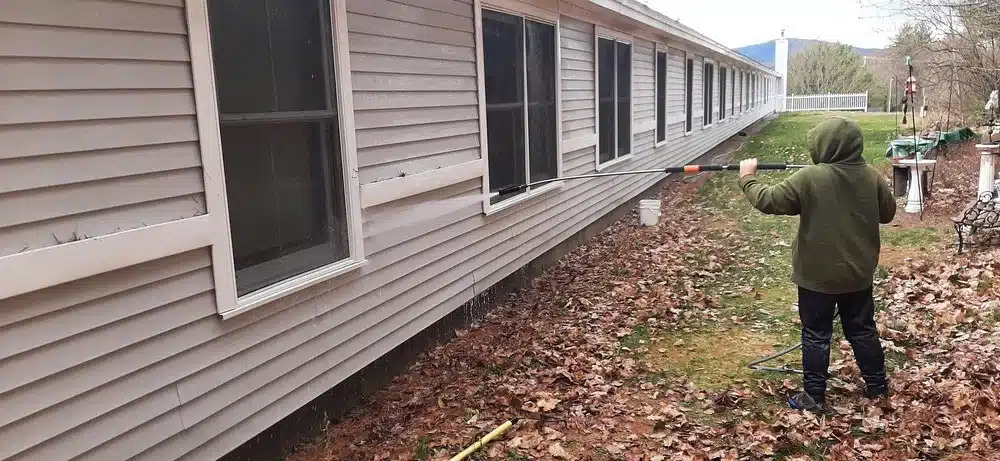



Why Your New Hampshire Property Needs the Right House Cleaning Method
Quick Answer: Best House Cleaning Approach
| Surface | Recommended Method | Pressure Level |
|---|---|---|
| Vinyl siding | Soft wash | Low (under 1,000 PSI) |
| Wood deck | Low-pressure wash + detergent | Medium (1,200-1,500 PSI) |
| Concrete driveway | Surface cleaner attachment | Medium-high (2,000-2,500 PSI) |
| Brick masonry | Soft wash | Low (under 1,200 PSI) |
| Painted surfaces | Soft wash | Low (under 1,000 PSI) |
Exterior house cleaning in New Hampshire is not as simple as pointing a wand and pulling a trigger.
New Hampshire’s climate is hard on exterior surfaces. Wet winters, humid summers, and heavy tree cover around Merrimack, Bedford, Nashua, Windham, and Manchester mean mold, mildew, algae, and grime build up quickly on houses, fences, decks, patios, pool areas, walkways, concrete, sidewalks, and sheds.
Left untreated, that buildup does not just look bad. It can shorten the life of siding and paint, reduce curb appeal, and create maintenance issues across the property.
The good news is that the right cleaning approach restores exterior surfaces safely and effectively. The key is using the right method. Too much pressure on the wrong surface – vinyl siding, painted wood, or window seals – can cause costly damage.
This guide covers pressure settings, surface-specific techniques, detergents, and why professional service is the smarter choice for properties in Merrimack, Bedford, Nashua, Windham, and Manchester.
Call +1603-883-6900 or Request a Quote.
Professional Approaches to Exterior House Cleaning in New Hampshire
When we clean properties in Merrimack, Bedford, Windham, Nashua, and Manchester, we do not treat every surface the same. That is the fastest route to striped siding, gouged wood, and preventable property damage.
For exterior cleaning, the real comparison is not about buying equipment. It is about matching the right method to the right material.
In general:
| Cleaning approach | Best use | Pros | Limits |
|---|---|---|---|
| Light rinse | Small, lighter-duty exterior tasks | Simple, quick, useful for loose debris | Limited impact on embedded grime or organic growth |
| Soft wash | Whole-house exterior cleaning and delicate materials | Safer for siding, trim, and painted surfaces | Requires correct chemistry and rinsing technique |
| Higher-pressure cleaning | Larger, heavier cleaning jobs on durable surfaces | Effective for concrete and neglected flatwork | More risk on delicate surfaces |
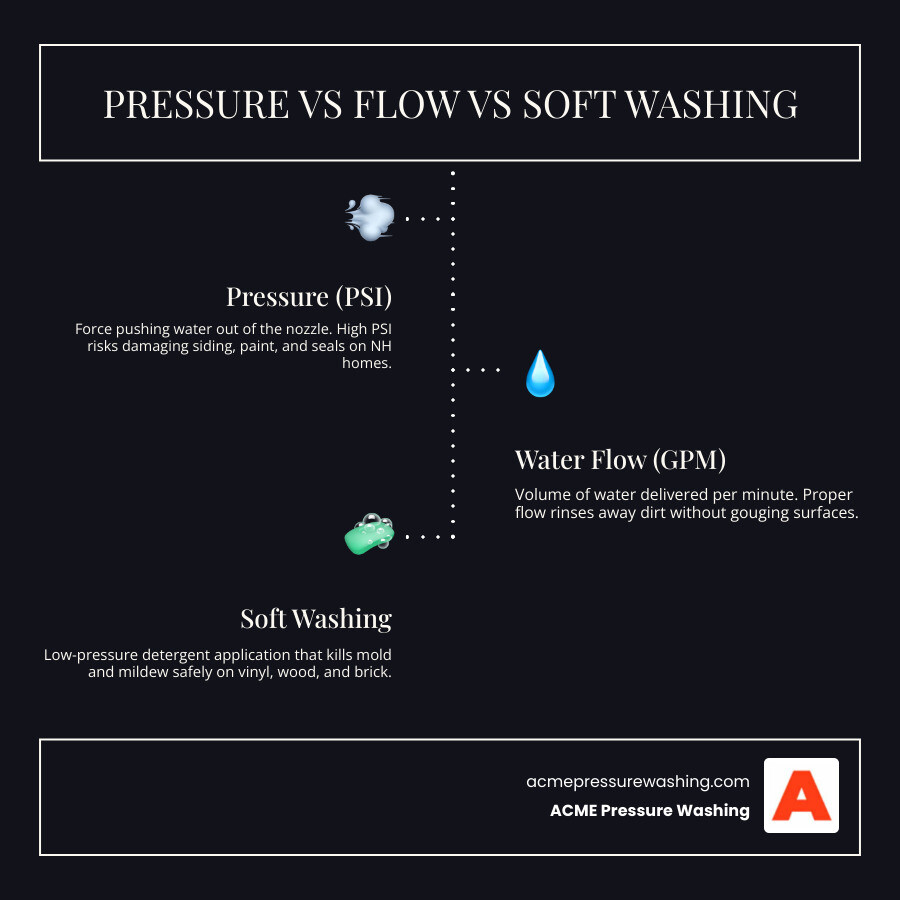
For houses, commercial buildings, and other structures, we often rely on soft washing and controlled low-pressure application rather than brute-force pressure. That matters because siding, trim, painted wood, and masonry joints usually respond better to chemistry, dwell time, and rinsing technique than to raw PSI.
Below is a practical comparison of professional application types.
| Application type | Typical use | Surface examples | Risk level |
|---|---|---|---|
| Light rinse | Dust, pollen, loose dirt | Screens, some trim, pre-rinse areas | Low |
| Soft wash | Organic growth, grime, siding cleaning | Vinyl, painted wood, brick, trim | Lowest when done correctly |
| Higher-pressure cleaning | Embedded dirt on durable flatwork | Concrete, walkways, some patios | Moderate if misused |
Understanding PSI and GPM for House Cleaning
PSI is pressure. GPM is water flow. Both matter.
A lot of people focus on PSI alone, but cleaning performance depends on both.
- PSI determines impact force
- GPM determines how much water moves dirt away
- Cleaning speed depends on both
For house washing, more pressure is not automatically better.
- Light-duty pressure levels often fall under about 1,900 PSI
- Medium-duty pressure levels typically land around 1,900 to 2,788 PSI
- Heavy-duty pressure levels start around 2,800 PSI and up
Those categories can help explain cleaning strength, but they do not mean every surface should be cleaned within that full range.
For example:
- Vinyl siding is usually safest with soft washing or very low pressure, often under 1,000 PSI
- Painted wood needs gentle treatment to avoid stripping paint or driving water behind boards
- Concrete near the property can often handle medium to medium-high pressure, especially with a surface cleaner
- Brick masonry may look tough, but mortar joints and older surfaces can still be damaged by excessive pressure
If you want a technical primer on how pressure washers work, Wikipedia’s pressure washer overview is a useful starting point.
That is why we strongly recommend reading Don’t Blast Your Siding Away and Other Soft Washing Benefits if you are comparing methods for siding.
Professional Equipment Standards for House Cleaning
Professional-grade equipment improves control, coverage, and safety during the cleaning process.
The short list of professional tools includes:
- Surface cleaners for driveways, sidewalks, and patios
- Soap nozzles and detergent injectors
- Extension wands for reach from the ground
- Professional hose reels and hose management
- Soft-wash application tools
- Protective rinsing tools for plants and sensitive areas
Surface cleaners are especially useful on flatwork. They can clean faster than a standard nozzle because they create a wider, more even path. For larger concrete areas, that saves time and reduces streaking.
For professional house washing service in New Hampshire, technique matters more than equipment. You can learn more about our house pressure washing services, commercial pressure washing, and fleet washing. For service planning, call +1603-883-6900 or use our quote form.
Essential Equipment and Safety for Home Exteriors
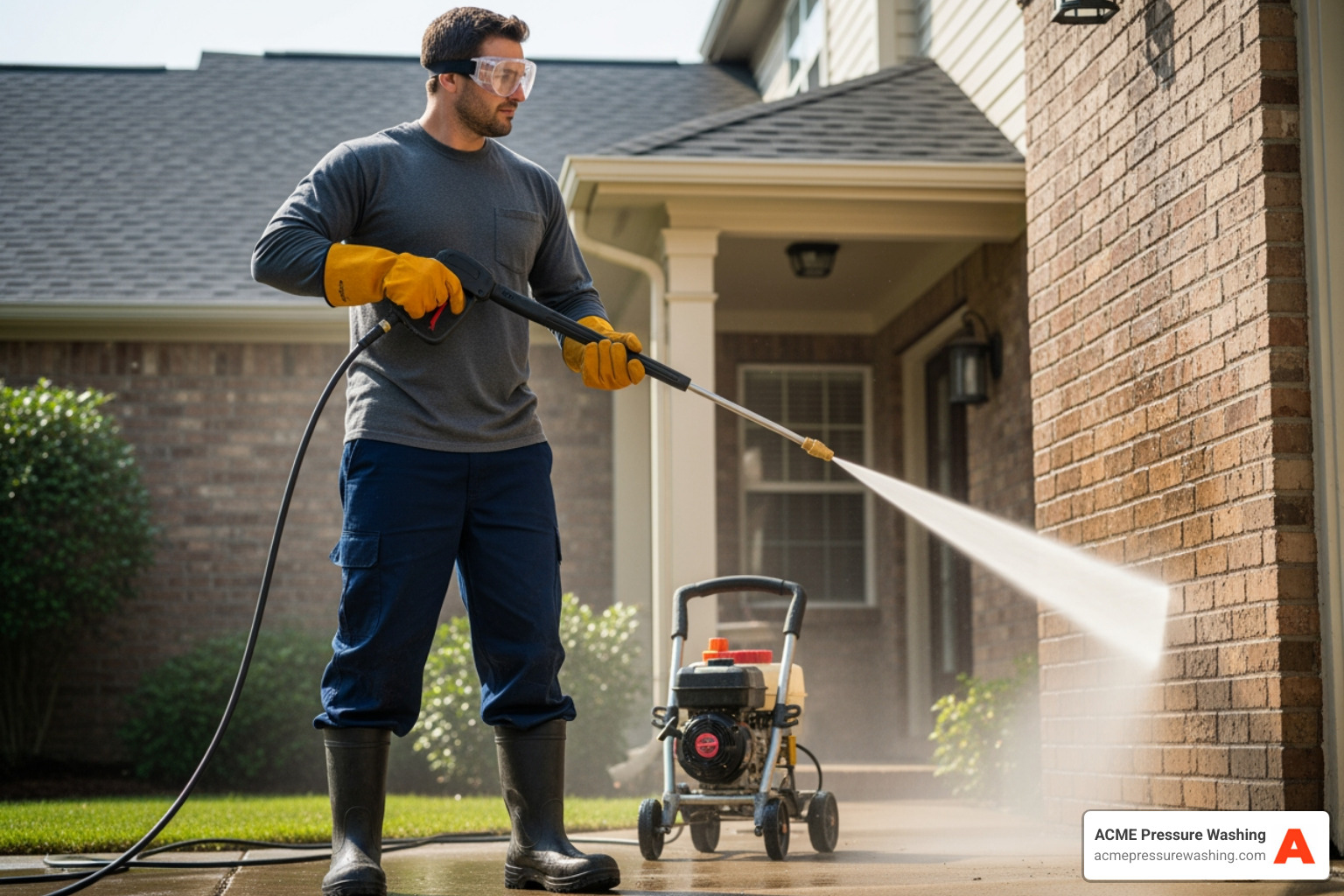
Safety is a primary reason to hire a professional for house washing. High-pressure equipment can cause serious injury and property damage if handled incorrectly. Professional teams use industrial-grade safety gear, including eye and hearing protection, and follow strict protocols to protect windows, electrical fixtures, and landscaping.
Nozzle selection is critical. While 0-degree (red) tips are available, they are highly dangerous for house exteriors and can easily gouge wood or shatter glass. Professional technicians use wider fan tips and specialized soft-wash tools to ensure a safe, even clean. For a deeper walkthrough of professional methods, see How to Pressure Wash House Exterior: 5 Guaranteed Methods.
If you are managing a property in Bedford, Merrimack, Nashua, Windham, or Manchester, professional service is the safest way to clean exterior surfaces without unnecessary risk. Call +1603-883-6900 or Request a Quote.
Best Practices for Cleaning Different Surfaces
Different surfaces need different pressure, chemistry, and expectations.
Vinyl siding
Vinyl is one of the most common materials we see around Bedford, Windham, and Merrimack. It is durable, but it is not invincible.
Best method:
- Soft wash or very low-pressure rinse
- Focus on mold, mildew, algae, and oxidation carefully
- Keep spray angle controlled to avoid forcing water behind panels
Wood decks and fences
Wood can go from weathered to beautiful with the right cleaning. It can also go from smooth to fuzzy in seconds with too much pressure.
Best method:
- Low-pressure wash
- Suitable detergent
- Controlled distance and fan tip
- Extra caution on older boards, railings, and fence pickets
Professional-grade equipment is often best suited for long-neglected decks, fences, or patios, but not because higher pressure should be used carelessly. It simply provides more capability when paired with the right operator and settings.
Concrete walkways, sidewalks, and driveways
Concrete can usually handle more force than siding or wood. This is where surface cleaners shine.
Best method:
- Medium to medium-high pressure
- Surface cleaner attachment for even cleaning
- Follow-up rinse for edges and joints
Patios and pool areas
Patios vary widely. Concrete, pavers, and decorative stone all respond differently. Pool areas also need extra care to prevent slippery residue and damage to nearby finishes.
Best method:
- Surface-specific pressure
- Pre-treatment for algae
- Surface cleaner where appropriate
- Care around joints, sealers, and coping
Brick masonry
Brick may tolerate more than painted wood, but mortar often does not.
Best method:
- Soft wash for staining and organic growth
- Lower pressure on older masonry
- Gentle rinsing to preserve joints
Sheds and outbuildings
Sheds and outbuildings accumulate the same mold, mildew, and grime as the main structure. The same surface-appropriate techniques apply — soft washing for painted or vinyl surfaces, controlled pressure for concrete pads.
For more on safer methods, see Don’t Be a High Pressure Mess and Switch to Low Pressure House Cleaning.
Avoiding Common Damage to Property Materials
The most common mistakes when pressure is misapplied are predictable:
- Holding the tip too close
- Using too narrow a nozzle
- Starting with too much pressure
- Spraying upward under siding laps
- Letting detergent dry
- Washing fragile areas without testing first
That can lead to:
- Wood gouging
- Paint stripping
- Vinyl striping or oxidation marks
- Window seal failure
- Water intrusion behind cladding
- Damage to soffits, vents, and trim
Safer technique looks like this:
- Start with the lowest effective pressure
- Use wider fan tips
- Test a small hidden area first
- Keep a steady distance
- Let chemistry do more of the work
- Respect dwell time
- Rinse thoroughly
This is exactly why we strongly recommend hiring a professional rather than attempting these jobs without proper training and equipment. For more practical guardrails, read 10 Dos and Don’ts for House Soft Washing Service.
Why Professional Service Is the Better Choice in New Hampshire
In New Hampshire, professional house washing is the smarter choice because:
- Exterior materials vary from property to property
- Mold, algae, and pollen need more than simple rinsing
- Safe detergent selection matters
- Ladders and pressure wands are a bad combination
- Technique and experience matter
- Mistakes can cost more than the cleaning itself
For commercial properties, multi-structure sites, and managed residential portfolios in Nashua, Bedford, Windham, Merrimack, and Manchester, the risks of renting equipment typically outweigh the savings. Rental machines come with transportation hassle, setup learning curves, unknown maintenance history, and limited effectiveness for full exterior cleaning programs. More importantly, improper technique on siding, decks, fences, patios, walkways, masonry, or concrete can result in damage that far exceeds the cost of professional service.
That is especially true in Nashua, Bedford, Windham, Merrimack, and Manchester, where shaded lots and seasonal moisture can create heavy organic buildup that responds better to professional soft washing than to an inexperienced attempt.
We provide a full range of exterior cleaning services across southern New Hampshire, including house pressure washing, commercial pressure washing, and fleet washing for tractor trailers and heavy equipment.
Call +1603-883-6900 or Request a Quote to get started.
Average Costs for Exterior Cleaning in 2026
All prices below are average costs sourced from publicly available internet data and industry averages. They are not the actual prices of ACME Pressure Washing and should not be interpreted as reflecting ACME’s rates or guarantees.
For broad market variability in New Hampshire in 2026, a reasonable exterior house-cleaning range is about:
- $1,600 to $5,000+ for a typical house-washing project
That wide range exists for good reason:
- Property size
- Height and accessibility
- Surface material
- Amount of mold or algae
- Decks, patios, walkways, fences, and add-on surfaces
- Water supply and drainage conditions
For a better breakdown of cost factors, see The Real Cost to Power Wash Your House in 2026.

Frequently Asked Questions about Residential Power Washing
What is the difference between power washing and soft washing?
Soft washing uses low pressure and relies more on detergents and dwell time. It is generally the better method for siding, painted surfaces, trim, and other delicate exterior materials.
Traditional high-pressure washing uses more force and is better reserved for durable surfaces like concrete, sidewalks, and heavily soiled flatwork.
For many properties in Nashua, Bedford, Merrimack, Windham, and Manchester, soft washing is the safer option for the main exterior. More on that here: Why Your Home Needs a Professional Manchester Soft Wash.
How often should I clean my property’s exterior in New Hampshire?
For most New Hampshire properties, once a year is a good baseline.
Some properties in Bedford, Windham, Nashua, Merrimack, and Manchester need cleaning more often if they have:
- Heavy tree coverage
- North-facing shade
- Persistent moisture
- Nearby pollen sources
- Visible green or black staining
A yearly wash helps remove seasonal grime, pollen, and organic growth before it shortens the life of siding and paint.
Can siding be damaged with a high-pressure washer?
Yes.
High pressure can:
- Force water behind siding
- Strip oxidation unevenly
- Remove paint
- Damage seams and trim
- Leave visible wand marks
We see this risk most often when pressure meant for concrete is used on vinyl or painted wood around Merrimack, Bedford, Nashua, Windham, and Manchester properties.
That is why professional low-pressure house washing is the better answer. Call +1603-883-6900 or Request a Quote to discuss your project with our team.
Related Exterior Cleaning Services in New Hampshire
If you are researching house cleaning methods, you may also be planning to clean the areas around the property decks, fences, patios, pool areas, walkways, concrete, sidewalks, sheds, and more. We provide a full range of exterior services in New Hampshire, including:
- House Washing Services
- Commercial Pressure Washing for commercial buildings and facilities
- Fleet Washing for tractor trailers, heavy equipment, and commercial fleets
You can also explore these helpful resources:
- The Ins and Outs of House Power Washing
- Don’t Blast Your Siding Away and Other Soft Washing Benefits
- Don’t Be a High Pressure Mess and Switch to Low Pressure House Cleaning
Conclusion
Choosing the right house cleaning method is really about choosing the right pressure, flow, detergent, and operator for the surface in front of you.
For properties in Merrimack, Bedford, Nashua, Windham, and Manchester, the safest answer is rarely more pressure. It is usually a professional approach built around experience, surface knowledge, and eco-friendly cleaning methods.
At ACME Pressure Washing, we bring more than 38 years of experience to exterior cleaning across southern New Hampshire – houses, decks, fences, patios, pool areas, walkways, concrete, sidewalks, sheds, commercial buildings, commercial fleets, tractor trailers, and heavy equipment.
We use safe, customized techniques designed to clean effectively without causing avoidable damage.
Request a Quote for professional results without the guesswork.
You can also get more details about our house pressure washing services, commercial pressure washing, and fleet washing.