Cleaning Outdoor Furniture: Power Washing Patio Cushions Guide
Why Your Patio Cushions Deserve a Power Wash
Many homeowners in Merrimack, NH, face the same challenge: enjoying their patio means battling grime, mold, and stains on outdoor cushions. You want to relax with a good book and a cold drink, but dingy cushions can quickly ruin the mood.
Can you safely power wash patio cushions? Yes, but with important precautions.
- Is it safe? Yes, if done correctly.
- Pressure settings: Use the lowest possible pressure.
- Nozzle: Opt for a wide-angle tip (like 40-degree or 65-degree) or low-pressure mode.
- Distance: Keep the nozzle at least 2 feet away from the fabric.
- Cleaner: Always use a fabric-safe cleaning solution.
- Caution: Never power wash delicate, dry-rotted, or visibly damaged fabrics.
It’s April 2026, and as the warmer weather arrives, your outdoor cushions are likely showing the signs of a long winter and busy seasons past. From kids and pets leaving grass stains to mildew thriving in humidity, your patio cushions take a beating. The good news is, power washing patio cushions can bring them back to life.
This guide will show you how to safely and effectively clean your outdoor cushions, transforming them from dingy to dazzling. You don’t need to replace them; you just need the right approach to cleaning. This method saves you money and prolongs the life of your outdoor furniture, making your patio inviting again.
Is Power Washing Patio Cushions Safe for All Fabrics?
When it comes to power washing patio cushions, the first question we always hear is: “Will this rip my expensive fabric?” It’s a valid concern. After all, a pressure washer is a powerful tool, not a garden hose.

Most modern outdoor fabrics, such as Sunbrella, are designed to be incredibly durable. These synthetic materials are solution-dyed, meaning the color goes all the way through the fiber, making them resistant to fading and tough enough to handle a deep clean. However, even the toughest fabric has its limits.
Before you start, check the manufacturer care tags usually located on the seam of the cushion. If the tag says “dry clean only” or warns against high-pressure water, listen to it! For cushions with non-removable covers, power washing is often the most efficient way to get a deep clean that manual scrubbing just can’t match.
According to How to Clean Outdoor Cushions, the best way to maintain material integrity is to ensure the fabric isn’t “dry rotted.” If your cushions have been sitting in the harsh New England sun for five years without protection, the fibers may be brittle. In that case, the high-pressure water might tear the fabric rather than clean it. If your patio itself is looking as dingy as your cushions, you might want to look into Walkway and Patio Cleaning to ensure your entire outdoor space matches your freshly cleaned seating.
Essential Equipment and Pressure Washer Settings
Success in power washing patio cushions is all about the settings. You aren’t trying to strip paint off a barn; you’re trying to gently lift dirt out of a weave.
For most fabric cleaning, we recommend an electric pressure washer. They typically offer lower, more controllable PSI (pounds per square inch) than heavy-duty gas units. You want to stay at the lowest effective pressure—usually under 1,500 PSI for textiles.
The nozzle you choose is just as important as the pressure setting. Never use the “0-degree” (red) tip; that’s essentially a water laser that will slice through your cushions.
| Nozzle Color | Degree | Safety Level for Fabric | Best Use Case |
|---|---|---|---|
| White | 40-degree | Very Safe | General rinsing and light cleaning. |
| Black | 65-degree | Safest | Applying soap and wide-area wetting. |
| Green | 25-degree | Use Caution | Only for very thick, heavy-duty canvas. |
| Red | 0-degree | DANGEROUS | Never use on fabric; will cause permanent damage. |
As noted in How to Pressure Wash Patio Cushions | Apartment Therapy, using a soap reservoir or a dedicated soap tip (usually the black 65-degree nozzle) allows you to apply detergent evenly without the physical strain of hand-scrubbing.
Step-by-Step Guide to Power Washing Patio Cushions
Ready to get started? It’s April 2026, the birds are singing in Bedford and Derry, and it’s the perfect time to reclaim your backyard. Follow these steps to ensure a professional-grade result without the professional-grade headache.
Preparing Your Cushions for Cleaning
Don’t just grab the wand and start blasting. Preparation is the secret to a streak-free finish.
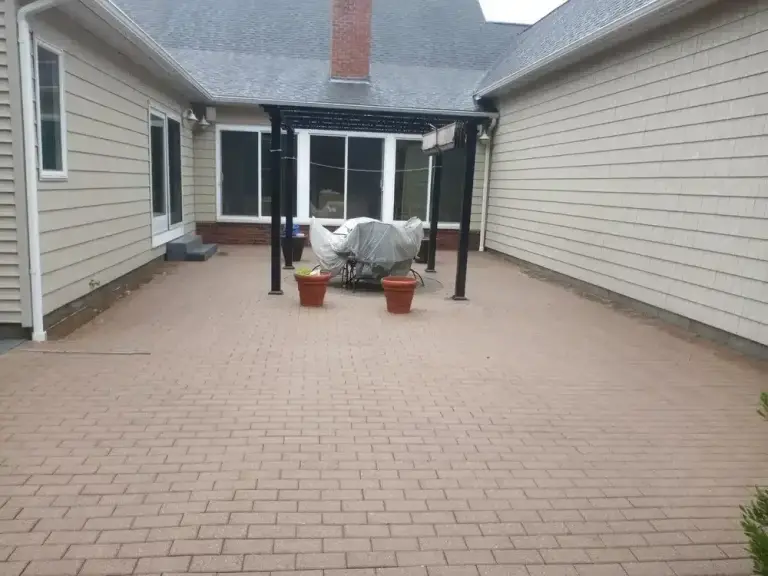
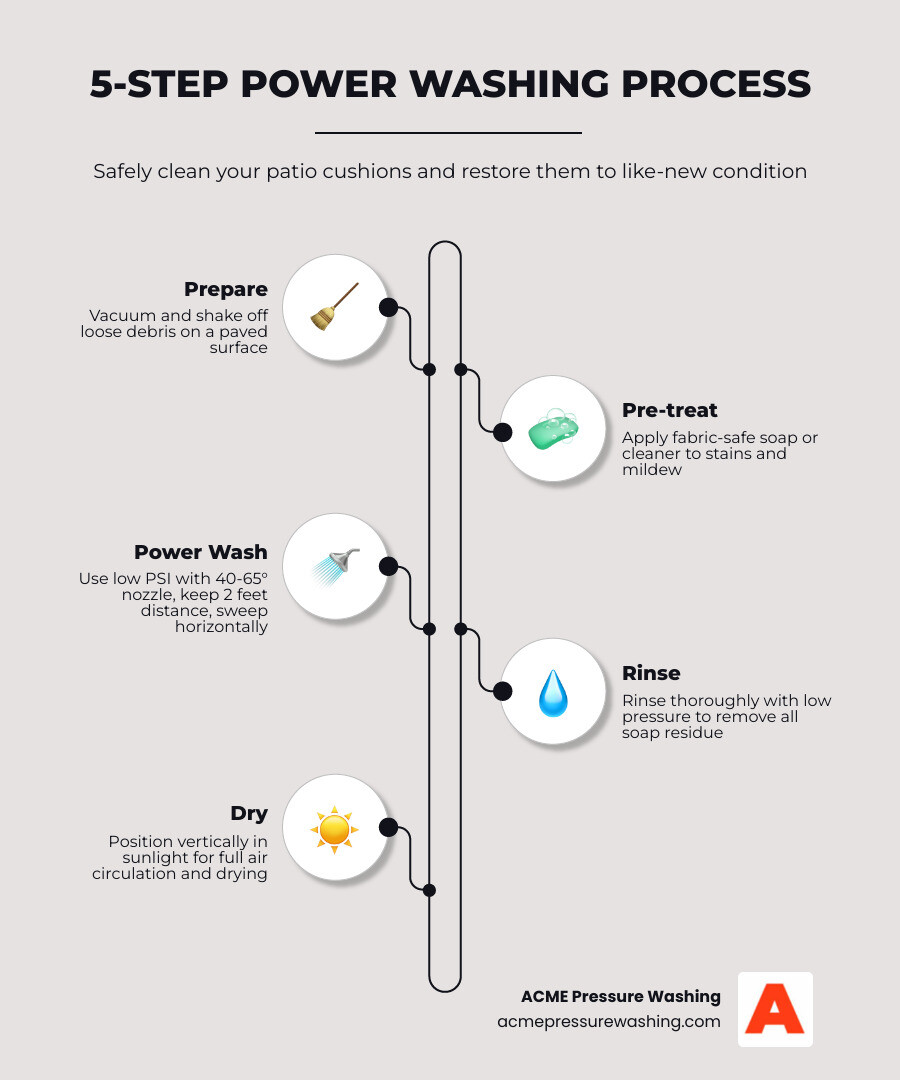
- Clear the Area: Move your furniture to a paved surface like a driveway or a concrete patio. Avoid grass or dirt at all costs—unless you want to create a mud bath for your cushions! Check out our Gallery Walkway and Patio Cleaning for examples of the ideal clean surfaces to work on.
- Dry Debris Removal: Use an upholstery attachment on your vacuum or give the cushions a vigorous shake. This removes loose hair, dust, and pollen before they turn into “mud” when they get wet.
- Secure the Cushions: If you have lightweight cushions, they might fly away once the water hits them. Prop them up against a solid wall or secure them to the furniture frame if the frame is also being cleaned.
The Process of Power Washing Patio Cushions
Now for the satisfying part.
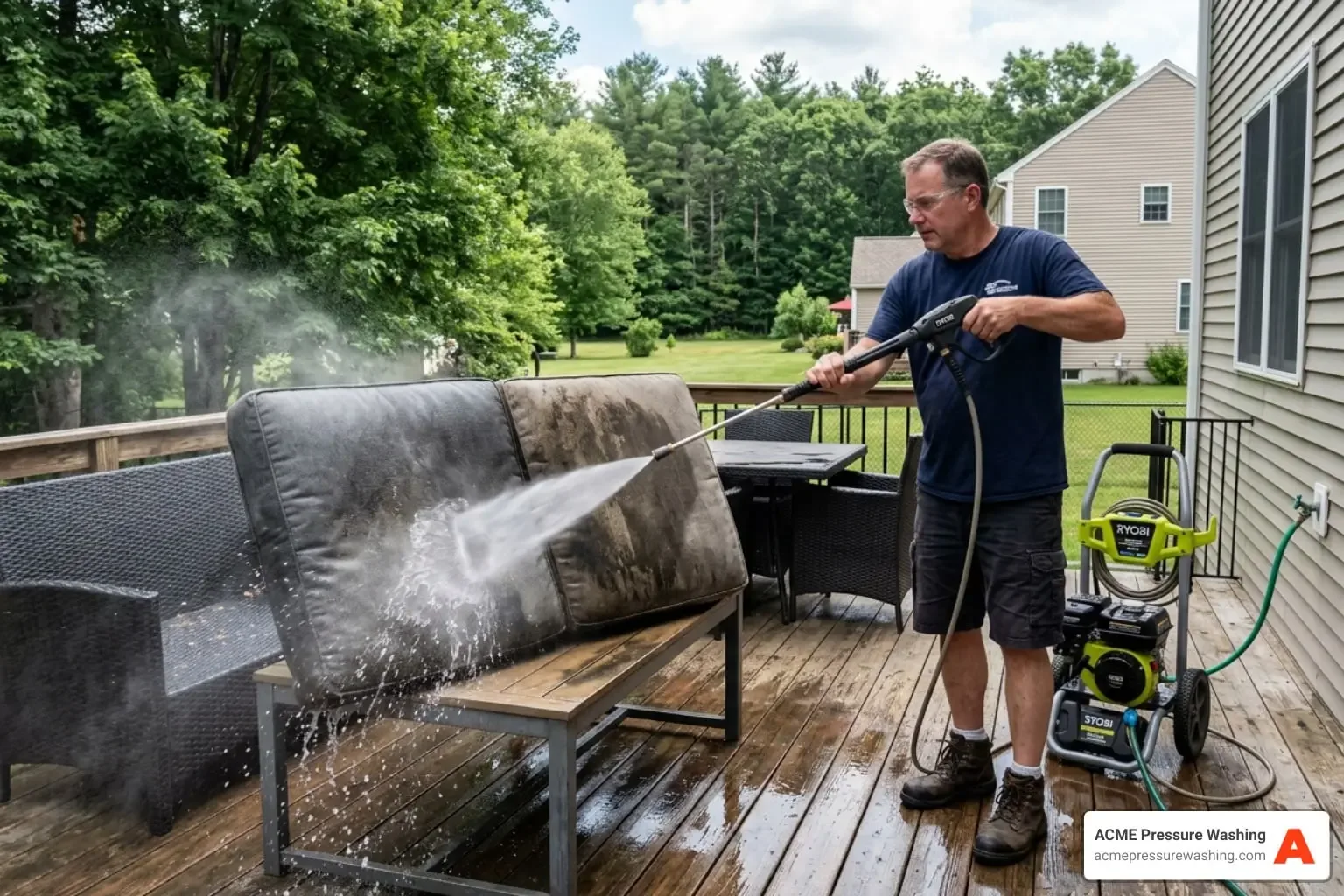
- Pre-Wetting: Start by misting the cushions with plain water. This “opens up” the fabric and prevents the cleaning solution from drying too quickly.
- Soap Application: Use a fabric-safe cleaner. Many homeowners use a mix of dish soap and Borax, or a dedicated outdoor fabric cleaner. Apply the soap using the low-pressure soap tip.
- The 2-Foot Rule: Always keep the nozzle at least 2 feet away from the fabric. As you gain confidence, you can move slightly closer for tough spots, but never closer than 12 inches.
- Overlapping Strokes: Move the wand in horizontal sweeping motions. Each pass should overlap the previous one by about 50% to ensure you don’t leave “tiger stripes” of dirt behind.
Handling Stubborn Stains, Mold, and Mildew
Sometimes, general cleaning isn’t enough. In humid areas like Hollis or Amherst, mold and mildew love to call patio cushions home.
- Mold and Mildew: A solution of 1 cup white vinegar and 1 gallon of water can work wonders. For tougher cases, a peroxide-based cleaner is safer for the environment than bleach.
- Oil and Grease: If a stray burger or some sunscreen hit the fabric, reach for the baking soda. Sprinkle it on, let it sit for 30 minutes to absorb the oil, then vacuum before washing.
- Tree Sap: This is a New Hampshire classic. According to How To Power Wash Patio Cushions – Home & Texture, you can try freezing the sap with an ice cube to make it brittle, then gently scraping it off before power washing.
- Grass Stains: Pre-treat these with a 50/50 mix of warm water and white vinegar. Let it sit for 20 minutes before you start the power washing process.
Post-Cleaning Care: Drying and Maintenance
The job isn’t done when the machine turns off. Improper drying is the number one cause of “returning” mildew.
Ensuring Your Power Washing Patio Cushions Dry Properly
After power washing patio cushions, they will be heavy with water.
- The Squeeze: Gently press down on the cushions with your hands or a clean towel to extract as much moisture as possible. Do not wring them, as this can distort the internal foam.
- Vertical Positioning: Stand the cushions up on their edges, leaning them against a wall or a clean fence. This allows gravity to pull the water down and out.
- Sunlight is Your Friend: The UV rays from the sun are a natural disinfectant that helps kill any remaining bacteria or mold spores. However, don’t leave them out for days on end, as prolonged exposure can eventually lead to fading.
- Air Circulation: Ensure there is plenty of space between each cushion. If you’re in a particularly humid week in Merrimack, a floor fan can help speed up the process. For more tips on maintaining your outdoor structures, see Merrimack Exterior Cleaning from Patios to Fences.
Long-Term Protection and Storage
Once your cushions are bone-dry, it’s time to protect your hard work.
Applying a fabric protectant (like 303 Marine Fabric Guard or similar products recommended by Sunbrella) creates a water-resistant barrier. This makes future spills bead up on the surface rather than soaking in.
When the season ends in late October, don’t just leave them out. Store your cushions in a dry, well-ventilated area—ideally in breathable fabric bags rather than plastic, which can trap moisture and lead to mold. If your patio slabs are also in need of a refresh before the winter sets in, check out How to Deep Clean Patio Slabs Without Breaking a Sweat.
Professional vs. DIY: Costs and Considerations
Is it worth doing yourself? For many homeowners in the Londonderry or Hudson area, the satisfaction of a DIY project is great, but the time commitment can be significant.
DIY involves renting or buying a machine, purchasing specialized cleaners, and spending a full Saturday scrubbing and spraying. If you aren’t careful, a DIY mistake—like using too much pressure—can result in ruined cushions that cost hundreds to replace.
Average Costs for Professional Patio Furniture Cleaning
Based on internet data from April 2026, professional cleaning for a full patio set typically averages $150, though specialized restoration or large commercial sets can range from $75 to over $450 depending on the material and level of staining.
| Factor | DIY Approach | Professional Service |
|---|---|---|
| Time | 4-6 hours | 1 hour |
| Risk | High (Fabric damage) | Low (Insured/Experienced) |
| Equipment | Rental ($40-$100/day) | Included |
| Results | Good to Great | Exceptional/Restorative |
Frequently Asked Questions about Cleaning Outdoor Cushions
How often should you power wash patio cushions?
We recommend a deep clean at least twice a year. Once in the spring to remove any dust or spiders that moved in during storage, and once in the fall before you pack them away. This prevents organic matter like pollen or bird droppings from “setting” into the fabric over the winter.
Can you use baking soda to clean outdoor cushions?
Absolutely! Baking soda is a fantastic, eco-friendly tool. It’s a natural deodorizer and is particularly effective at lifting oil-based stains (like sunscreen or pizza grease). Just make sure to rinse it thoroughly, as dried baking soda can leave a white, powdery residue in the fabric weave.
What is the best location to power wash cushions?
A clean, paved driveway or a concrete patio is the gold standard. You want a surface that allows water to run off quickly without pooling. Never wash cushions on the grass; the pressure from the wand will churn up the soil, splashing mud all over your “clean” cushions.
Conclusion
At ACME Pressure Washing, we know that your outdoor living space is an investment. With over 38 years of experience serving Merrimack, NH, and surrounding areas like Nashua, Manchester, and Windham, we’ve seen it all. We pride ourselves on using safe, customized, and eco-friendly techniques to protect your property while making it look brand new.
Whether you decide to tackle power washing patio cushions yourself or want to leave the heavy lifting to the experts, the goal is the same: a beautiful, clean space to enjoy with your family. If your cushions are clean but your patio is still looking a bit gray, we’re here to help. From residential homes to commercial fleets, we bring the same level of care and expertise to every job.
Ready to see the difference a professional touch can make? Check out our Professional Walkway and Patio Cleaning services today and let us help you get your home ready for the best season yet!