Paver Patio Pressure Wash: Avoiding Common DIY Mistakes
Your Paver Patio Deserves More Than a Quick Rinse
Paver patio pressure wash done right can restore your outdoor space from grimy and green to clean and sharp — but done wrong, it can cause serious, costly damage.
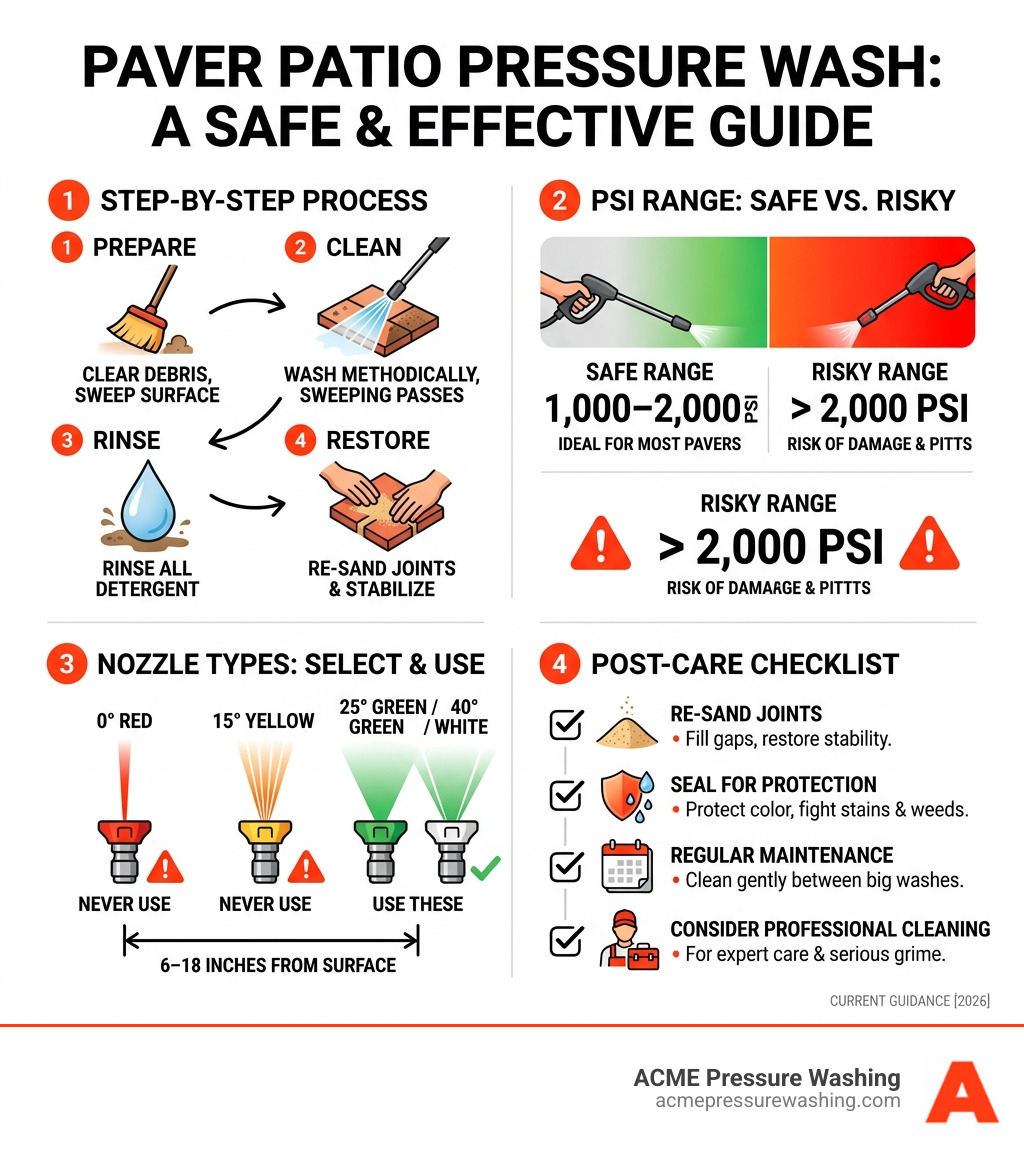
If you’re looking for a quick answer on how to approach paver patio cleaning:
- Use 1,000–2,000 PSI — never exceed 2,000 PSI on pavers
- Choose a 25° or 40° fan tip nozzle — never a 0° or 15° tip
- Keep the wand 6–18 inches from the surface at all times
- Work in steady, sweeping passes — don’t linger in one spot
- Re-sand the joints after washing to restore paver stability
- Seal every 2–5 years to protect against stains, weeds, and freeze-thaw damage
- When in doubt, hire a professional — especially for delicate stone or heavy staining
Here’s the reality most homeowners in Merrimack, NH find out the hard way: pavers are not like concrete. They’re softer, their surface holds color through a thin layer of fine particles, and their joints rely on sand that a pressure washer can blast right out. One wrong nozzle, one moment of holding the wand too close, and you’re looking at etching, pitting, or a patio that shifts underfoot.
This guide walks through the most common DIY mistakes — and why professional paver cleaning is often the smarter, safer choice.
The Risks of Improper Paver Patio Pressure Wash
When we talk about a paver patio pressure wash, we aren’t just talking about rinsing off some dirt. We are dealing with a complex system of masonry units held together by friction and joint sand. Many homeowners in towns like Amherst and Hollis assume that because their patio is made of “stone,” it can handle the same high-pressure blast as a commercial dumpster pad. This is a dangerous misconception.
One of the most significant risks is the destruction of “surface fines.” Concrete pavers are manufactured with a concentrated layer of fine particles on the surface to provide a smooth finish and vibrant color. High pressure can strip these fines away, leading to aggregate exposure. Once the larger stones inside the paver are exposed, the patio looks pitted, feels rough, and loses its original luster.
Beyond the aesthetics, there is the issue of structural integrity. As noted in Pressure Wash Pavers Without Destroying Them, the sand in the joints is what keeps your pavers from shifting. If you aim a high-pressure stream directly into those joints, you’ll blast that sand out. Without it, the pavers can wobble, tilt, or even sink over time.
Other common damages include:
- Etching marks: Using a narrow nozzle (like a 0-degree “red” tip) can leave permanent “scribble” marks on the stone.
- Pitting: High PSI can create small holes in softer materials like brick or sandstone.
- Color Fading: Stripping the top layer of the paver often removes the pigment, leaving you with a dull, greyish surface.
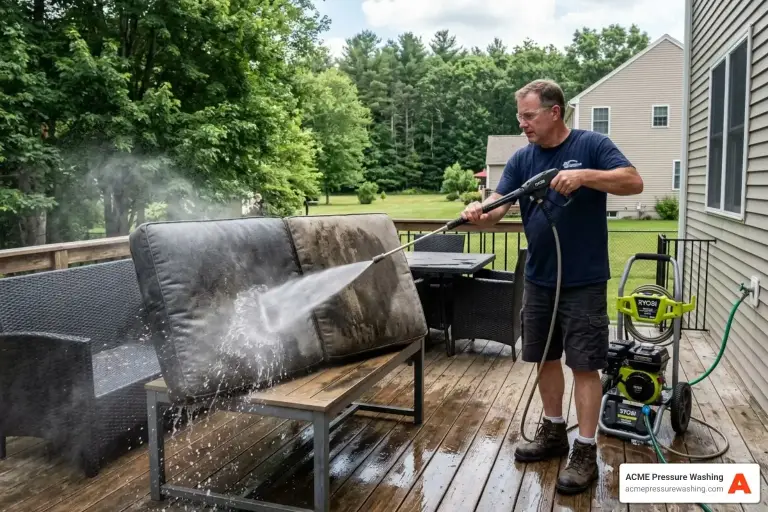
At ACME Pressure Washing, we’ve seen many DIY projects go south because the operator lingered too long on a single spot. To see what a professional, safe result looks like, check out our Walkway and Patio Cleaning service page.
Essential Equipment and Material-Specific Settings
To avoid the “horror stories” of pitted stone and ruined joints, you need the right tools. Most residential paver surfaces should never see pressure exceeding 2,000 PSI. In fact, for many natural stones, 1,000 to 1,500 PSI is the “sweet spot” for effective cleaning without destruction.
Recommended PSI and Nozzles by Material
| Paver Material | Recommended PSI Range | Ideal Nozzle Tip |
|---|---|---|
| Concrete Pavers | 1,500 – 2,000 PSI | 25° (Green) or 40° (White) |
| Brick Pavers | 1,500 – 2,000 PSI | 40° (White) |
| Flagstone / Slate | 800 – 1,200 PSI | 40° (White) |
| Sandstone / Limestone | 800 – 1,000 PSI | 40° (White) |
A 25-degree fan tip or a 40-degree nozzle is essential. These tips spread the water out into a wide “fan” shape, which reduces the impact on any single point. We also highly recommend using a walk-behind surface cleaner attachment. These tools use rotating nozzles housed under a deck to provide a consistent, even clean without the “tiger stripes” often left by a manual wand.
Before you start, don’t forget your safety gear. This includes safety goggles (sand and debris will fly), hearing protection, and closed-toe shoes. For a deeper dive into equipment selection, you can read more at Clean Pavers With Pressure Washer: A Complete Guide.
Safe PSI for a Concrete Paver Patio Pressure Wash
Concrete pavers are generally the heartiest of the bunch, but they still require a delicate touch. We recommend a range of 1,500-2,000 PSI for these surfaces. Because concrete pavers have a high surface density, they can handle enough pressure to lift deep-seated mold and algae, but exceeding 2,000 PSI risks exposing the aggregate beneath that smooth top layer.
In high-traffic areas like driveways or main walkways, the surface might be more durable, but the joints remain vulnerable. We always suggest checking out our Gallery Walkway and Patio Cleaning to see how we maintain that perfect balance of power and preservation on concrete surfaces.
Handling Delicate Natural Stone and Brick
Natural stone requires an entirely different strategy. Flagstone, for example, is often held together by mortar. High pressure can crack or wash away that mortar, leading to expensive repairs. We keep our equipment between 800-1,200 PSI for flagstone and slate.
Sandstone and limestone are even more porous and soft. Using too much pressure on these can actually “etch” the stone, creating a permanent texture change. If you have a slate patio, be aware of “cleavage planes”—the natural layers of the stone. Blasting water at a sharp angle can cause the stone to flake or delaminate.
Professional Techniques for a Flawless Finish
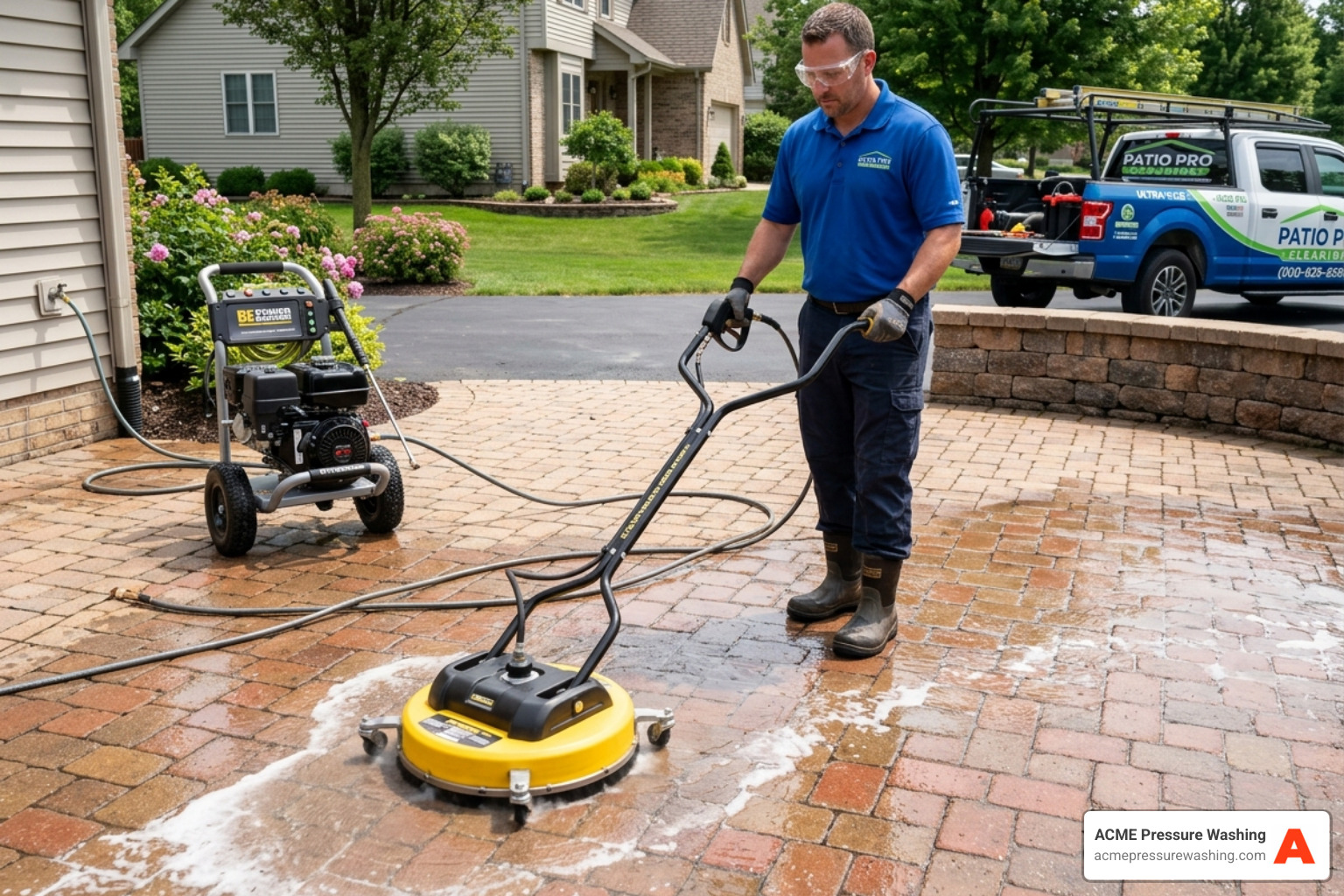
How you move the wand is just as important as the PSI setting. At ACME Pressure Washing, we use a specific “S-pattern” movement. This ensures that every inch of the patio receives the same amount of cleaning time, preventing streaks and “hot spots.”
Key professional techniques include:
- Wand Distance: Keep the nozzle 6 to 18 inches away from the pavers. Getting too close is the fastest way to cause damage.
- Angle of Attack: Hold the wand at a slight angle rather than pointing it straight down. This helps “sweep” the dirt away rather than driving it deeper into the pores of the stone.
- Working with the Slope: Always start at the highest point of the patio and work your way down. This allows the dirty water to drain away from the areas you’ve already cleaned.
- Drainage Management: Ensure your runoff isn’t pooling in your mulch beds or basement window wells.
For more tips on achieving a professional look, see our guide on How to Deep Clean Patio Slabs Without Breaking a Sweat.
Preparation Steps Before Your Paver Patio Pressure Wash
Preparation is 90% of a successful paver patio pressure wash. Don’t just pull the trigger and hope for the best.
- Clear the Area: Move all furniture, grills, and potted plants.
- Edge Trimming: Use a string trimmer or spade to clear grass and weeds that have encroached on the edges of the patio.
- Weed Removal: Manually pull large weeds from the joints. While pressure washing can remove some moss, it rarely kills the roots of deep-seated weeds.
- Sweep Debris: Use a stiff-bristle broom to remove loose dirt, leaves, and twigs.
- Protect Landscaping: Thoroughly pre-wet any grass or flowers surrounding the patio. This dilutes any cleaning solutions that might splash onto your plants.
Safe Cleaning Solutions and Detergents
Sometimes water alone isn’t enough, especially for oil stains or heavy mold. We recommend using eco-friendly surfactants and specialized detergents.
- Oxygen Bleach: Great for lifting organic stains (mold/mildew) without killing your lawn.
- Dish Soap: A simple mixture of Dawn and water is surprisingly effective for light grease stains.
- Specialized Degreasers: Necessary for grill drippings or oil spots on driveways.
- Avoid Muriatic Acid: Unless you are a highly trained professional, stay away from harsh acids. They can dissolve the surface of concrete pavers and permanently change the color of natural stone.
If you notice white, powdery stains on your pavers, that’s efflorescence. This is a natural mineral deposit that rises to the surface. Specialized cleaners are required to treat this without damaging the stone.
Post-Cleaning Care: Re-sanding and Sealing
The job isn’t done just because the pavers are clean. In fact, the most critical steps happen after the washing is finished. Because a paver patio pressure wash inevitably displaces some joint sand, you must replace it to maintain the patio’s stability.
Choosing the Right Sand
- Kiln-Dried Sand: Traditional sand that is swept into joints. It’s affordable but doesn’t offer much protection against weeds.
- Polymeric Sand: This is a “high-tech” sand infused with polymers (glues). When misted with water, it hardens to create a flexible, weed-resistant bond that locks the pavers in place.
For a step-by-step on the re-sanding process, check out How to Clean Brick Pavers with a Pressure Washer.
Why Post-Wash Care is Vital for Your Paver Patio Pressure Wash
If you skip re-sanding and sealing, you’re basically inviting the dirt and weeds back in within weeks.
- Weed and Insect Prevention: Properly installed polymeric sand creates a barrier that prevents seeds from germinating and ants from tunneling.
- Stain Resistance: A high-quality sealer acts as a “clear coat” for your patio. It prevents oil, wine, and leaf tannins from soaking into the porous stone.
- Color Enhancement: Many sealers offer a “wet look” that deepens the natural colors of the stone, making an old patio look brand new.
- Freeze-Thaw Protection: In New Hampshire, water that gets into paver pores can freeze and expand, causing cracks. Sealing prevents this moisture absorption.
We generally recommend a sealing cycle of every 2 to 5 years, depending on the type of sealer used and the amount of sun/traffic the patio receives.
When to Call the Experts for Patio Restoration
While many homeowners enjoy a DIY project, a paver patio pressure wash can be a massive undertaking. A typical 400-square-foot patio can take a DIYer an entire weekend when you factor in prep, washing, drying time (24-48 hours), re-sanding, and sealing.
Average Costs Based on Internet Data: Professional patio cleaning and sealing typically ranges from $150 to $2,500+.
- Small Patios (under 500 sq ft): Often fall on the lower end ($150 – $600).
- Large Estates or Commercial Plazas: Can easily exceed $2,500 depending on the level of staining and the type of sealer required.
You should definitely call a professional if you are dealing with stubborn lichen (those white/grey “crusty” spots), heavy oil stains, or if you have delicate natural stone. We use professional-grade steam cleaning and customized techniques that safely lift grime that consumer-grade pressure washers simply can’t touch. Learn more about our local expertise at Merrimack Exterior Cleaning from Patios to Fences.
Frequently Asked Questions about Paver Cleaning
How often should I pressure wash my pavers?
Most residential patios in New Hampshire benefit from a professional cleaning once or twice a year—ideally in the spring to remove winter salt and grime, and in the fall to clear away organic debris before the snow flies.
Will pressure washing remove the sand between my pavers?
Yes, it almost certainly will. Even with a fan tip, some sand displacement is expected. This is why re-sanding is a mandatory part of the restoration process. If you don’t replace the sand, your pavers will eventually shift and become uneven.
Can I use bleach to clean my paver patio?
You can, but you must be extremely careful. Standard laundry bleach can be harsh on certain natural stones and will definitely kill any surrounding vegetation if not diluted and rinsed properly. We prefer using oxygen-based cleaners or specialized masonry detergents that are safer for your “Morning Glories” and the local environment.
Conclusion
A beautiful patio is an investment in your home’s value and your family’s enjoyment. At ACME Pressure Washing, we bring over 38 years of experience to every job in Merrimack, NH, and surrounding areas like Bedford, Londonderry, and Nashua. We don’t believe in a “one size fits all” approach. Instead, we use safe, customized, and eco-friendly techniques to ensure your pavers are cleaned without the risk of aggregate exposure or structural damage.
Don’t spend your entire April weekend wrestling with a rental machine and bags of sand. Let the experts handle the heavy lifting.
Schedule Your Professional Walkway and Patio Cleaning with ACME Pressure Washing today and see the difference that 38 years of local expertise can make!