Don’t Let Your Roof Become a Science Experiment
Why You Need to Clean Moss Off Roof Shingles Before It’s Too Late
If you need to clean moss off roof shingles, the safest recommendation is to have the roof evaluated and treated by a professional New Hampshire roof cleaning company rather than attempting a DIY removal.
Safe Professional Approach to Clean Moss Off Roof Shingles
- Inspect the roof from the ground first to identify moss growth on shaded and north-facing slopes.
- Protect landscaping and surrounding surfaces before any treatment is applied.
- Apply an appropriate low-pressure roof cleaning treatment designed to kill moss at the root.
- Rinse or allow dwell time based on the product and roof condition.
- Avoid aggressive brushing or pressure washing, which can damage asphalt shingles.
- Prevent regrowth by reducing shade and improving ongoing roof maintenance.
- Hire a professional if the roof is steep, multi-story, or has widespread growth.
That green fuzz creeping across your shingles might look harmless — even charming to some. It’s not.
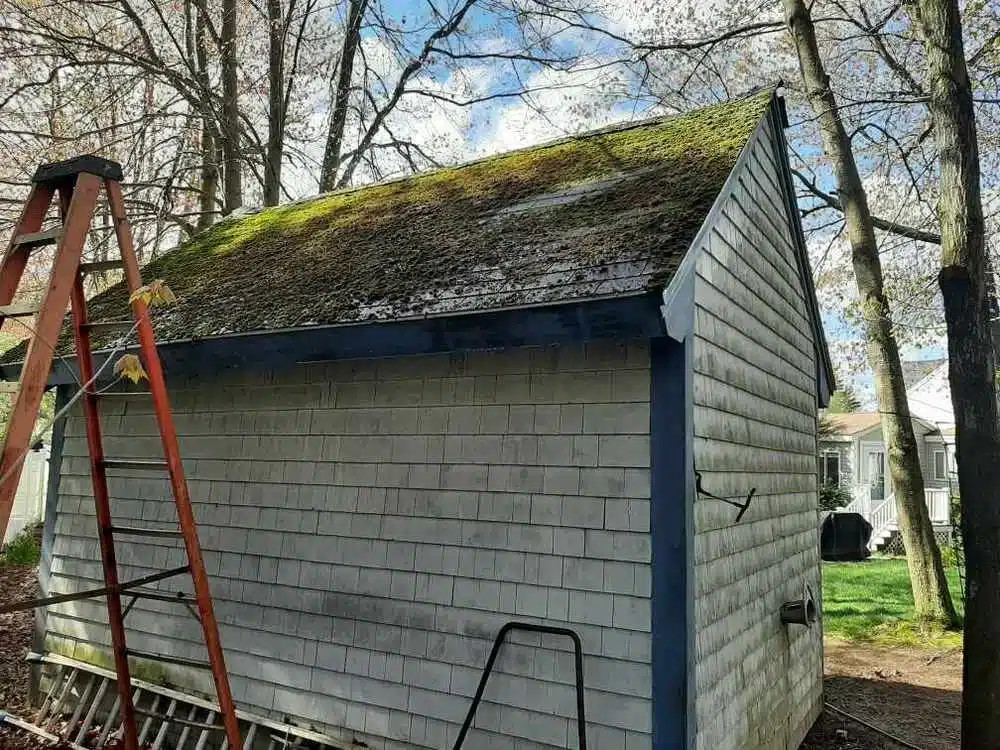
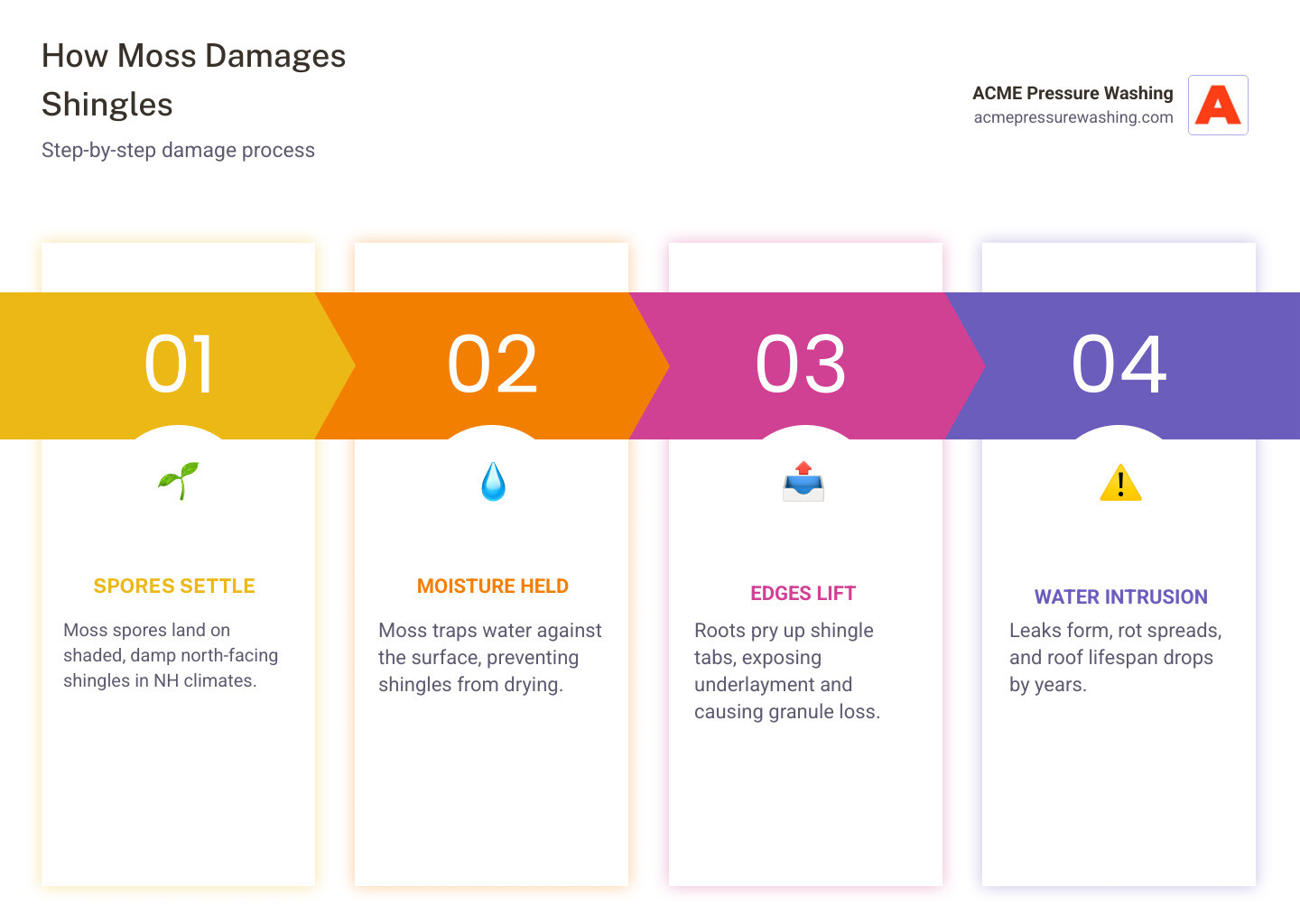
Moss is a non-vascular plant that absorbs water through its leaves rather than roots. That means it holds moisture directly against your shingles, around the clock. Over time, it works its way under shingle edges, prying them up and exposing the underlayment to water intrusion, rot, and leaks.
In New Hampshire’s damp climate — especially in towns like Merrimack, Manchester, Bedford, and Amherst — roofs do not get the long dry spells needed to naturally fight off biological growth. North-facing slopes and tree-shaded sections are the worst offenders. Once moss gets a foothold, it does not stop on its own.
And the cost of ignoring it? Significant. Light moss coverage can shave years off your roof’s lifespan. Heavy coverage can accelerate deterioration even further and push a property owner toward a full replacement costing thousands.
The sooner you act, the easier and safer the solution usually is.
I’m Lionel Greenwood, owner of ACME Pressure Washing — serving New Hampshire property owners since 1988, including roof cleaning projects in Merrimack, Manchester, Bedford, and Amherst. Over nearly four decades, I’ve seen how quickly moss can turn a healthy roof into a costly repair bill, and I’ve helped clients clean moss off roof shingles safely before the damage got out of hand.
In addition to roof cleaning, ACME Pressure Washing provides related exterior cleaning services across New Hampshire, including house washing, commercial pressure washing, and fleet washing.
For fast help or to schedule service, call +1603-883-6900 or request a quote through our Online Quote Form.
Glossary for clean moss off roof shingles:
Identifying Roof Invaders and Why You Must Clean Moss Off Roof Shingles
Before any treatment is scheduled, you need to know exactly what is growing on the roof. Not all green, gray, or black discoloration is the same, and proper identification helps determine the safest professional cleaning method. On asphalt shingle roofs in Southern New Hampshire — including Bedford, Manchester, Merrimack, and Amherst — we typically see three main culprits:
1. Algae (Gloeocapsa Magma)
If you see dark black or brown streaks running down your roof, you are likely dealing with Gloeocapsa magma, a type of blue-green algae. Algae spores are carried by the wind and animals, allowing the problem to spread throughout neighborhoods in New Hampshire.
While algae often begins as an appearance issue, it can also feed on the limestone filler used to manufacture modern asphalt shingles. In humid conditions on roofs without algae-resistant granules, these black streaks can appear in only a few years.
2. Lichen
Lichen is a symbiotic partnership between algae and fungi. It presents as crusty, light green, or gray-green patches that look almost like tiny leaf structures clinging to the shingles. Lichen is especially stubborn because it bonds aggressively to the shingle’s mineral granules. Improper scraping can pull those protective granules off and permanently damage the roof.
3. Moss
Unlike algae, moss is a complex, non-vascular plant. It thrives in cool, damp, shaded environments, which is why roofs with significant tree canopy coverage often have chronic moss issues.
Moss is uniquely destructive to asphalt shingles for several reasons:
- Severe Moisture Retention: Moss behaves like a sponge, holding substantial water against the roof surface and slowing drying.
- Shingle Lifting and Curling: As moss grows, its root-like structures can pry up shingle edges, making the roof more vulnerable during storms.
- Freeze-Thaw Damage: During New Hampshire winters, trapped moisture can freeze and expand, worsening cracks and openings that allow water intrusion.
Proper identification matters. A mild algae stain may require a different treatment than thick moss accumulation or bonded lichen. In Merrimack, Manchester, Bedford, and Amherst, the safest course is usually a professional low-pressure roof cleaning process rather than any DIY removal attempt. For a deeper look at identifying these growths without harming your roof, check out What You Need to Know to Clean and Prevent a Mossy Roof – This Old House and read our guide on Roof Shingle Moss Cleaning: How to Avoid Damage.
High-Level Methods to Clean Moss Off Roof Shingles Safely
If you are considering how to clean moss off roof shingles, the best recommendation is to hire a trained professional. Roof work is hazardous, chemical handling creates additional risk, and improper cleaning can permanently damage asphalt shingles.
When treatment is necessary, the process should stay high-level and safety-focused:
Step 1: Roof Evaluation
A professional should inspect the roof condition, the extent of the moss growth, roof pitch, access points, and any existing damage before work begins.
Step 2: Site and Landscape Protection
Before any roof treatment is applied, surrounding plants, siding, walkways, and other surfaces should be protected and pre-rinsed as needed to reduce the impact of runoff.
Step 3: Low-Pressure Treatment
Moss should be treated with an appropriate low-pressure roof cleaning solution applied carefully to kill the growth at the root without damaging the shingles.
Step 4: Limited Physical Removal Only When Appropriate
If any physical removal is needed, it should be gentle and controlled. Aggressive brushing, scraping, or any process that strips shingle granules should be avoided.
Step 5: Ongoing Prevention
Long-term prevention may include trimming overhanging branches, improving sunlight exposure where possible, and scheduling maintenance cleanings.
For New Hampshire properties in Merrimack, Manchester, Bedford, and Amherst, professional service is the safest option for roof surfaces as well as related exterior cleaning needs. ACME Pressure Washing also provides house washing, commercial pressure washing, and fleet washing throughout New Hampshire. For detailed information, refer to How to Remove Moss from Roof Shingles – IKO and read our expert breakdown on How to Clean Roof Moss the Right Way.
Why High-Pressure Washing is a Costly Mistake for Shingles
If there is one absolute rule in roof maintenance, it is this: Never use a pressure washer on asphalt shingles.
While it might be tempting to blast the moss away with high pressure, doing so will instantly ruin your roof and void your manufacturer’s warranty. Asphalt shingles are coated with a layer of ceramic-coated mineral granules. These granules are your roof’s primary line of defense against ultraviolet (UV) radiation, fire, and physical impact.
When high-pressure water hits these shingles:
- Granule Stripping: The intense pressure blasts the protective granules right off the asphalt mat. This exposes the underlying asphalt to the sun, causing the shingles to dry out, crack, and fail prematurely.
- Water Intrusion: High-pressure spray can easily force water upward underneath the shingle laps, soaking the underlayment and roof decking, leading to immediate indoor leaks and mold growth.
- Physical Damage: Pressure washers can easily tear shingles, rip off weakened tabs, and destroy the delicate water-shedding valleys of your roof.
The Professional Alternative: Soft Washing
At ACME Pressure Washing, we strictly adhere to the Asphalt Roofing Manufacturers Association (ARMA) guidelines by utilizing a process called soft washing.
Soft washing replaces high-pressure water with a specialized, biodegradable cleaning solution applied at incredibly low pressure (similar to the force of a gentle garden hose). The eco-friendly solution sanitizes the roof by killing moss, algae, and lichen at the root level, rather than just blasting away the surface growth.
Because the organisms are killed chemically, they naturally decompose and wash away safely over the following weeks without any abrasive scrubbing or granule loss. To understand why this method is the gold standard for New Hampshire homes in Manchester, Merrimack, and Amherst, read more about Merrimack Roof Cleaning: Why Soft Washing Wins.
Frequently Asked Questions about Roof Moss Removal
What is the best time of year to clean moss off roof shingles?
The ideal times to clean moss off roof shingles are generally late spring and early fall, when New Hampshire weather is milder and roof surfaces are safer to evaluate and treat. Extremely hot summer days can reduce product performance, while winter conditions create serious slip hazards and can make shingles more brittle.
Can bleach or vinegar be used to clean moss off roof shingles?
Various cleaning solutions are commonly discussed online, but selecting and applying the wrong product can damage shingles, nearby landscaping, and other exterior surfaces. For that reason, we strongly recommend professional roof cleaning rather than DIY chemical application.
When should I call a professional New Hampshire roof cleaning service?
You should call a professional if:
- The roof pitch is steep.
- The moss covers a meaningful portion of the roof surface.
- The building is more than one story high.
- The roof already shows signs of wear, curling, or damage.
- You want to avoid safety risks and accidental shingle damage.
According to publicly available online data and industry averages, roof moss removal can vary widely, often ranging from $1,200 to $6,000 or more, depending on roof size, accessibility, pitch, and severity of growth. These are general market averages only and are not the actual prices of ACME Pressure Washing.
For property owners in Merrimack, Manchester, Bedford, and Amherst, professional service helps ensure the roof is cleaned safely and appropriately. If you need roof cleaning or other exterior services in New Hampshire, including house washing, commercial pressure washing, or fleet washing, call +1603-883-6900 or request service through our Online Quote Form.
Conclusion
Your roof is too important to treat as a DIY project. Scraping, brushing, or pressure washing moss without the right process can lead to shingle damage, shortened roof life, and serious safety hazards.
At ACME Pressure Washing, we bring over 38 years of experience to every job. We use safe, customized, low-pressure soft washing methods designed to protect New Hampshire properties in Merrimack, Manchester, Bedford, and Amherst while addressing moss, algae, and roof staining properly.
We also provide a full range of exterior cleaning services across New Hampshire, including house washing, commercial pressure washing, and fleet washing.
Ready to schedule service?
- Get a free estimate: Fill out our Online Quote Form