




Understanding the Need for the Best Roof Moss Killer
When we look at a roof covered in green patches in Amherst or Nashua, we aren’t just looking at an aesthetic issue. We are looking at a biological invasion that is actively consuming the structural integrity of the building. To understand why you need the best roof moss killer, you first have to understand what moss is doing to your shingles.
Modern asphalt shingles are manufactured using limestone and calcium carbonate as fillers. While these materials provide weight and durability, they also serve as a literal buffet for organic growth. A specific type of cyanobacteria known as Gloeocapsa magma—often recognized as those unsightly black streaks—paves the way by feeding on that limestone. Once established, moss moves in, using its root-like structures to anchor deep into the shingle granules.
Because moss acts as a “moisture sponge,” it can hold 20 to 30 times its own weight in water. This keeps the roof surface perpetually damp, even during dry spells. This moisture eventually seeps under the shingles, leading to wood rot in the underlayment and potentially inviting mold into the attic space. According to the International Association of Certified Home Inspectors (InterNACHI), moss growth is one of the most common causes of premature roof deterioration in humid climates. Learning How To Clean Roof Moss The Right Way is essential to prevent these expensive repairs. Furthermore, improper cleaning can be just as hazardous as the moss itself; Roof Shingle Moss Cleaning How To Avoid Damage requires a delicate touch that preserves the protective granules.
Biological Impact on New Hampshire Roofs
In our local New Hampshire climate, moss growth follows a specific seasonal rhythm. Growth is most aggressive during the damp fall, moderate winters, and early spring. North-facing roof slopes are the primary targets because they receive the least amount of direct sunlight, allowing moisture to linger. Overhanging tree canopies compound the problem by trapping humidity against the roof surface and blocking UV rays that would otherwise inhibit moss development.
Spore migration is a constant threat in heavily wooded areas like Amherst and Nashua. Wind and wildlife carry spores from nearby trees directly onto your roof. Once they land in a shaded, damp spot, the cycle begins again. Properties in Bedford and Merrimack face similar challenges, particularly on buildings surrounded by mature hardwoods and conifers. Without the application of a high-quality moss killer or professional intervention, these organisms will continue to “eat” the limestone filler, leading to premature shingle failure and significant granule loss.
Top-Rated Commercial Moss Killers for New Hampshire Roofs
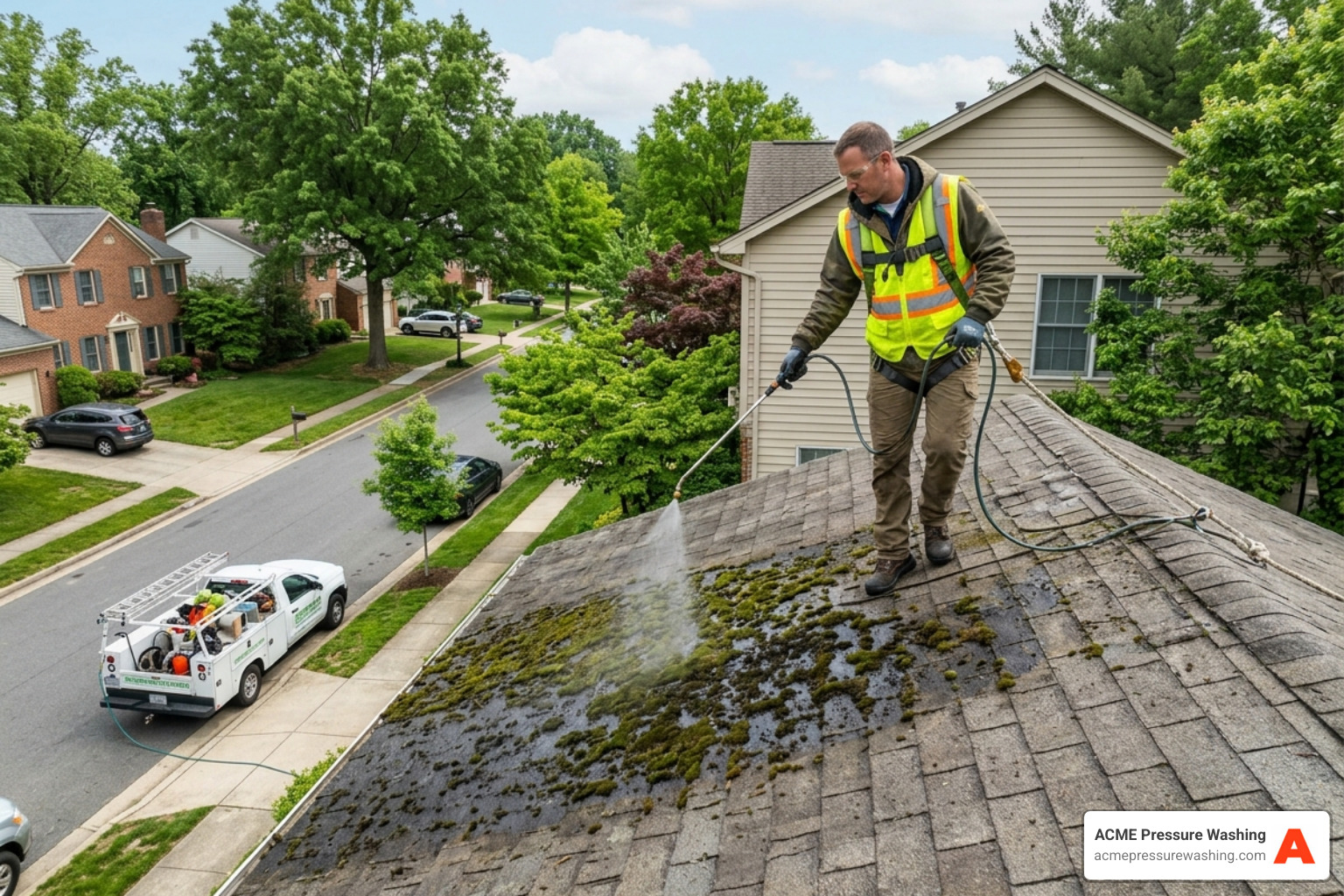
Selecting the best roof moss killer depends largely on whether you need an immediate “knock-down” of existing growth or a long-term preventative shield. In the commercial market, products generally fall into two categories: fast-acting soaps and systemic minerals.
Commercial roof treatment programs in Amherst, Bedford, Merrimack, and Nashua typically prioritize products that can address active moss growth while supporting long-term roof maintenance planning for New Hampshire properties.
Best Roof Moss Killer for Fast Results
For commercial buildings with heavy moss accumulation, fast-acting products containing ammoniated soaps of fatty acids are commonly used because they dehydrate moss on contact.
These formulas are often selected when property managers want visible results quickly on roof sections, walkways, or adjacent hardscapes without the rust-like staining associated with some iron-based treatments.
Best Roof Moss Killer for Long-Term Prevention
For long-term prevention on commercial and large residential properties in Nashua, Amherst, Bedford, and Merrimack, zinc sulfate remains a widely used industry-standard option.
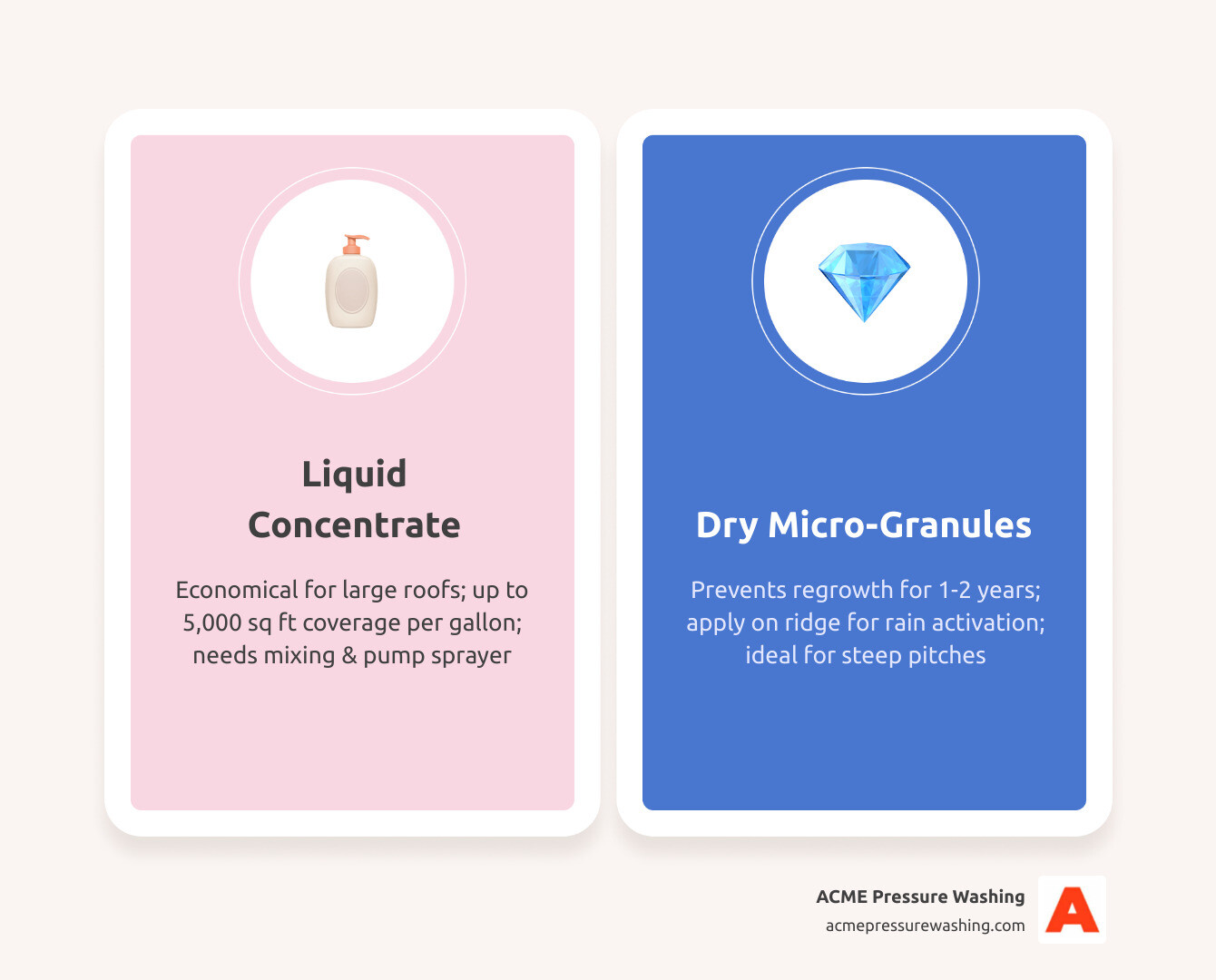
The application strategy here is different: you apply the granules along the ridge of the roof. As it rains, the water dissolves the zinc and carries it down the shingles, creating a sacrificial layer that is toxic to moss spores but non-corrosive to galvanized gutters. This method is highly effective as a “set it and forget it” preventative measure, typically applied in late fall or early spring.
Comparing Application Methods: Liquid vs. Granular vs. Ready-to-Spray
Choosing the right format is often a matter of roof pitch, access, and safety for New Hampshire properties. We’ve summarized the key differences below:
| Method | Best Use Case | Pros | Cons |
|---|---|---|---|
| Liquid Concentrate | Large commercial roofs | Most economical; high coverage | Requires manual mixing and a pump sprayer |
| Ready-to-Spray (RTS) | Limited ground-level application | No mixing; reaches some lower roof areas | Limited coverage (approx. 500 sq. ft.) |
| Dry Micro-Granules | Pitched roofs | Long-term prevention; easy to see | Requires roof walking; needs rain to activate |
For many commercial buildings in Bedford, Merrimack, Amherst, and Nashua, Pressure Washing Roofs using a professional liquid application approach is the most efficient way to ensure total coverage.
Safety and Environmental Considerations
At ACME Pressure Washing, we prioritize the safety of your landscape, surrounding surfaces, and jobsite conditions across New Hampshire. Many commercial moss killers are hazardous to aquatic life, so runoff management is critical. When applying these products in Bedford, Merrimack, or Nashua, it is vital to heavily water surrounding plants before, during, and after the application to dilute any chemicals that may drip from the eaves.
Always look for “non-staining” and “non-corrosive” labels. While zinc-based products are safe for galvanized gutters, some high-acid cleaners can etch windows or damage the finish on aluminum siding if not rinsed properly.
Because roof treatment carries fall risk and surface-damage risk, application should be handled by trained professionals rather than as a DIY project.
Professional Soft Washing vs. DIY Chemical Treatments
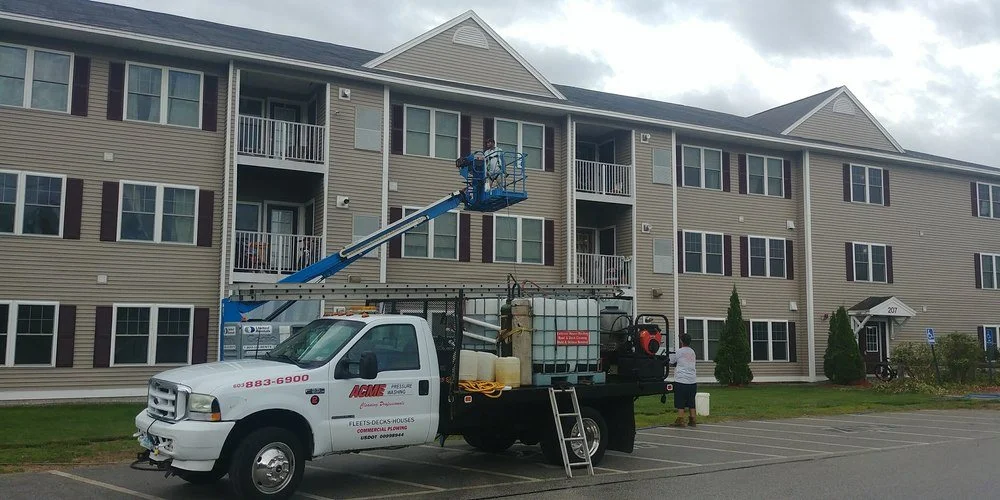
While roof treatment products are available, there is a significant difference between “killing” moss and “removing” it safely. Using high-pressure water to blast dead moss away is a recipe for disaster; high pressure strips away the protective granules of the shingle, effectively shortening the life of the roof by years and voiding manufacturer warranties.
This is why Merrimack Roof Cleaning Why Soft Washing Wins. Soft washing uses low-pressure pumps—similar to a garden hose—to apply eco-friendly, biodegradable detergents. These solutions kill the moss at the root (the rhizoids) without the need for abrasive scrubbing.
Furthermore, professional cleaning ensures Can You Power Wash Shingles Risks And Safer Alternatives are utilized. Our team at ACME Pressure Washing utilizes OSHA-compliant fall protection and specialized equipment that most property owners and facility managers simply do not keep on site. In places like Merrimack, Nashua, Bedford, and Amherst, where roof pitches and access conditions can be challenging, the risk of improper treatment far outweighs the perceived savings of a self-managed approach.
Investment and Pricing Realities
Maintaining a commercial or large residential property involves budgeting for long-term care. While treatment products may appear inexpensive at first glance, labor, access, insurance, and safety considerations can significantly increase total project cost.
Note: Based on industry averages and publicly available online data as of May 2026, roof moss treatment services in New Hampshire can vary widely, with broad market ranges often falling between $2,400 and $15,000+ depending on roof pitch, access complexity, and total square footage. These are average market ranges only and are not the actual prices of ACME Pressure Washing.
In cities like Merrimack, Nashua, Bedford, and Amherst, investing in professional soft washing every 1-2 years can extend the life of a roof by a decade, helping reduce the likelihood of premature replacement.
Frequently Asked Questions about Roof Moss Removal
How long does it take for the best roof moss killer to work?
It depends on the active ingredient. Ammoniated soaps work within hours, turning moss brown or yellow as it dehydrates. Zinc-based systemic killers can take several weeks. Once the moss is dead, it may take several months of rain and wind for it to naturally detach and wash off the roof.
Is zinc sulfate safe for my gutters and downspouts?
Yes, most modern zinc sulfate products are formulated to be non-corrosive to galvanized metal gutters. However, you should always check the label if you have specialty copper gutters, as certain chemicals can cause spotting or patina changes.
When is the best time of year to treat roof moss in New Hampshire?
The “perfect timing” is late fall, just before the heavy rains begin, or early spring during the peak growth cycle. Treating in the dead of summer is less effective because moss is often dormant and less likely to absorb the treatment.
Conclusion
With over 38 years of experience, ACME Pressure Washing has seen how New Hampshire’s climate can wreak havoc on local roofs. From Amherst to Bedford, Nashua, and Merrimack, we have dedicated ourselves to using safe, customized, and eco-friendly techniques to protect your investment.
Whether you need roof moss treatment for a commercial property, a large residential building, or part of a broader exterior maintenance plan, we are here to help. Our soft wash systems ensure your shingles stay intact while the moss is completely eradicated. For more information on our process, visit our page on Pressure Washing Roofs.
Get a Professional Consultation Today Fill out our Quote Form to get started.
Explore our full range of services:
