The Dirty Truth About Pressure Washing Oil Stains

The Honest Answer: Can You Pressure Wash Oil Stains?
Can you pressure wash oil stains? Yes — but not with a pressure washer alone, and not always completely.
Here’s what actually determines success:
| Factor | Impact on Results |
|---|---|
| Stain age | Fresh (under 24 hrs) = best results; over 12 months = limited |
| Water temperature | Hot water (180°F–200°F) dramatically outperforms cold |
| Degreaser use | Required — pressure alone pushes oil deeper |
| Surface type | Porous concrete and asphalt absorb oil fast, making removal harder |
| PSI | 2,000–3,500 PSI with the right nozzle is the professional standard |
Oil is hydrophobic — it repels water. High-pressure water without the right chemistry doesn’t dissolve oil. It spreads it, or drives it deeper into porous surfaces like concrete and asphalt.
The reality is this: pressure washing is the final step in a multi-step process, not the whole solution.
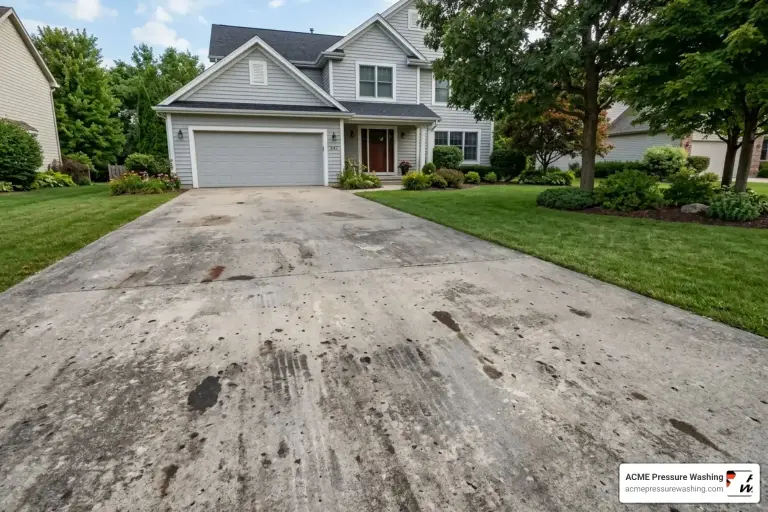
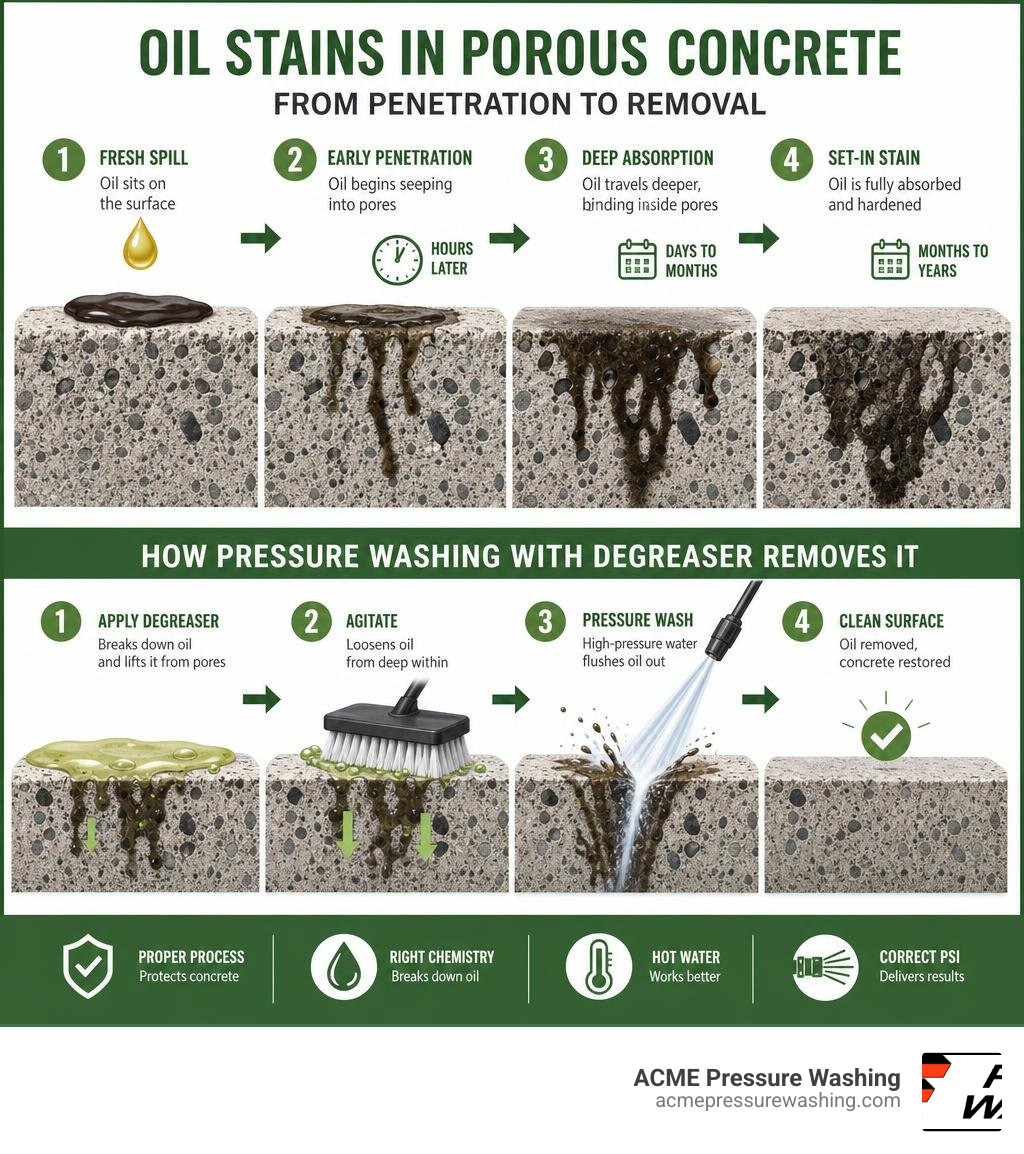
Think about what happens when a vehicle leaks oil on a driveway in Merrimack or Londonderry. Within hours, that petroleum-based fluid has already begun wicking down into the microscopic pores of the concrete. By the time most people notice the stain, it’s no longer sitting on the surface — it’s inside the material.
That’s the problem a garden hose or even a pressure washer on its own simply cannot solve.
I’m Lionel Greenwood, owner of ACME Pressure Washing, and in over 38 years of hands-on exterior cleaning across New Hampshire, I’ve seen what works — and what makes oil stains worse — when it comes to can you pressure wash oil stains from concrete and asphalt. In this guide, I’ll walk you through the honest truth about what pressure washing can and can’t do, and exactly how professionals get the best results.
Can You Pressure Wash Oil Stains Effectively?
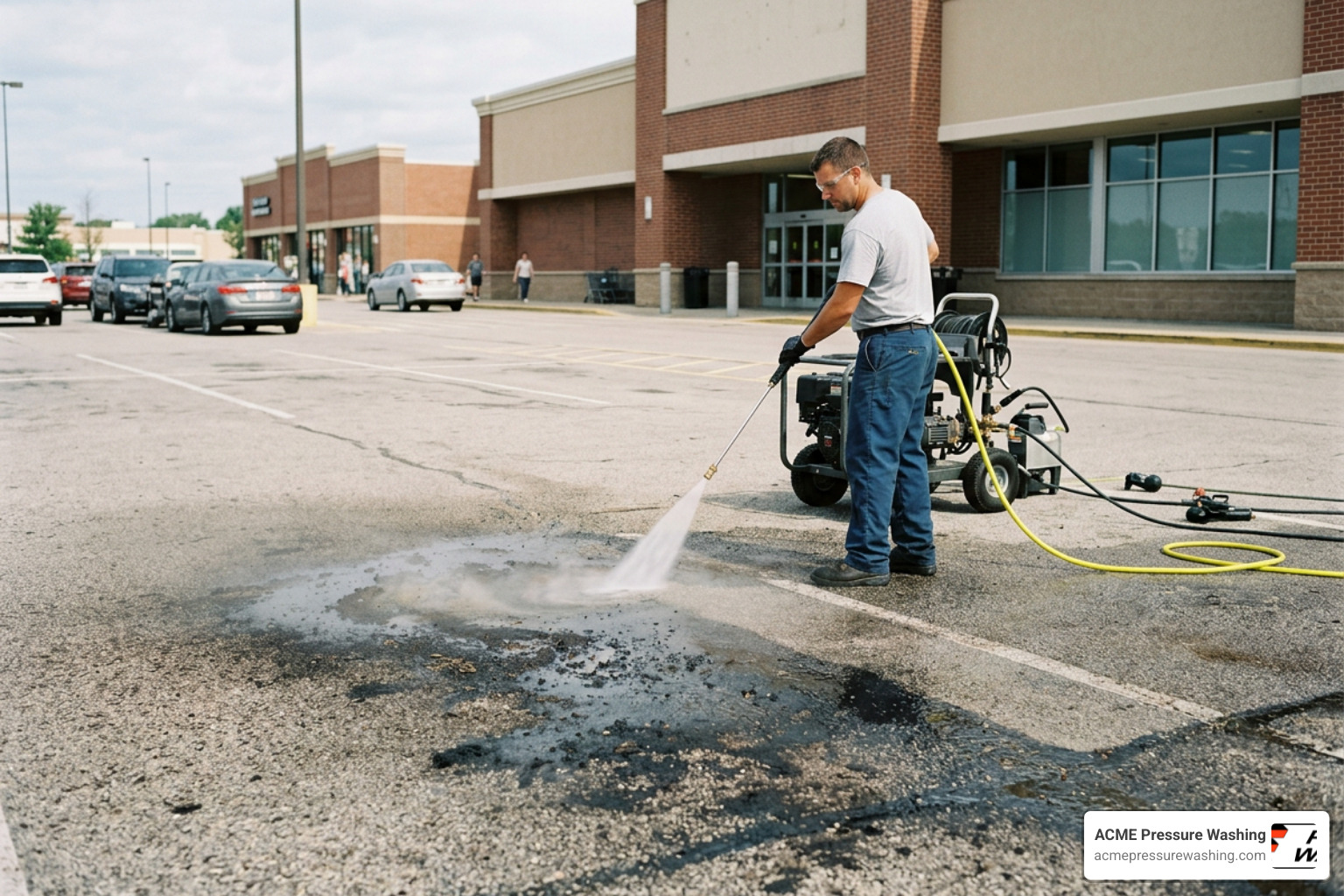
When property owners ask us if they can blast away vehicle leaks with high pressure, they are often surprised by the science behind the stain. To understand why a pressure washer alone fails, we have to look at the relationship between the oil and the substrate.
Concrete is essentially a hard sponge. It is highly porous, filled with millions of microscopic capillaries. When motor oil, transmission fluid, or cooking grease spills onto it, gravity and capillary action draw the nonpolar petroleum molecules deep into these voids.
Asphalt presents an even more delicate challenge. Unlike concrete, asphalt is a petroleum-based material held together by a tar-like binder. When motor oil leaks onto asphalt, the oil acts as a solvent, actively dissolving the binder. If you try to clean it using high pressure alone, you will not only fail to lift the stain, but you will accelerate asphalt degradation, stripping away the protective top layer and leaving a pitted, crumbling surface.
To safely and effectively remove oil, we must rely on a precise three-stage cleaning mechanism:
- Chemical Disruption: We apply specialized, professional-grade alkaline or biological agents to break the chemical bond between the oil and the substrate.
- Emulsification: Surfactants surround the suspended oil molecules, forming structures called micelles that allow the hydrophobic oil to mix with water.
- Mechanical Flushing: This is where the pressure washer finally comes in. We use the pressurized stream to flush the suspended, emulsified oil out of the pores and sweep it away.
Without the first two stages, pressure washing is just pushing water against oil. If you are trying to understand what your property needs, exploring driveway pressure washing service options can help clarify the difference between standard cleaning and heavy-duty restoration. For a deeper dive into whether a machine alone can do the trick, the guide on Will A Pressure Washer Remove Oil Stains? highlights these mechanical limitations.
The Science of Hot Water vs. Cold Water Power Washing
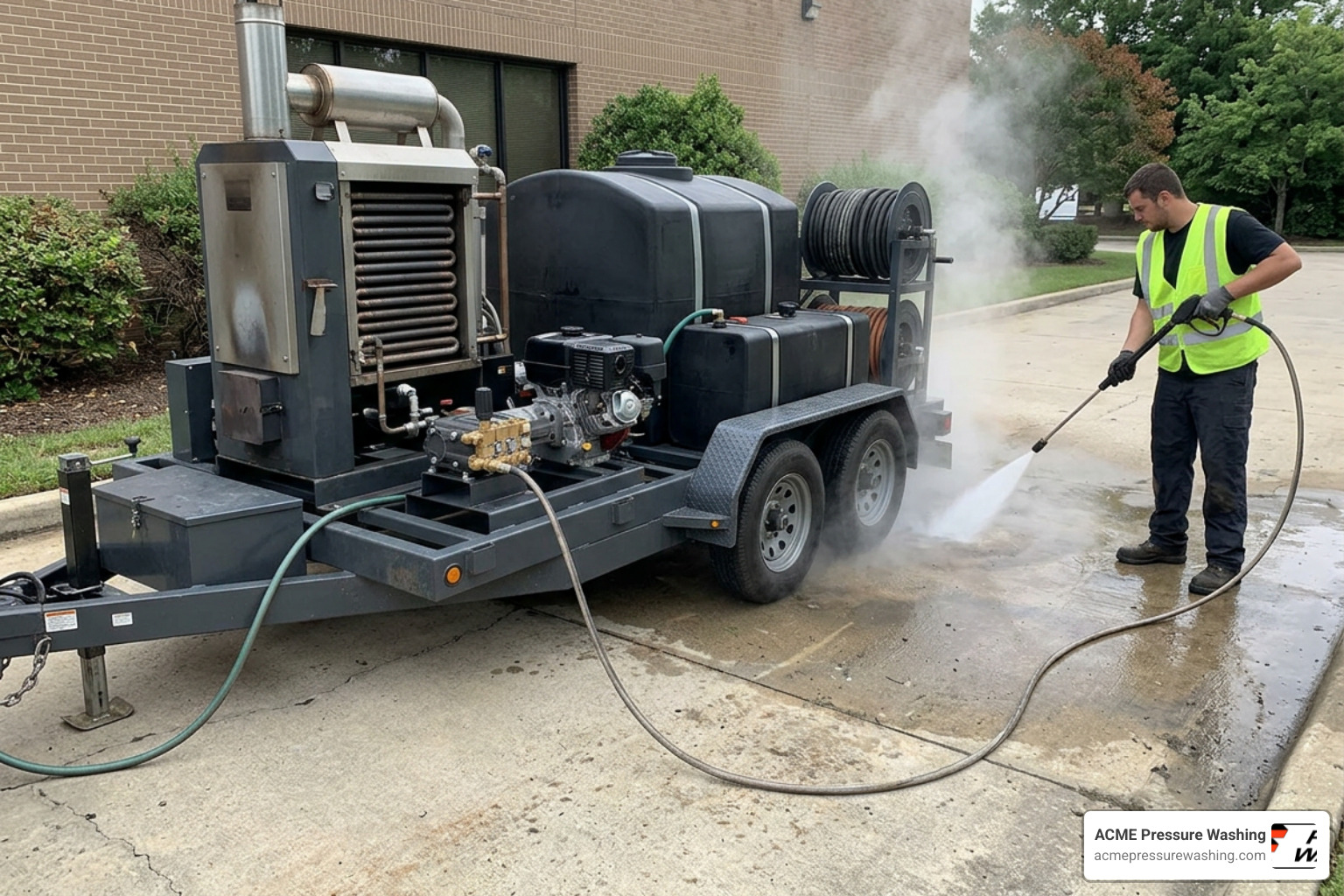
There is a major difference between pressure washing (using cold water) and power washing (using heated water). When it comes to petroleum-based contaminants, temperature is everything.
The Cleaning Equipment Trade Association (CETA) recognizes hot-water pressure washing systems as the absolute industry standard for grease and oil applications. The reason is simple physics: heat reduces the viscosity of oil.
Think of it like washing a greasy frying pan in your kitchen sink. If you rinse it with freezing cold water, the grease remains congealed and stuck to the surface. But when you turn on the hot water, the grease immediately softens, liquefies, and rinses away.
On driveways and commercial parking lots in Manchester or Derry, we use industrial-grade power washers that heat water to between 180°F and 200°F (82°C to 93°C). This extreme heat does several things at once:
- It breaks down the thick, viscous structure of polymerized motor oil.
- It accelerates the chemical activation of our degreasers, making them work twice as fast.
- It allows us to thoroughly flush the oil out of the concrete pores without needing to use destructive, ultra-high pressure.
Using cold water on an oil stain that has sat for more than 24 hours is one of the most common concrete power washing mistakes we see. Cold water will simply cool and harden the oil, locking it further into the pore structure and leaving a permanent shadow.
Recommended PSI, Nozzles, and Surface Protection
Using the wrong pressure or nozzle can instantly ruin a concrete driveway or tear a hole straight through asphalt. To clean safely, we must match our equipment settings to the specific surface we are treating.
For concrete surfaces, a pressure range of 2,000 to 3,500 PSI is highly effective for flushing out oil. However, the age of the concrete matters immensely. You should never pressure wash concrete that was poured less than 24 months ago. Young concrete is still curing and lacks the structural strength to withstand high pressure; blasting it can permanently strip the cream coat, leaving the rough aggregate exposed.
For asphalt surfaces, such as driveways in Bedford or parking lanes in Derry, we must lower our pressure. Asphalt should never be washed at more than 2,000 PSI to prevent aggregate displacement.
Nozzle selection is equally critical. We use color-coded spray tips to control the angle of the water:
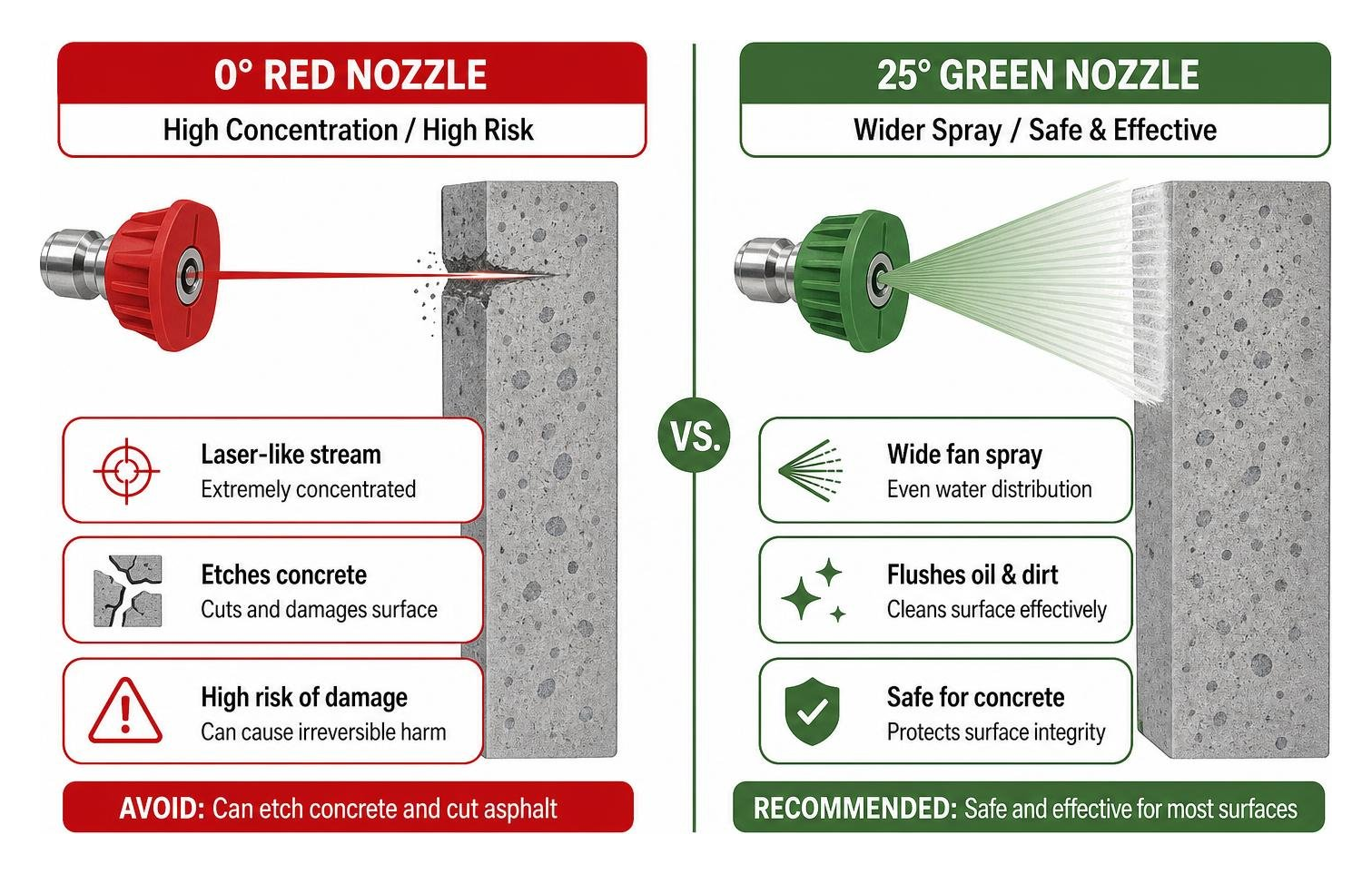
- Red Tip (0-Degree): Never use this. It focuses the water into a highly concentrated, laser-like stream that will etch concrete, cut through asphalt, and cause irreversible structural damage.
- Yellow Tip (15-Degree): Excellent for stripping and heavy-duty spot-cleaning on tough, uncolored concrete.
- Green Tip (25-Degree): The safest and most effective standard nozzle for flushing out emulsified oil stains on most residential and commercial surfaces.
- White Tip (40-Degree): Best for rinsing and washing delicate surfaces like decorative colored concrete.
When operating the wand, we always maintain a distance of 12 to 18 inches from the surface, moving in consistent, overlapping sweeping motions. Holding the tip too close or hovering over a single spot for too long will leave permanent circular scars on your pavement.
For more details on setting up your equipment, check out our guide on finding the perfect PSI for concrete. If you are dealing with asphalt specifically, you can read more about safe operating limits in this resource on Will Pressure Washer Remove Oil from Asphalt?.
The Crucial Role of Chemical Pre-Treatment and Degreasers
Because oil is hydrophobic, chemical pre-treatment is the most important step in the entire process. If you skip the degreaser, you are simply wasting your time and water.
Different types of oil stains require different chemical approaches:
- Alkaline Degreasers (pH 11–13): These are the workhorses of the industry. They work via saponification, chemically converting fats and heavy petroleum oils into soap-like compounds that dissolve easily in water. They are highly effective on heavy motor oil, transmission fluid, and diesel stains.
- Enzymatic Bio-Cleaners: These contain live, beneficial bacteria that literally eat hydrocarbons, breaking them down into harmless water and carbon dioxide. They are slower-acting but continue working deep within the concrete pores long after the initial wash is complete.
- Citrus-Based Degreasers (d-limonene): Excellent eco-friendly options for lighter oil drips, grease around commercial dumpster pads, or residential grilling areas.
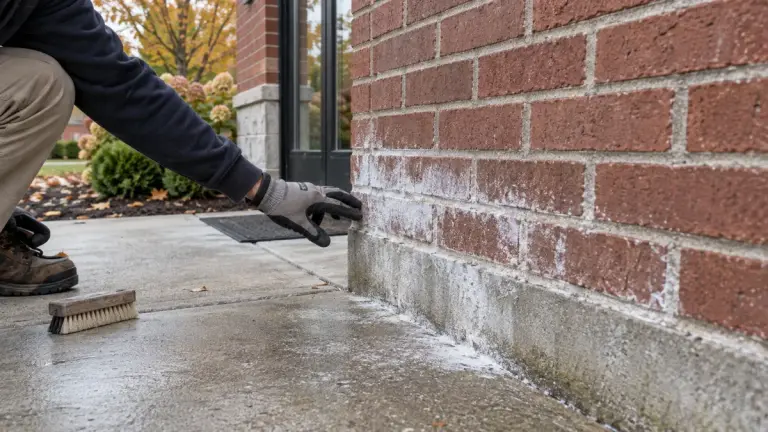
To get the most out of any degreaser, proper technique is essential. We first lightly pre-wet the surrounding concrete to prevent the chemical from drying out or soaking into clean areas. Next, we apply the degreaser full-strength to the stain, allowing a dwell time of 15 to 30 minutes.
During this dwell time, we use a stiff-bristle scrubbing broom to manually agitate the stain. This mechanical action works the chemical deep into the concrete pores, ensuring it contacts all the trapped oil. We never allow the degreaser to dry on the surface; if it starts to dry, we mist it with a small amount of water to keep the chemical reaction active.
If you want to choose the right product for your specific driveway, take a look at our article on the best degreaser for stubborn oil stains. Whether we are treating a driveway in Londonderry or a commercial loading dock in Manchester, matching the chemical to the specific hydrocarbon is the key to our high success rate.
Environmental Regulations and Wastewater Management
Washing oil off a driveway isn’t just a cleaning challenge — it is a legal and environmental responsibility.
Under Section 402 of the Clean Water Act, it is illegal to discharge wastewater containing petroleum products, heavy metals, or toxic chemicals into municipal storm drains. Storm drains lead directly to our local streams, rivers, and groundwater supply without going through a water treatment plant.
If a contractor or homeowner washes oil off a driveway in Bedford or Derry and allows that contaminated runoff to flow down the street into a storm sewer, they can face severe environmental fines.
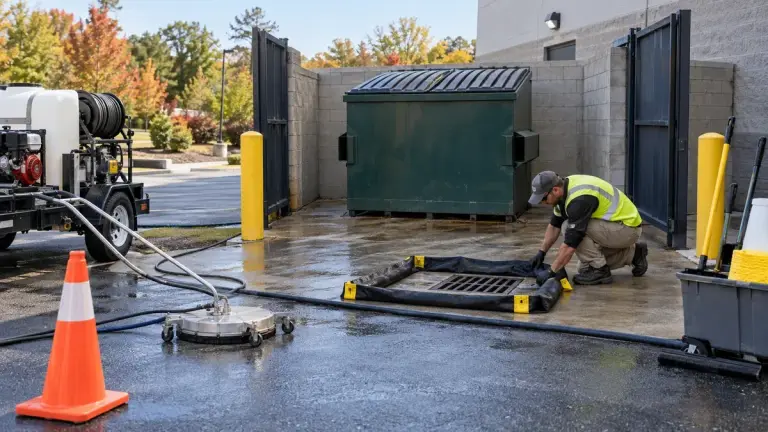
As a professional service provider with over 38 years of experience in New Hampshire, we take environmental compliance seriously. We use specialized wastewater containment systems, including:
- Inflatable Sand-Filled Booms: To block off storm drain inlets and prevent runoff from escaping the property.
- Vacuum Recovery Systems: To capture the wash water directly at the cleaning site.
- Petroleum Filtration Pads: To filter out hydrocarbons and suspended solids, allowing us to safely dispose of the treated water in accordance with local municipal regulations.
When dealing with asphalt, the environmental stakes are even higher due to the fragile nature of the binder. You can read more about responsible cleaning practices in this article on Getting Rid of Oil Stains in Asphalt.
Frequently Asked Questions About Oil Stain Removal
Can you pressure wash oil stains that are years old?
Yes, but you must have realistic expectations. When oil sits on concrete for months or years, it undergoes oxidation and chemically bonds with the concrete matrix. The volatile compounds evaporate, leaving behind a tough, dark carbon residue.
While hot-water power washing and industrial degreasers can dramatically lighten these old stains — often achieving a 20% to 50% visual improvement — complete removal is rarely possible. For deeply set, years-old stains in Londonderry or Manchester, alternative restoration methods such as mechanical grinding or a chemical poultice treatment (which draws the oil out over several days using an absorbent powder) may be required.
Can you pressure wash oil stains without using chemicals?
No. Because of oil’s hydrophobic properties, trying to wash oil with water alone is like trying to mix oil and vinegar without shaking the bottle. The high-pressure water will simply bounce off the petroleum, push the oil slick across your driveway, and create a larger, more unsightly shadow.
To break that surface tension and lift the stain, you absolutely must use a surfactant or degreaser to emulsify the oil first. Professional hot-water equipment makes a massive difference, but even hot water needs chemical assistance to fully release oil from concrete pores.
How much does professional oil stain removal cost in New Hampshire?
Professional oil stain removal costs vary depending on the size of the area, the age of the stain, and the equipment required.
The pricing information below represents average costs based on publicly available internet data. These are not the actual rates of ACME Pressure Washing, but are provided to show typical industry ranges.
| Stain Size / Severity | Average Internet Price | Typical Professional Range (Low to High) |
|---|---|---|
| Small Spot (Single drip, fresh) | $150 | $300 – $750 |
| Medium Area (Standard 2-car driveway drips) | $250 | $500 – $1,250 |
| Large/Severe (Commercial parking stall, heavy buildup) | $350 | $700 – $1,750 |
Because of the specialized hot-water equipment, chemical degreasers, and strict wastewater containment setups required to safely clean oil in towns like Londonderry or Manchester, professional rates reflect the high level of skill and liability involved in this type of work.
Conclusion
At the end of the day, dealing with oil stains on your concrete or asphalt is a race against the clock. The longer you wait, the deeper the oil penetrates, and the harder it becomes to clean.
While a DIY approach with cold water and consumer-grade equipment might lighten a very fresh spill, attempting to blast away deep, set-in oil stains usually leads to etched concrete, stripped asphalt, and environmental runoff issues.
At ACME Pressure Washing, we have spent over 38 years perfecting safe, customized, and eco-friendly cleaning techniques across New Hampshire. From our home base in Merrimack, NH, we serve residential and commercial properties with state-of-the-art hot-water power washing systems that melt away tough grease and oil while fully protecting your surfaces and complying with environmental laws.
Once your concrete is clean, we also highly recommend professional concrete sealing. A high-quality penetrating sealer fills those microscopic pores, creating a protective barrier that repels future spills and makes ongoing maintenance a breeze.
Don’t let ugly, slippery oil stains ruin your property’s curb appeal or create a safety liability. Let the experienced team at ACME Pressure Washing handle it the right way.
Ready to restore your concrete or asphalt?
- Get a Free Estimate: Request a Quote Online
- Explore Our Services: Learn more about our professional pressure washing services for homes, commercial properties, and fleets.