Clean Your Patio Pavers Like a Pro This Weekend
Why Your Patio Pavers Deserve More Than a Quick Rinse
Patio pavers cleaning is one of the most effective ways to restore your outdoor living space and protect a significant property investment — and it doesn’t have to take all weekend.
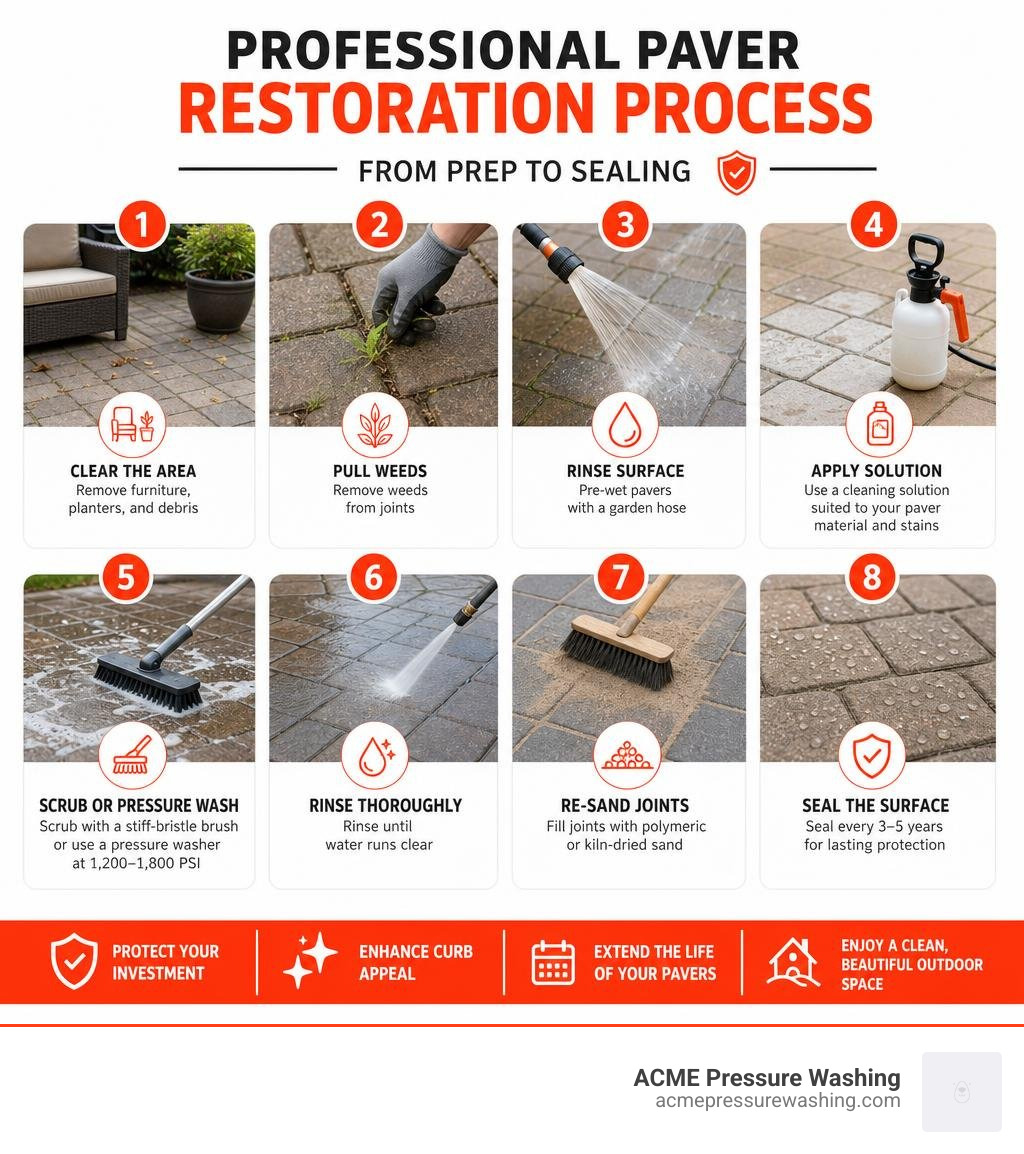
Here’s how to clean patio pavers effectively:
- Clear the area — remove furniture, planters, and loose debris
- Pull weeds from between joints
- Rinse the surface with a garden hose to pre-wet pavers
- Apply a cleaning solution suited to your paver material and stain type
- Scrub with a stiff-bristle brush or use a pressure washer at 1,200–1,800 PSI
- Rinse thoroughly until water runs clear
- Re-sand the joints with polymeric or kiln-dried sand
- Seal the surface (every 3–5 years) for lasting protection
New Hampshire winters are tough on outdoor surfaces. In towns like Merrimack and Bedford, freeze-thaw cycles, road salt, and seasonal humidity quietly break down even well-installed paver patios — loosening joint sand, encouraging mold and algae growth, and letting stains sink deeper into porous surfaces year after year. Most homeowners don’t notice the damage until it’s already costly to fix.
The good news? Regular cleaning and a little seasonal attention can keep your patio looking sharp and add years to its life.
I’m Lionel Greenwood, owner of ACME Pressure Washing, and I’ve spent more than 38 years restoring outdoor surfaces — including patio pavers cleaning jobs across New Hampshire for both residential and commercial clients. In this guide, I’ll walk you through exactly what works, what to avoid, and when it makes sense to call in a pro.
Easy patio pavers cleaning glossary:
The Science of Patio Pavers Cleaning and Material Care
Before you grab a scrub brush or fire up any equipment, you must understand what your patio is made of. Pavers are not created equal, and using the wrong cleaning chemical or too much physical force can permanently ruin their finish.
Concrete Pavers
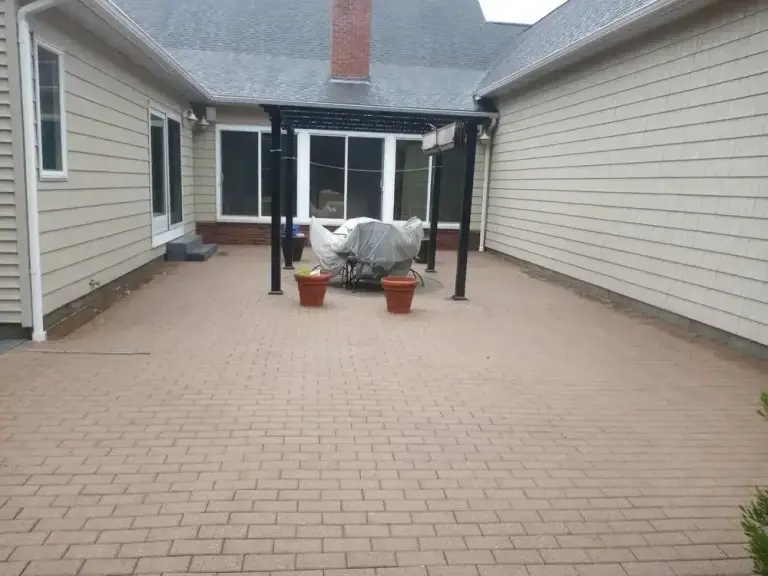
Concrete pavers are incredibly popular across New Hampshire, from backyards in Auburn to commercial courtyards in Bedford. They are highly durable but inherently porous. This means they act like a hard sponge, absorbing water, motor oil, and organic tannins from falling autumn leaves. For concrete, we recommend using a mild, pH-balanced detergent or specialized concrete cleaners. You can learn more about preserving these surfaces in our guide on How to Clean and Seal Your Patio for Long-Lasting Beauty.
Natural Stone Pavers
Whether you have granite, slate, travertine, or limestone on your property in Manchester, natural stone requires the gentlest touch. Natural stone is highly sensitive to acidic cleaners. Using acidic solutions like vinegar or harsh commercial rust removers can etch the stone, dulling its natural color and permanently pitting the surface. Always stick to pH-neutral stone cleaners and soft-bristled brushes. For premium stone installations, check out the resources provided by Your Premier Supplier of Concrete Pavers in Auburn New Hampshire to ensure you are matching your cleaning technique to your specific stone profile.
Porcelain Pavers
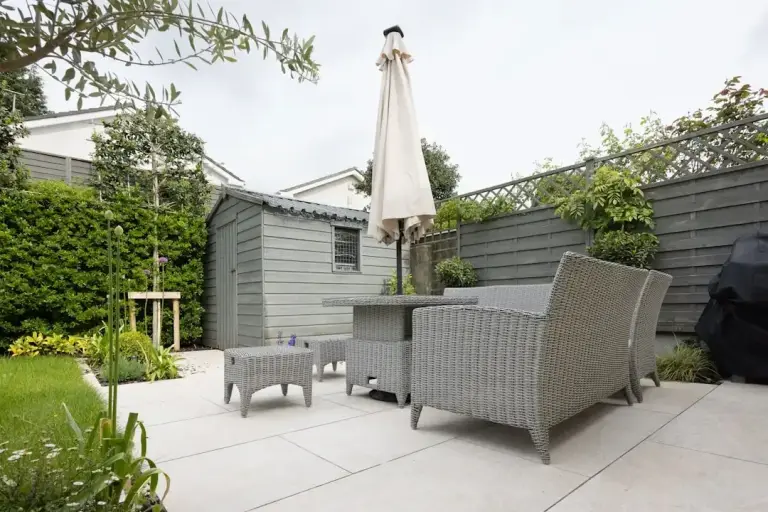
Porcelain is the newcomer to many modern outdoor designs. Unlike concrete or natural stone, premium porcelain pavers are practically non-porous. They resist stains beautifully and do not absorb moisture, making them highly resistant to freeze-thaw damage. However, they can still collect a surface layer of slick algae, mold, and dirt. Cleaning porcelain is relatively simple: a mild dish soap solution and a soft nylon brush are usually all it takes to restore their shine. Avoid wire brushes at all costs, as they can scratch the beautiful factory finish. For more material-specific tips, you can read the official guidelines on How to Clean Pavers | Unilock.
High-Level Steps for Restoring Your Outdoor Surfaces
Restoring your patio is a systematic process. If you skip a step, you risk locking in dirt, washing away structural joint sand, or encouraging rapid weed regrowth.
Step 1: Surface Preparation and Debris Removal
Begin by removing all patio furniture, grills, and planters. Next, use a leaf blower or a stiff outdoor broom to sweep away loose leaves, twigs, and dirt. If you skip this, wetting the patio will turn that dry dust into a stubborn layer of mud.
Step 2: Weed and Moss Eradication
Weeds and moss love the damp, shaded joints between pavers. Use a manual weeding tool or a joint scraper to pull weeds out by their roots. For moss, which can spread rapidly in our humid New Hampshire summers, we recommend applying a targeted treatment. You can read our professional recommendations on How to Kill and Prevent Patio Moss for Good to ensure the roots are completely dead before you begin washing.
Manual Patio Pavers Cleaning Without a Pressure Washer
If you do not own a pressure washer, or if you want to avoid the risks of using high-pressure water on delicate stone, manual cleaning is a highly effective, safe alternative. It takes more physical effort, but it gives you total control over the process.
To clean your pavers by hand, follow this high-level process:
- Saturate the Surface: Thoroughly wet the entire patio with a garden hose. Keeping the pavers wet prevents the cleaning solution from drying out too quickly, which can leave unsightly white soap films.
- Mix Your Solution: In a large bucket, mix warm water with a mild, biodegradable dish soap or a specialized paver cleaner. For organic stains or mildew, a mild oxygen-bleach solution can also be used.
- Scrub with a Push Broom: Dip a stiff-bristle push broom (avoid wire bristles) into the soapy water and scrub the pavers in circular motions. Work in small, manageable sections so the soap does not dry on the surface.
- Rinse and Dry: Thoroughly rinse the dirty suds off the patio with your garden hose, directing the runoff away from your landscaping.
For a deeper look at manual techniques, read the step-by-step guide on How to Clean Patio Pavers Without a Pressure Washer | Family Handyman or check out our article on How to Deep Clean Your Patio Using Elbow Grease Instead of Electricity.
Advanced Patio Pavers Cleaning with Professional Equipment
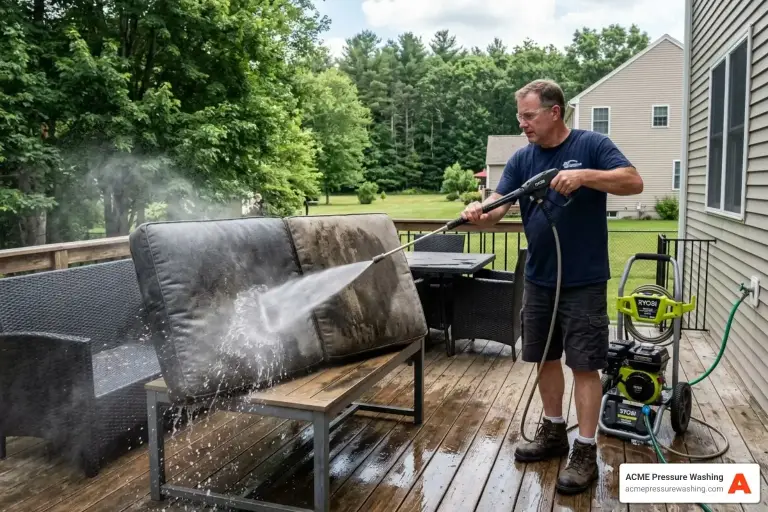
While manual scrubbing works well for minor seasonal dirt, heavy algae growth, deep oil stains, and large commercial spaces require professional-grade equipment. However, using a pressure washer on pavers is a double-edged sword.
If you use too much pressure or hold the spray wand too close to the surface, you can easily etch concrete, scar natural stone, and blast out all of the joint sand holding your patio together.
If you choose to use a pressure washer, keep these professional rules in mind:
- Keep PSI Low: Never exceed 1,200 to 1,800 PSI when cleaning pavers. High-pressure commercial concrete settings (3,000+ PSI) will destroy the surface of your pavers.
- Use a Wide Fan Tip: Use a 25-degree or 40-degree nozzle tip. Never use a pinpoint “0-degree” red nozzle, which acts like a physical chisel.
- Maintain Distance and Angle: Keep the wand at least 12 inches away from the surface and spray at a shallow 30-degree angle. Never spray straight down into the joints, as this will instantly wash out the joint sand.
- Use a Surface Cleaner Attachment: For even, streak-free results, professionals use rotating surface cleaners. This distributes the pressure evenly and prevents the “tiger striping” marks common with DIY wand washing.
For more detailed safety settings, read our guide on Pressure Washing Paving Stones Like a Pro and explore The Ultimate Guide to Finding the Perfect PSI for Concrete Driveways to understand how pressure settings change based on the substrate.
Managing Tough Stains, Efflorescence, and Joint Sand
Simple dirt is easy to wash away, but specific stains require targeted chemical treatments. Because concrete and stone are porous, stains quickly bind to the material at a molecular level.
Oil and Grease Stains
Whether it is food grease from a summer barbecue in Goffstown or motor oil on a driveway in Auburn, oil must be lifted, not just scrubbed. Sprinkle kitty litter, cornstarch, or baking soda directly onto fresh oil spills to absorb the excess liquid. Once dry, sweep it up and apply a specialized alkaline degreaser or liquid dish soap. Let it sit for 15 minutes to break down the oil, then scrub gently and rinse.
Rust Stains
Rust often occurs when metal patio furniture, toys, or fertilizers containing iron come into contact with damp pavers. Because rust is an iron oxide, it requires an acid-based cleaner to dissolve. However, as we mentioned earlier, acids can damage natural stone and concrete. Always use a specialized, non-acidic rust remover designed specifically for pavers, and spot-test it in an inconspicuous area first.
Efflorescence
Have you noticed a chalky, white powder appearing on the surface of your concrete pavers? This is called efflorescence. It is a natural process where water-soluble salts inside the concrete migrate to the surface as moisture evaporates. While it often wears away naturally over time, severe cases can be treated with specialized efflorescence removers.
To make things easier, we have put together this quick-reference table for treating common paver issues:
| Stain / Issue | Primary Cause | Recommended Treatment | Avoid This! |
|---|---|---|---|
| Oil & Grease | Grills, vehicles, food spills | Alkaline degreaser, baking soda, dish soap | High-pressure blasting (pushes oil deeper) |
| Rust | Metal furniture, iron fertilizers | Specialized non-acidic rust remover | Muriatic acid, wire brushes |
| Efflorescence | Natural salt migration | Specialized efflorescence wash, gentle scrubbing | Sealing over the white powder |
| Mold & Algae | Shaded areas, high humidity | Diluted bleach (10:1) or specialized organic cleaner | Acidic vinegar on natural stone |
The Critical Role of Joint Sand
Once your pavers are completely clean and dry, you must inspect the joints. Water and cleaning will inevitably wash away some of the sand between the pavers. This sand is not just decorative; it provides the friction needed to keep the pavers from shifting, cracking, and rubbing against one another.
Always sweep fresh kiln-dried sand or polymeric sand back into the joints after a deep clean. If you are using polymeric sand, sweep away all excess sand from the surface of the pavers using a broom or leaf blower before misting it with water to activate the hardening polymers. For more tips on managing deep-cleaning projects, read How to Deep Clean Patio Slabs Without Breaking a Sweat.
The Impact of New Hampshire’s Climate on Paver Longevity
Our local climate in New Hampshire presents unique challenges for hardscape maintenance. In towns like Bedford, Goffstown, Merrimack, and Auburn, pavers are subjected to extreme weather swings.
During our harsh winters, water seeps into unsealed, porous pavers. When this water freezes, it expands, creating internal pressures of up to 25,000 PSI. Over time, this constant expansion and contraction causes concrete to crack, spall, and shift, leading to uneven walkways and tripping hazards.
Furthermore, winter de-icing salts and coastal air accelerate the chemical breakdown of concrete. In the spring and summer, high humidity and heavy tree cover create the perfect breeding ground for slippery green algae and black mold, which ruin your curb appeal and create dangerous slip-and-fall hazards.
To combat these climate challenges, we highly recommend sealing your pavers every 3 to 5 years. A high-quality, breathable sealer acts as a protective shield, preventing water from penetrating the pores, locking in the joint sand, protecting against UV fading, and making future patio pavers cleaning much easier. You can explore our professional approach to protecting these surfaces on our Walkway and Patio Cleaning service page.
Frequently Asked Questions About Paver Maintenance
How much does professional patio paver cleaning and sealing cost in New Hampshire?
Based on average online industry data, homeowners can expect to pay anywhere from $1.00 to $2.00 per square foot for basic cleaning, sand replacement, and sealing. However, due to the wide variability in paver conditions, access, and regional labor costs, actual project prices can range widely.
For instance, a highly complex, heavily stained, or neglected residential patio requiring extensive weed removal and restorative sealing can range from $3.00 to $10.00+ per square foot depending on the level of restoration required. These figures are based on general internet averages and do not represent the exact pricing of ACME Pressure Washing. To see real-world examples of restored hardscapes in Bedford, Goffstown, and Merrimack, view our Gallery Walkway and Patio Cleaning.
Can you use household bleach or vinegar to clean pavers?
While household bleach can be highly effective at killing stubborn mold and algae when diluted properly (typically 1 part bleach to 10 parts water), it must be used with extreme caution. Bleach can runoff and kill surrounding grass and prized landscaping.
Vinegar, while eco-friendly, is highly acidic (pH of around 2 to 3). It should never be used on natural stone like travertine, limestone, or marble, as it will chemically etch and ruin the surface. For alternative household options, check out our guide on Does Washing Powder Clean Block Paving The Ultimate Guide.
How often should pavers be sealed?
In our New Hampshire climate, we recommend sealing your pavers every 3 to 5 years. If your patio is in a highly shaded, wooded area prone to dampness, or if it experiences heavy commercial foot traffic, it may require maintenance cleaning annually and sealing closer to the 3-year mark.
For sunny, open patios, you can easily go 5 years between sealer applications. Sealing not only locks in joint sand but also prevents UV rays from fading the rich colors of your stone. To learn more about the best cleaning methods, read our guide on Top Rated Cleaners to Make Your Patio Shine Again.
Conclusion
A beautiful paver patio, walkway, or pool deck is a wonderful addition to any New Hampshire home or business, but keeping it pristine requires consistent care. While simple sweeping and light rinsing can be handled over a weekend, deep restorative cleaning, polymeric sand replacement, and professional-grade sealing are tasks best left to experienced professionals.
At ACME Pressure Washing, we bring over 38 years of industry experience using safe, customized, eco-friendly pressure washing and soft-washing techniques. We proudly serve residential and commercial clients throughout Merrimack, Goffstown, Auburn, Bedford, and the surrounding areas.
Whether you need to restore your home’s curb appeal, clean up a commercial storefront, or maintain your business’s assets, we are here to help. In addition to hardscape restoration, we specialize in high-quality House Pressure Washing, large-scale Commercial Pressure Washing, and Fleet and Equipment Pressure Washing services.
Stop spending your weekends scrubbing heavy stains or risking damage to your expensive stone installations with rental pressure washers. Let our experienced team handle the hard work safely and efficiently.
Ready to bring your outdoor surfaces back to life?
- Get a free estimate: Fill out our quick online Contact ACME Pressure Washing quote form.
- Explore our services: Visit our Walkway and Patio Cleaning Services page to see how we can protect your investment today!